
Politics
Protests: Tinubu’s Real Troubles Are Just Beginning – Farooq Kperogi

In light of his planned astronomical hike in petrol prices euphemistically called “subsidy removal” in 2023, which his opponents also promised to implement and caused Nigerians embrace as inevitable and desirable, I foretold the imminent social convulsion that is gathering momentum across Nigeria now.
“I can assure Tinubu that if petrol price hikes deepen people’s misery, he’ll have a tough time governing,” I wrote in my April 29, 2023, column. I followed this up with more than half a dozen columns on the same theme.
When you remove subsidies from an all-important product like petrol that literally regulates every facet of life in a country like Nigeria, which also has the dubious honor of being in perpetual competition with India for the status of the world’s poverty capital, and then follow it up with a massive devaluation of the national currency even when the country is hopelessly import-dependent, you unleash existential demons that compel vast swaths of people to choose between life and death.
False assurances that the mass agony in the country is only temporary, or that the pains people are grappling with are mere precursors to future gains, or even that there is light at the end of the tunnel only aggravate people’s angst. There are two reasons for this.
One, most people know that based on past experiences in Nigeria (notably during IBB’s ruinous SAP, which Tinubu merely repurposed and renamed) and elsewhere in the developing world where the IMF and the World Bank dictate economic policies, there has never been a single example of these sorts of pains ever transforming into gains for the masses of the people.
Second, people outside the circles of power and privilege realize that the pains are being borne only by the poor.
Tinubu, for example, bought a new presidential jet worth millions of dollars even before the spineless National Assembly had a chance to rubber-stamp it, as is now their wont, among other profligate expenditures amid a biting economic downturn.
People who are visiting darkness on the poor in the name of a deferred light at the end of the tunnel are glowing in incandescent bulbs of illumination. And the people are intelligent enough to know that what awaits them at the end of this disconsolate tunnel isn’t light. It’s an inferno. It’s a dreary snake pit of doom and gloom.
When people come to this realization, no one needs to “sponsor” them to protest. The pangs of hunger they feel is sufficient to sponsor them to protest. The sensation of hopelessness that overcomes them is a bigger motive force for protest than the political machinations of any politician.
But even if it’s true that opposition politicians are taking advantage of the mass discontent in the country to cripple the government and delegitimize it for their self-interest, that’s not illegal. It’s an intrinsic element of democracies for opposition parties to seize on the missteps of incumbents to displace them.
President Tinubu is in power today precisely because he mastered the art of instrumentalizing the missteps of incumbents to advance his political aspirations. As recently as 2012, he “sponsored” a disruptive protest against former President Goodluck Jonathan that led to the deaths of protesters—for precisely what he is doing to Nigerians now.
No amount of persuasion or financial inducement of traditional rulers, religious clerics, union leaders, or activists will get people to make peace with needless suffering occasioned by a self-centered, hard-hearted implementation of vicious economic policies that snuff the life out of the people. Even if the planned protests are aborted, the predictable is only being postponed.
The only way Tinubu can retain legitimacy and earn the trust of the people is to reverse the deep, stinging hurt his policies have caused to the vast majority of our people. People are no longer interested in progress or the renewal of hope. They just want Tinubu to take them back to where he met them, which was not an enviable state. And that’s not too much to ask.
In a February 10, 2024, column titled “Hunger Protests: Why Tinubu Can’t Govern Like Buhari,” I said the spontaneous, hunger-induced eruption of seething communal anger in Minna, Suleja, Kano, and Osogbo were “a warning sign” that Tinubu couldn’t afford to ignore. He ignored it.
He is probably following the Buhari template of enacting unpopular policies and relying on the blind support of his worshipers to shield him from the consequences of his actions. But Tinubu has no such following, and I am glad he doesn’t, which is why I would hate for someone like Peter Obi or Rabiu Kwankwaso to be president.
They are political cult leaders with unthinking, fanatical followers who lose their damned minds if you as much utter the mildest critical remark about their gods, however factual it may be. Like Buharists, they have abdicated their senses to their political gods.
I reproduce here a portion of the column to remind Tinubu why he can’t benefit from the kind of immunity Buhari enjoyed:
“Had the current president been Muhammadu Buhari and not Bola Ahmed Tinubu, chances are that the worst that would happen amid the adversity people are going through now would be suppressed, barely audible murmurs. It’s because Buhari is a political cult leader with a firm grip on his followers who worship him and surrender responsibility for their lives over to him. Tinubu has no such appeal.
“A psychologist by the name of Steve Taylor came up with a concept he called ‘abdication syndrome,’ which he said disposes people to invest total, child-like trust in a political figure, a cult leader, an opinion molder, etc. in ways that mimic how children idealize and idolize their parents as unblemished paragons of perfection.
“According to Taylor, ‘abdication syndrome stems from the unconscious desire of some people to return to a state of early childhood, when their parents were infallible, omnipotent figures who controlled their lives and protected them from the world. They’re trying to rekindle that childhood state of unconditional devotion and irresponsibility.’
“Buhari is lucky to benefit from abdication syndrome in Muslim northern Nigeria, broadly conceived, which explains why he got away with murder for eight years. When he increased petrol prices by a steep margin in 2016, for instance, there were protests in Kano, Bauchi, and other places in SUPPORT of the increase and AGAINST people who planned to protest the increase. Nigeria had never seen anything like that before.
“Even protests against the unabating descent of northern Nigeria into a theater of bloodshed and abduction on Buhari’s watch provoked counter protests from people who have abdicated the use of their brains in the service of Buhari.
“Tinubu not only does not have the benefit of abdication syndrome anywhere in Nigeria, but he also has the misfortune of having to contend with a peculiar character of Muslim northern Nigeria: we feel the pain of, and react violently to, bad policies only when the policies are hatched and executed by people who have no filiation with our natal region.
“It’s no surprise that the hunger protests against the Tinubu administration started from and spread in the North.
“A powerful indication of Tinubu’s lack of firm emotional support base emerged when Osun, his state of birth where he lost the last presidential election to PDP’s Atiku Abubakar, became the first southern state to join the hunger protests. Should the resistance to his punishingly heartless neoliberal economic policies ignite a nationwide convulsion, the Southwest is unlikely to constitute itself as his bulwark.
“In fact, I hazard a guess that should Tinubu’s unfeeling policies activate the sort of destabilizing national upheaval that we saw in 2012 during Goodluck Jonathan’s administration, the Southwest won’t be aloof. It is likely to join in.
“And, of course, Tinubu is deeply unpopular in the Southeast, the South-south, and Christian northern Nigeria. In other words, Tinubu is essentially floundering into the most treacherous of social quicksands.
“His only fortification against danger is not just good governance but compassionate governance. The release of thousands of metric tons of grains is a good first step, but it’s not nearly enough to stem the tide of mass rebellion that is brewing in the country. At best, it will only delay the inevitable.
“The truth is that Nigeria can’t survive a total withdrawal of petroleum subsidies without an adequate, systematic, well-planned public transportation system. To do away with petrol subsidies, the government must first create conditions where car ownership and patronage of commercial transportation are a luxury.”



Politics
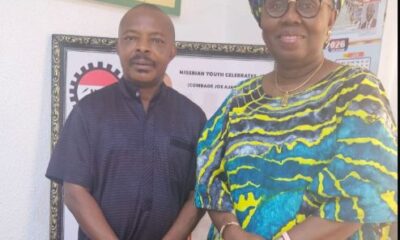
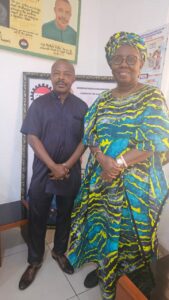
Dr. Betty Anyanwu-Akeredolu Meets NLC President Joe Ajaero in Abuja as #ImoEast2027 Consultations Continue
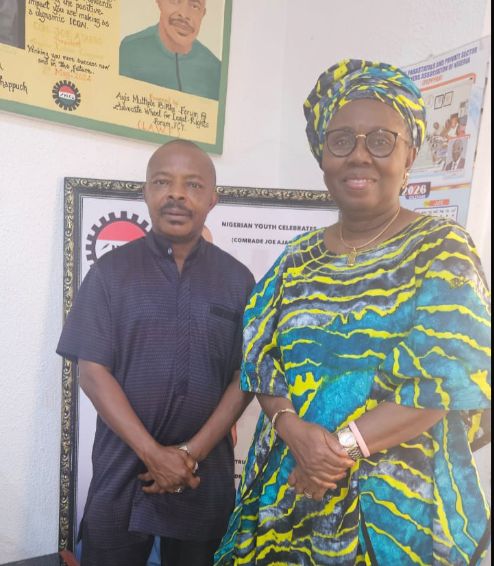
Dr. Betty Anyanwu-Akeredolu, former First Lady of Ondo State and senatorial aspirant for Imo East, has held a consultation meeting with Nigeria Labour Congress (NLC) President, Comrade Joe Ajaero, as she ramps up engagements ahead of the 2027 elections.
The meeting took place in Abuja on Wednesday during what Anyanwu-Akeredolu described as part of her ongoing consultations for the Imo East Senatorial District race, tagged #ImoEast2027.
Describing Ajaero as her “broda” and fellow son of Owerri Zone, Anyanwu-Akeredolu said the visit was to pay homage and discuss issues affecting the zone and the wider state.
“Our discussion centered on the need for purposeful leadership, quality representation, and the urgent task of improving the welfare of our people,” she stated.
She added that the “journey to the Red Chambers continues with wide consultations and engagement with critical stakeholders.”
Anyanwu-Akeredolu, who hails from Owerri Federal Constituency, signed off the statement as “Ada Owere 1,” a traditional title she holds in Owerri.
The visit adds to a series of consultations she has been holding with political and civic leaders as she seeks the support of stakeholders in Imo East ahead of the 2027 senatorial election.
Imo East, also known as Owerri Senatorial District, comprises nine local government areas and is considered one of the key political battlegrounds in Imo State.
By Ihezie Dede Walax
The Imo State chapter of the African Democratic Congress (ADC) has successfully concluded the screening exercise for aspirants seeking to contest various elective positions under the platform of the party ahead of the forthcoming primary elections scheduled for Thursday, May 21, 2026.
The screening exercise, which took place at the party’s designated venue, was conducted in strict compliance with the provisions of the Electoral Act as amended, as well as the constitution, guidelines, and internal democratic procedures of the African Democratic Congress. The exercise covered aspirants vying for the State House of Assembly, House of Representatives, and Senate seats across the state.
Party leaders and aspirants described the exercise as transparent, credible, and orderly, noting that all aspirants underwent thorough verification of credentials, eligibility requirements, and compliance with party regulations. At the end of the process, no fewer than fifty aspirants were officially screened and cleared to participate in the party primaries.
The development marks another major step in the party’s preparations for the 2027 general elections, as the ADC continues to strengthen its internal structures and promote a democratic culture founded on fairness, accountability, and equal opportunity for all contestants.
Speaking shortly after the screening exercise, the Imo State Chairman of the party, Prof. James Okoroma, commended members of the screening committee for conducting what he described as a professional, transparent, and impartial assignment. He stated that the successful completion of the screening process demonstrates the commitment of the party leadership to credible internal democracy and strict adherence to constitutional procedures.
Prof. Okoroma further urged all cleared aspirants to maintain decorum, unity, and mutual respect throughout the primary process. According to him, the strength of the ADC lies in its discipline, transparency, and collective vision to provide responsible leadership for the people of Imo State and Nigeria at large.
He also assured party faithful that the forthcoming primaries would be free, fair, and credible, emphasizing that the party remains committed to providing every qualified aspirant with a level playing ground. He encouraged supporters and party leaders to conduct themselves peacefully and uphold the integrity of the party throughout the exercise.
The state chairman expressed confidence in the growing acceptance of the ADC across the state, noting that the increasing number of aspirants and supporters joining the party reflects public trust in the party’s ideology, leadership direction, and commitment to good governance.
Several aspirants who participated in the screening exercise expressed satisfaction with the transparency of the process and reaffirmed their commitment to supporting the party irrespective of the outcome of the primaries. They described the ADC as a progressive political platform committed to good governance, people oriented policies, youth inclusion, and sustainable development.
With the successful conclusion of the screening exercise, attention has now shifted to the party primaries, where registered party members will decide through direct primaries the candidates who will fly the party’s flag in the 2027 general elections.
ADC — Arise and Shine
Ihezie Dede Walax
DG, Imo ADC New Media
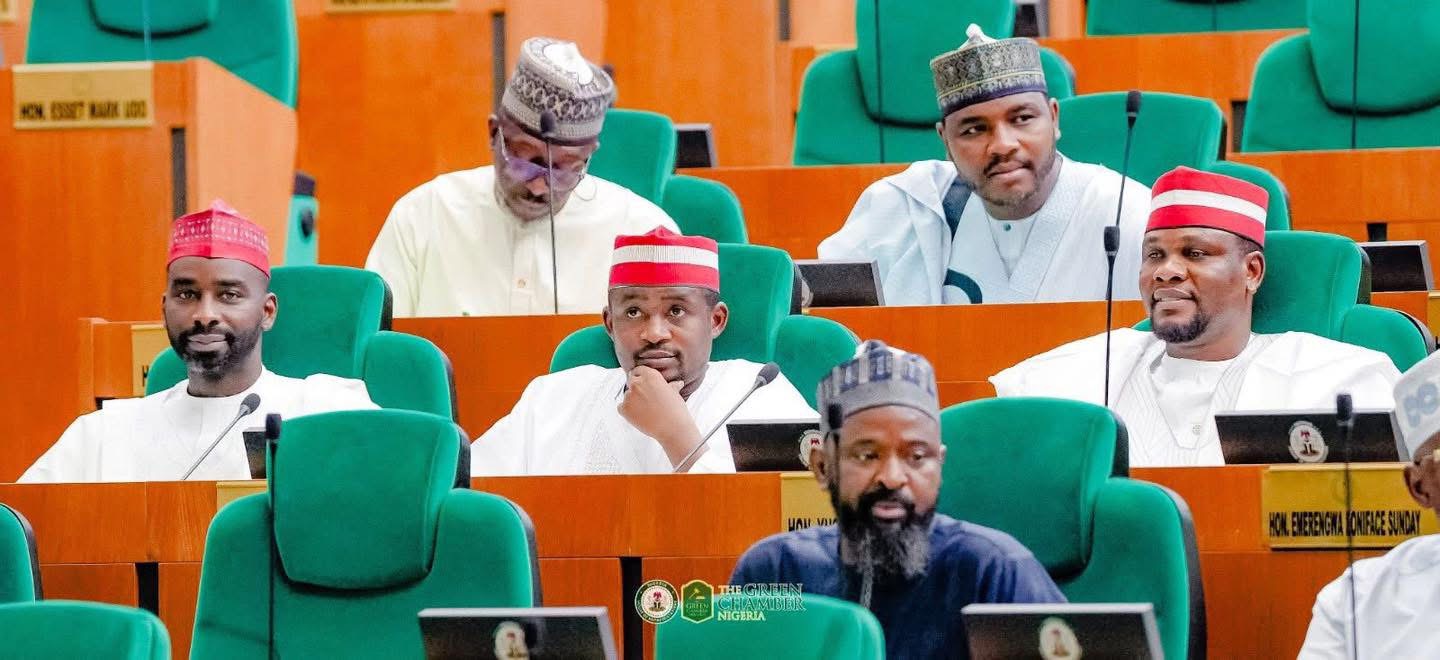
No fewer than 50 members of the 10th House of Representatives are unlikely to be part of the 11th Assembly after losing out in the All Progressive Congress (APC) primaries held on Saturday.
This marks one of the largest turnovers of sitting federal lawmakers since 2015 and signals intensifying internal competition within the ruling party eight months to the 2027 general elections.
While House Speaker Tajudeen Abbas (Kano) and Deputy Speaker Benjamin Kalu (Abia) successfully defended their tickets, several ranking and long-serving lawmakers were defeated, exposing strong anti-incumbent sentiment and the decisive role of state governors in candidate selection.
Major casualties
One of the biggest upsets was the defeat of House Majority Leader Julius Ihonvbere in Edo State’s Owan Federal Constituency. He polled 1,005 votes out of 7,587 cast, finishing third behind Andrew Ijegbia, who scored 3,695 votes. Abdul Oroh placed second with 1,740 votes.
In Delta State, veteran lawmaker Nicholas Mutu, who has represented Bomadi/Patani Federal Constituency since 1999, lost his re-election bid. Ngozi Okolie also lost the Aniocha/Oshimili ticket to former House Minority Leader Ndudi Elumelu.
Cross River State recorded one of the highest casualty rates, with five of eight incumbents failing to secure re-nomination.
They include three-term member Mike Etaba (Obubra/Etung), Godwin Offiono (Ogoja/Yala), Emil Inyang (Akamkpa/Biase), and Bassey Akiba (Odukpani/Calabar Municipality).
Only Peter Akpanke, Joseph Bassey, and Victor Abang won return tickets.
In Plateau State, conflicting results in Pankshin/Kanke/Kanam Federal Constituency triggered early confusion. One returning officer declared challenger John Tongshinen winner with 29,968 votes against incumbent Yusuf Gagdi’s 5,849.
The APC Plateau State primaries committee, chaired by Stella Okotete, later dismissed that declaration as unauthorised and affirmed Mr Gagdi as the authentic winner with 29,207 votes.
At a press briefing, Mrs Okotete stated that Nandom Kura was the recognised returning officer. “The returning officer approved by my committee that has gone to do fake declaration is null and void,” she said.
Other significant losses occurred in Ogun State (at least five incumbents, including Deputy Chief Whip Ibrahim Isiaka and Tunji Akinosi) and Ekiti State (three sitting members).

Dr. Betty Anyanwu-Akeredolu Meets NLC President Joe Ajaero in Abuja as #ImoEast2027 Consultations Continue

Imo ADC Screens and Clears 50 Aspirants, Sets Stage for Party Primaries

𝗛𝗢𝗡. 𝗧𝗢𝗦𝗞𝗔 𝗖𝗢𝗡𝗗𝗘𝗠𝗡𝗦 𝗧𝗛𝗘 𝗞𝗜𝗟𝗟𝗜𝗡𝗚𝗦, 𝗞𝗜𝗗𝗡𝗔𝗣𝗣𝗜𝗡𝗚𝗦 𝗔𝗡𝗗 𝗥𝗔𝗣𝗘𝗦 𝗜𝗡 𝗜𝗛𝗜𝗔𝗚𝗪𝗔, 𝗢𝗕𝗜𝗕𝗜𝗘𝗭𝗘𝗡𝗔, 𝗘𝗭𝗜𝗢𝗕𝗢𝗗𝗢, 𝗘𝗠𝗘𝗔𝗕𝗜𝗔𝗠, 𝗢𝗞𝗢𝗟𝗢𝗖𝗛𝗜, 𝗨𝗠𝗨𝗚𝗨𝗠𝗔, 𝗔𝗩𝗨 𝗔𝗡𝗗 𝗢𝗧𝗛𝗘𝗥 𝗖𝗢𝗠𝗠𝗨𝗡𝗜𝗧𝗜𝗘𝗦: 𝗖𝗔𝗟𝗟𝗦 𝗙𝗢𝗥 𝗜𝗠𝗠𝗘𝗗𝗜𝗔𝗧𝗘 𝗖𝗘𝗦𝗦𝗔𝗧𝗜𝗢𝗡

-
Business2 years ago
US court acquits Air Peace boss, slams Mayfield $4000 fine
-

 Trending2 years ago
NYA demands release of ‘abducted’ Imo chairman, preaches good governance
-

 Politics2 years ago
Mexico’s new president causes concern just weeks before the US elections
-

 Politics2 years ago
Putin invites 20 world leaders
-

 Politics2 years ago
Russia bans imports of agro-products from Kazakhstan after refusal to join BRICS
-
Entertainment2 years ago
Bobrisky falls ill in police custody, rushed to hospital
-
Entertainment2 years ago
Bobrisky transferred from Immigration to FCID, spends night behind bars
-
Education2 years ago
GOVERNOR FUBARA APPOINTS COUNCIL MEMBERS FOR KEN SARO-WIWA POLYTECHNIC BORI