
Politics
Gombe Governor Presents N320 Billion Budget Proposal for 2025

Gombe Governor Presents N320 Billion Budget Proposal for 2025
Earmarks 65% for Capital Projects, 35 % for Recurrent Expenditure
2025 Budget Prioritizes Education, Health, Agriculture, Infrastructure, Human Capital, Others
…House Assures Swift Passage
Gombe State Governor, Muhammadu Inuwa Yahaya, CON has presented a Budget Proposal of Three Hundred and Twenty Billion, One Hundred and Ten Million Naira (N320,110,000,000.00) to the State House of Assembly for consideration and passage into law.
The proposed budget, tagged “Budget of Resilience and Sustainability,” is aimed at addressing socio-economic challenges and promoting sustainable development across the state.
Presenting the appropriation bill, the governor emphasized that the budget’s contents align with current local, national, and global economic realities.
The Governor explained that of the total budget, N111,087,215,000 has been allocated for recurrent expenditure, accounting for 34.70%, while N209,022,785,000 has been earmarked for capital expenditure, representing 65.30%.
Highlighting significant allocations to key sectors, the governor revealed that the economic sector receives the lion’s share with over N138 billion, followed by works, housing, and transport with over N85 billion, and the social sector with approximately N59 billion.
Furthermore, over N32 billion was allocated to health, education received more than N32 billion, higher education more than N15 billion, and water resources, environment, and forest resources more than N19 billion.
Recognizing the challenging economic climate, the Governor said his administration will implement fiscal reforms, reduce unnecessary spending, and mobilize private sector investment to maximize resource utilization and deliver impactful results.
He emphasized the importance of addressing malnutrition and improving child health, disclosing that significant funds have been allocated to nutrition programmes aimed at enhancing dietary diversity and reducing malnutrition rates among vulnerable populations.
“The 2025 budget aligns with the state’s ten-year development plan, DEVAGOM, which outlines a vision for a more resilient and prosperous Gombe State. By integrating the Sustainable Development Goals (SDGs) into its policies and programmes, the government aims to achieve sustainable and inclusive development”.
Reflecting on the 2024 budget, Governor Inuwa noted that the government had achieved significant progress, including the construction of over 800 kilometers of roads, 1,600 classrooms, and building Integrated Tsangaya Model schools in all 11 Local Government Areas of the state.
“Additionally, the Dukku Campus of Gombe State University was completed, academic staff allowances were settled, and funding was provided for the take off of Lincoln University, Kumo Campus”.
In the health sector, the Governor highlighted the provision of primary healthcare facilities in all 114 wards, the upgrade of the State Specialist Hospital and General Hospitals in Kaltungo and Bajoga, and the construction of a new general hospital in Kumo and a 600-student capacity College of Nursing and Midwifery.
“The Go-Health Scheme has provided affordable healthcare coverage to approximately 300,000 residents, including 100,000 vulnerable individuals”, he outlined.
“The government has also made significant strides in agriculture, rehabilitation of the Gombe Regional Water Supply Scheme, implemention of small town water supply schemes and construction of over 1,250 boreholes, particularly in rural areas.
“In addition to these achievements, the government has also cleared over N14 billion in inherited gratuity liabilities and remains up-to-date on pension payments. We also made provision for additional N4.27 billion in gratuity liabilities”.
Governor Inuwa Yahaya restated that his his government resolved to bridge the infrastructure deficit by executing the 3-arm zone project, which will provide modern facilities for the state’s executive, legislative, and judicial branches. “This ambitious project will leave a lasting legacy for future generations”, the governor declared.
In his remarks, the Speaker of the Gombe State House of Assembly, Rt. Hon. Abubakar Luggerewo, thanked the Governor for consistently prioritizing the needs of the people through his policies and programmes.
He acknowledged that the proposed 2025 budget aligns with the aspirations of the people of Gombe State, assuring the Governor of the timely and speedy passage of the appropriation bill to enable the government to continue its laudable projects across the state.
The Speaker expressed satisfaction with the implementation of the 2024 budget, highlighting achievements in health, education, urban development, road infrastructure, water reticulation, and other sectors.
He commended the Governor for the ambitious 3-arm zone project, which will provide a modern and efficient working environment for the state’s executive, legislative, and judicial branches.

The Speaker praised the strong working relationship between the executive and legislative arms, which has facilitated the swift passage of bills and policies that directly benefit the people.
Ismaila Uba Misilli
Director-General
( Press Affairs)
Government House
Gombe
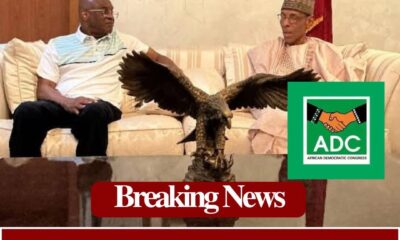




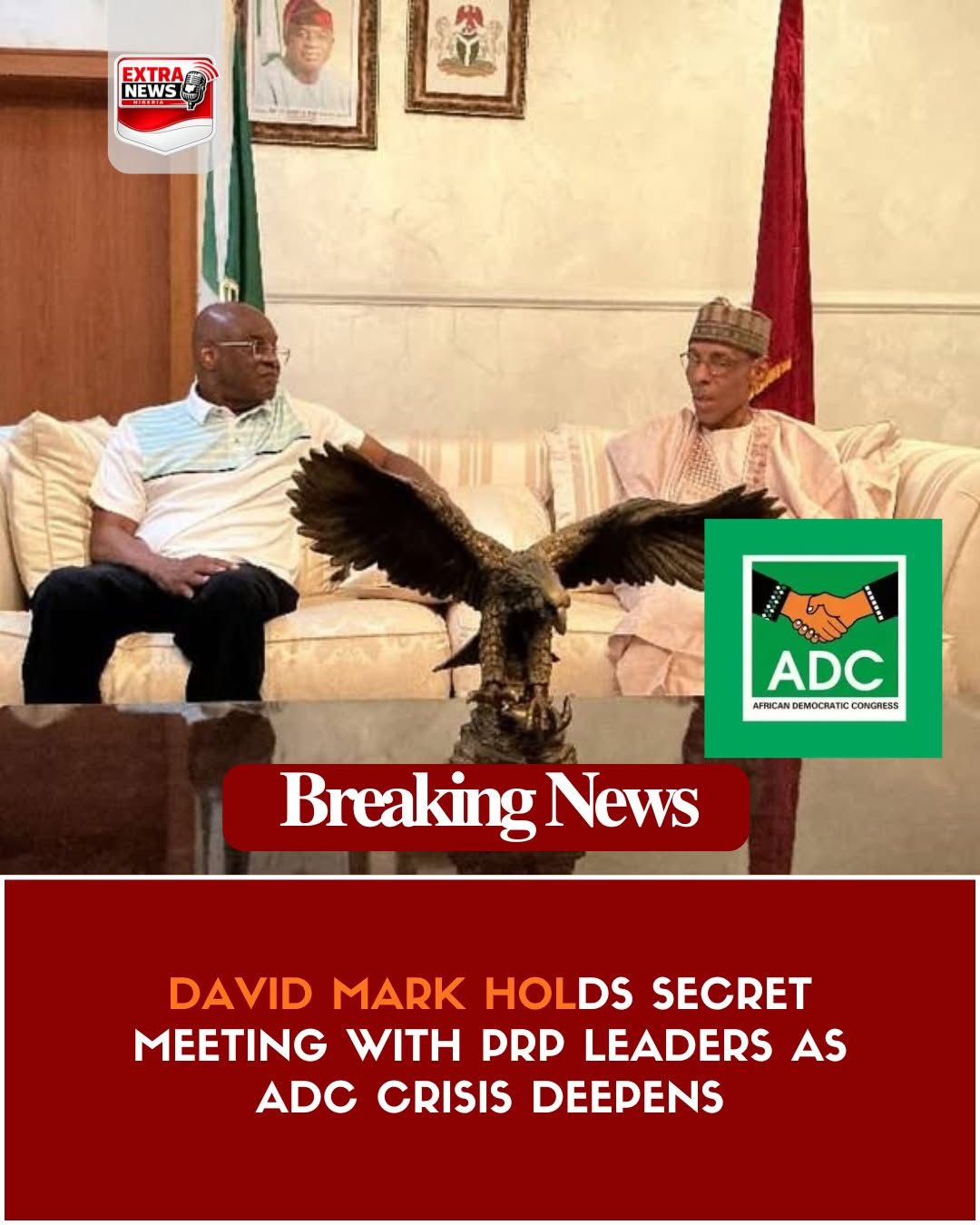
The embattled National Chairman of the African Democratic Congress, David Mark, on Friday held a closed-door meeting with leaders of the Peoples Redemption Party in Abuja. The private consultation is seen as a fresh round of political moves as the ADC continues to battle a lingering leadership crisis and growing internal divisions.
Top figures from both parties were said to be present at the meeting, including PRP National Chairman Hakeem Baba-Ahmed and senior ADC officials. The development is already drawing attention as opposition parties continue realignments ahead of the 2027 political season, with many watching closely for possible alliances and next steps in the party crisis.
Politics
“ADC is a Holy Party, Cannot be used to Scam Nigerians Again” – Hon Success Opara tells David Mark
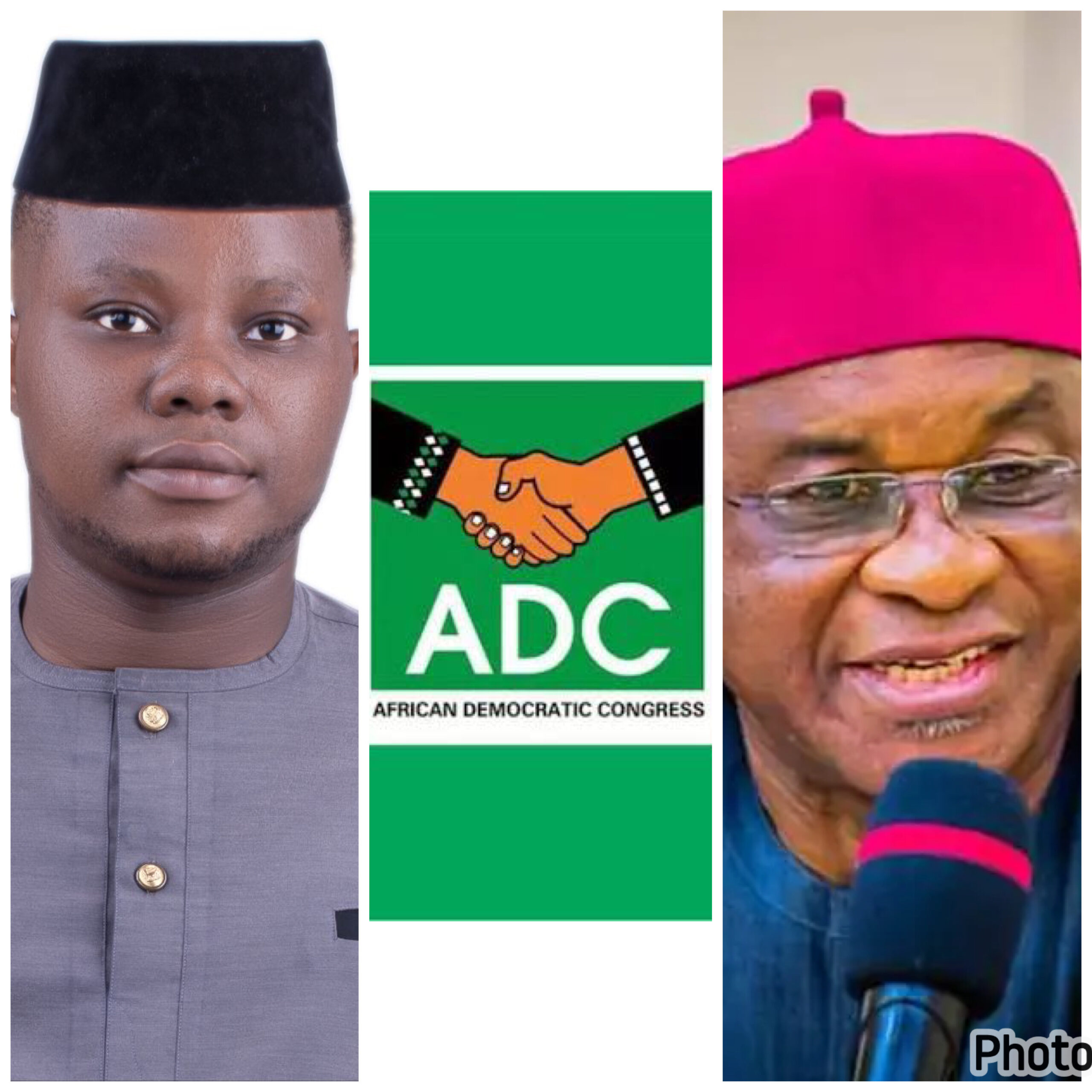
ADC Party in Turmoil: Hon Success Opara Slams Leadership, Warns Against Scamming Nigerians
Abuja, Nigeria – The African Democratic Congress (ADC) is facing internal strife as Hon Success Opara, a prominent party official, has warned against attempts to use the party to deceive Nigerians. Opara specifically criticized the leadership of David Mark, stating that the party cannot be used to scam citizens again.
“ADC holy Party cannot be used to scam Nigerians again,” Opara said, emphasizing that those forming coalitions are hindering the party’s growth and denying youths opportunities to thrive.
“Those who are forming coalition don’t want to give the youths the chance to strive in the party,” she added.
Opara’s statement highlights the deepening divisions within the ADC, with concerns over leadership and the party’s direction.
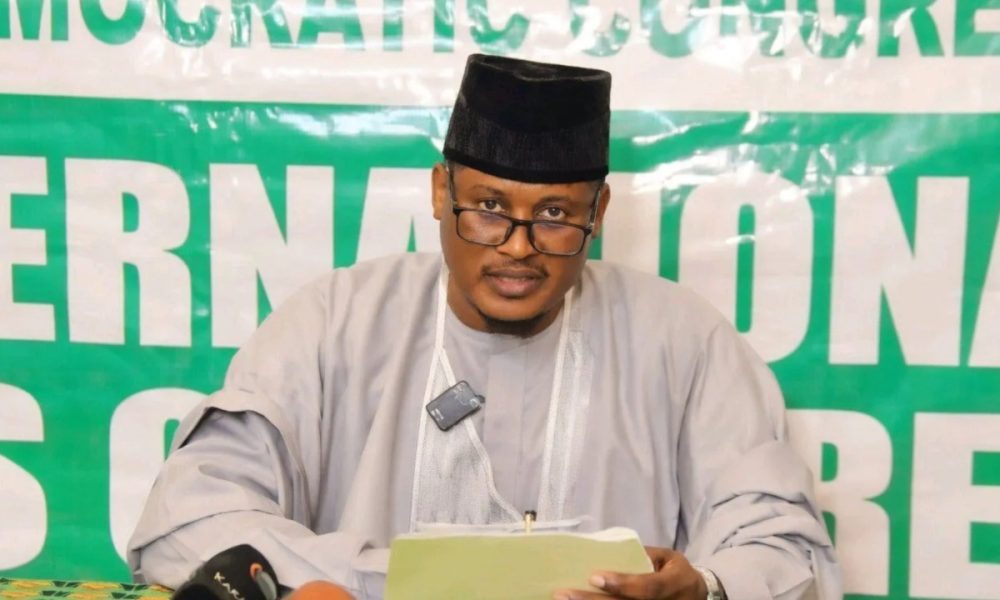
The factional National Chairman of the African Democratic Congress (ADC), Nafiu Bala Gombe, has announced that the party under his leadership will bar individuals above the age of 55 from contesting for political positions.
Gombe made the disclosure during an interview with BBC Hausa, where he outlined a vision centred on generational change and greater youth participation in politics.
“The African Democratic Congress (ADC) is a party that belongs to all Nigerians. What we are doing now is to ensure the party moves forward properly.
“We have decided that we will give the youths a real chance. The time has come for young people to take the lead in politics.
“If you are over 55 years old, you are not going to contest for positions in the ADC under our leadership.
“We want to bring in fresh blood, new ideas, and energy from the youth. Nigeria’s future depends on the young generation.
“The old ways have not worked well for the country. We need to open the door wide for youths to participate fully as candidates, leaders, and decision-makers,” he said.

David Mark Holds Secret Meeting With PRP Leaders as ADC Crisis Deepens

Chaos As Military Officers Exchange Blows During Tinubu’s Visit To Bayelsa (Videos)

HRH Ekwueme of Ochia Kingdom Iynched & kiIIed in Imo.

-
Business1 year ago
US court acquits Air Peace boss, slams Mayfield $4000 fine
-

 Trending1 year ago
NYA demands release of ‘abducted’ Imo chairman, preaches good governance
-

 Politics1 year ago
Mexico’s new president causes concern just weeks before the US elections
-

 Politics1 year ago
Putin invites 20 world leaders
-

 Politics1 year ago
Russia bans imports of agro-products from Kazakhstan after refusal to join BRICS
-
Entertainment1 year ago
Bobrisky falls ill in police custody, rushed to hospital
-
Entertainment1 year ago
Bobrisky transferred from Immigration to FCID, spends night behind bars
-
Education2 years ago
GOVERNOR FUBARA APPOINTS COUNCIL MEMBERS FOR KEN SARO-WIWA POLYTECHNIC BORI