
Politics
PRESENTATION BY PRESIDENT BOLA AHMED TINUBU, GCFR OF THE 2025 BUDGET OF RESTORATION: SECURING PEACE, REBUILDING PROSPERITY TO A JOINT SESSION OF THE NATIONAL ASSEMBLY ON WEDNESDAY 18TH DECEMBER, 2024

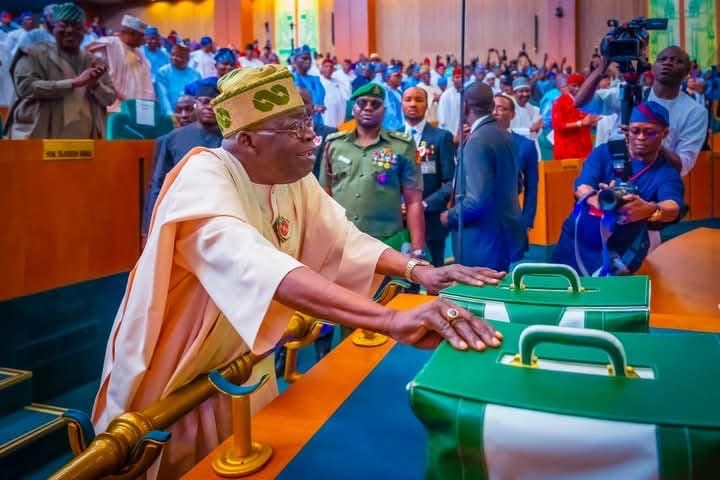
PRESENTATION BY PRESIDENT BOLA AHMED TINUBU, GCFR
OF THE 2025 BUDGET OF RESTORATION: SECURING PEACE, REBUILDING PROSPERITY TO A JOINT SESSION OF THE NATIONAL ASSEMBLY ON WEDNESDAY 18TH DECEMBER, 2024
My Fellow Nigerians,
1. In fulfilment of one of my constitutional duties and with unyielding commitment to rebuilding Nigeria towards ensuring that we remain steadfast on the journey to a prosperous future, I hereby present the 2025 Budget to the Joint Session of the 10th National Assembly.
2. On this day, before this hallowed chamber, I present to you the 2025 Budget at a time when our country is at a crucial point in its development trajectory.
3. The 2025 Budget Proposal again reinforces our administration’s roadmap to secure peace, prosperity, and hope for a greater future for our beloved nation. This budget christened, “Budget of Restoration: Securing Peace, Rebuilding Prosperity,” strikes at the very core of our Renewed Hope Agenda and demonstrates our commitment to stabilizing the economy, improving lives, and repositioning our country for greater performance.
4. The journey of economic renewal and institutional development, which we began 18 months ago as a nation, is very much underway. It is not a journey of our choosing but one we had to embark on for Nigeria to have a real chance at greatness. I thank every Nigerian for embarking on this journey of REFORMS and TRANSFORMATION with us.
5. The road of reforms is now clearly upon us, and as the President of this blessed nation, I know this less-travelled road has not been easy. That there have been difficulties and sacrifices. They will not be in vain. And we must keep faith with the process to arrive at our collectively desired destination.
6. We must build on the progress we have made in the past eighteen months in restructuring our economy and ensuring it is strong enough to withstand the headwinds of any future shocks of the global downturn.
7. The 2025 budget that I present today is one of restoration. It seeks to consolidate the key policies we have instituted to restructure our economy, boost human capital development, increase the volume of trade and investments, bolster oil and gas production, get our manufacturing sector humming again and ultimately increase the competitiveness of our economy.
8. We do not intend to depart from this critical path to strengthen the Nigerian economy. Just as I believe in the resilience of our economy to withstand the current challenges, I also strongly believe in the resilience of the Nigerian people. Again, I summon the unstoppable Nigerian spirit to lead us on as we work to rebuild the fabric of our economy and existence.
9. The improvements we witnessed in the 2024 budget have led us into the 2025 budget. The goals of advancing national security, creating economic opportunities, investing in our youthful population, infrastructure development, and national re-orientation form the core of the 2025 budget. But more than that, this will lay a solid foundation for Nigeria’s future growth trajectory.
CURRENT ECONOMIC REALITIES AND PROGRESS
10. Distinguished Senate President, Right Honourable Speaker of the House of Representatives, leaders and members of both Chambers of the National Assembly, I report today that our economy is responding positively to stimulus. Our objective is to further stimulate the economy through the implementation of targeted fiscal stimulus packages through public expenditures and specific non-inflationary spending.
11. The reforms we have instituted are beginning to yield results. Nigerians will soon experience a better and more functional economy.
12. Global economic growth for the outgoing year 2024 was projected at 3.2 percent, and against predictions, our country made significant progress.
o Our economy grew by 3.46 percent in the third quarter of 2024, up from 2.54 percent in the third quarter of 2023.
o Our Foreign Reserves now stand at nearly 42 billion US dollars, providing a robust buffer against external shocks.
o Our rising exports are reflected in the current trade surplus, which now stands at 5.8 trillion naira, according to the National Bureau of Statistics.
13. These clear results of gradual recovery, among others, reflect the resilience of our economy and the impact of deliberate policy choices we made from the outset.
2024 BUDGET PERFORMANCE
14. I am happy to inform this National Assembly that our administration attained remarkable milestones in implementing the 2024 Budget. In 2024, we achieved:
o 14.55 trillion naira in revenue, meeting 75 percent of our target as of the third quarter.
o 21.60 trillion naira in expenditure, representing 85 percent of our target, also in the third quarter.
15. While challenges persist, we improved revenue collection and fulfilled key obligations. The transformational effects of this on our economy are gradually being felt.
PHILOSOPHY OF THE 2025 BUDGET
16. The 2025 Budget seeks to:
o Restore macroeconomic stability.
o Enhance the business environment.
o Foster inclusive growth, employment, and poverty reduction.
o Promote equitable income distribution and human capital development.
17. Our budgetary allocations reflect the administration’s strategic priorities, especially in the implementation of the Renewed Hope Agenda and its developmental objectives.
2025 BUDGET OVERVIEW
18. The numbers for our 2025 budget proposal tell a bold and exciting story of the direction we are taking to retool and revamp the socio-economic fabric of our society.
o In 2025, we are targeting 34.82 trillion naira in revenue to fund the budget.
o Government expenditure in the same year is projected to be 47.90 trillion naira, including 15.81 trillion naira for debt servicing.
o A total of 13.08 trillion naira, or 3.89 percent of GDP, will make up the budget deficit.
19. This is an ambitious but necessary budget to secure our future.
20. The Budget projects inflation will decline from the current rate of 34.6 percent to 15 percent next year, while the exchange rate will improve from approximately 1,700 naira per US dollar to 1,500 naira, and a base crude oil production assumption of 2.06 million barrels per day (mbpd).
21. These projections are based on the following observations:
o Reduced importation of petroleum products alongside increased export of finished petroleum products.
o Bumper harvests, driven by enhanced security, reducing reliance on food imports.
o Increased foreign exchange inflows through Foreign Portfolio Investments.
o Higher crude oil output and exports, coupled with a substantial reduction in upstream oil and gas production costs.
KEY PRIORITIES: REBUILDING NIGERIA
22. Our budgetary allocations underscore this administration’s strategic priorities, particularly in advancing the Renewed Hope Agenda and achieving its developmental objectives.
23. Highlights of the 2025 Budget Allocations:
• Defence and Security: N4.91 trillion
• Infrastructure: N4.06 trillion
• Health: N2.48 trillion
• Education: N3.52 trillion
24. As we embark on implementing the 2025 Budget, our steps are deliberate, our decisions resolute, and our priorities are clear. This budget reflects a renewed commitment to strengthening the foundation of a robust economy, while addressing critical sectors essential for the growth and development we envision.
Securing Our Nation:
25. Security is the foundation of all progress. We have significantly increased funding for the military, paramilitary, and police forces to secure the nation, protect our borders, and consolidate government control over every inch of our national territory. The government will continue to provide our security forces with the modern tools and technology they need to keep us safe. Boosting the morale of our men and women in the armed forces will remain our government’s top priority.
26. The officers, men, and women of our Armed Forces and the Nigerian Police Force are the shields and protectors of our nation. Our administration will continue to empower them to defeat insurgency, banditry, and all threats to our sovereignty. Our people should never live in fear—whether on their farmlands, highways or cities. By restoring peace, we restore productivity, revive businesses, and rebuild our communities.
Infrastructure Development:
27. When we launched the Renewed Hope Infrastructure Development Fund, it was with the conviction that infrastructure remains the backbone of every thriving economy. Under this programme, we are accelerating investments in energy, transport, and public works. By leveraging private capital, we hope to complete key projects that drive growth and create jobs. We have already embarked on key legacy projects: Lagos-Calabar Coastal Highway and Sokoto-Badagry Highway, which will have a huge impact on the lives of our people and accelerate economic output.
Human Capital Development:
28. Our people are our greatest resource. That is why we are making record investments in education, healthcare, and social services:
o Our administration has so far disbursed 34 billion naira to over 300,000 students via the Nigeria Education Loan Fund (NELFUND). In the 2025 Budget, we have made provision for 826.90 billion naira for infrastructure development in the educational sector. This provision also includes those for the Universal Basic Education (UBEC) and the nine new higher educational institutions.
o We are convinced that Universal Health Coverage initiatives will strengthen primary healthcare systems across Nigeria. In this way, we have allocated 402 billion naira for infrastructure investments in the health sector in the 2025 Budget and another 282.65 billion naira for the Basic Health Care Fund. Our hospitals will be revitalised with medication and better resources, ensuring quality care for all Nigerians. This is consistent with the Federal Government’s planned procurement of essential drugs for distribution to public healthcare facilities nationwide, improving healthcare access and reducing medical import dependency.
Revitalizing Agriculture:
29. Increasing agricultural production is central to our food security agenda, but insecurity has crippled this vital sector. We are supporting our farmers with funding and inputs to reignite productivity. Food security is non-negotiable. In this regard, we are taking bold steps to ensure that every Nigerian can feed conveniently, and none of our citizens will have to go to bed hungry.
30. Distinguished Senate President, Right Honourable Speaker of the House of Representatives, leaders and members of both Chambers of the National Assembly and fellow Nigerians, our 2025 budget proposal is not just another statement on projected government revenue and expenditures. It is one that calls for action.
31. Our nation faces existential threats from corruption and insecurity and suffers from many past poor choices. These challenges are surmountable when we work collaboratively to overcome them. We must rewrite the narrative of this nation together, with every leader, institution, and citizen playing their part.
32. The time for lamentation is over. This is a time to act. A time to support and promote greater investment in the private sector. A time for our civil servants to faithfully execute our policies and programmes. It is a time for every Nigerian to look hopefully towards a brighter future because a new day has dawned for us as a nation.
33. As your President, I remain committed and resolute to continue to lead the charge.
34. This 2025 budget proposal lays the foundation for peace, prosperity, and much needed hope. It is the plan through which a Nigeria where every citizen can dream, work, and thrive in safety can be achieved.
35. It is with great pleasure, therefore, that I lay before this distinguished Joint Session of the National Assembly the 2025 Budget of the Federal Government of Nigeria titled “The Restoration Budget: Securing Peace, Rebuilding Prosperity.
36. May God bless our Armed Forces and keep them safe. May God bless the Federal Republic of Nigeria.
Thank you.
Bola Ahmed Tinubu, GCFR
President, Commander-in-Chief of The Armed Forces,
Federal Republic of Nigeria
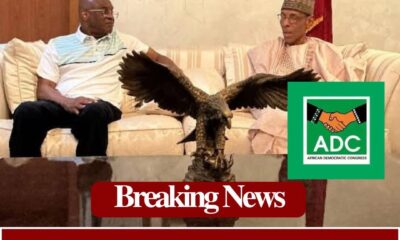



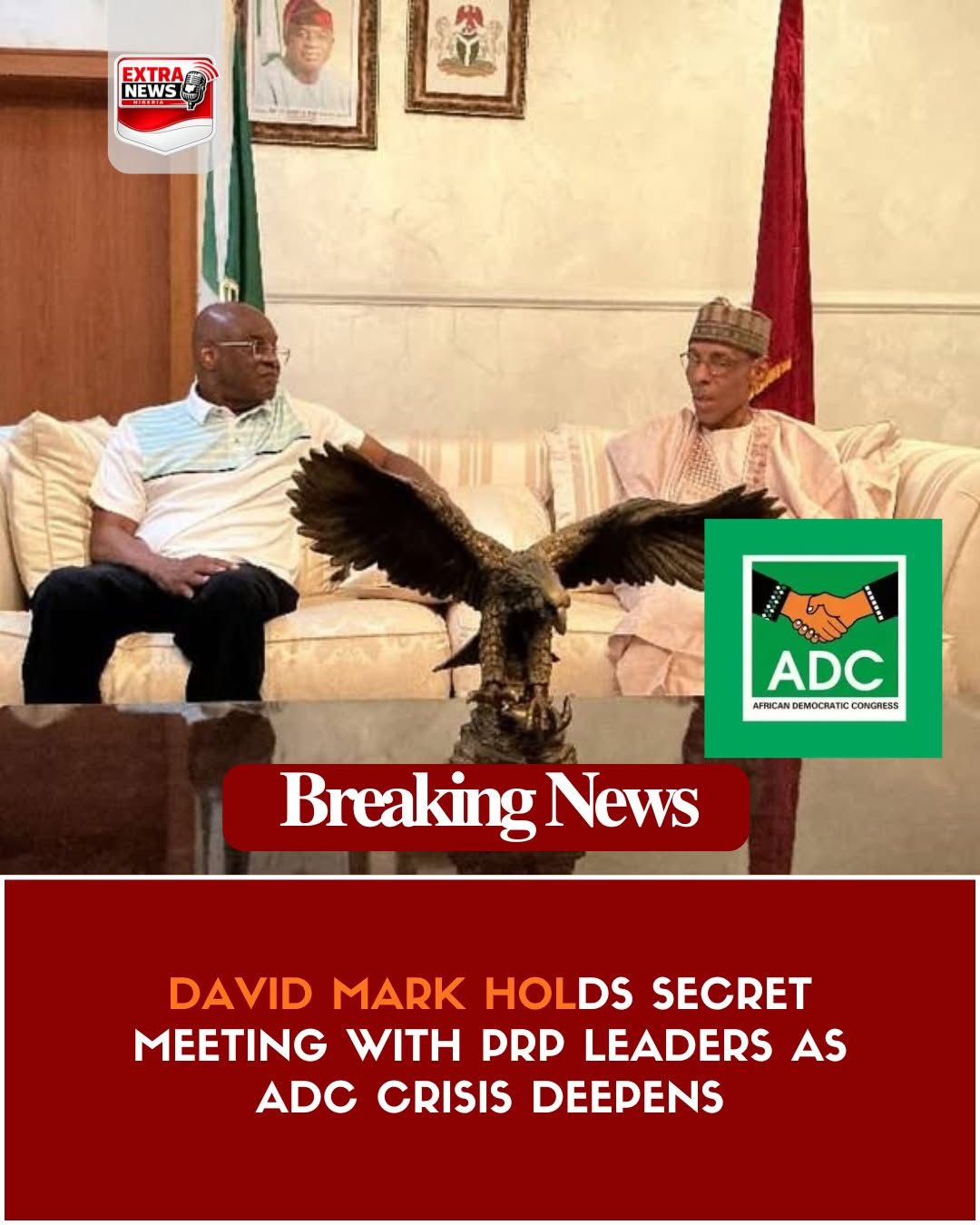
The embattled National Chairman of the African Democratic Congress, David Mark, on Friday held a closed-door meeting with leaders of the Peoples Redemption Party in Abuja. The private consultation is seen as a fresh round of political moves as the ADC continues to battle a lingering leadership crisis and growing internal divisions.
Top figures from both parties were said to be present at the meeting, including PRP National Chairman Hakeem Baba-Ahmed and senior ADC officials. The development is already drawing attention as opposition parties continue realignments ahead of the 2027 political season, with many watching closely for possible alliances and next steps in the party crisis.
Politics
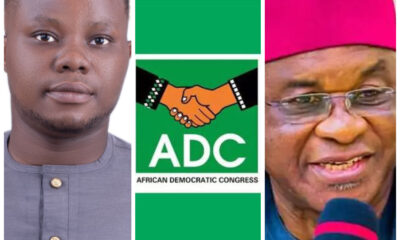
“ADC is a Holy Party, Cannot be used to Scam Nigerians Again” – Hon Success Opara tells David Mark
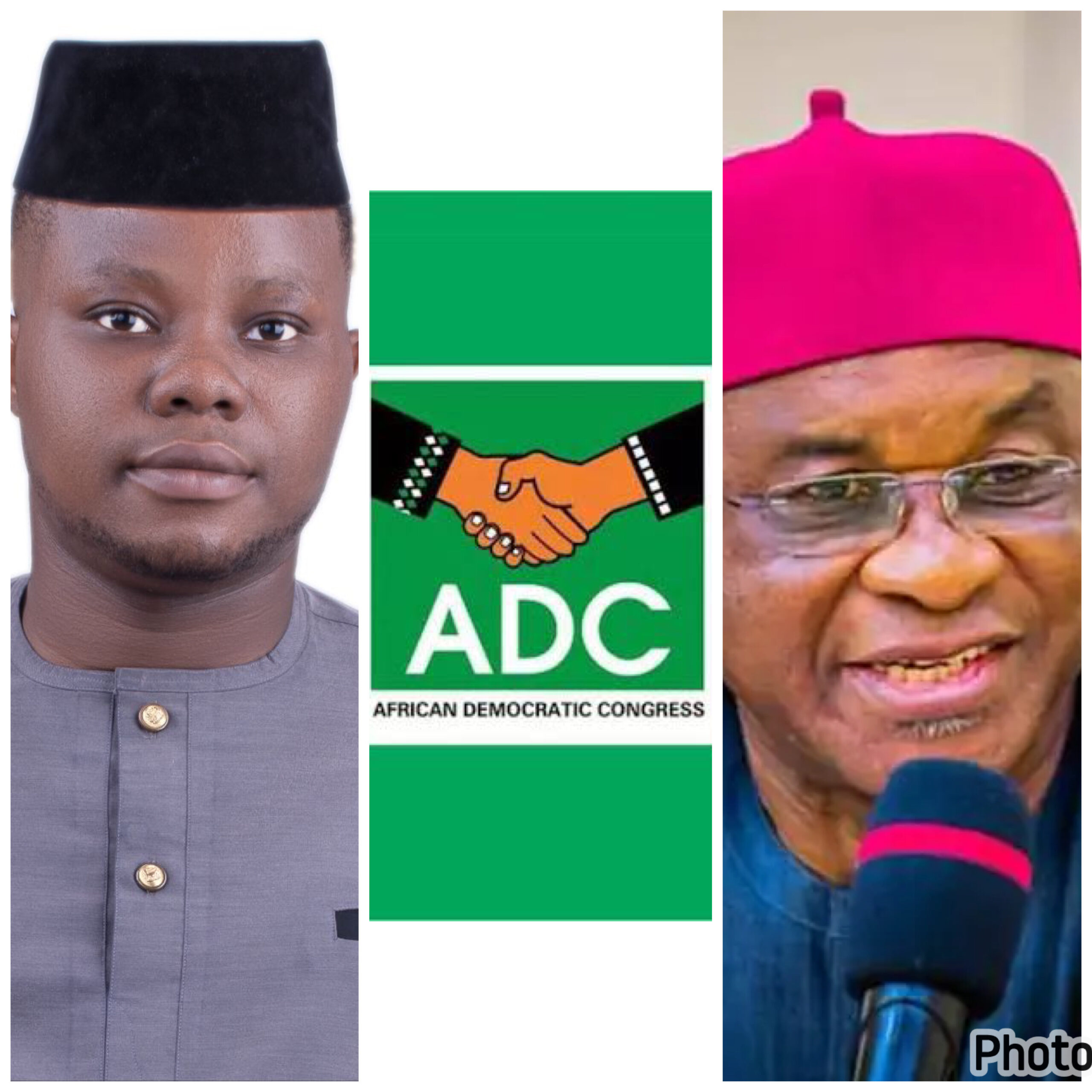
ADC Party in Turmoil: Hon Success Opara Slams Leadership, Warns Against Scamming Nigerians
Abuja, Nigeria – The African Democratic Congress (ADC) is facing internal strife as Hon Success Opara, a prominent party official, has warned against attempts to use the party to deceive Nigerians. Opara specifically criticized the leadership of David Mark, stating that the party cannot be used to scam citizens again.
“ADC holy Party cannot be used to scam Nigerians again,” Opara said, emphasizing that those forming coalitions are hindering the party’s growth and denying youths opportunities to thrive.
“Those who are forming coalition don’t want to give the youths the chance to strive in the party,” she added.
Opara’s statement highlights the deepening divisions within the ADC, with concerns over leadership and the party’s direction.
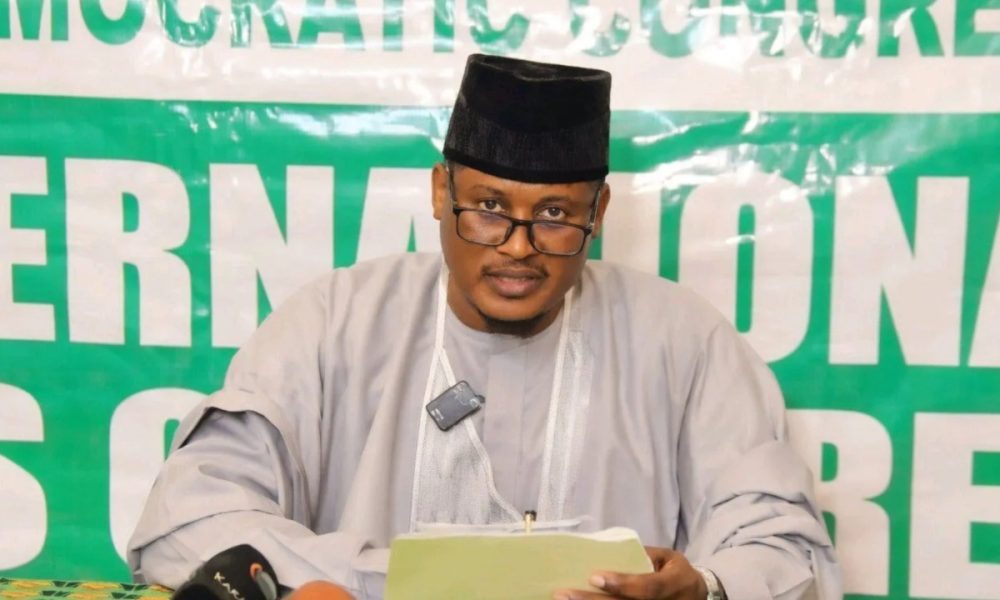
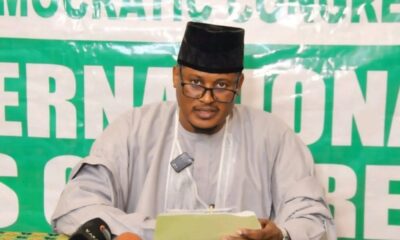
The factional National Chairman of the African Democratic Congress (ADC), Nafiu Bala Gombe, has announced that the party under his leadership will bar individuals above the age of 55 from contesting for political positions.
Gombe made the disclosure during an interview with BBC Hausa, where he outlined a vision centred on generational change and greater youth participation in politics.
“The African Democratic Congress (ADC) is a party that belongs to all Nigerians. What we are doing now is to ensure the party moves forward properly.
“We have decided that we will give the youths a real chance. The time has come for young people to take the lead in politics.
“If you are over 55 years old, you are not going to contest for positions in the ADC under our leadership.
“We want to bring in fresh blood, new ideas, and energy from the youth. Nigeria’s future depends on the young generation.
“The old ways have not worked well for the country. We need to open the door wide for youths to participate fully as candidates, leaders, and decision-makers,” he said.

David Mark Holds Secret Meeting With PRP Leaders as ADC Crisis Deepens

Chaos As Military Officers Exchange Blows During Tinubu’s Visit To Bayelsa (Videos)

HRH Ekwueme of Ochia Kingdom Iynched & kiIIed in Imo.

-
Business1 year ago
US court acquits Air Peace boss, slams Mayfield $4000 fine
-

 Trending1 year ago
NYA demands release of ‘abducted’ Imo chairman, preaches good governance
-

 Politics1 year ago
Mexico’s new president causes concern just weeks before the US elections
-

 Politics1 year ago
Putin invites 20 world leaders
-

 Politics1 year ago
Russia bans imports of agro-products from Kazakhstan after refusal to join BRICS
-
Entertainment1 year ago
Bobrisky falls ill in police custody, rushed to hospital
-
Entertainment1 year ago
Bobrisky transferred from Immigration to FCID, spends night behind bars
-
Education2 years ago
GOVERNOR FUBARA APPOINTS COUNCIL MEMBERS FOR KEN SARO-WIWA POLYTECHNIC BORI