
Business
Food inflation hits 40% despite FG $3.3bn agric loan

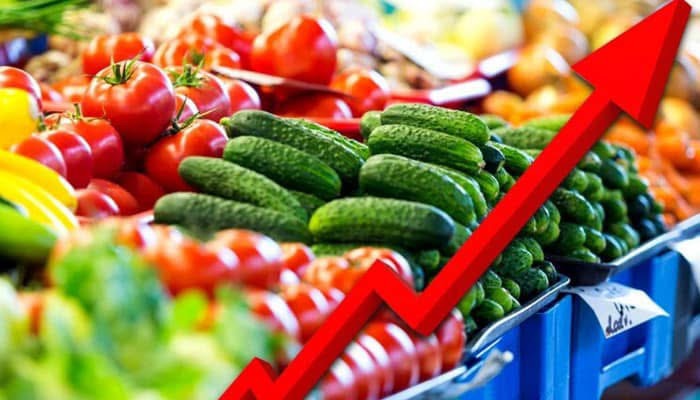
Despite securing multilateral loans amounting to $3.334bn (N5.178tn) and attracting over $4.3bn investments to boost food production, the cost of essential staple food items skyrocketed by 60.88 per cent under the leadership of President Bola Tinubu, The PUNCH reports.
When Tinubu assumed office in May 2023, food inflation was 24.82 per cent. It jumped to about 40 per cent in November 2024. This is based on data from the National Bureau of Statistics.
This is occurring as Nigerians are increasingly struggling to afford basic food items, with many households finding it difficult to make ends meet due to the sharp rise in prices.
This stark increase in food prices stands in contrast to the government’s ambitious efforts to address food security and agricultural development, raising concerns about the effectiveness of current economic policies, the impact of inflation, and the challenges in translating financial support into tangible relief for Nigerians.
Explainer: Guidelines To Actualise Guinness World Record Dream | Punch
Upon assumption of office in May last year, President Tinubu promised to prioritise food availability and security, stressing that the government would cultivate about 500,000 hectares of farmlands to combat hunger in the country.
“I am well aware that for some time now, the conversations and debates have centred on the rising cost of living, high inflation, which is now above 28 per cent, and the unacceptable high under-employment rate.
“To ensure constant food supply, security, and affordability, we will step up our plan to cultivate 500,000 hectares of farmlands across the country to grow maize, rice, wheat, millet, and other staple crops”, Tinubu stated in his new year address amidst other commitments.
However, the spiral increase in transportation costs occasioned by the removal of fuel subsidies, massive devaluation of the naira, and ravaging insecurity have fuelled a rapid increase in the price of all food commodities over 19 months.
Data obtained from the Consumer Price Index report released by the National Bureau of Statistics between May 2023, when Tinubu assumed office, and November 2024 showed that for 14 consecutive months, Nigerians spent increasingly more money each time they visited the market to buy food items.
A breakdown showed that food inflation increased from 24.82 per cent in May 2023 to 25.25 per cent in June, 26.98 per cent in July, 29.34 per cent in August, 30.64 per cent in September, 31.52 per cent in October, 32.84 per cent in November and 33.93 in December 2023.
By January 2024, the price of food items increased to 35.41 per cent and surged further to 37.92 per cent in February, 40.01 per cent in March, 40.53 per cent in April, 40.66 per cent in May, 40.87 in June, before witnessing a drop to 39.53 per cent in July and 37.52 per cent in August due to the harvest season.
In September, the cost of food increased again to 37.77 per cent, 39.16 per cent in October, and 39.93 per cent in November, which is almost 40 per cent.
Despite the challenging situation, checks by our correspondent revealed that the government secured loans totalling $3.334bn, an equivalent of N5.178tn from the World Bank and the African Development Bank under President Tinubu’s administration to enhance agricultural production, adopt innovative farming techniques, and increase food sufficiency for Nigerians.
Analysis showed that $500m was approved by the World Bank for the Livestock Productivity and Resilience Support Project to boost livestock production and food security nationwide.
The Board of the World Bank Group approved a $500m loan to Nigeria last week Friday (December 13, 2024) to boost rural access and agricultural marketing in the country.
According to information obtained from the Washington-based institution, the loan is for the Rural Access and Agricultural Marketing Project—Scale Up.
It is designed to bridge the gap between rural communities and the broader marketplace, facilitating smoother access to agricultural markets, schools, and hospitals and promoting social cohesion among rural populations.
Similarly, the AfDB under the leadership of President Akinwumi Adesina has approved a loan facility worth $2.2bn in capital mobilisation for its transformative Special Agro-Industrial Processing Zones in Nigeria.
He said phase two is set to revolutionize Nigeria’s agricultural sector by creating agro-industrial hubs that drive productivity, enhance food security, raise living standards, and create jobs.
The programme will be implemented in states including Cross River, Imo, Ogun, Oyo, Kaduna, Kwara, Kano, and the Federal Capital Territory and will expand to an additional 24 States in Nigeria in the next three years.
In an interview with PUNCH, Adeshina said its agricultural initiatives would yield about five million metric tons of wheat, rice, cassava, and this year for the country.
Also, a loan of $134m was approved for seeds and grain production in the country in November this year.
A statement by the agriculture ministry said the fund will support farmers across the country to increase production of key staple crops, thereby improving national food security.
Health 360: Sickle Cell Disease
Upon assumption of office in May last year, President Tinubu promised to prioritise food availability and security, stressing that the government would cultivate about 500,000 hectares of farmlands to combat hunger in the country.
“I am well aware that for some time now, the conversations and debates have centred on the rising cost of living, high inflation, which is now above 28 per cent, and the unacceptable high under-employment rate.
“To ensure constant food supply, security, and affordability, we will step up our plan to cultivate 500,000 hectares of farmlands across the country to grow maize, rice, wheat, millet, and other staple crops”, Tinubu stated in his new year address amidst other commitments.
However, the spiral increase in transportation costs occasioned by the removal of fuel subsidies, massive devaluation of the naira, and ravaging insecurity have fuelled a rapid increase in the price of all food commodities over 19 months.
Data obtained from the Consumer Price Index report released by the National Bureau of Statistics between May 2023, when Tinubu assumed office, and November 2024 showed that for 14 consecutive months, Nigerians spent increasingly more money each time they visited the market to buy food items.
A breakdown showed that food inflation increased from 24.82 per cent in May 2023 to 25.25 per cent in June, 26.98 per cent in July, 29.34 per cent in August, 30.64 per cent in September, 31.52 per cent in October, 32.84 per cent in November and 33.93 in December 2023.
By January 2024, the price of food items increased to 35.41 per cent and surged further to 37.92 per cent in February, 40.01 per cent in March, 40.53 per cent in April, 40.66 per cent in May, 40.87 in June, before witnessing a drop to 39.53 per cent in July and 37.52 per cent in August due to the harvest season.
In September, the cost of food increased again to 37.77 per cent, 39.16 per cent in October, and 39.93 per cent in November, which is almost 40 per cent.
Despite the challenging situation, checks by our correspondent revealed that the government secured loans totalling $3.334bn, an equivalent of N5.178tn from the World Bank and the African Development Bank under President Tinubu’s administration to enhance agricultural production, adopt innovative farming techniques, and increase food sufficiency for Nigerians.
Analysis showed that $500m was approved by the World Bank for the Livestock Productivity and Resilience Support Project to boost livestock production and food security nationwide.
The Board of the World Bank Group approved a $500m loan to Nigeria last week Friday (December 13, 2024) to boost rural access and agricultural marketing in the country.
According to information obtained from the Washington-based institution, the loan is for the Rural Access and Agricultural Marketing Project—Scale Up.
It is designed to bridge the gap between rural communities and the broader marketplace, facilitating smoother access to agricultural markets, schools, and hospitals and promoting social cohesion among rural populations.
Similarly, the AfDB under the leadership of President Akinwumi Adesina has approved a loan facility worth $2.2bn in capital mobilisation for its transformative Special Agro-Industrial Processing Zones in Nigeria.
He said phase two is set to revolutionize Nigeria’s agricultural sector by creating agro-industrial hubs that drive productivity, enhance food security, raise living standards, and create jobs.
The programme will be implemented in states including Cross River, Imo, Ogun, Oyo, Kaduna, Kwara, Kano, and the Federal Capital Territory and will expand to an additional 24 States in Nigeria in the next three years.
In an interview with PUNCH, Adeshina said its agricultural initiatives would yield about five million metric tons of wheat, rice, cassava, and this year for the country.
Also, a loan of $134m was approved for seeds and grain production in the country in November this year.
A statement by the agriculture ministry said the fund will support farmers across the country to increase production of key staple crops, thereby improving national food security.
Related News
Food inflation: Imported rice price jumps by 114%
Food inflation: Seven imported wheat vessels arrive Nigeria
Stakeholders warn of higher food inflation in 2025
“The Federal Government has secured a loan facility of $134m from the African Development Bank to help farmers boost seeds and grain production in the country,” the statement read.
The government through the Ministry of Agriculture and Food Security also secured a private-sector investment commitment worth $4.3bn to advance private-sector development in fertiliser production, hybrid seed technology, and agricultural finance.
The partnership with the Fundação Getulio Vargas of Brazil will support one agribusiness in Nigeria’s 774 Local Government Areas with technical and financial resources over the next five years.
The surge in food costs underscores the complexities of managing an economy where external financial assistance and investments have yet to stabilize the market or alleviate the burden on citizens.
Stakeholders wondered the effect of the loans which are to yield expected results and drive down the cost of food items.










The Trade Union of Nigeria, TUC, has raised the alarm that the price of Premium Motor Spirit aka Petrol may climb to about N2,000 per litre if urgent measures are not taken to cushion the impact of rising global crude prices and the depreciating naira.
Speaking to newsmen on Thursday, April 9, the president of the TUC, Festus Osifo, called on the Federal Government to immediately deploy 60 percent of excess crude oil revenue above the 2026 budget benchmark to subsidise crude feedstock supplies to the Dangote Refinery and other modular refineries, a move it says will slash pump prices of petrol, diesel, and jet fuel within two weeks
“Today, comrades, we are seeing that the cost of petrol is edging towards N2,000 per litre depending on the part of the country that you are. Nigerian workers are already passing through excruciating pain as we speak.
The same way it is affecting transportation, it is also affecting manufacturing. The cost of diesel has also gone northward, meaning that the cost of production has increased. When production costs rise, the final price of goods on the shelves will also skyrocket.
If this continues unchecked, the inflation that we are currently celebrating as going downwards will reverse and start moving up again,” he stated.
Osifo outlined the proposal as an urgent intervention to cushion Nigerian workers from excruciating pain caused by petrol prices edging towards ₦2,000 per litre in some parts of the country

The governor of Oyo state, Seyi Makinde, has approved a N10,000 transportation allowance as a palliative for the state workforce to cushion the effects of the increase in the pump price of Premium Motor Spirit, otherwise known as petrol.
The Chairman of the Nigeria Labour Congress (NLC), Oyo State chapter, Kayode Martins, in a statement released on Monday, March 23, disclosed that the governor has granted the request of the union on the issue of transportation allowance.
The statement read
“Following the intervention and formal request made by the State Council of the Nigeria Labour Congress (NLC) earlier this morning, the state government has approved a N10,000 transportation allowance for all workers in the state.
The newly approved allowance is set to take effect from April 2026, providing much-needed relief to workers grappling with rising transportation costs amid current economic challenges.
This development comes as a direct response to sustained advocacy by the state NLC, aimed at cushioning the impact of increased living expenses on the workforce.
Further details on implementation are expected to be communicated by the relevant government authorities in due course.”
The Central Bank of Nigeria (CBN), has declared that banks and financial institutions must establish and maintain a temporary watch-list for Bank Verification Numbers (BVN) implicated in suspected fraudulent transactions.
According to the CBN in a circular dated March 12, 2026 and signed by its Director of Payments System Policy Department, Musa I. Jimoh, the apex bank said such a suspected BVN may remain on the temporary watchlist for a maximum period of twenty-four (24) hours during which the owner would be contacted to make clarifications.
The circular explained that the move is part of several new measures under a revised regulatory framework aimed at enhancing financial system stability.
“A BVN may remain on this temporary Watchlist for a maximum period of twenty-four (24) hours, during this period, the BVN owner shall be contacted to provide clarification regarding the identified transaction(s),” the circular stated.
The circular also sets an age requirement for BVN enrolment, restricting registration to individuals who have attained eighteen (18) years and above.
The CBN also added that amendments to phone numbers linked to a BVN shall be allowed only once.
“Amendments to phone numbers linked to a BVN shall be allowed only once,” the circular noted.
The apex bank stated that access to BVN databases will remain tightly controlled.
“Access to the BVN databases shall be exclusively granted to Central Bank of Nigeria (CBN) licensed financial institutions.
“Notwithstanding this provision, the Central Bank of Nigeria (the Bank) reserves the right to approve access to the BVN databases in extenuating circumstances and in accordance with the provisions of extant laws,” the circular said.
Financial institutions are expected to comply with the new requirements, and customers may be contacted by their banks if their BVNs are temporarily flagged during the new fraud monitoring process.
The new policy, as stated by the CBN, takes effect from May 1, 2026.

2027: More Than 50 Lawmakers Lose APC Reps Tickets in Major Primary Election

Bandits behind Ogbomoso school abduction will face full wrath of the law- President Tinubu

PDP to screen Goodluck Jonathan on Tuesday as its sole Presidential aspirant For 2027 race

-
Business2 years ago
US court acquits Air Peace boss, slams Mayfield $4000 fine
-

 Trending2 years ago
NYA demands release of ‘abducted’ Imo chairman, preaches good governance
-

 Politics2 years ago
Mexico’s new president causes concern just weeks before the US elections
-

 Politics2 years ago
Putin invites 20 world leaders
-

 Politics2 years ago
Russia bans imports of agro-products from Kazakhstan after refusal to join BRICS
-
Entertainment2 years ago
Bobrisky falls ill in police custody, rushed to hospital
-
Entertainment2 years ago
Bobrisky transferred from Immigration to FCID, spends night behind bars
-
Education2 years ago
GOVERNOR FUBARA APPOINTS COUNCIL MEMBERS FOR KEN SARO-WIWA POLYTECHNIC BORI