
The cause of the altercation could not be immediately ascertained as of press time.
Trending
The mega trade deal that has French farmers in uproar

As the ink was drying on one of the world’s biggest trade deals, signed in Uruguay this month, and hailed as a milestone for the global economy, anger was brewing thousands of miles away in France.
Under the agreement between the EU on one hand, and Argentina, Brazil, Paraguay and Uruguay on the other, tariffs will be greatly reduced and the amounts of imports and exports allowed will be increased.
The deal would affect almost 800 million people.
It comes as a marked contrast to Donald Trump’s plans to greatly increase protectionism when he returns to the White House next month.
The deal still needs to be approved by the 27 EU member states, and France is planning to block it, due to fears that it will harm its farming sector.
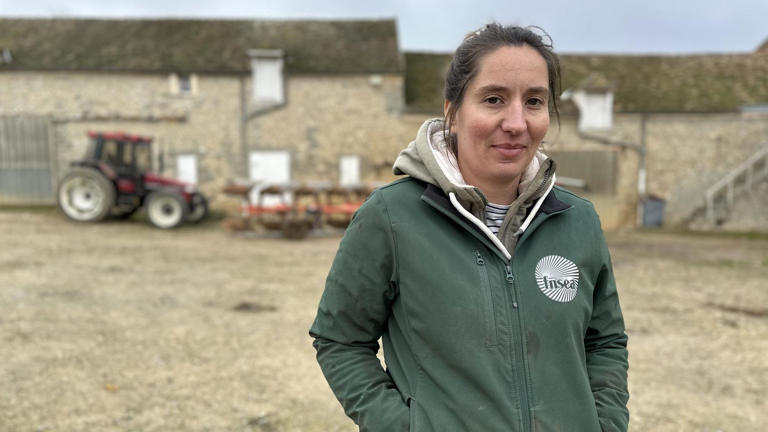
Alix Heurtault, a 34-year-old French farmer, says she is worried about her future if the planned agreement goes ahead.
“I fear that the deal will mean making ends meet becoming even more difficult for farmers like me,” she says.
As a result, she is crossing her fingers that the French government will be able to stop it.
The planned trade agreement will mean more South American beef, chicken and sugar coming to the EU, and at lower prices. While in the opposite direction, the likes of European cars, clothing and wine would have more access to the Mercosur zone.
For France to block the deal it will need to persuade at least three other EU countries, representing at least 35% of the total population to join it. Ireland, Poland and Austria are also opposed, but Italy will likely need to also come on board to achieve the required population quota.
And with the media giving very conflicting reports about Italy’s position, we’ll have to wait and see which way the Italians go when the vote is held some time in 2025.
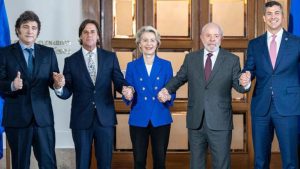
European Commission President Ursula von der Leyen signed the deal with South American leaders, but it still needs to be ratified by EU member states
© Getty Images
In the meantime, French farmers are continuing to put pressure on Paris to not back down. French President Emmanuel Macron is listening, and has described the trade deal as “unacceptable in its current form”.
Ms Heurtault grows sugar beet, wheat and barley on a 150-hectare farm in the small village of Villeneuve-sur-Auvers located 60km (37 miles) south of Paris.
She says that the deal would see French farmers badly hit in order to help EU manufacturers. “It feels like we’re a bargaining chip. Farmers in the Mercosur countries [the name of the Argentina, Brazil, Paraguay and Uruguay block] have less restrictions regarding pesticides and lower labour costs.”
Ms Heurtault’s view is widely held across the French farming sector, which has been holding regular protests in recent months.
A few weeks ago some 200 farmers dumped bales of straw in front of the Grand Palais museum and exhibition centre in Paris.
They lit up red flares, and chanted slogans like “We are feeding you, show us some respect”.
The protest was held to coincide with an annual meeting of commodities importers and exporters taking place at the venue.
Stéphane Gallais, a cattle farmer and the national secretary of farmers’ union Confédération Paysanne, which had organised the event, explained why it was being held.
“Today’s demonstration is a stance against free trade, especially the EU-Mercosur agreement that we’ve been opposing since it was first discussed in the late 1990s,” he said.
While France is opposed to the trade deal, other EU nations, such as Germany, Spain and Portugal are strongly in favour of it.
Proponents welcome the fact it would be a marked contrast to Trump’s threats of increased protectionism.
“It would be a good signal at a time when we have movement in the opposite direction towards economic fragmentation and protectionism, especially with free-trade sceptic US President Donald Trump re-elected,” says Uri Dadush, a research professor for trade policy at the University of Maryland in the US.
Prof Dadush adds that while European farmers will be negatively impacted, he says this will be very limited.
“The deal is a threat for European farmers, as the world’s most competitive agricultural sector gets access to their market, but we’re talking about a tiny amount of liberalisation spread out over a long period of time,” he says.
He points out that under the agreement the Mercosur nations would still have limits on what they can export to the EU. Such as their proposed initial increased annual quota of beef exports still only accounting for less than 1% of EU consumption of the meat.
Prof Dadush adds that “the deal is an opportunity to push for much needed market-orientated reform in the heavily-subsidised EU agricultural sector, and Mercosur’s highly-protected factory sector”.
Chris Hegadorn, adjunct professor for global food policies at Paris-based university Sciences Po, and former secretary of the UN’s Committee on World Food Security, says the agreement would overall be beneficial to Europe – including its farmers.
“It obviously depends on the subcategory you’re looking at, but French cheese and wine producers will benefit,” he says.
He adds that it will also improve health and environmental standards in the Mercosur countries, and increase ties with the EU at a time when “China is also trying to get a foothold in Latin America”.
But David Cayla, lecturer for economics at Angers University in western France and member of the left-wing collective “The Dismayed Economists”, doubts the EU will be able to enforce higher standards in Latin American countries.
“It’s impossible to control their implementation,” he says. “Our farmers will only face increased competition from countries with a better climate and more fertile soils.
“But we need to protect European agriculture – that’s also a question of food sovereignty,” he emphasizes, adding that the Covid-19 pandemic showed how quickly worldwide supply chains could collapse in times of crisis.
Continue Reading
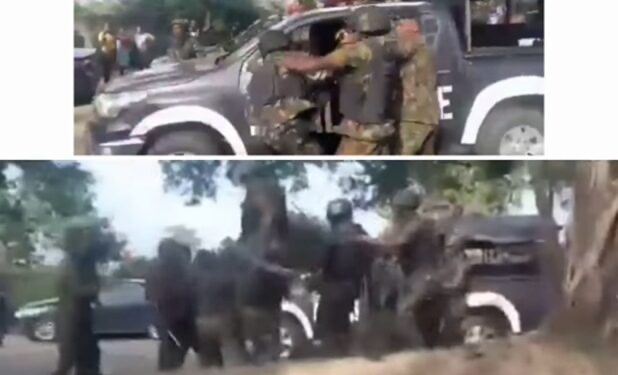
Personnel of the Nigerian military were seen engaging in a fight during the visit of President Bola Ahmed Tinubu to Bayelsa on Friday.
In a video spotted on social media, the driver of a Hilux vehicle marked “Naval Police” was seen stepping down from his vehicle and exchanging words with another driver.
After returning to his vehicle, another driver with a rifle approached him and threw a punch at the Naval Police driver, triggering a brawl.
The incident quickly escalated into a free-for-all, with personnel attached to both vehicles exchanging blows, while stunned civilians watched in disbelief.
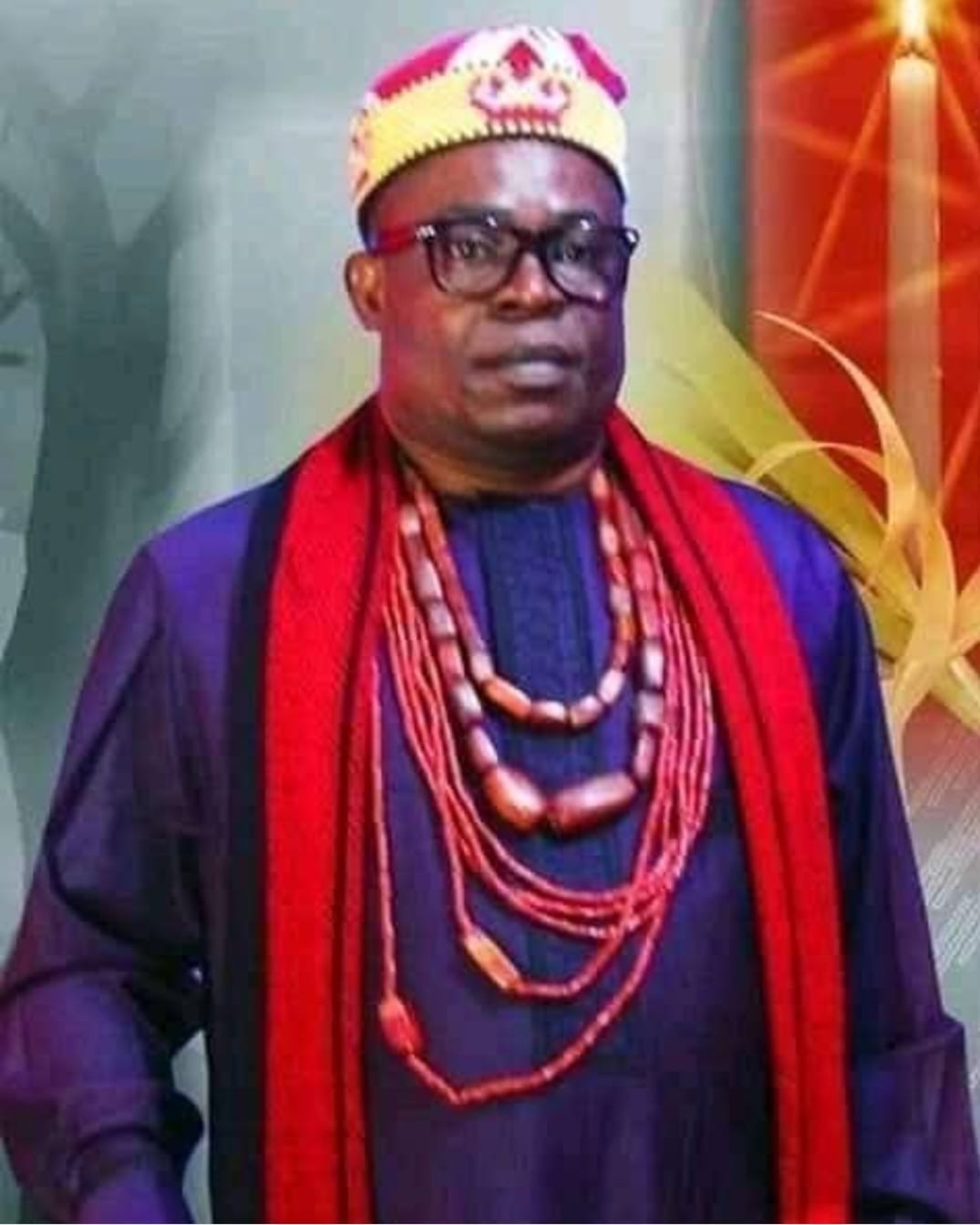
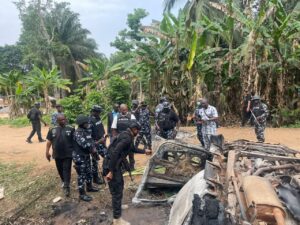
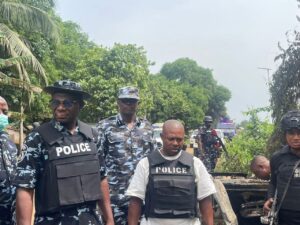
Gunmen on Friday night killed the traditional ruler of Ochia, Barr Paulinus Ekwueme, alongside security operatives in the Ohaji/Egbema Local Government Area of Imo State. The attackers ambushed the monarch at the boundary of Assa and Ochia communities after he returned from a trip abroad earlier in the week.
Some security operatives in his convoy were also shot dead. Eyewitness said the monarch and the security operatives were set ablaze after the killing, adding that the Ohaji/Egbema Local Government Area had been thrown into mourning.
Hrm lives in America, but some in his town accuse him of acquiring lots of wealth coming from the oil in their land and yet they have no nepa (light) and other amenities, and that this angered the youths of his community to take this step. One said Ms Duruaku wrote, “he ate the youth empowerment meant given to him by shell oil company and ran abroad for years”

#Ekwutosblog
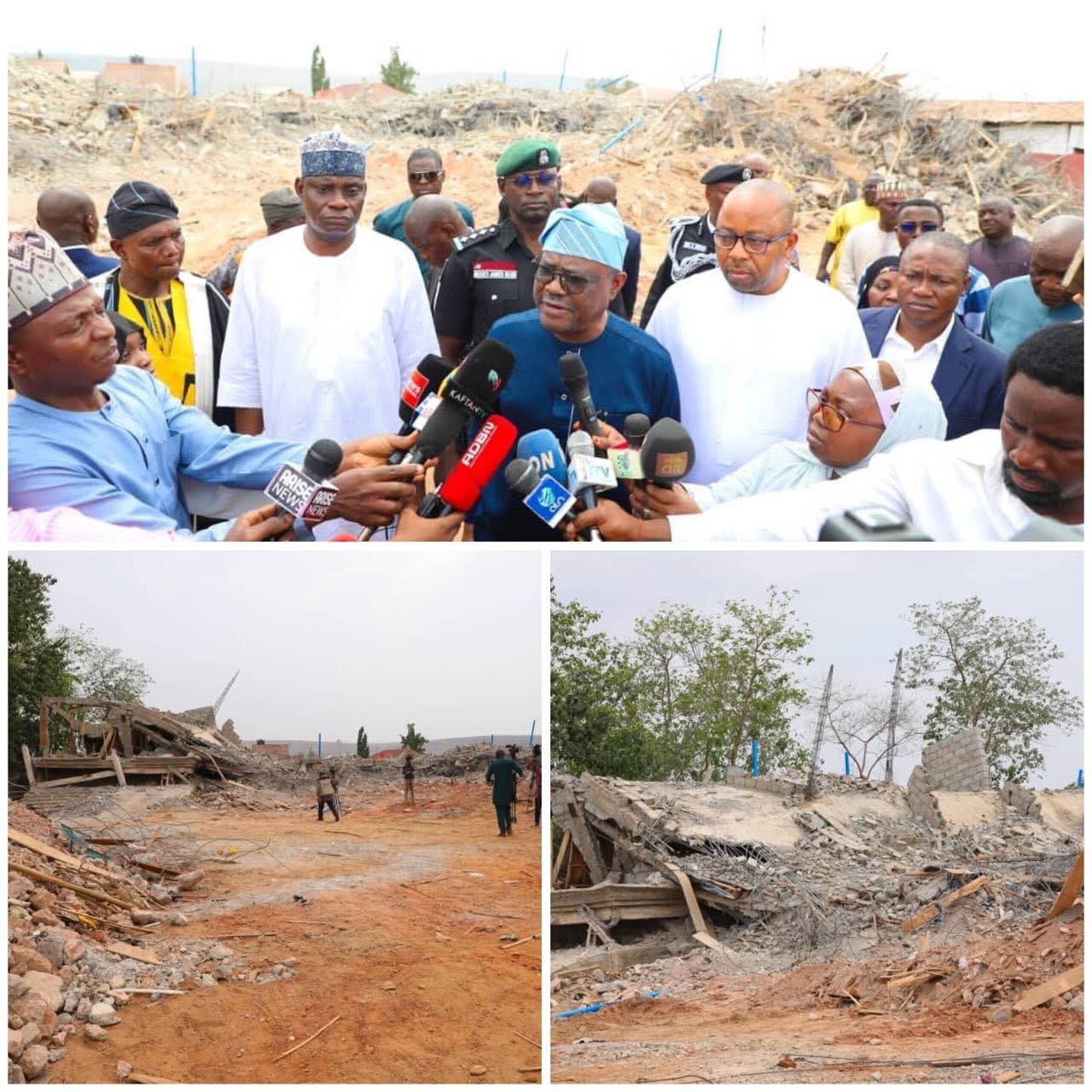
The Minister of the Federal Capital Territory, Nyesom Wike, has ordered the immediate arrest of the owner of a multi-story hotel that collapsed in Jikwoyi, Abuja last Friday, April 4 and announced that the land would be seized for public use.
LIB had reported that the building crumbled while workers were on site, triggering an emergency response from relevant authorities.
Visiting the site today April 7, Wike said the building was constructed without approval from the FCT Department of Development Control and that all the stop-work notices sent to the builders were ignored by the developer.
Wike confirmed that while there were no fatalities, several people sustained injuries and were taken to the hospital. He warned that the outcome could have been far worse.
Announcing the government’s plans for the land, Wike said the FCT Administration will take over the land for public use, noting that those responsible for the illegal construction will face prosecution in accordance with the law.
He added that the local community would be consulted to determine a suitable public-purpose project for the reclaimed site.

Politics1 week ago
David Mark Holds Secret Meeting With PRP Leaders as ADC Crisis Deepens

Trending1 week ago
Chaos As Military Officers Exchange Blows During Tinubu’s Visit To Bayelsa (Videos)

Trending1 week ago
HRH Ekwueme of Ochia Kingdom Iynched & kiIIed in Imo.

-
Business1 year ago
US court acquits Air Peace boss, slams Mayfield $4000 fine
-

 Trending1 year ago
NYA demands release of ‘abducted’ Imo chairman, preaches good governance
-

 Politics1 year ago
Mexico’s new president causes concern just weeks before the US elections
-

 Politics1 year ago
Putin invites 20 world leaders
-

 Politics1 year ago
Russia bans imports of agro-products from Kazakhstan after refusal to join BRICS
-
Entertainment1 year ago
Bobrisky falls ill in police custody, rushed to hospital
-
Entertainment1 year ago
Bobrisky transferred from Immigration to FCID, spends night behind bars
-
Education2 years ago
GOVERNOR FUBARA APPOINTS COUNCIL MEMBERS FOR KEN SARO-WIWA POLYTECHNIC BORI