
Politics
Judge sets Trump’s sentencing date in hush money case but signals no jail time

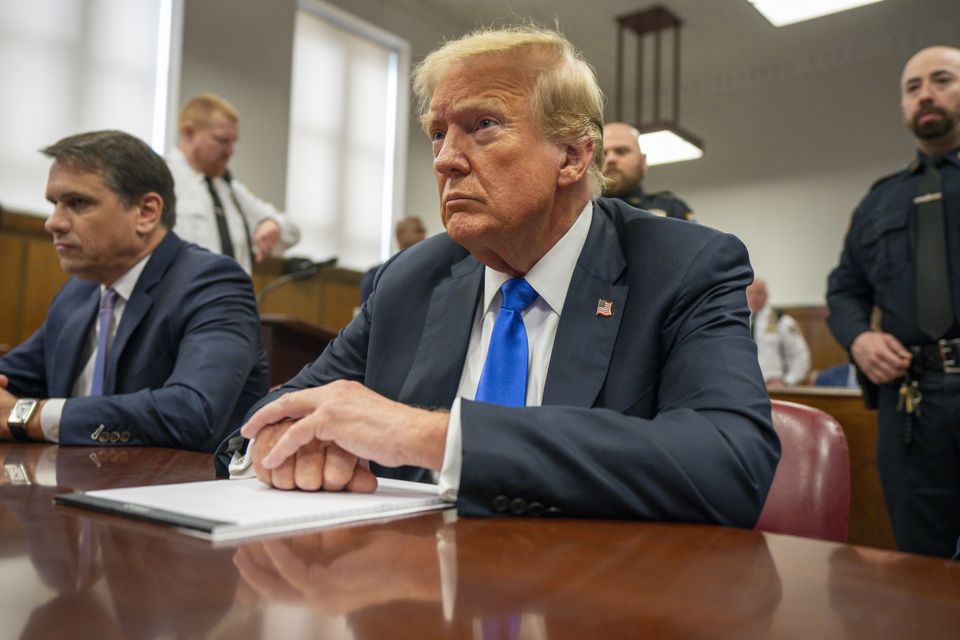
A judge has ordered that Donald Trump will be sentenced on 10 January in his hush-money case in New York – less than two weeks before he is set to be sworn in as president.
New York Justice Juan Merchan signalled he would not sentence Trump to jail time, probation or a fine, but instead give him an “unconditional discharge”, and wrote in his order that the president-elect could appear in person or virtually for the hearing.
Trump had attempted to use his presidential election victory to have the case against him dismissed.
The president-elect has posted on social mediadismissing the judge’s order as an “illegitimate political attack” and calling the case “nothing but a rigged charade”.
Trump was convicted in May of 34 felony counts of falsifying business records related to a $130,000 (£105,000) payment to adult-film star Stormy Daniels.
The charges related to attempts to cover up reimbursements to his ex-lawyer, Michael Cohen, who in the final days of the 2016 election campaign paid off the adult-film star to remain silent about an alleged sexual encounter with Trump.
The president-elect has denied all wrongdoing and pleaded not guilty, arguing the case was an attempt to harm his 2024 presidential campaign.
In the post on his Truth Social platform on Saturday Trump said the judge’s sentencing order “goes against our Constitution and, if allowed to stand, would be the end of the Presidency as we know it”.
Trump’s spokesperson Steven Cheung earlier called the order part of a “witch hunt”.
“President Trump must be allowed to continue the presidential transition process and to execute the vital duties of the presidency, unobstructed by the remains of this or any remnants of the witch hunts,” Cheung said.
“There should be no sentencing, and President Trump will continue fighting against these hoaxes until they are all dead.”
In his latest motion against the case, Trump had argued the case would hang over him during his presidency and impede his ability to govern.
Justice Merchan said he had been advised of several measures he could employ that could assuage Trump’s concerns about being distracted by a criminal case while serving as president that fell short of the “extreme remedy” of overturning the jury’s verdict.
His options included delaying the sentencing until Trump, 78, leaves the White House in 2029, or guaranteeing a sentence that would not involve prison time.
Trump had initially, and unsuccessfully, argued the case against him ran afoul of a Supreme Court ruling on presidential immunity.
In July, the country’s top court ruled that presidents have broad immunity from criminal prosecution for “official actions” they take while in office.
However, last month Justice Merchan ruled Trump’s hush money conviction was valid.
Trump is currently set to be the first convicted felon to serve in the White House.
He may attempt to appeal against the conviction after the sentencing.
While falsifying business records is punishable by up to four years in prison in the US, there is no minimum sentence and incarceration is not required.
Even before his election victory, legal experts thought it was unlikely Trump would face jail time given his age and his legal record.
Trump has also been charged in three other state and federal criminal cases: one involving classified documents and two relating to his alleged efforts to overturn his loss in the election of 2020.
The president-elect was initially scheduled to be sentenced on 26 November, but Justice Merchan pushed the date back after Trump won the presidential election.






The embattled National Chairman of the African Democratic Congress, David Mark, on Friday held a closed-door meeting with leaders of the Peoples Redemption Party in Abuja. The private consultation is seen as a fresh round of political moves as the ADC continues to battle a lingering leadership crisis and growing internal divisions.
Top figures from both parties were said to be present at the meeting, including PRP National Chairman Hakeem Baba-Ahmed and senior ADC officials. The development is already drawing attention as opposition parties continue realignments ahead of the 2027 political season, with many watching closely for possible alliances and next steps in the party crisis.
Politics
“ADC is a Holy Party, Cannot be used to Scam Nigerians Again” – Hon Success Opara tells David Mark
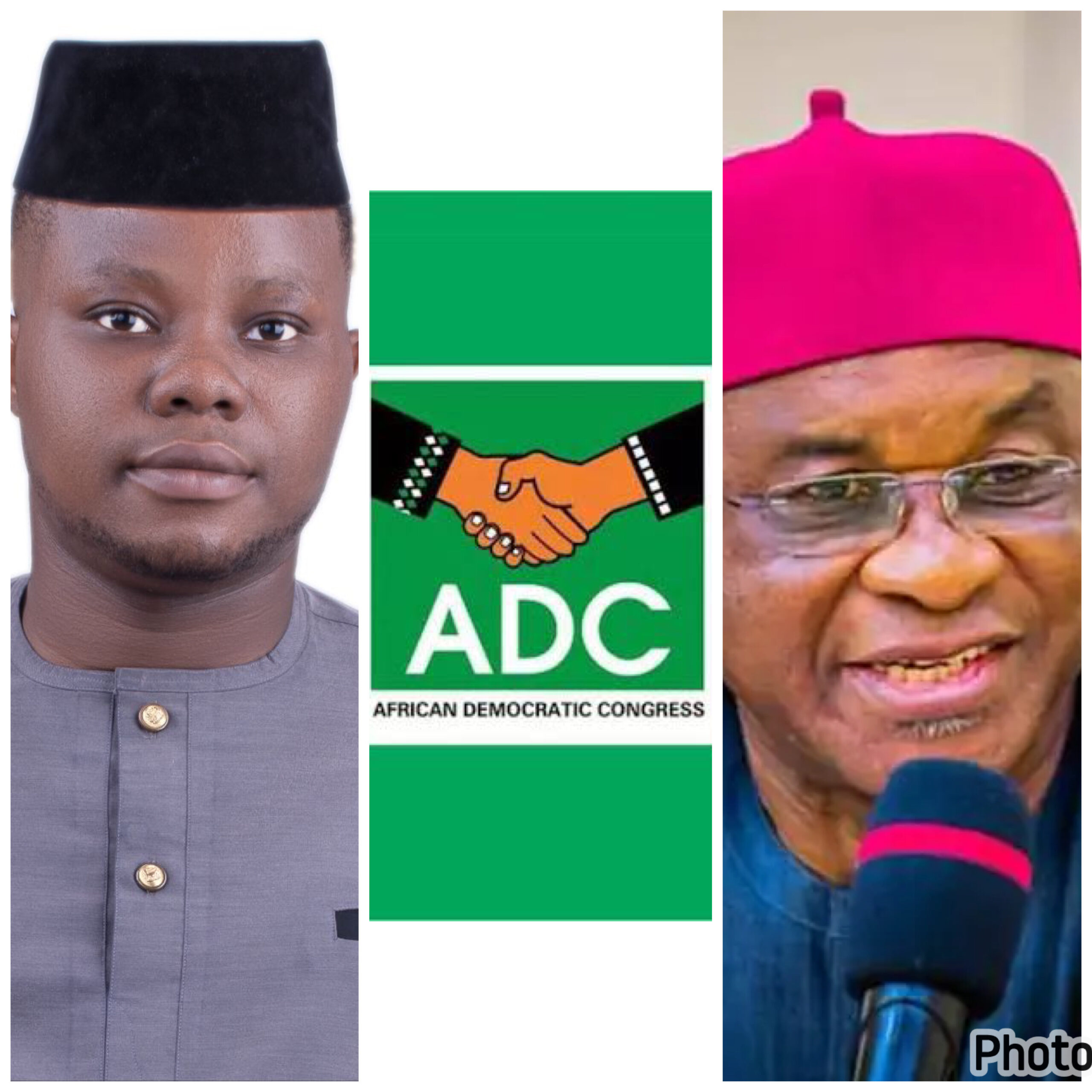
ADC Party in Turmoil: Hon Success Opara Slams Leadership, Warns Against Scamming Nigerians
Abuja, Nigeria – The African Democratic Congress (ADC) is facing internal strife as Hon Success Opara, a prominent party official, has warned against attempts to use the party to deceive Nigerians. Opara specifically criticized the leadership of David Mark, stating that the party cannot be used to scam citizens again.
“ADC holy Party cannot be used to scam Nigerians again,” Opara said, emphasizing that those forming coalitions are hindering the party’s growth and denying youths opportunities to thrive.
“Those who are forming coalition don’t want to give the youths the chance to strive in the party,” she added.
Opara’s statement highlights the deepening divisions within the ADC, with concerns over leadership and the party’s direction.
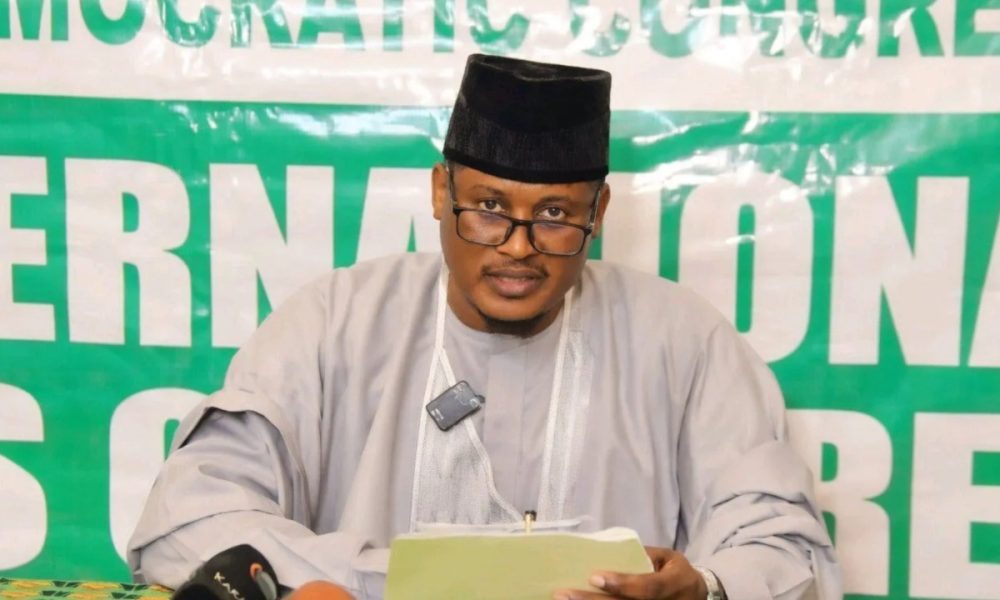
The factional National Chairman of the African Democratic Congress (ADC), Nafiu Bala Gombe, has announced that the party under his leadership will bar individuals above the age of 55 from contesting for political positions.
Gombe made the disclosure during an interview with BBC Hausa, where he outlined a vision centred on generational change and greater youth participation in politics.
“The African Democratic Congress (ADC) is a party that belongs to all Nigerians. What we are doing now is to ensure the party moves forward properly.
“We have decided that we will give the youths a real chance. The time has come for young people to take the lead in politics.
“If you are over 55 years old, you are not going to contest for positions in the ADC under our leadership.
“We want to bring in fresh blood, new ideas, and energy from the youth. Nigeria’s future depends on the young generation.
“The old ways have not worked well for the country. We need to open the door wide for youths to participate fully as candidates, leaders, and decision-makers,” he said.

David Mark Holds Secret Meeting With PRP Leaders as ADC Crisis Deepens

Chaos As Military Officers Exchange Blows During Tinubu’s Visit To Bayelsa (Videos)

HRH Ekwueme of Ochia Kingdom Iynched & kiIIed in Imo.

-
Business1 year ago
US court acquits Air Peace boss, slams Mayfield $4000 fine
-

 Trending1 year ago
NYA demands release of ‘abducted’ Imo chairman, preaches good governance
-

 Politics1 year ago
Mexico’s new president causes concern just weeks before the US elections
-

 Politics1 year ago
Putin invites 20 world leaders
-

 Politics1 year ago
Russia bans imports of agro-products from Kazakhstan after refusal to join BRICS
-
Entertainment1 year ago
Bobrisky falls ill in police custody, rushed to hospital
-
Entertainment1 year ago
Bobrisky transferred from Immigration to FCID, spends night behind bars
-
Education2 years ago
GOVERNOR FUBARA APPOINTS COUNCIL MEMBERS FOR KEN SARO-WIWA POLYTECHNIC BORI