
Tech
Globacom CEO Ahmad Farroukh resigns after one month amid governance challenges

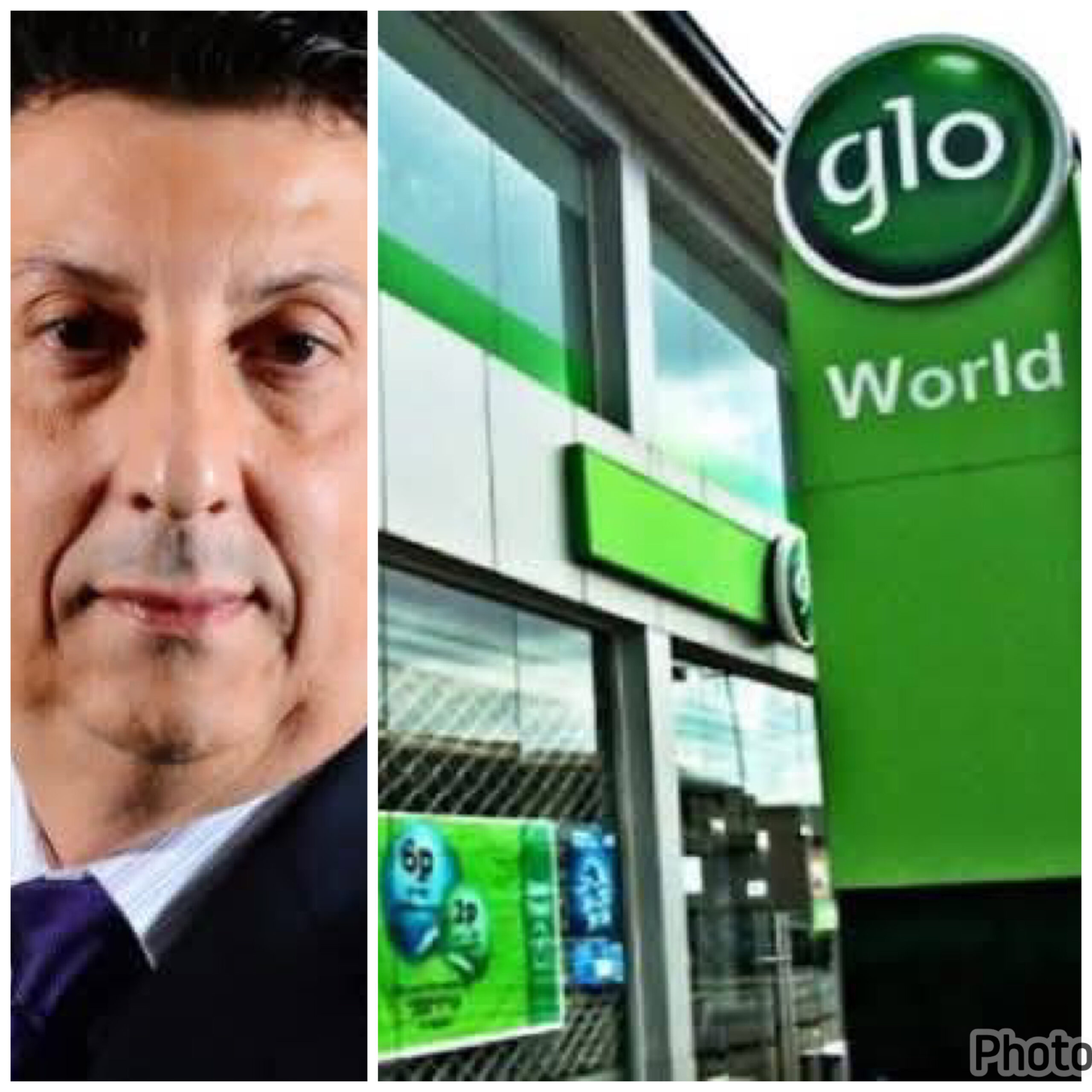
Globacom CEO Ahmad Farroukh resigns after one month amid governance challenges
Frank Eleanya (Ekwutosblog)
Jan 21, 2025
Ahmad Farroukh, who was appointed CEO of Nigerian telecom giant Globacom in October 2024, resigned after just one month in the role, multiple sources close to the matter confirmed. While Globacom has not issued an official statement or communicated the resignation internally, several industry insiders suggest the decision was linked to significant challenges within the company’s organisational structure.
A mid-level manager at Globacom, speaking on the condition of anonymity, speculated Farroukh’s departure was tied to problems with the organisational setup. A top-level executive at the Nigerian Communications Commission (NCC) who asked not to be named confirmed Farroukh’s exit but declined to share specifics.
Globacom did not respond to multiple requests for comments.
Farroukh’s abrupt resignation highlights significant internal challenges at the company, which has long been criticised for its centralised decision-making process. According to a former Globacom executive, the company’s founder, Mike Adenuga, is key to most decisions within the company. Adenuga has managed the telecom giant alongside his other business interests, including oil and gas, financial services, and real estate, with minimal structural separation between his other ventures and Globacom’s operations.
This approach has historically worked for the company but may have presented obstacles for Farroukh, whose experience at more structured organizations like MTN and Airtel might have led him to expect a different level of operational autonomy.
Farroukh’s departure also comes when Globacom is facing heightened regulatory scrutiny. In late 2024, the NCC’s sector audit revealed that over 40 million subscribers were not properly registered with their National Identification Numbers (NIN), violating government regulations. This led to a significant loss of market share, with Globacom’s share of the Nigerian mobile market shrinking by approximately 60%, leaving it with just 12%.
Globacom has also faced ongoing cybersecurity issues, including a high-profile hack in 2023 that exposed the personal data of millions of its subscribers. These issues may have created an environment where Farroukh’s leadership efforts could not make a meaningful impact quickly.
“A CEO leaving in one month is unprecedented in the industry. The NCC can investigate the reason for his exit. The commission can seek an explanation from the CEO, who is not obligated to respond, or from the company because this is about corporate governance, which the NCC Act covers,” said Ayoola Oke, a former Special Adviser to the former Executive Vice-Chairman of NCC, Ernest Ndukwe.
Globacom’s leadership void following Farroukh’s departure will raise questions about the company’s ability to navigate its ongoing internal challenges and regain its competitive edge. Without significant structural changes, it is unclear how Globacom can address the organizational weaknesses that led to Farroukh’s exit.










A jury in Los Angeles has ruled that tech giants YouTube and Meta are liable for negligence in a closely watched case involving a young woman who said she became addicted to their platforms from childhood.
The panel awarded the plaintiff $3 million in compensatory damages, assigning 70 percent of the liability to Meta. Jurors also determined that both companies could face additional punitive damages, with a decision on that yet to be made.
The lawsuit, filed in 2023, alleged that platforms such as Instagram were deliberately designed to create addictive user experiences, particularly for young audiences. According to court filings, the plaintiff began using YouTube at age six and Instagram at nine.
During the trial, a therapist who treated the woman testified that prolonged social media exposure contributed to significant mental health challenges, including social phobia and body image issues.
Both companies have rejected the verdict. Meta argued that teen mental health is influenced by multiple factors and cannot be attributed to a single platform. YouTube, meanwhile, maintained that its service is not inherently addictive.
Legal experts expect both companies to appeal the decision, setting the stage for a potentially influential battle over the responsibility of tech platforms in safeguarding young users.
Google is acquiring energy infrastructure company ‘Intersect’ for $4.75 billion (approximately 7 trillion Korean won) to secure the power needed for its AI (artificial intelligence) data centers. The move aims to address the power issue, the biggest hurdle in expanding data centers. Google, which developed the ‘Gemini’ AI, is a so-called ‘AI full-stack’ company equipped with all AI-related technologies and services, including AI chips and cloud (virtual servers). The strategy is to directly manage the energy infrastructure needed to actually operate AI as well.
Reuters reported on the 22nd (local time) that Google is acquiring Intersect for $4.75 billion in cash. Google already holds a minority stake in Intersect, and through this acquisition, it will also secure the gigawatt (GW)-level energy and data center projects that Intersect is developing and constructing. Intersect is expected to be responsible for building Google’s data center power infrastructure in the U.S., based on its technology linking power generation facilities and power grids.
Sundar Pichai, CEO of Google and Alphabet, said, “Intersect will enable us to build power infrastructure more quickly and flexibly in line with the increasing demand for AI data centers,” adding, “It will also be an important partner in strengthening America’s energy innovation and technological leadership.”
Bloomberg reported that Intersect’s energy assets currently in operation or under construction in the U.S. amount to $15 billion (approximately 22.2 trillion Korean won).
◇Google increasing energy investments
Google has recently been increasing its investments in the energy sector. Although the company possesses AI chips (TPUs), Gemini, and search and cloud services, stable energy supply is essential to support these businesses.
To this end, Google is also investing in nuclear power technology. In October of last year, it signed a long-term cooperation agreement with small modular reactor (SMR) startup ‘Kairos Power’ to secure up to 500 MW (megawatts) of power. It is noted as the first case among big tech companies to publicly declare securing SMR-based power. Additionally, in August, Google and Kairos Power announced plans to build the next-generation SMR ‘Hermes 2’ in Oak Ridge, Tennessee. The goal is to commence operation in 2030.
Google is also restarting previously shut-down nuclear power plants to secure energy. In October, it announced that it will collaborate with ‘NextEra Energy’ to restart the Duane Arnold Nuclear Generating Station in Iowa, which was closed in 2020. The target restart period is between 2028 and 2029.
Google is also investing in renewable energy such as geothermal power. Since 2023, it has been supplying power to data centers through geothermal power generation with ‘Fervo Energy’ in Nevada, U.S.
Google is also actively investing in next-generation energy technologies that are not yet commercialized. In 2022, it made a large-scale investment in ‘TAE Technologies,’ which possesses nuclear fusion technology. Nuclear fusion power generation is a technology that applies the principle of energy creation in the sun, combining atomic nuclei to produce energy. It is called the ‘dream energy’ because it has abundant fuel resources, emits no carbon, and, unlike conventional nuclear power plants, does not produce high-level nuclear waste. However, it is assessed that more time is needed for commercialization due to technical challenges. Recently, TAE Technologies has accelerated the commercialization of fusion energy by merging with Trump Media Group (TMTG).
Tech
“I Lost $1.2 Million To Hackers On One Of My Apps. I Caught One Of The Hackers, And Instead Of Handing Him Over To The Police, I Employed Him To Work For Me.”- BLord

Anambra Born tech entrepreneur and businessman Linus Williams, popularly known as BLord, has shared an unusual story about how he handled a major cyberattack on one of his applications.
According to BLord, he lost $1.2 million to hackers who infiltrated one of his digital platforms. In the course of tracking the incident, he successfully identified one of the individuals involved in the breach.
Rather than handing the suspect over to security agencies, BLord said he made a strategic decision: he employed the hacker.
He explained that the hacker’s skills, though misapplied, were exceptional and could be redirected towards strengthening his company’s cybersecurity systems.
BLord noted that the decision was driven by a desire to turn a negative experience into an opportunity for growth and to better secure his business infrastructure.

Bandits behind Ogbomoso school abduction will face full wrath of the law- President Tinubu

PDP to screen Goodluck Jonathan on Tuesday as its sole Presidential aspirant For 2027 race

Oshiomhole wins Edo APC senatorial primaries unopposed

-
Business2 years ago
US court acquits Air Peace boss, slams Mayfield $4000 fine
-

 Trending2 years ago
NYA demands release of ‘abducted’ Imo chairman, preaches good governance
-

 Politics2 years ago
Mexico’s new president causes concern just weeks before the US elections
-

 Politics2 years ago
Putin invites 20 world leaders
-

 Politics2 years ago
Russia bans imports of agro-products from Kazakhstan after refusal to join BRICS
-
Entertainment2 years ago
Bobrisky falls ill in police custody, rushed to hospital
-
Entertainment2 years ago
Bobrisky transferred from Immigration to FCID, spends night behind bars
-
Education2 years ago
GOVERNOR FUBARA APPOINTS COUNCIL MEMBERS FOR KEN SARO-WIWA POLYTECHNIC BORI