
Politics
A non Commissioned Officer Killed Ironsi..

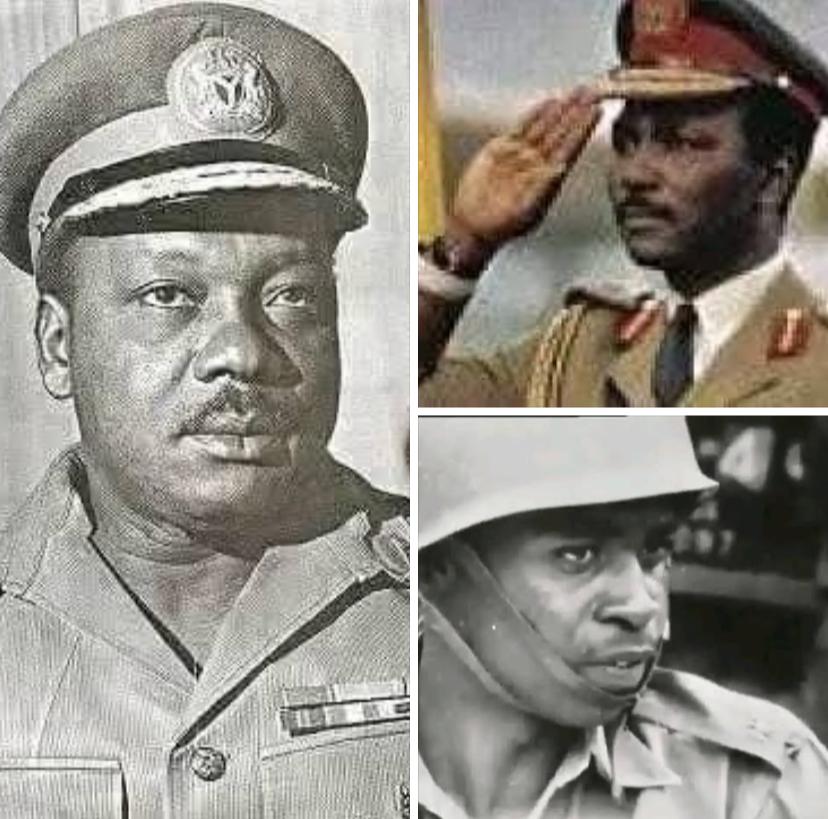
Fifty seven years after his assassination, the departure of General Johnson Aguiyi – Ironsi continues to be engulfed in mystery. Even those closest to him came out with different versions of what transpired in Ibadan, on July 29, 1966.
In all accounts, it is impossible to name who really shot the first African to command United Nations forces and the first Nigerian general. What is certain is that the trigger was pulled by a Non Commissioned Officer ( NCO) after commissioned officers lost control of the rabid situation.
Recently, Col. Sani Bello, then a Second Lieutenant and Ironsi’s Army Aide de Camp ( ADC) debunked claims that he made a deal with the Air Force ADC, Lt. Andrew Nwankwo. The supposed agreement benefitted the duo who escaped as their boss faced imminent death.
Fifty seven years after his assassination, the departure of General Johnson Aguiyi – Ironsi continues to be engulfed in mystery. Even those closest to him came out with different versions of what transpired in Ibadan, on July 29, 1966.
In all accounts, it is impossible to name who really shot the first African to command United Nations forces and the first Nigerian general. What is certain is that the trigger was pulled by a Non Commissioned Officer ( NCO) after commissioned officers lost control of the rabid situation.
Recently, Col. Sani Bello, then a Second Lieutenant and Ironsi’s Army Aide de Camp ( ADC) debunked claims that he made a deal with the Air Force ADC, Lt. Andrew Nwankwo. The supposed agreement benefitted the duo who escaped as their boss faced imminent death.
Our electric bike will crash price of goods and fight climate change – Adekunle Ajasin Varsity….0:00 / 1:00
It is curious that it took 57 years for Bello to come out with this version. Nwankwo is late now, so it is difficult to get his reaction. However, I find it odd that a brave officer would agree to run away instead of defending his principal even if death was the price.
Lt. Akintunde Akinsehinwa died defending Gen. Murtala Mohammed in 1976. Maj. Usman Bello was killed as he tried to fight for Gen. Ibrahim Babangida, in 1990. From Bello’s account, he was arrested and detained when he went to ascertain what had become of those who were sent to find out what went wrong at Government House, Ibadan.
While Nwankwo announced to Biafrans that Bello saved him, the latter credits Garba Dada Paiko as their saviour who ordered them into a Land Rover as the killer gang got really blood thirsty. This account makes some sense since Bello and the Ironsi family have continued to relate.
I tend to agree with Bello that he was going to be gunned down, like Ironsi and Col. Adekunle Fajuyi, until Dada Paiko intervened. What I do not know is what happened to Adamu Umoru, Fajuyi’s ADC who was with the other subalterns at Government House Ibadan during the coup.
Paiko and Bello hailed from Bida Province, that could have worked. If Paiko desired, he would have left Nwankwo with the assassins instead of taking him away with Bello. The moment he was about to drive off, Sgt. Tijanni Maiduguri fired the shot that killed the military governor of Western Region.
It is almost certain that no commissioned officer was there when Ironsi died. That explains the different names being bandied about since 1966. Yakubu Danjuma, Dada Paiko, William Walbe, Nuhu Nathan, Clement Dabang, Musa Bitiyong, Ibrahim Rabo, Bako Wali, all these names keep popping up.
Dada Paiko played a major role in the abduction of Ironsi and Fajuyi but denied killing the general. He came out with another puzzle. The name Sgt. Bakari Baba Lapai should interest everyone. He was alleged to have hit Danjuma’s shoulders for wasting time with the Head of State.
According to Paiko, while Nuhu Nathan snatched Ironsi’s crocodile swagger stick called Charlie, Baba Lapai disappeared with it. Till date, there is no trace of Bakari Baba Lapai in Nigeria Army records, so said Paiko who unfortunately, is not alive today to repeat himself.
Search for:
Search
Home
News
E-Editions
Politics
Metro
Business
Sports
Editorial
Columns
Allure
Columns
August 5, 2023
Unknown Gunman Shot Ironsi, By Emeka Obasi
Aguiyi-Ironsi
Aguiyi-Ironsi
Fifty seven years after his assassination, the departure of General Johnson Aguiyi – Ironsi continues to be engulfed in mystery. Even those closest to him came out with different versions of what transpired in Ibadan, on July 29, 1966.
In all accounts, it is impossible to name who really shot the first African to command United Nations forces and the first Nigerian general. What is certain is that the trigger was pulled by a Non Commissioned Officer ( NCO) after commissioned officers lost control of the rabid situation.
Recently, Col. Sani Bello, then a Second Lieutenant and Ironsi’s Army Aide de Camp ( ADC) debunked claims that he made a deal with the Air Force ADC, Lt. Andrew Nwankwo. The supposed agreement benefitted the duo who escaped as their boss faced imminent death.
Our electric bike will crash price of goods and fight climate change – Adekunle Ajasin Varsity….0:00 / 1:00
It is curious that it took 57 years for Bello to come out with this version. Nwankwo is late now, so it is difficult to get his reaction. However, I find it odd that a brave officer would agree to run away instead of defending his principal even if death was the price.
Lt. Akintunde Akinsehinwa died defending Gen. Murtala Mohammed in 1976. Maj. Usman Bello was killed as he tried to fight for Gen. Ibrahim Babangida, in 1990. From Bello’s account, he was arrested and detained when he went to ascertain what had become of those who were sent to find out what went wrong at Government House, Ibadan.
While Nwankwo announced to Biafrans that Bello saved him, the latter credits Garba Dada Paiko as their saviour who ordered them into a Land Rover as the killer gang got really blood thirsty. This account makes some sense since Bello and the Ironsi family have continued to relate.
I tend to agree with Bello that he was going to be gunned down, like Ironsi and Col. Adekunle Fajuyi, until Dada Paiko intervened. What I do not know is what happened to Adamu Umoru, Fajuyi’s ADC who was with the other subalterns at Government House Ibadan during the coup.
Paiko and Bello hailed from Bida Province, that could have worked. If Paiko desired, he would have left Nwankwo with the assassins instead of taking him away with Bello. The moment he was about to drive off, Sgt. Tijanni Maiduguri fired the shot that killed the military governor of Western Region.
It is almost certain that no commissioned officer was there when Ironsi died. That explains the different names being bandied about since 1966. Yakubu Danjuma, Dada Paiko, William Walbe, Nuhu Nathan, Clement Dabang, Musa Bitiyong, Ibrahim Rabo, Bako Wali, all these names keep popping up.
Dada Paiko played a major role in the abduction of Ironsi and Fajuyi but denied killing the general. He came out with another puzzle. The name Sgt. Bakari Baba Lapai should interest everyone. He was alleged to have hit Danjuma’s shoulders for wasting time with the Head of State.
According to Paiko, while Nuhu Nathan snatched Ironsi’s crocodile swagger stick called Charlie, Baba Lapai disappeared with it. Till date, there is no trace of Bakari Baba Lapai in Nigeria Army records, so said Paiko who unfortunately, is not alive today to repeat himself.
Related News
JAN 15, 1966 COUP: Eye witness to a morning of murder, mayhem, carnage
January 15, 1966: A morning of murder, mayhem and carnage
ABATI VS TOS BENSON, by Emeka Obasi
Paiko further explained that while in the United States in 1963, he came across one Vararo Segura, an Ifa high priest, also known as Obafemi. The story was that supreme power in the world was with Orisha, and it was believed that Chief Ladoke Akintola, governor of Western Region, before Fajuyi possessed such power.
Segura tried to convince Dada Paiko that someone snatched the power from Akintola after his assassination in January 1966. And the verdict was that Ironsi had it in his crocodile swagger stick. A funny tale because the general was in Lagos at the time Emma
Nwobosi led troops to kill Akintola in Ibadan.
The fear of Ironsi was real. As a United Nations Peace keeper in the Congo, he braved Katanga rebels to rescue an Austrian medical team and some Nigerian soldiers. That act earned him the Ritter Kruez ( First Class) medal.
The Congolese rebels under Moise Tshombe were dreaded as cannibals. The killing of Lt. G. Ezeugbana confirmed it. Lt. Olusegun Obasanjo was lucky. He cheated death after being dumped in a vehicle booth. That Ironsi dared them made headlines.
The second Secretary General of the United Nations, Dag Hammarskjold, did not survive the Katanga crisis. His aircraft was blown up near Ndola, Zambia on his way to negotiate a ceasefire between UN troops and Tshombe’s soldiers.
Those who took Ironsi and Fajuyi away, knew they returned from Congo with medals. What they did not know was that the crocodile swagger stick was bought in Lubumbashi as a souvenir.
It possessed no power from Orisha. Apparently, Baba Lapai was a ghost sent from the spirit world.
The mystery is endless. Stories continue to fly. Some said Ironsi and Fajuyi were tied to a Land Rover, driven to Olodo Village along Ibadan – Iwo Road, tied to trees and executed. Another account said they were buried in a shallow grave at Lalupon. However, their bodies were exhumed from the Military Cemetery, Jericho, Ibadan.
How strange that some of the names associated with Ironsi’s death in 1966, were also killed much later over coup plots. Dabang, Rabo, Umoru died in 1976. Bitiyong was executed in 1986. Others who were part of second coup of 1966, died following a third coup in 1976. Murtala, Isa Bukar, Abdul Wya, Bukar Dimka, Mac Donald Gotibp, Sabo Kwale, all lost their lives.
Bello was commissioned on July 29, 1965. Hammarskjold was born on July 29, 1905. Ironsi died on July 29, 1966. His successor, Yakubu Gowon, was overthrown on July 29, 1975. Murtala who led the coup against Ironsi, became Head of State on July 29, 1975.
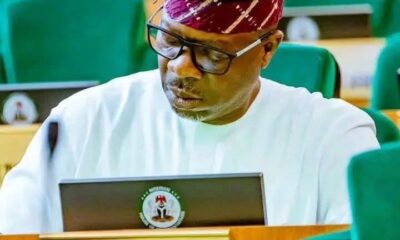

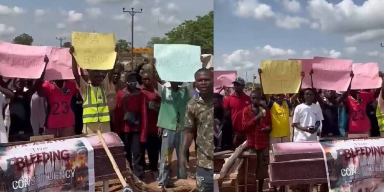

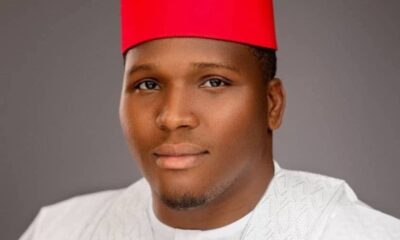

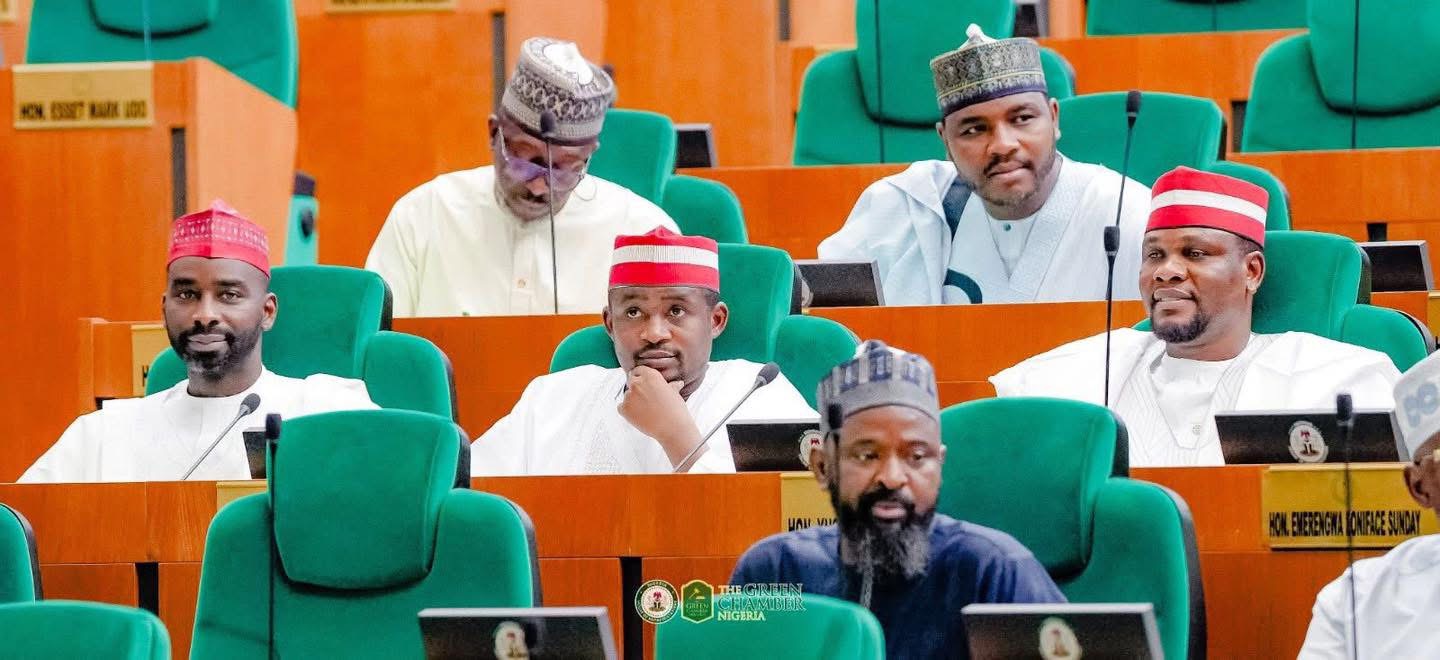
No fewer than 50 members of the 10th House of Representatives are unlikely to be part of the 11th Assembly after losing out in the All Progressive Congress (APC) primaries held on Saturday.
This marks one of the largest turnovers of sitting federal lawmakers since 2015 and signals intensifying internal competition within the ruling party eight months to the 2027 general elections.
While House Speaker Tajudeen Abbas (Kano) and Deputy Speaker Benjamin Kalu (Abia) successfully defended their tickets, several ranking and long-serving lawmakers were defeated, exposing strong anti-incumbent sentiment and the decisive role of state governors in candidate selection.
Major casualties
One of the biggest upsets was the defeat of House Majority Leader Julius Ihonvbere in Edo State’s Owan Federal Constituency. He polled 1,005 votes out of 7,587 cast, finishing third behind Andrew Ijegbia, who scored 3,695 votes. Abdul Oroh placed second with 1,740 votes.
In Delta State, veteran lawmaker Nicholas Mutu, who has represented Bomadi/Patani Federal Constituency since 1999, lost his re-election bid. Ngozi Okolie also lost the Aniocha/Oshimili ticket to former House Minority Leader Ndudi Elumelu.
Cross River State recorded one of the highest casualty rates, with five of eight incumbents failing to secure re-nomination.
They include three-term member Mike Etaba (Obubra/Etung), Godwin Offiono (Ogoja/Yala), Emil Inyang (Akamkpa/Biase), and Bassey Akiba (Odukpani/Calabar Municipality).
Only Peter Akpanke, Joseph Bassey, and Victor Abang won return tickets.
In Plateau State, conflicting results in Pankshin/Kanke/Kanam Federal Constituency triggered early confusion. One returning officer declared challenger John Tongshinen winner with 29,968 votes against incumbent Yusuf Gagdi’s 5,849.
The APC Plateau State primaries committee, chaired by Stella Okotete, later dismissed that declaration as unauthorised and affirmed Mr Gagdi as the authentic winner with 29,207 votes.
At a press briefing, Mrs Okotete stated that Nandom Kura was the recognised returning officer. “The returning officer approved by my committee that has gone to do fake declaration is null and void,” she said.
Other significant losses occurred in Ogun State (at least five incumbents, including Deputy Chief Whip Ibrahim Isiaka and Tunji Akinosi) and Ekiti State (three sitting members).
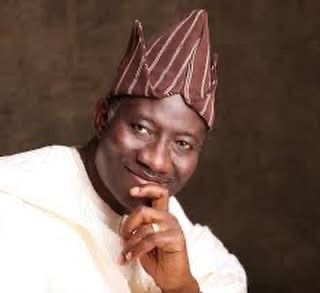
The Peoples Democratic Party (PDP), led by Tanimu Turaki, SAN, has scheduled to screen former president Goodluck Jonathan tomorrow, Tuesday, aMay 19, as the lone presidential candidate of party.
According to a statement from the PDP faction backed by the Oyo State Governor, Seyi Makinde, Former Vice-President Namadi Sambo, former governor of Plateau State, Jona Jang and a former Minister of Foreign Affairs, Tom Ikimi have been listed among a committee of 14 members to screen Jonathan described as a lone candidate by the party.
Other members of the committee were Chief Olabode George, Babangida Aliyu, Maryam ciroma, Zainab Maina, Josephine Anenin, Dr. Abdul Bulama, Dr. Esther Uduehi, Edo State PDP chairman, Tony Aziegbemi, Dr. Sunday Solarium and Chief Anicho Okoro, who would serve as administrative secretary of the committee.
Last week, the national Publicity Secretary of the faction, Ini Ememobong, disclosed that former president Jonathan has successfully registered as a member of the party in the fresh digital registration exercise directed by INEC.
The PDP faction also announced that it was set to screen 748 house of representatives aspirants, 198 senatorial aspirants, and 112 governorship aspirants.
The screening committee would screen 2122 states houses of assembly aspirants. The exercise will commence tomorrow, Tuesday in different states.
According to the statement, the screening exercise would take place nationwide on Tuesday, May 19, 2026, at 10:00 a.m.
The statement said the Interim National Working Committee (iNWC) has also released the names of members to serve on the Screening Committees and Screening Appeal Panels.
It added that the publication of the screening details “is in accordance with the party’s guidelines and timetable for the conduct of the 2027 general elections.”
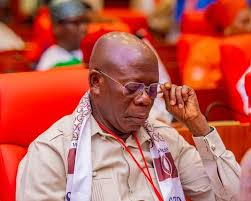
A former governor and incumbent Senator, Adams Oshiomhole, along with his counterpart Senator Joe Ikpea, sailed through the All Progressives Congress senatorial primary in Edo unopposed, and securing their tickets without a single vote cast against them.
Also Omoregie Ogbeide-Ihama emerged the winner in the APC primary for the Edo South senatorial district.
Ogbeide-Ihama won in the seven local government areas of Edo South in the results announced by the Chairman of APC National Assembly Primary Election, Muhammed Ajana at the Urokpota Hall, Benin.
He polled 27,154 votes while his opponents, Senator Neda Imasuen, got 13,580, and Pastor Osagie Ize-Iyamu got 6785.
The elections were hitch-free in Edo North and Edo Central, where there was no contest against the incumbents, Senators Oshiomhole of Edo North and Ikpea of Edo Central, respectively.
Ajana at the Urokpota Hall said the collation arose from votes cast in the seven local government areas made up of 77 wards where elections were conducted by members of the committee.
He said, “There are seven local governments that make up the Edo South Senatorial District. We have heard from the Returning officers from the seven local government areas. From the collation, the cumulative result we have for Edo South Senatorial District is this; Ogbeide-Ihama with 27,154 votes, Imasuen with 13,580 votes and Ize-Iyamu with 6, 785.
“This is the total reflection of what has transpired from the ward level to the local government and the Edo South senatorial district collation centre. With this we await further directives from the National Secretariat, we have done our best by collating the results which is our mandate, to collate the results and send them to the National Secretariat.”
However, it was gathered that Ize-Iyamu emerged as the APC candidate for Edo South Senatorial race. He claimed to have clinched the party’s ticket after defeating Ogbeide-Ihama and Imasuen.
It was claimed that the Chief Returning Officer, Abubakar Muhammad Kabiru, officially declared Ize-Iyamu the winner after securing the highest number of votes cast.
On his part, the senator representing the district condemned the exercise describing it as a sham allegedly designed to favour a preferred aspirant.
Imasuen spoke while reacting to events at his polling unit in Umagbae North Ward 5, Urhokuosa where he said he was denied the opportunity to vote following what he described as a chaotic and manipulated process.
The lawmaker accused leaders of the party of openly adopting a preferred candidate ahead of the exercise and intimidating members into supporting that aspirant.
He said, “There is nothing satisfactory about this sham of election they did today and it is very unfortunate because as a loyal party member, I expected something better than this.”
He said the warning signs emerged days before the primary when some ward chairmen allegedly informed him that they had been directed not to receive him during consultations.
Imasuen claimed that some ward leaders openly told him the party had already adopted a preferred aspirant, identified as Hon. Omoregie Ogbeide-Ihama, making further consultations unnecessary.

2027: More Than 50 Lawmakers Lose APC Reps Tickets in Major Primary Election

Bandits behind Ogbomoso school abduction will face full wrath of the law- President Tinubu

PDP to screen Goodluck Jonathan on Tuesday as its sole Presidential aspirant For 2027 race

-
Business2 years ago
US court acquits Air Peace boss, slams Mayfield $4000 fine
-

 Trending2 years ago
NYA demands release of ‘abducted’ Imo chairman, preaches good governance
-

 Politics2 years ago
Mexico’s new president causes concern just weeks before the US elections
-

 Politics2 years ago
Putin invites 20 world leaders
-

 Politics2 years ago
Russia bans imports of agro-products from Kazakhstan after refusal to join BRICS
-
Entertainment2 years ago
Bobrisky falls ill in police custody, rushed to hospital
-
Entertainment2 years ago
Bobrisky transferred from Immigration to FCID, spends night behind bars
-
Education2 years ago
GOVERNOR FUBARA APPOINTS COUNCIL MEMBERS FOR KEN SARO-WIWA POLYTECHNIC BORI