
Politics
US and Russia to ‘normalise’ relationship and start Ukraine talks, officials say

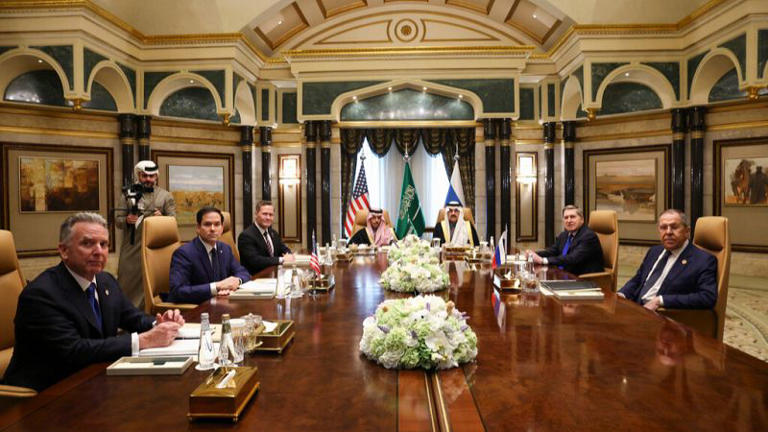
US and Russian officials, who met for high-stakes talks in Saudi Arabia on Tuesday, agreed to “normalise” relations between the two countries and begin discussions on the war in Ukraine, the US State Department said.
US State Secretary Marco Rubio called the meeting “the first step of a long and difficult journey.”
He added that concessions should be made on both sides but that it would be wrong to “predetermine those”.
US National Security Adviser Michael Waltz said that discussion of territory and security guarantees would “underlie” any type of talks moving forward and insisted there should be an “end” to Russia’s war in Ukraine.
Both Rubio and Waltz pushed back on suggestions that European officials would be left out of negotiations, with Rubio concluding that the EU would be involved as it had “sanctions (against Russia) that have been imposed.”
Waltz, for his part, said that the US allies were being consulted “literally almost on a daily basis, and we’ll continue to do so.”
Both sides also briefly discussed a potential meeting between US President Donald Trump and Russian President Vladimir Putin, although Putin’s aide Yuri Ushakov added that such a meeting would be unlikely next week.
Overall, discussions were “not bad”, according to Ushakov. “It is still difficult to say that (the positions of Russia and the United States) are converging, but there was talk about it,” he said after the meeting.
Ushakov was present in the meeting alongside Waltz, Rubio, Russian Foreign Minister Sergey Lavrov and US special envoy Steve Witkoff.
‘No agreement about us without us’
The meeting in the Saudi Arabian capital Riyadh was the first in-person discussion between top officials from both countries since the Kremlin launched its full-scale invasion of Ukraine almost three years ago.
The meeting comes as Trump upended years of foreign policy towards Russia by holding a phone call with Putin last Wednesday and declaring that both had agreed to start negotiations immediately.
A whirlwind week of speeches by US officials followed, in which it emerged that the Washington was seemingly uninterested in Ukraine’s core demands for peace — including its long-held NATO ambitions — and that European leaders would not immediately have a seat at the negotiating table.
Ukrainian President Volodymyr Zelenskyy said on Monday that Kyiv would not recognise any peace agreement made without its participation.
“We cannot recognise … any agreements about us without us,” Zelenskyy said, adding that Ukraine was not made aware of the talks in Riyadh.
Kremlin’s spokesperson Dmitry Peskov said that the meeting would be devoted to the “preparation of possible negotiations on the Ukrainian settlement and the organisation of a meeting between the two presidents.”
On Monday, Lavrov said Moscow would hear out its US colleagues in comments cited by the state-run Tass news agency but added that Europe had “no place at the negotiating table.”
He also said Russia had no intention of making territorial concessions to Ukraine during the peace talks, a likely sticking point between Putin and Zelenskyy.
Kyiv has insisted that any peace deal would include the full withdrawal of Russian troops from areas Moscow has seized during the invasion, as well as the Black Sea peninsula of Crimea — which Moscow annexed in 2014 — and the regions of Donetsk and Luhansk.
Ahead of the talks, Kirill Dmitriev, the head of the Russian Direct Investment Fund, who the Kremlin said might also join the meeting, said, “Good US-Russia relations are very important for the whole world. Only jointly can Russia and the US address lots of world problems, resolve global conflicts and offer solutions.”
Zelenskyy said he would also be travelling to Saudi Arabia in a video briefing on Monday, although he stressed that his visit was not linked to Russia-US peace talks.
Keith Kellogg, Trump’s special envoy to Ukraine, is also set to visit Zelenskyy in Kyiv on Thursday.
In response to fast-moving negotiations that seemed to be taking place without Europe, French President Emmanuel Macron convened an emergency meeting in Paris on Monday with other European leaders.
After the meeting, they vowed to continue supporting Ukraine but failed to provide concrete security guarantees, including a potential idea to send peacekeeping troops to Ukrainian territory.




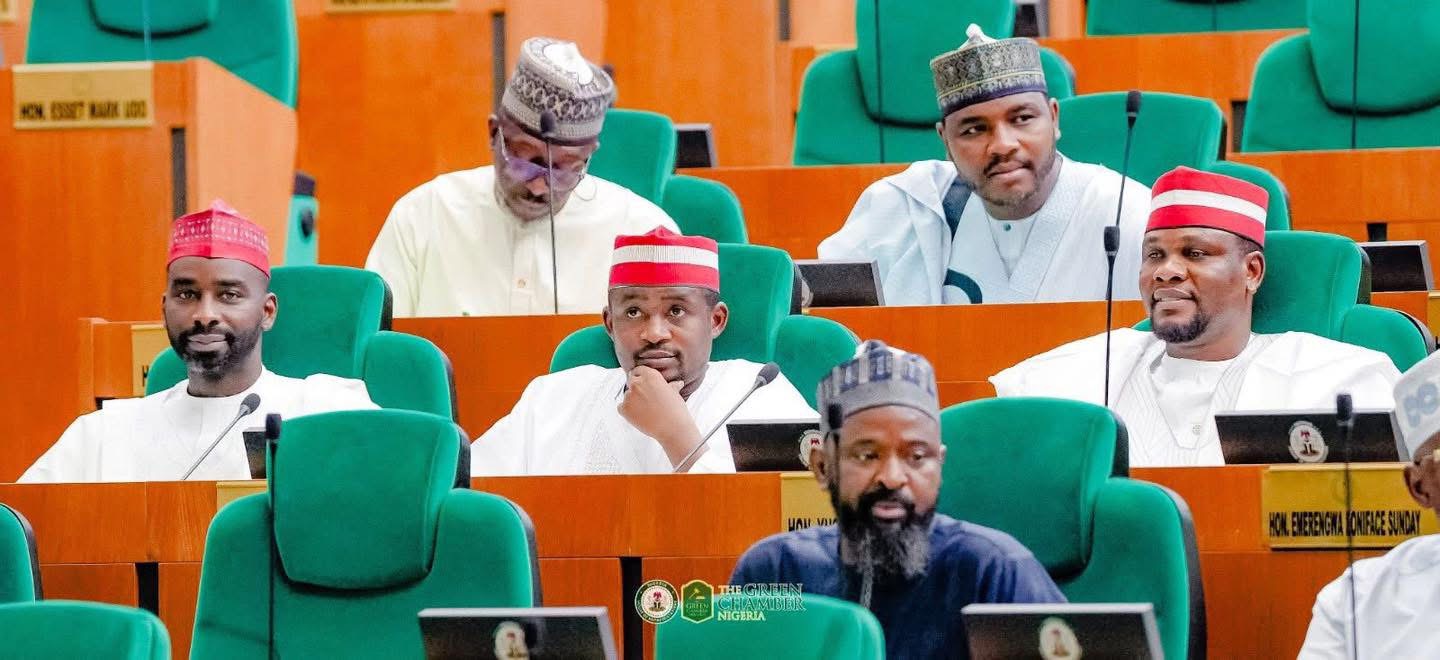
No fewer than 50 members of the 10th House of Representatives are unlikely to be part of the 11th Assembly after losing out in the All Progressive Congress (APC) primaries held on Saturday.
This marks one of the largest turnovers of sitting federal lawmakers since 2015 and signals intensifying internal competition within the ruling party eight months to the 2027 general elections.
While House Speaker Tajudeen Abbas (Kano) and Deputy Speaker Benjamin Kalu (Abia) successfully defended their tickets, several ranking and long-serving lawmakers were defeated, exposing strong anti-incumbent sentiment and the decisive role of state governors in candidate selection.
Major casualties
One of the biggest upsets was the defeat of House Majority Leader Julius Ihonvbere in Edo State’s Owan Federal Constituency. He polled 1,005 votes out of 7,587 cast, finishing third behind Andrew Ijegbia, who scored 3,695 votes. Abdul Oroh placed second with 1,740 votes.
In Delta State, veteran lawmaker Nicholas Mutu, who has represented Bomadi/Patani Federal Constituency since 1999, lost his re-election bid. Ngozi Okolie also lost the Aniocha/Oshimili ticket to former House Minority Leader Ndudi Elumelu.
Cross River State recorded one of the highest casualty rates, with five of eight incumbents failing to secure re-nomination.
They include three-term member Mike Etaba (Obubra/Etung), Godwin Offiono (Ogoja/Yala), Emil Inyang (Akamkpa/Biase), and Bassey Akiba (Odukpani/Calabar Municipality).
Only Peter Akpanke, Joseph Bassey, and Victor Abang won return tickets.
In Plateau State, conflicting results in Pankshin/Kanke/Kanam Federal Constituency triggered early confusion. One returning officer declared challenger John Tongshinen winner with 29,968 votes against incumbent Yusuf Gagdi’s 5,849.
The APC Plateau State primaries committee, chaired by Stella Okotete, later dismissed that declaration as unauthorised and affirmed Mr Gagdi as the authentic winner with 29,207 votes.
At a press briefing, Mrs Okotete stated that Nandom Kura was the recognised returning officer. “The returning officer approved by my committee that has gone to do fake declaration is null and void,” she said.
Other significant losses occurred in Ogun State (at least five incumbents, including Deputy Chief Whip Ibrahim Isiaka and Tunji Akinosi) and Ekiti State (three sitting members).
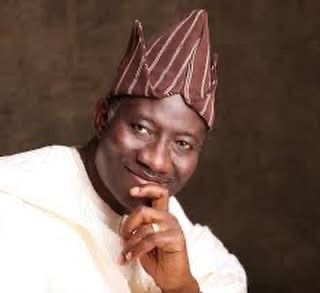
The Peoples Democratic Party (PDP), led by Tanimu Turaki, SAN, has scheduled to screen former president Goodluck Jonathan tomorrow, Tuesday, aMay 19, as the lone presidential candidate of party.
According to a statement from the PDP faction backed by the Oyo State Governor, Seyi Makinde, Former Vice-President Namadi Sambo, former governor of Plateau State, Jona Jang and a former Minister of Foreign Affairs, Tom Ikimi have been listed among a committee of 14 members to screen Jonathan described as a lone candidate by the party.
Other members of the committee were Chief Olabode George, Babangida Aliyu, Maryam ciroma, Zainab Maina, Josephine Anenin, Dr. Abdul Bulama, Dr. Esther Uduehi, Edo State PDP chairman, Tony Aziegbemi, Dr. Sunday Solarium and Chief Anicho Okoro, who would serve as administrative secretary of the committee.
Last week, the national Publicity Secretary of the faction, Ini Ememobong, disclosed that former president Jonathan has successfully registered as a member of the party in the fresh digital registration exercise directed by INEC.
The PDP faction also announced that it was set to screen 748 house of representatives aspirants, 198 senatorial aspirants, and 112 governorship aspirants.
The screening committee would screen 2122 states houses of assembly aspirants. The exercise will commence tomorrow, Tuesday in different states.
According to the statement, the screening exercise would take place nationwide on Tuesday, May 19, 2026, at 10:00 a.m.
The statement said the Interim National Working Committee (iNWC) has also released the names of members to serve on the Screening Committees and Screening Appeal Panels.
It added that the publication of the screening details “is in accordance with the party’s guidelines and timetable for the conduct of the 2027 general elections.”
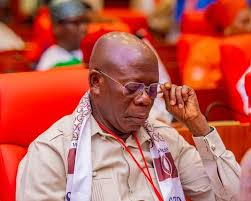
A former governor and incumbent Senator, Adams Oshiomhole, along with his counterpart Senator Joe Ikpea, sailed through the All Progressives Congress senatorial primary in Edo unopposed, and securing their tickets without a single vote cast against them.
Also Omoregie Ogbeide-Ihama emerged the winner in the APC primary for the Edo South senatorial district.
Ogbeide-Ihama won in the seven local government areas of Edo South in the results announced by the Chairman of APC National Assembly Primary Election, Muhammed Ajana at the Urokpota Hall, Benin.
He polled 27,154 votes while his opponents, Senator Neda Imasuen, got 13,580, and Pastor Osagie Ize-Iyamu got 6785.
The elections were hitch-free in Edo North and Edo Central, where there was no contest against the incumbents, Senators Oshiomhole of Edo North and Ikpea of Edo Central, respectively.
Ajana at the Urokpota Hall said the collation arose from votes cast in the seven local government areas made up of 77 wards where elections were conducted by members of the committee.
He said, “There are seven local governments that make up the Edo South Senatorial District. We have heard from the Returning officers from the seven local government areas. From the collation, the cumulative result we have for Edo South Senatorial District is this; Ogbeide-Ihama with 27,154 votes, Imasuen with 13,580 votes and Ize-Iyamu with 6, 785.
“This is the total reflection of what has transpired from the ward level to the local government and the Edo South senatorial district collation centre. With this we await further directives from the National Secretariat, we have done our best by collating the results which is our mandate, to collate the results and send them to the National Secretariat.”
However, it was gathered that Ize-Iyamu emerged as the APC candidate for Edo South Senatorial race. He claimed to have clinched the party’s ticket after defeating Ogbeide-Ihama and Imasuen.
It was claimed that the Chief Returning Officer, Abubakar Muhammad Kabiru, officially declared Ize-Iyamu the winner after securing the highest number of votes cast.
On his part, the senator representing the district condemned the exercise describing it as a sham allegedly designed to favour a preferred aspirant.
Imasuen spoke while reacting to events at his polling unit in Umagbae North Ward 5, Urhokuosa where he said he was denied the opportunity to vote following what he described as a chaotic and manipulated process.
The lawmaker accused leaders of the party of openly adopting a preferred candidate ahead of the exercise and intimidating members into supporting that aspirant.
He said, “There is nothing satisfactory about this sham of election they did today and it is very unfortunate because as a loyal party member, I expected something better than this.”
He said the warning signs emerged days before the primary when some ward chairmen allegedly informed him that they had been directed not to receive him during consultations.
Imasuen claimed that some ward leaders openly told him the party had already adopted a preferred aspirant, identified as Hon. Omoregie Ogbeide-Ihama, making further consultations unnecessary.

2027: More Than 50 Lawmakers Lose APC Reps Tickets in Major Primary Election

Bandits behind Ogbomoso school abduction will face full wrath of the law- President Tinubu

PDP to screen Goodluck Jonathan on Tuesday as its sole Presidential aspirant For 2027 race

-
Business2 years ago
US court acquits Air Peace boss, slams Mayfield $4000 fine
-

 Trending2 years ago
NYA demands release of ‘abducted’ Imo chairman, preaches good governance
-

 Politics2 years ago
Mexico’s new president causes concern just weeks before the US elections
-

 Politics2 years ago
Putin invites 20 world leaders
-

 Politics2 years ago
Russia bans imports of agro-products from Kazakhstan after refusal to join BRICS
-
Entertainment2 years ago
Bobrisky falls ill in police custody, rushed to hospital
-
Entertainment2 years ago
Bobrisky transferred from Immigration to FCID, spends night behind bars
-
Education2 years ago
GOVERNOR FUBARA APPOINTS COUNCIL MEMBERS FOR KEN SARO-WIWA POLYTECHNIC BORI