By Mohammed Bello Doka
November, 2026.
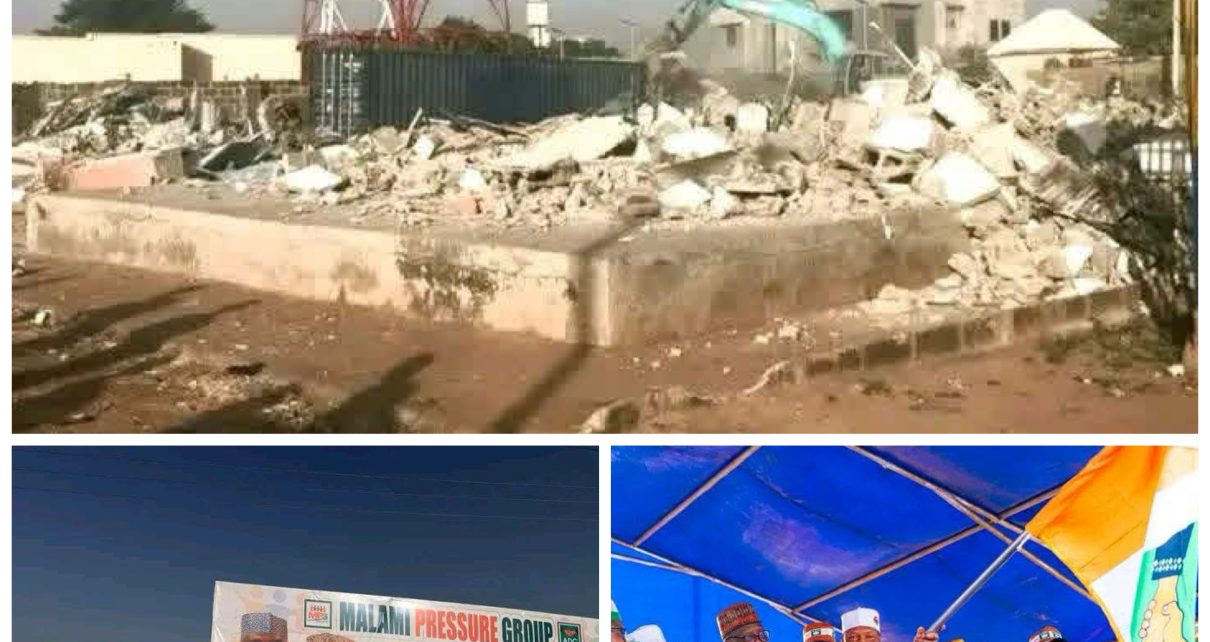
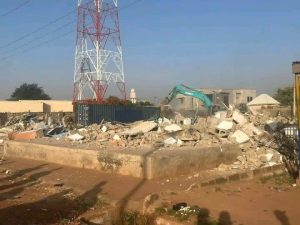
The demolition of the Malami Pressure Group (MPG) headquarters in Birnin Kebbi on October 30, 2026, by a suspected agency of the Kebbi State Government represents a deeply troubling development in our state’s political history. We condemn this action in the strongest possible terms. It is an affront to democratic principles, an assault on political freedom and a disturbing demonstration of intolerance towards lawful opposition.
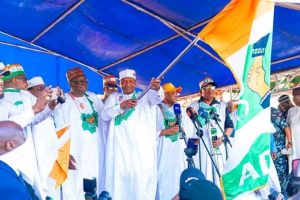
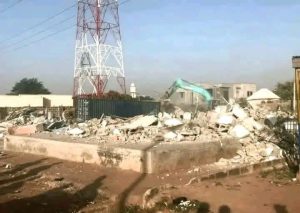
The property belongs to Abubakar Malami, SAN, former Attorney-General of the Federation and Minister of Justice, who generously donated it to the Malami Pressure Group, an ADC-affiliated youth support organisation, to serve as its headquarters ahead of the 2027 general elections. Its official opening was scheduled for October 31. However, without prior communication, formal notice or warning, the premises were demolished just a day before the scheduled inauguration.
A facility intended to provide a meeting point for young people, political supporters and members of a lawful political organisation was reduced to rubble before it could formally commence operations.
This is unacceptable in a constitutional democracy.
The circumstances surrounding this incident raise fundamental questions about the rights of citizens to own property, freely associate, express political opinions and participate in the democratic process. No government, regardless of its political strength or control of state institutions, should regard opposition activities as an offence or treat constitutional rights as privileges that can be withdrawn at will.
Who authorised the demolition? Which government agency executed the operation? Under what legal authority was it undertaken? Was any formal notice served on the property owner? Was there a court order or established administrative process? Most importantly, why was a property donated for lawful political activities demolished at this particular time?
The Kebbi State Government owes the people clear and unequivocal answers.
Nigeria is governed by a Constitution, not by the personal preferences of those occupying public office. Section 39 of the 1999 Constitution guarantees freedom of expression, Section 40 protects peaceful assembly and association, while Sections 43 and 44 provide for property ownership and safeguards against compulsory acquisition except in accordance with the law.
These protections apply equally to supporters of the ruling party and opposition parties. Government has legitimate powers to enforce planning regulations and building standards, but such powers must be exercised transparently, fairly and through due process. Regulatory authority must never become an instrument of political intimidation.
The timing makes this incident particularly disturbing. With the 2027 general elections approaching, the demolition of an opposition support organisation’s headquarters raises serious concerns about the environment in which political parties, candidates and their supporters are expected to operate.
Democracy is not the exclusive property of the party in government. It requires political competition, freedom of association and the protection of dissent. Citizens must be able to establish political offices, organise meetings and support candidates of their choice without fear of arbitrary interference.
The fundamental question is whether political competition in Kebbi is being conducted within the spirit of democratic governance or whether administrative powers are becoming instruments of partisan confrontation.
This question becomes even more important when considered against the socioeconomic realities confronting the people of Kebbi State.
The National Bureau of Statistics’ 2022 Multidimensional Poverty Index placed Kebbi’s poverty incidence at 82.2 per cent, compared with the national average of 63 per cent. More than eight out of every ten residents were experiencing multiple forms of deprivation, including inadequate access to healthcare, education, clean water and other essential services.
The situation among children is even more alarming. The NBS reported that more than 95 per cent of children under five in Kebbi were multidimensionally poor, estimating approximately 820,000 children in this category.
More disturbing is the scale of child malnutrition. A Premium Times investigation published on January 23, 2026, citing data from the Kebbi State Nutrition Office, reported that 608 severely malnourished children died between January and September 2025 across 21 treatment centres in five local government areas.
Six hundred and eight children in nine months. This is a deeply disturbing public-health reality that demands urgent government attention, sustained investment in nutrition programmes and improved access to healthcare.
The October 2026 Cadre Harmonisé food-security assessment presents another sobering picture. It estimated that 969,245 people in Kebbi would face Crisis-level food insecurity between October and December 2026, with the figure projected to rise to 1,196,830 during the June-August 2027 lean season. This represents a projected increase of approximately 23.5 per cent.
Nearly 1.2 million people are therefore projected to face crisis-level food insecurity during the 2027 lean season. Our people need practical interventions that strengthen agriculture, protect rural livelihoods, address food shortages and improve household purchasing power.
Insecurity equally remains a major challenge. A January 2026 assessment by the European Union Agency for Asylum, drawing on Armed Conflict Location & Event Data, documented 70 security incidents and 156 associated fatalities in Kebbi between January 2024 and August 2025. Forty incidents were classified as violence against civilians.
More recently, attacks and reprisals affecting communities in Besse and Shanga local government areas in October 2026 resulted in further casualties and displacement. Police accounts reported by Nigerian newspapers put the combined death toll at 10, while another publication reported 12, underscoring the need for an authoritative account.
Our people deserve to live without fear. Farmers should access their farmlands, traders should conduct business safely and rural communities should not endure repeated attacks and displacement.
These are the issues that should command the urgency and resources of government. Kebbi needs effective security, accessible healthcare, quality education, economic opportunities and measurable progress against poverty and hunger.
We are not suggesting that the demolition caused these socioeconomic challenges. Rather, the incident raises broader questions about governance priorities, institutional accountability and the protection of citizens’ rights at a time when the state faces substantial developmental and security challenges.
The African Charter on Human and Peoples’ Rights, to which Nigeria is a state party, also recognises freedom of expression, association and property rights as essential components of democratic governance. These protections must be respected, particularly during periods of heightened political competition.
We therefore demand an immediate and comprehensive explanation from the Kebbi State Government. The agency responsible must be identified, the legal authority for the operation disclosed and any relevant notices, enforcement documents or court orders made available for public scrutiny. If established procedures were disregarded, the matter must be investigated and appropriate remedies provided.
We also call on the Nigeria Police Force, the National Human Rights Commission and other relevant authorities to examine any formal complaints and ensure that the rights of those affected are protected.
This matter goes beyond Abubakar Malami, SAN, the ADC or the Malami Pressure Group. It concerns the fundamental rights of every Nigerian. The same constitutional protections that safeguard supporters of the ruling party must equally protect those who choose to support the opposition.
No government should regard peaceful political mobilisation as a threat to its authority. Public office is a constitutional trust, not a licence to settle political differences or intimidate opponents.
As the country approaches another electoral cycle, the protection of opposition parties and their supporters must be recognised as an essential obligation of democratic governance, not a favour granted at the discretion of those in power.
We will continue to defend the constitutional rights of citizens to associate freely, express their convictions and participate in the democratic process. Our commitment to the rule of law and peaceful political engagement remains unwavering.
The demolition of the Malami Pressure Group headquarters must not pass without accountability. The Kebbi State Government must explain what happened, identify those responsible and demonstrate that the law applies equally to everyone.
Ultimately, the strength of democracy is not measured by how much power those in government can exercise over their opponents, but by how faithfully they protect the rights of those who challenge them.
Kebbi State must answer a fundamental question: Are we practising democracy, founded on constitutional freedoms and the rule of law, or gradually normalising a system in which political opposition is treated as an inconvenience to be suppressed?
Democracy cannot thrive where dissent is punished, opposition is intimidated and public authority is perceived as an instrument of political retaliation.
Mohammed Bello Doka is the special assistant on media to Abubakar Malami SAN.
can be reached via bellodoka82@gmail.com