
Connect with us

Health

Nigeria records 145 Lassa fever deaths in 2025

Published

on

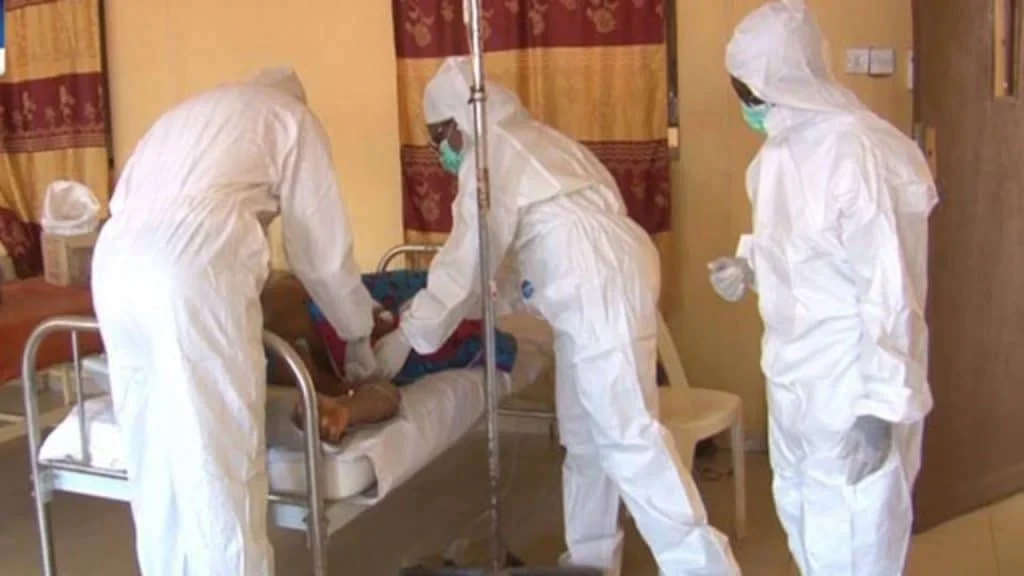
The Nigeria Centre for Disease Control and Prevention (NCDC) has confirmed 145 deaths from Lassa fever in 2025 as the country continues to battle the viral hemorrhagic disease across 18 states.

According to the latest situation report released on Friday by the NCDC for epidemiological week 24 (June 9–15), Nigeria recorded 766 confirmed cases from 5,678 suspected infections.

The case fatality rate stood at 18.9 per cent, up from 17.6 per cent during the same period in 2024.

The agency said that the states most affected were Ondo, Bauchi, Edo, Taraba, and Ebonyi, which accounted for 91 per cent of the confirmed cases.

It said that Ondo alone contributed 31 per cent making it the epicentre of the outbreak.

In spite a decline in new confirmed cases — down to eight from 11 the previous week — the Nigerian public health agency said that health authorities remained concerned about the high fatality rate.

The agency said that this was driven by late presentation of cases, poor health-seeking behaviour, and unsanitary living conditions in high-burden communities.

According to it, efforts to contain the outbreak have included the deployment of Rapid Response Teams to 10 states, risk communication, environmental sanitation campaigns, and training of health workers in high-risk areas.

The NCDC also de-escalated its Incident Management System to alert mode while integrating Lassa fever messages into wider disease awareness campaigns.

The agency has appealed to the public to avoid contact with rodents and to seek prompt medical care at designated treatment centres at the first sign of symptoms such as fever, headache, or bleeding.

The agency continues to urge Nigerians to maintain hygiene, report symptoms early, and avoid contact with rodents and their secretions.

“The public is also encouraged to follow NCDC advisories and utilise the toll-free line 6232 for inquiries,” it said.

The News Agency of Nigeria(NAN) reports that Lassa fever is a viral hemorrhagic disease transmitted primarily through contact with the urine or faeces of infected rats.

It can also spread from person to person through bodily fluids, contaminated objects, or infected medical equipment.

Symptoms include fever, sore throat, headache, vomiting, muscle pain, and in severe cases, bleeding from the body openings.

Continue Reading
Click to comment

Leave a Reply

Your email address will not be published. Required fields are marked *

Health

Robotic surgeries now happening in many private hospitals in Nigeria- Muhammad Ali Pate, Minister Of Health & Social Welfare

Published

on

Nigeria’s healthcare sector just got a major boost! Minister of Health and Social Welfare, Muhammad Ali Pate, has announced that robotic surgeries are now being performed in several private hospitals across the country.

This marks a significant milestone in Nigeria’s medical landscape, positioning the country as a hub for advanced surgical care in West Africa.

The Toumai Pro Robotic Surgery Platform, recently launched at Nisa Premier Hospital in Abuja, is a game-changer. This state-of-the-art technology enables surgeons to perform complex procedures with enhanced precision, reducing recovery time and complications.

Some benefits of robotic surgery include:

Minimally invasive: Smaller incisions, less pain, and faster recovery

Increased precision: Enhanced dexterity and accuracy

Reduced complications: Lower risk of infection and bleeding

Hospitals like Nisa Premier Hospital, Kelina Hospital, and Lagoon Hospital are already offering robotic surgery services. This development is expected to attract medical tourism, boost Nigeria’s healthcare sector, and improve patient outcomes.

As Minister Pate puts it, “This is not just a milestone for Nigeria, but for the entire African continent”.

https://www.instagram.com/reel/DSRb0Q3DH71/?igsh=MXBscG4yY2dhOXBqZA==

Continue Reading

Health

Osun Hospital Allegedly Detains Newborn Over Mother’s N700,000 Medical Debt

Published

on

A private hospital in Osun State has come under public attention following reports that it is detaining a newborn baby over an unpaid medical bill estimated at N700,000. The incident has generated public concern and renewed discussions about patients’ rights and medical ethics in Nigeria.

The case involves a young mother who reportedly experienced serious medical complications during childbirth, leading to extended hospital care for both her and the baby. After treatment was completed and the newborn was declared medically stable, the hospital allegedly refused to discharge the child, insisting that the outstanding bill must be settled first.

Sources say the family has already paid a significant amount for medical services but has been unable to raise the remaining balance due to financial hardship.

Relatives of the mother have appealed for understanding, stating that the continued stay of the newborn in the hospital has placed emotional and psychological strain on the family.

The hospital management is reported to have justified its position by pointing to past experiences where patients left without paying their medical bills. According to the management, unpaid debts affect the hospital’s ability to operate and provide services to other patients.

The situation has attracted criticism from members of the public and human rights advocates, who argue that holding patients, particularly newborns, over unpaid bills is unethical and contrary to basic human rights principles. Some legal observers have also suggested that such actions may conflict with existing laws and professional medical standards.

As public reaction continues to grow, there have been calls for the Osun State Government and relevant health authorities to step in, facilitate the release of the newborn, and address systemic issues that allow such incidents to occur.

The case has once again drawn attention to the broader challenges facing Nigeria’s healthcare system, especially the financial burden on families and limited access to affordable healthcare.


Continue Reading

Health

FG Temporarily Opens 47KM Stretch Of Lagos–calabar Coastal Highyway

Published

on

The federal government has temporarily opened a section of the Lagos-Calabar coastal highway for vehicular movement.


The 47-kilometre stretch runs from the Ahmadu Bello Way junction in Victoria Island to the Eleko junction.


The road was temporarily opened on Friday after a ceremony attended by David Umahi, minister of works; Gbolahan Lawal, Oniru of Iruland; Barinada Mpigi, the chairman of senate committee on works; Dany Abboud, managing director of Hitech construction company; Oluwaseun Osiyemi, Lagos commissioner for transportation; and officials of the ministry of works.


Olufemi Dare, federal controller of works in Lagos, said the government decided to temporarily open the section to ease traffic congestion during the Yuletide season.

Dare said the 47km section of the Lagos-Calabar coastal road was awarded to Hitech construction company for N1,067,887,381,148.61.


He said the contract sum covered the “construction of rigid pavement dual-carriage highway with accompanying drainages and culverts, median barriers, street lightings, and the relocation of public utilities like electric cables, poles, cable ducts, gas and water pipelines as required”.


“The stretch of the Lagos-Calabar Coastal Highway that falls entirely within the Lagos State border is 103km in length,” he said.


“Up till date, a total of 30km of continuously reinforced concrete pavement (CRCP) has been completed, while sand filling has been completed on the remaining 17.474km, and the whole stretch of 47.474km is thus motorable.


“The total stretch in section 1 is projected to be completed before the end of the second quarter of 2026.”


Speaking during the ceremony, the works minister said it is untrue that the federal government is only concentrating on the Lagos-Calabar coastal road, adding that other projects are currently being executed.


He added that the federal government is ready to accept constructive criticism about the project.

Continue Reading

Trending