
Columns
KNOW WHAT & WHAT NOT TO TAKE WITH RESPECT TO YOUR BLOOD GROUP

Blood group O*:
Reduce the way you eat plantain! Please please and please, reduce your intake of plantain even if you like it. Why because, you are a general donor and the blood of People with *Blood group O* is usually light
Iron which is contained in plantain makes the blood light. The problem here is that the blood of a *Blood group O* person is light and constant intake of plantain (iron) will make the blood lighter thereby leaving you with no clotting factor.
Also as a *Blood Group O*
reduce your intake of wheat, corn. Continuous intake of wheat & corn as a *Blood Group O* person is exposing yourself to Diabetes.
The problem here as well is that our different blood groups contains different types of sugar. The food that is good for someone with *Blood Group A* might not be good for someone with a *Blood Group B*. When you eat a food that does not contain your type of sugar in your Blood group, your body will be looking for where to keep the sugar and the sugar will be converted into fats and will be stored in the liver.
When there is an excess of this sugar in the Liver or the liver is saturated diabetes starts this is because the remaining sugar in the body which can’t be converted to fats begins to spread in the body.
*Blood Group B*;
Excess consumption of beans is not good for someone with *Blood Group B*. There is a major difference between Carbohydrate molecules and that of protein which is Nitrogen. Continuous intake of foods that contain Nitrogen is not good for someone with *Blood Group B*. The Nitrogen goes to the kidney. Most of the patients in Dialysis Centres are those with the *Blood Group B*.
As someone with *Blood Group B*, reduce your intake of garri, reduce your intake of Chicken. Infact avoid chicken!
Chicken contains an “Agglutinating Lectin” that can attack the bloodstream of someone with *Blood Group B* which causes immune disorders and Strokes.
People with *Blood Group O* and *Blood Group B*, continuous consumption of cashew nuts and groundnuts is not ok for you.
People with *Blood Group B*, apart from Cashew nuts and groundnuts, they are ok.
But People with *Blood Group O* should avoid all nuts generally or have a minimal intake of nuts because nuts contain aflotoxins which the body of a person with *Blood Group O* cannot digest.
Nuts are generally ok for people with *Blood Group A*. One man’s food is another man’s poison.
People with *Blood Group O*, avoid yoghurt or reduce your intake of yoghurt. People with *Blood Group A* and *Blood Group B*, free yoghurt for you.
Milk is very good and contains calcium but it is not a good source of Calcium for someone with *Blood Group O.*
This is because a person with *Blood Group O* can’t break down lactose.
Some of the Hypertension & Diabetes found among People with Blood Group O is caused by milk.
Excessive intake of milk is not good for persons with *Blood Group A* and *Blood Group B*.
*Blood Group A*;
Please reduce you general intake of meat especially cow meat!!! Cow meat exposes those with *Blood Group A* to Heart issues. Both Goat meat, Bush meat, and every other meat If you have *Blood Group A*, reduce your intake of meat whereas excessive intake of meat is very good and ok for persons with *Blood Group O.*
Even ponmo as well, *Blood Group A*. If it’s possible for you to avoid meat as a *Blood Group A* person, that will even be good.
*Blood Group O*, enjoy your meat.
*Blood Group A* you should preferably eat Snail, turkey and Chicken (Poultry) but avoid meat from ram, cow, goat and the likes.
*Blood Group B*, you’re free to eat cow meat but it should be minimal. You’re however free to eat ram & goat meat. It’s very much ok for you.
Also *Blood Group B*, please reduce your consumption of Chicken (Poultry) and even tomato as well or if it’s possible for you to avoid Chicken, that’s fine.
Chicken and tomato predisposes some with *Blood Group B* to a disease called Lupus. Lupus is a disease that occurs when your own body immune system attacks your tissues and organs. Lupus currently has no cure though the situation can be managed.
It must be emphasised the importance of the consumption of meat for someone with *Blood Group O*. Like it was said earlier, If you have Blood Group O continue eating meat. Any meat at all no matter your age. Atimes when People come of age, they reduce their intake of meat. This is however not for everybody. If you’re *Blood Group O* and you’re of age and you stop eating meat, you might have Arthritis.
This is because you’re a proteinous person by nature and your body now lacks the building blocks of protein.
If you’re *Blood Group O* and you feel you want to lose weight, you should quit eating bread, corn, pap, custard etc but not meat.
*Blood Group O* are proteinous by nature *Blood Group A* are Vegetarians by nature.
*Blood Group B* are mainly the fruit and vegetables type
*Blood Group O* you are very much free to eat garri but don’t eat wheat. Even if you have diabetes it’s ok
But
*Blood Group B*, reduce your intake of garri because garri can make someone with Blood Group B have diabetes.
Irish potato is not good for someone with Blood Group O and Blood Group A. It is however ok for people with *Blood Group B* and *Blood Group AB*.
Sweet potato is good for persons with *Blood Group O*
People with *Blood Group A*
Please reduce your intake of yam be it cocoa yam, sweet yam etc.
*Blood Group AB*;
People with *Blood Group AB* should focus on foods like seafood, dairy and green vegetables, egg.
People with *Blood Group AB* tend to have low stomach acids. They should avoid caffeine, alcohol, Corns, buckwheat, coconut, bananas, mangoes, whole milk and black tea.
People with *Blood Group AB* can also take yoghurt, walnuts, millets, broccoli, plums and berries
In Conclusion, eat more natural foods and reduce your consumption of processed foods.
*BAY LEAVES*- Yoruba name for it is “Ewe Bunkun”. That is the Leaves Women and Caterers put in Jollof-Rice to flavour it and preserve it from souring.
***Many ladies add bay leaves to their foods, especially in the cooking of red meat and poultry. Many don’t know why bay leaves are added to food!
When a woman was asked why, she said, “to flavor the food”. If you boil the bay leaves in a glass of water and taste it, it will have no flavor. So why do you put bay leaves in the meat or other food?
The addition of bay leaves to meat converts triglycerides to monounsaturated fats and, for experimentation and confirmation:
>Cut a chicken into two halves, cook each half in a separate pan and place on one a bay leaf, and cook the other without a bay leaf. Observe the amount of fat in both pans after cooking!
If you have bay leaves, there is no need for a pharmacy, as recent scientific studies have shown that bay leaves have many benefits:
They help to get rid of many serious health problems and illnesses.
The benefits of bay leaf:
They –
▪Treat digestive disorders and help eliminate –
•Lumps
•Heartburn
•Acidity
•Constipation
Hot bay tea regulates bowel movements –
•lowers blood sugar
•is an antioxidant,
▪by eating them, or by drinking bay tea for a month, the body is able to produce insulin
▪eliminates bad cholesterol and relieves the body of triglycerides.
▪useful in treating colds, flu and severe coughs, as it is a rich source of vitamin “C”. ▪you can boil the leaves and inhale steam to get rid of phlegm and reduce the severity of coughs.
▪protects the heart from seizures and strokes, as they contain cardiovascular protective compounds.
▪rich in acids such as caffeic acid, quercetin, eigonol and bartolinide, substances that prevent the formation of cancer cells in the body.
▪eliminates insomnia and anxiety. If taken before bed time, helps you relax and sleep peacefully.
▪drinking a cup of boiled bay leaves twice a day breaks down kidney stones and cures infections.
■Don’t just read and leave in your in box. Forward to others for benefit! ????
*Defeated cancer*
Pineapple hot water
Please spread the word!! Please spread the word!!
ICBS General Hospital Professor Dr. Gilbert A. Kwok insisted that if everyone who received this bulletin could take ten copies to others, at least one life would be saved.
I have done some on my part, hope you can too..
Thanks!
Pineapple hot water will save your life
Hot pineapple kills cancer cells.
Thinly slice 2 to 3 pieces of pineapple in a cup and add hot water, it will be “alkaline water”, if you drink it daily, it is good for everyone.
Hot pineapple releases anti-cancer substances, the latest advancement in medicine for effective cancer treatment.
The warm fruit of pineapple has the effect of killing cysts and tumors. It has been proven to cure all types of cancer.
Pineapple hot water clears all the germs and toxins from the body due to allergies/allergies.
A drug derived from pineapple juice only destroys *violent cells* and does not affect healthy cells.
Also, the amino acids and pineapple polyphenols in pineapple juice can control high blood pressure, prevent blockage of internal blood vessels, improve blood circulation and reduce blood clotting.
After reading, tell others, family, friends, take care of your health.








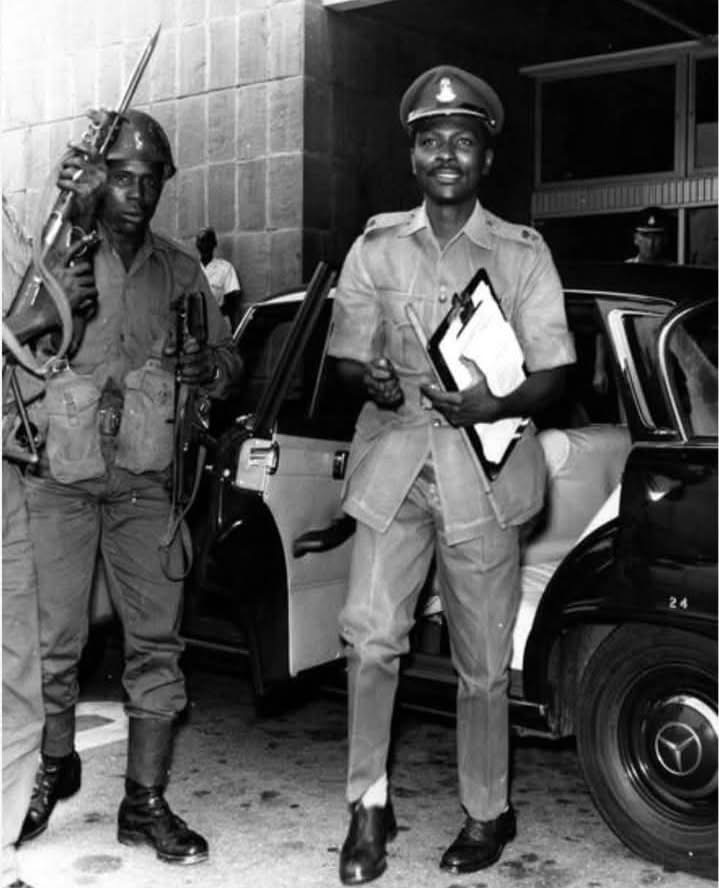
How Yakubu Gowon decided to enter the Army is quite interesting. Encouraged by his British Principal and Vice-Principal to go military, he was nevertheless torn between a career in the Army and competing options as a teacher, engineer, or physician. So he wrote out the options on little pieces of paper placed them inside a Bible and prayed. Then, with his eyes closed, he opened the Bible and picked one at random. It was the Army.
Throughout his military career he would repeatedly approach issues with a r!fle in one hand and a Bible in the other. Years later he would come to be regarded by most as a model of a “kinder, gentler” soldier. Some have nicknamed him “The Preacher”.
In 1954, after passing an entrance examination, he attended several interviews before being sent to the Regular Officers Cadet School at Teshie in Ghana – along with Patrick Anwuna, Alexander Madiebo, Michael Okwechime and Arthur Unegbe. This was followed by a course at Eton Hall in Chester, UK, followed by formal cadet training at the Royal Military Academy, Sandhurst (RMAS). He was a Cadet Sergeant at the RMAS and was commissioned 2/Lt in December 1956. It was at the RMAS that he acquired the nickname “Jack,” the closest sound to “Yakubu” his British instructors could think of.
The above is part of a piece put lol together by Nowa Omoigui, Nigerian military historian and cardiologist.
Gowon later became Head of State and had one of the most troubling dispensation in the history of Nigeria. He was removed from office in 1975 by Murtala Muhammed.
On how he survived immediately after his removal from office, he said in an interview:
“I can say with absolute authority that I may not have anything today, but honestly, at least I have a clear conscience. I thank Idi Amin and (Gnassingbé) Eyadema for the help they gave me to have money to start off with.”
Ethnic African Stories
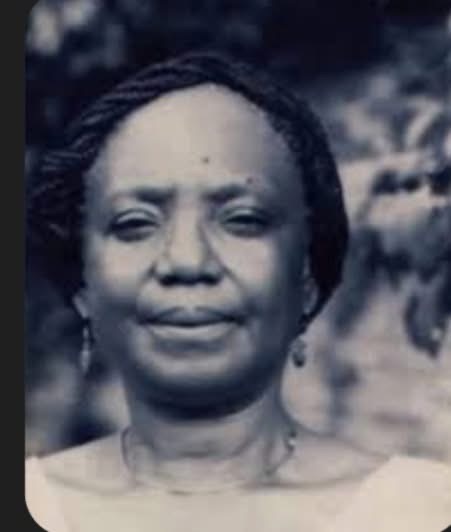
The Imo State born writer and teacher who is largely referred to as the “mother of African Literature”, was the first African woman to publish a novel in English.
Flora belived that African women were unjustly portrayed (in the books of her male counterparts) as people who were doubly malleable, as people who didn’t have even a vestige voice of their own: people who must, for instance, eat fufu not exactly because they wanted to eat fufu but because men insisted that they eat fufu, people who must live in the shadows of men… So she basically did the opposite of this in her books where she gave women prime places, using her pen to unfold to the whole world, in concrete clarity, what she believed ought to be the generally accepted societal ethos.
She celebrated the strength, tenacity and courage of African women, told their success stories in glittering terms, and sang their praises to the stratosphere.
She was born January 13, 92 years ago in Oguta – Imo State, and passed away on October 13, 1993, after enduring a server bout of pneumonia.
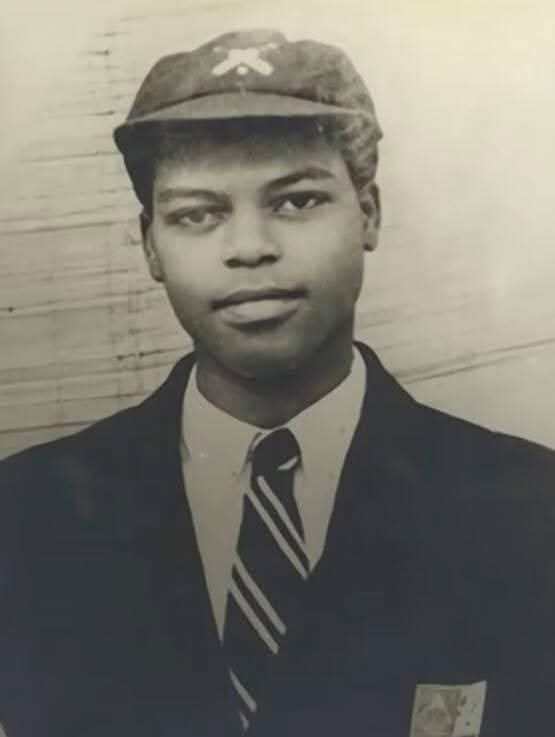
Michael Ibru was a pioneering Nigerian entrepreneur, philanthropist, and founder of the Ibru Organisation, one of the most influential business groups in West Africa. His life reflects ambition, discipline, and the transformation of opportunity into a diversified empire.
Early Life and Background
Born in 1930, Michael Ibru hailed from Agbarha-Otor, near Ughelli.
He was the eldest of seven children in a prominent family. His mother was the daughter of the wealthy Ovedje Osadjere of Olomu, which placed him within a lineage of both traditional influence and commercial awareness.
Growing up in the Niger Delta region, young Ibru was exposed early to trade, mobility, and the importance of enterprise in coastal and riverine communities.
Education and Formative Years
A defining stage of his early life was his education at Igbobi College Yaba, one of Nigeria’s most prestigious secondary schools at the time.
At Igbobi College, Michael Ibru distinguished himself not only academically but also in leadership, eventually serving as Senior Prefect. This position reflected his discipline, influence, and ability to lead peers—qualities that later shaped his business career.
His time at the institution helped refine his worldview and exposed him to structured education during a period when Nigeria was still under colonial administration.
Early Career and Exposure to Business
After completing his studies, he briefly worked with the United Africa Company (UAC), one of the most powerful trading firms operating in West Africa at the time.
This experience exposed him to:
Large-scale import and export systems
Corporate structure and logistics
Commercial distribution networks
However, rather than remain in salaried employment, he chose the path of entrepreneurship—a decision that would redefine his life and legacy.
The Birth of a Business Empire
In 1956, Michael Ibru founded a frozen fish business.
At the time, frozen food distribution was still relatively new in Nigeria, and Ibru identified a gap in the market: the need for affordable, preserved protein sources in urban centres.
His venture quickly expanded due to:
Strong demand for fish in growing cities
Efficient supply chain management
Strategic importation and distribution systems
This modest beginning became the foundation of what would evolve into the Ibru Organisation.
Expansion into a Conglomerate
Over time, the Ibru Organisation grew into a diversified business empire spanning multiple sectors, including:
Food and seafood processing
Aviation and logistics
Hospitality and real estate
Finance and banking
Oil and marine services
Media and publishing
Agriculture and industrial production
The group became one of the largest family-owned conglomerates in West Africa, with numerous subsidiaries operating across Nigeria and beyond.
Rather than relying on a single industry, Michael Ibru built a multi-sectoral business model, which helped the organisation withstand economic fluctuations and remain competitive for decades.
Leadership Style and Business Philosophy
Michael Ibru was widely regarded as a strategic thinker who believed in:
Identifying unmet market needs
Investing in scalable industries
Building long-term institutional structures
Empowering family-led continuity in business
His leadership approach combined traditional values with modern corporate thinking, allowing the Ibru Organisation to grow into a structured enterprise rather than a short-term venture.
Philanthropy and Social Impact
Beyond commerce, Michael Ibru was deeply committed to philanthropy.
His contributions included:
Support for education and scholarships
Community development initiatives
Investment in youth empowerment
Assistance to local infrastructure and social welfare projects
He believed that business success should translate into societal progress, particularly in education and opportunity creation.
Legacy of the Ibru Organisation
The Ibru Organisation remains one of Nigeria’s most recognised business groups, continuing to operate through various subsidiaries across sectors.
Its legacy is defined by:
Industrial diversification
Private sector growth in post-independence Nigeria
Family-led business continuity
Contribution to West Africa’s economic development
From a young student at Igbobi College Yaba to the founder of a continental business empire, Michael Ibru represents the story of vision, risk-taking, and entrepreneurial excellence.
His journey shows how observation, opportunity, and courage can transform a simple idea—like frozen fish distribution—into a legacy that shaped industries across Africa.
Source
Biographical and historical records on Michael Ibru
Public information on the development of the Ibru Organisation
Educational history of Igbobi College Yaba
Historical context of Nigerian post-colonial entrepreneurship and trade development

Bandits behind Ogbomoso school abduction will face full wrath of the law- President Tinubu

PDP to screen Goodluck Jonathan on Tuesday as its sole Presidential aspirant For 2027 race

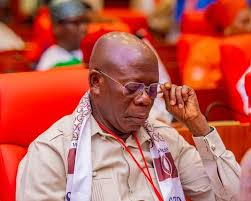
Oshiomhole wins Edo APC senatorial primaries unopposed

-
Business2 years ago
US court acquits Air Peace boss, slams Mayfield $4000 fine
-

 Trending2 years ago
NYA demands release of ‘abducted’ Imo chairman, preaches good governance
-

 Politics2 years ago
Mexico’s new president causes concern just weeks before the US elections
-

 Politics2 years ago
Putin invites 20 world leaders
-

 Politics2 years ago
Russia bans imports of agro-products from Kazakhstan after refusal to join BRICS
-
Entertainment2 years ago
Bobrisky falls ill in police custody, rushed to hospital
-
Entertainment2 years ago
Bobrisky transferred from Immigration to FCID, spends night behind bars
-
Education2 years ago
GOVERNOR FUBARA APPOINTS COUNCIL MEMBERS FOR KEN SARO-WIWA POLYTECHNIC BORI