
Columns
FOND MEMORIES OF OWERRI DURING THE GOOD OLD DAYS WHILE GROWING UP. By Willie Amadi.


A MUST READ 📚 🤣
For those above 50, who had the privilege to live in Owerri during our growing up old school days, life was sweeter, more secured and loving.
Some times when I take a retrospective look between now and those days, when we grew up in “Old Owerri” I am compelled to affirm that the old days was better. “Uwa mbu kà nmà dàà” !
You may wonder what makes the good old times to be better than now that you have almost everything, color television, telephone handset, money transfer, modern and cosy aeroplanes and cars, tall glass houses and more tarred roads, etc. etc
Unfortunately, despite what many may see as modernity, civilization and jet age, with beautiful environment, made more decent by innovations and science, I still will give one arm for the joyous, organic and natural times we enjoyed in our old Owerri.
We had our fun without fear of the unknown, even at midnights till the wee hours of the morning. There was trust, compassion, considerations and respect among peers devoid of envy.
Reason was that, though there existed competition, yet you always know where you landed and accepted it because merit was sacrosanct.
We knew each other up to our parents who also knew us all too.
Every Parent must as a matter of practice, know who the friends of their Children are and where they live.
Then, we knew who owns which car in Owerri and what he does for a living.
Just to hang a television pole will attract attention of who owns it.
People lived within their income, were satisfied and happy. Their Children were happy with the modest life of their parents, whether rich, middle class or poor. Happiness was relative without envy.
When you visit a friend and he is not around, you simply pick his door key from the door lintel or under the foot mat and open the door.
If you are spending the night, the mother will feed you. This was old Owerri and good old days.
In Owerri, there were a few modern houses then, but life was organic and boisterous. I remember seeing people who came to Ekeukwu Owerri market streaming always into our compound daily to drink refreshing tap water before leaving for their various nearby villages. People visit Owerri once in a long while from Mbaise, Orlu, Mbano, Oguta, Ikeduru etc, etc. Such rare visits was like modern day going to Lagos and traveling to Lagos in those days was like an overseas trip of today.
Major roads and streets include,Tetlow, Mbaise, Wetheral, Okigwe, Douglas, Royce Road. There was nothing like MCC, New Owerri, Dick Tiger, Ikenegbu, Chukwuma Nwoha roads or names of the recent nouveau de rich politicians and businessmen in Imo today with little or no pedigree. That used to be the Owerri you see today.
In those regulated days, no girl will ever attempt to visit you at home as you dare not visit any in her parent’s house. It will take months for a girl to acknowledge your advances, and many more to find a convenient place to meet as no hotel will allow you into their premises. Meeting points were either at the School’s visiting day, School’s debating day or during holidays at public taps while fetching water, which usually is in the evening when the Public Water Corporation pumps water. The other place are the Church on Sundays or at the Library, where your studies and seriousness with your academics win you the opposite sex and not money.
Our books were our major focal points, even though we secretly socialized on Sunday evenings too.
We exchanged Novels like James Hardly Chase, Agatha Christy etc.You may attempt hunger strike or suicide for failing JAMB or WAEC while your mates pass and gain admission into the University before you.
Nearly all the secondary schools are equal in academic standards, no matter where they are located, except those in Owerri township preferred usually as first choice in Common Entrance examination.
Schools were known by their Nicknames.
We had, OGSSIAN the all time great school in Owerri, OCOGRAM, HOGOSCO , OGIMGBO, ECOL, all in Owerri town, St. CATA in Nkwere, AQUINAS in Añara, Sabastin Accademy, Emekuku Compre, Ejiogu Memorial Egbu owned by Nathan Ejiogu, SAHACO, NEWARK HIGH, all in Aba, OGS and NGOR HIGH in Ngor Okpala. There was also the TTC Irette and the nearest higher institution in Owerri then was Alvan Ikoku college of education, now University of Education.
We have some good “Commercial Schools” which we saw then as places for those who failed Common Entrance or whose parents can not afford Secondary School fees. There were OZIMS Commercial at Nwaorie axis and CITY Commercial at Amaram extension. These were two great and impactive learning curve for secretarial and commercial training.
Children’s Day, Independent celebration and the Inter House Sports in Schools were like our Christmas and New year Celebrations put together.
They were days Principals and Parents leave us alone for at least eight hours out of their proding eyes, and we “Utilized it to the fullest”.
We prepare for these occasions like there won’t be another tomorrow.
Apart from saving money for ‘JUMP or DISCO”, they were days to display our best cloths, some hidden from our parents. We wore them outside the house in a friend’s house and also changed them again before going back home or we wear our school uniforms on them and change them before going home to avoid the beating of our lives or starving of food as punishment.
To look clean, we visit places like Soul Scissors barbing saloon at Tetlow road for perfect and modern hair cuts. That was the only barbing saloon in Owerri that had electric clippers, and they charge a little higher. If you visit two times, you will get one free hair cut.
Latest fashions then were Amos and Easy Jeans trousers, Crazy Horse, Velvetin, Yobris, Acapulco Shirts, Silk etc, etc
We keep records through pictures taken with Kodak and Polaroid Cameras, which we call “Wait and Take”.
After the march pasts held at Old Township Stadium along Tetlow road, the next is to enter O’town and “Rock” before 6pm to hit back to our various Dormetries or prepare to head home after suspension.
But we must go to “Afternoon JUMP” before returning to school. Hotels in Owerri make heavy sells in such days.
We had Gulf Course, Catering rest house, Awareness, Kakadu, Chaseside, James, Ambassador, Domino, Third House at Emekuku, Tourist Centre, Pelly hotels, etc, etc
You can go to Angelo, Unit One, Duflox or Kemo if you want pastries.
The Headquarter of entertainment then in Owerri was Afurola Night Club located at White House Hotel, owned by late Eze Philip Nwosu, where you must save enough money for ticket and lately La Pearch owne by Nda Ambu, Mr. White and Concord Cassino and Nite club.
Geraldo Pino and Bina Kofi usually perform in turns. Attendance was for “Big Boys”. We happily return to tell our friends who couldn’t make it what they missed.
If you grew up in Owerri you will also remember Afro hotel at Oparanozie Street and Cocoanut Inn around Cherubin junction reputed for short time business. We would go to Nworie and swim after our lesson at the government hand craft center by Oparanozie street and be prepared to receive strokes of the cane at home as our red eyes betrays our lies of not swimming.
There was Rex Cinema at Royce Road. Talking about Cinemas, we were not comfortable with our parent’s black and white TV, until the Color brand started coming in vogue.
We enjoyed movies; like Bruce Lee, John Wayne, Hawaii 50, Sky Force, Hotel de Jordan with Chief Idiemudia as the man character and Samanja the army man with thick mustach, Jagua, Dallas, Charlies Angels, Zebrudaya, Nathy, Ovuleria, Jango and others entertained many. Many whose parents could not afford TV, peeped from the windows of their friends who will shift the curtain of their windows for them to watch Zebrudaya and Soul train. There was love and compassion from the heart.
We also enjoyed Brizillian League. The only player I can remember is Zeze.
The Common drinks include ever lasting Coca Cola, Green Sands Shandy, Champion Beer, Golden Guinea, Dubic, Royal Crown, Dr Pepper etc, etc.
Available Cigarettes were Saint Morris, Gold Leaf, Marlboro, Dunhill, Three Rings, Bicycle, Erimoore, Flight, Benson and Hedges but if you want to get real “high” than these stuffs, you visit Okon, located inside Mami Market at Shell Camp, Aluma at Wetheral road, Paddy Yama at Naze, Wazobia at Agbala or Ndà Jonel Cross èbè ime Ohèè in Umuororonjo village for weeds.
If you want the best palmy, you visit Igbokwe at Alvan Quarters, and another secret joint at Amakohia junction by Orlu road.
We hadly joked with music as we are always alert for singing and dancing the new “Release”.
Shalama, Fela, Whispers, Bob Marley, Chris Okotie, Jide Obi, Sonny Okosun, Yvonne Chaka Chaka, Maha of I will fly over the mountains fame, though she died very early, Onyeka Onwenu, Bongos Ikwue, Osibisa, Jimmy Cliff, Brother Johnsons, Commodores, Michael Jackson, MC Hammer, Felix Liberty, Chris Okotie, Christy Essien Igbokwe, Temptation, Somkey Robbison, Bony M, Earth Wind and Fire, Barry White, Smokies, Rod Stewart, Jonh Cougar, Bostons, Cutis Blow, Lijadu Sisters, Donna Summer, Gladys Knight and the Pimps, Grace Jones, Teddy Pendagrass, Cool and the Gang, Sir Warrior, Dan Orji, Alloy Anyanwu, Kabaka,Joeneze, Ederi Chukwueke, Abaraka, Olololo, Paulson Kalu, Raskimo, Majek Fashek, Malvin Gay, Billy Ocean, Odessy, etc.
Dancing styles include electric shock, shuffling, break dance and bruce or wholesale. These hugging dance feelings was like having sex, as that was the closest opportunity to touch a girl’s breast and waist and secretely kiss her while dancing in the hall.
Owerri had known Recording Studios. Labamba along School Road owned by Orlando Oparaugo.
We had Beaton owned by Vitais Ajumbe. We also enjoyed Master Blast DJ, Leostan, now Africa’s Tech giant, Alan B, who with Ajumbe were the major and best DJs in town.
I remember Awila, Martin Momo, Major Otuka, Kofi Nnaji, Bob and Eze Nnodi, Practicals, July Best, Innocent Boy, Massacre, Ekeledo (Agenda) Fusion (Toto) Saboo,Topscat, Alibuto, Ikeotuonye, Lazoo, Poto, Broken, Nna Meen, Ngozi & Chinyere (Umu ejimma).
I also remember “World Man and Bro Ken Obiekea and nda Felly Abii who thought us “Guy”.
“Guy” at that time was to have good dress sense and be bold among sexes, and know how to toast and do the Talking To, called (TT).
Not many families had vehicles then. Those of us who had privileged parents had to find a way to “roll out” our parent’s car to attend parties when they were asleep or hire one at Mbaise road for a few hours and return the vehicle. Running away with the vehicle will not even enter your mind.
The popular brands were Toyota Crown, Citreon, Datsun, Laurel and Pannel Van, Lada, Renault, Peugeot, Range Rover, Rio, Land Rover, Passat, Opel, Bettle, Fiat, Honda, Datsun Kawasaki, Vespa, Moblet etc, etc
I can vividly remember the white color Range Rover belonging to Chief Loveday Ememe, my uncle’s friend, a Commissioner then, who usually parked it in front of his house at Commissioners Quarter, Shell Camp.
The only available Swimming Pool was at Shell Camp Secondary School until Mbakwe built Concord Hotel in 1982.
Attending Football matches was a must. At Old Stadium fenced round with zinc.
We either scale the fence or follow a Military Man to enter free.
There was nothing like Premiership then. Nobody had time for that.
Our Clubs were Spartans, P&T Owerri, Ministry of Works FC, Elemats Ubomiri, Trojans Owerri.
Outside Owerri were Asabatex, Standard of Jos, Ewekoro Babes, Bendel Insurance, Flamingos of Benin, Leventis of Ibadan, IICC Shooting Stars of Ibadan, Rangers International Enugu, Vasco Dagama of Enugu, Enyimba of Aba, PZ FC, Aba, Stationary Stores Lagos, Racca Rovers of Kano, Calabar Rovers, Sharks of Port Hacourt, DIC Bees of Kaduna etc.
My Stars were in Spartans: Leo Nkwocha(Atila) Emma Ajunwa(Piccolo) Ben Akanu(Pele) Nicholas Ukadike(Thunder) Evans Ikwuwegbu(Mpoto) formerly Manning the goal of Enyimba and denied Spartans victory many times, Sidney Ugorji, Cardinal Ugwuegbu (Dont Dirty), the “Wonderful” goal keeper, Jerry Chukwueke, Sylvester Oparanozie(Bahama) lk Madukairo (Man Mountain) Emeliano Momokobo, Frank Njemanze, Ugo Harrison, Eugene Ohuabunwa, Kevin Onwana, Jonny Nwadioha, Goddy Ebomuche, the goal keeper Amadi Nwokocha, Goddy Agbarakwe, Peter Erege, Kelechi Emetole(Caterpillar) Ben Nwosu (Zico) and others.
I recognize nda Chim Chim Pepper, the number one fan of Spartans FC and also not forgetting Agwu Nwogo, the great IBC commentator who brought the matches to our homes and you felt that you were in the stadium
I am glad Owerri has developed and is developing into a Bigger City. Hotels, Shops and Plazas litter everywhere now.
Then we had Bata Shoes, Chanrai Super Market at Okigwe road, where PDP office is located presently, GayGill Super Market, at Wethral road, Jonny Stores, Ghana Stores at Douglas(owned by the Chukwuezis) Amadi Gun Store, on School road (by Willie Amadi’s family house), Donna Summer and Tonnison Electronic Shops,Tims Press. The only good Chemist was Manila on Douglas road.
We need a replica of SULLO, an Environmental Company that Mbakwe brought which made Owerri a sparkling cleanest State capital in 1982, later replicated in 2008-10 by Willie Amadi’s Clean & Green of Ohakim administration. I wish my Clean & Green was sustained till date to make Owerri a clean garden city. It will still happen, God willing.
Although development and science have made the city look more exciting, but much of her historical artifacts are gone to give way to civilization. The Mbari cultural center, the Nworie and Otamiri sparkling rivers, the great Ekeukwu Owere market are no more. The new proposed world class Water Front and Amusement Park by the Uzodinma administration may be a consolation to the younger and future generations.
I still remember the Jonny Walker Clock at Ama Jk Round About family house of amiable Nze HSK Osuji which survived the Biafran Civil War.
And lest I forget. In our growing up days, we only knew of Assumpta Cathedral and Cathol, Bishops Unegbu and Bishop Nwankiti at Egbu Cathedral. These were two major churches in Owerri. Today, Christianity have been invaded by Pentecostal movements.
Things have really changed.
We breathed my Owere Nchi-Ise as air of love, hospitality and conviviality. Today, it has become polluted and toxic due to urbanization, insecurity, politics of hatred and envy. God help us !
Nevertheless, WE thank God for the over 50 years of love, brotherlines compassion enjoyed amongst citizens of Abia who lived with us in Owerri before Abia State was created out of Imo in the 70s.
In OWERE …
“Ūyo wu ūyo mă gi remains our cherished hospitality gift and wishes for all good residents of Owere. Anyi shi kwa nū, gi láma nkpu nkpu âfu kwa la gi, ná âzu ooh !!!
I dedicate this piece of work to our children and libraries accross Nigeria for history, knowledge and posterity.
WILLIE AMADI ✨
Ukwachiaka, Omeudo Owere,
LL.B, BL, LL.M, Ph.D Law inview & Scholar at Cambridge.




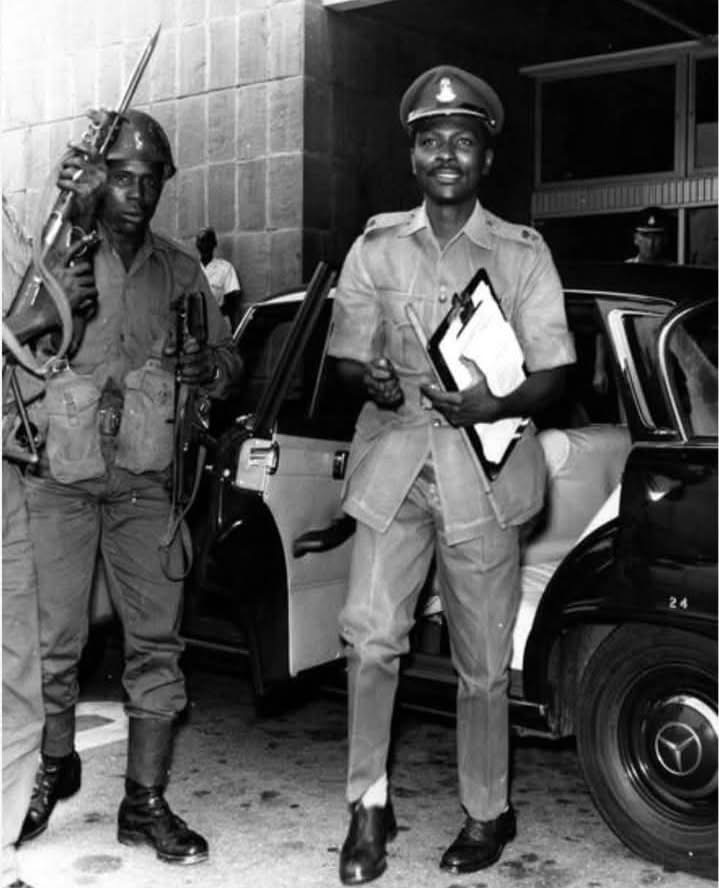
How Yakubu Gowon decided to enter the Army is quite interesting. Encouraged by his British Principal and Vice-Principal to go military, he was nevertheless torn between a career in the Army and competing options as a teacher, engineer, or physician. So he wrote out the options on little pieces of paper placed them inside a Bible and prayed. Then, with his eyes closed, he opened the Bible and picked one at random. It was the Army.
Throughout his military career he would repeatedly approach issues with a r!fle in one hand and a Bible in the other. Years later he would come to be regarded by most as a model of a “kinder, gentler” soldier. Some have nicknamed him “The Preacher”.
In 1954, after passing an entrance examination, he attended several interviews before being sent to the Regular Officers Cadet School at Teshie in Ghana – along with Patrick Anwuna, Alexander Madiebo, Michael Okwechime and Arthur Unegbe. This was followed by a course at Eton Hall in Chester, UK, followed by formal cadet training at the Royal Military Academy, Sandhurst (RMAS). He was a Cadet Sergeant at the RMAS and was commissioned 2/Lt in December 1956. It was at the RMAS that he acquired the nickname “Jack,” the closest sound to “Yakubu” his British instructors could think of.
The above is part of a piece put lol together by Nowa Omoigui, Nigerian military historian and cardiologist.
Gowon later became Head of State and had one of the most troubling dispensation in the history of Nigeria. He was removed from office in 1975 by Murtala Muhammed.
On how he survived immediately after his removal from office, he said in an interview:
“I can say with absolute authority that I may not have anything today, but honestly, at least I have a clear conscience. I thank Idi Amin and (Gnassingbé) Eyadema for the help they gave me to have money to start off with.”
Ethnic African Stories
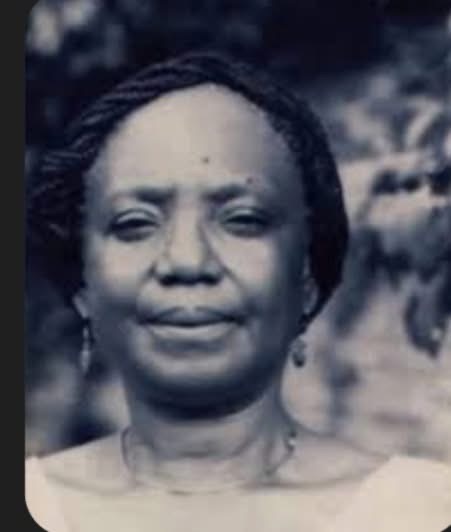
The Imo State born writer and teacher who is largely referred to as the “mother of African Literature”, was the first African woman to publish a novel in English.
Flora belived that African women were unjustly portrayed (in the books of her male counterparts) as people who were doubly malleable, as people who didn’t have even a vestige voice of their own: people who must, for instance, eat fufu not exactly because they wanted to eat fufu but because men insisted that they eat fufu, people who must live in the shadows of men… So she basically did the opposite of this in her books where she gave women prime places, using her pen to unfold to the whole world, in concrete clarity, what she believed ought to be the generally accepted societal ethos.
She celebrated the strength, tenacity and courage of African women, told their success stories in glittering terms, and sang their praises to the stratosphere.
She was born January 13, 92 years ago in Oguta – Imo State, and passed away on October 13, 1993, after enduring a server bout of pneumonia.
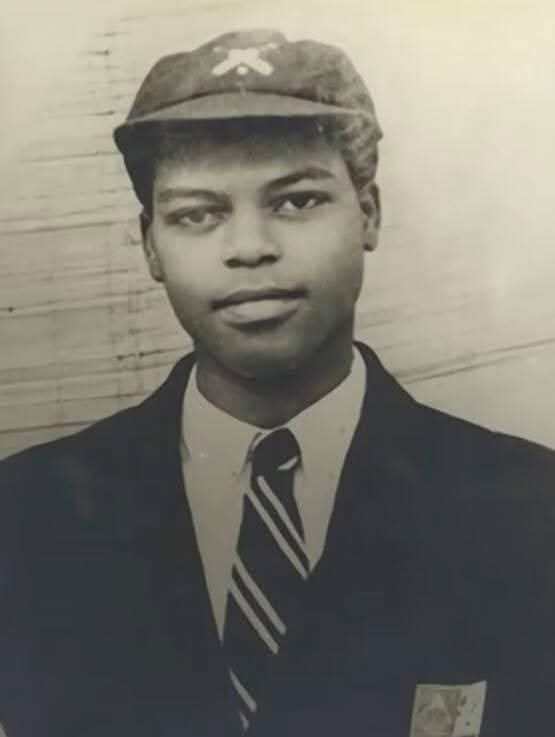
Michael Ibru was a pioneering Nigerian entrepreneur, philanthropist, and founder of the Ibru Organisation, one of the most influential business groups in West Africa. His life reflects ambition, discipline, and the transformation of opportunity into a diversified empire.
Early Life and Background
Born in 1930, Michael Ibru hailed from Agbarha-Otor, near Ughelli.
He was the eldest of seven children in a prominent family. His mother was the daughter of the wealthy Ovedje Osadjere of Olomu, which placed him within a lineage of both traditional influence and commercial awareness.
Growing up in the Niger Delta region, young Ibru was exposed early to trade, mobility, and the importance of enterprise in coastal and riverine communities.
Education and Formative Years
A defining stage of his early life was his education at Igbobi College Yaba, one of Nigeria’s most prestigious secondary schools at the time.
At Igbobi College, Michael Ibru distinguished himself not only academically but also in leadership, eventually serving as Senior Prefect. This position reflected his discipline, influence, and ability to lead peers—qualities that later shaped his business career.
His time at the institution helped refine his worldview and exposed him to structured education during a period when Nigeria was still under colonial administration.
Early Career and Exposure to Business
After completing his studies, he briefly worked with the United Africa Company (UAC), one of the most powerful trading firms operating in West Africa at the time.
This experience exposed him to:
Large-scale import and export systems
Corporate structure and logistics
Commercial distribution networks
However, rather than remain in salaried employment, he chose the path of entrepreneurship—a decision that would redefine his life and legacy.
The Birth of a Business Empire
In 1956, Michael Ibru founded a frozen fish business.
At the time, frozen food distribution was still relatively new in Nigeria, and Ibru identified a gap in the market: the need for affordable, preserved protein sources in urban centres.
His venture quickly expanded due to:
Strong demand for fish in growing cities
Efficient supply chain management
Strategic importation and distribution systems
This modest beginning became the foundation of what would evolve into the Ibru Organisation.
Expansion into a Conglomerate
Over time, the Ibru Organisation grew into a diversified business empire spanning multiple sectors, including:
Food and seafood processing
Aviation and logistics
Hospitality and real estate
Finance and banking
Oil and marine services
Media and publishing
Agriculture and industrial production
The group became one of the largest family-owned conglomerates in West Africa, with numerous subsidiaries operating across Nigeria and beyond.
Rather than relying on a single industry, Michael Ibru built a multi-sectoral business model, which helped the organisation withstand economic fluctuations and remain competitive for decades.
Leadership Style and Business Philosophy
Michael Ibru was widely regarded as a strategic thinker who believed in:
Identifying unmet market needs
Investing in scalable industries
Building long-term institutional structures
Empowering family-led continuity in business
His leadership approach combined traditional values with modern corporate thinking, allowing the Ibru Organisation to grow into a structured enterprise rather than a short-term venture.
Philanthropy and Social Impact
Beyond commerce, Michael Ibru was deeply committed to philanthropy.
His contributions included:
Support for education and scholarships
Community development initiatives
Investment in youth empowerment
Assistance to local infrastructure and social welfare projects
He believed that business success should translate into societal progress, particularly in education and opportunity creation.
Legacy of the Ibru Organisation
The Ibru Organisation remains one of Nigeria’s most recognised business groups, continuing to operate through various subsidiaries across sectors.
Its legacy is defined by:
Industrial diversification
Private sector growth in post-independence Nigeria
Family-led business continuity
Contribution to West Africa’s economic development
From a young student at Igbobi College Yaba to the founder of a continental business empire, Michael Ibru represents the story of vision, risk-taking, and entrepreneurial excellence.
His journey shows how observation, opportunity, and courage can transform a simple idea—like frozen fish distribution—into a legacy that shaped industries across Africa.
Source
Biographical and historical records on Michael Ibru
Public information on the development of the Ibru Organisation
Educational history of Igbobi College Yaba
Historical context of Nigerian post-colonial entrepreneurship and trade development

2027: More Than 50 Lawmakers Lose APC Reps Tickets in Major Primary Election

Bandits behind Ogbomoso school abduction will face full wrath of the law- President Tinubu

PDP to screen Goodluck Jonathan on Tuesday as its sole Presidential aspirant For 2027 race

-
Business2 years ago
US court acquits Air Peace boss, slams Mayfield $4000 fine
-

 Trending2 years ago
NYA demands release of ‘abducted’ Imo chairman, preaches good governance
-

 Politics2 years ago
Mexico’s new president causes concern just weeks before the US elections
-

 Politics2 years ago
Putin invites 20 world leaders
-

 Politics2 years ago
Russia bans imports of agro-products from Kazakhstan after refusal to join BRICS
-
Entertainment2 years ago
Bobrisky falls ill in police custody, rushed to hospital
-
Entertainment2 years ago
Bobrisky transferred from Immigration to FCID, spends night behind bars
-
Education2 years ago
GOVERNOR FUBARA APPOINTS COUNCIL MEMBERS FOR KEN SARO-WIWA POLYTECHNIC BORI