
News
Anthony Joshua Knocks Out Jake Paul in Sixth Round

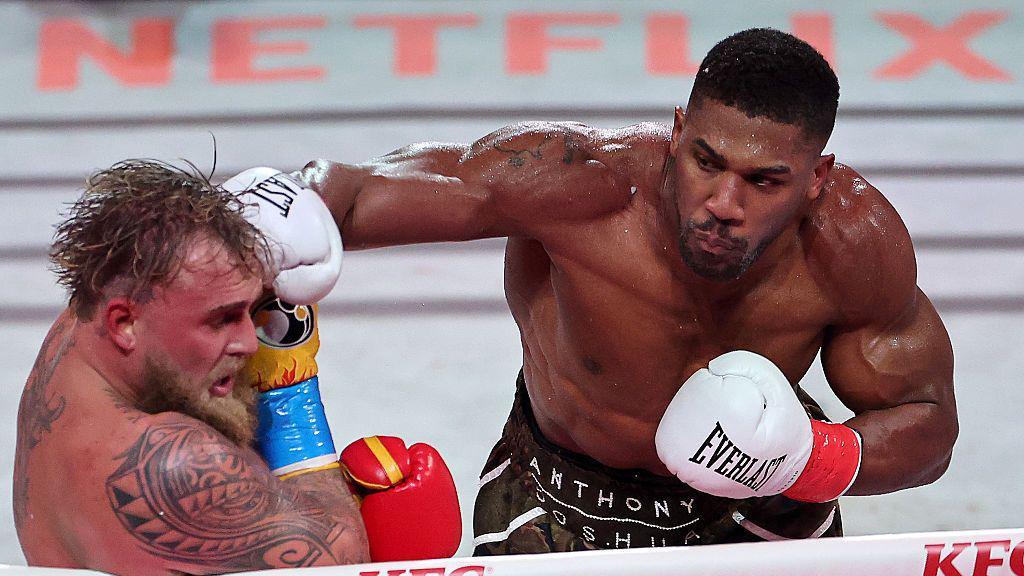
In a night that captivated the global sports world, British boxing icon Anthony Joshua delivered a commanding sixth‑round knockout of YouTuber‑turned‑boxer Jake Paul in a highly anticipated heavyweight clash at the Kaseya Center in Miami on December 19, 2025. The bout, streamed live to millions on Netflix, marked one of the most surreal and talked‑about events in modern combat sports, blending traditional pugilism with celebrity spectacle.
From the opening bell, the fight — billed as “Judgment Day” — carried enormous expectations. Joshua, a two‑time unified heavyweight champion and Olympic gold medalist, entered the ring as the overwhelming favorite despite more than a year out of active competition following a stoppage loss to Daniel Dubois in September 2024. Paul, the social media mogul whose unconventional boxing career has generated more headlines than wins, was seen as an intriguing yet risky opponent, a cruiserweight stepping up to face a seasoned heavyweight with significant advantages in size, experience and pedigree. The narrative was part David vs. Goliath, part circus, but the outcome was undoubtedly reaffirmation of boxing fundamentals.
The physical disparities were evident early. At the weigh‑in, Joshua tipped the scales at 243.4 pounds, nearly 30 pounds heavier than Paul, who weighed in at 216.6 pounds — a rare heavyweight outing for the American whose career has mostly been at cruiserweight. Standing six feet six inches tall with a longer reach, Joshua looked every bit the seasoned contender poised to reestablish his dominance. Paul, by contrast, sought to rely on speed, movement and unpredictability, a strategy that allowed him to avoid early confrontation.
The first four rounds unfolded in a way few anticipated. Joshua, methodical but visibly shaking off ring rust, struggled to impose his will while Paul employed a defensive game plan built around evasion and clinching. The crowd’s expectation for early fireworks dissipated as both fighters traded minimal offense, prompting boos and criticism from some spectators who felt the spectacle did not live up to the hype. Nevertheless, Joshua’s experience — and sustained pressure — began shaping the narrative as the fight progressed.
By the fifth round, momentum definitively shifted. Joshua began to land meaningful blows, culminating in two knockdowns as Paul’s energy reserves drained and his defensive tactics became increasingly untenable. Judges and fans alike sensed the fight reaching a turning point as the veteran Briton closed the distance with crisp combinations that rattled his opponent.
The decisive moment came early in the sixth. After dropping Paul again with a heavy right, Joshua pressed forward — his shots now landing with precision and power — prompting referee intervention and an emphatic stoppage at 1:31 of the round. The victory marked Joshua’s first knockout win since defeating Francis Ngannou in early 2024 and ended Paul’s bid to make a defining statement in his sporadic journey through professional boxing.
In the frenetic moments following the fight, Joshua offered measured respect to his defeated foe, acknowledging Paul’s resilience in lasting into the later rounds despite the physical toll. Paul, grimacing from the knockout blow, later revealed he believes he suffered a broken jaw but maintained a defiant spirit, expressing a desire to continue his boxing career after recovery and even pursue a world title.
The bout also reignited questions about the evolving nature of celebrity boxing — a phenomenon that has both expanded audiences and drawn criticism from purists. Observers on social media and discussion boards were quick to debate the legitimacy of the match, with some fans decrying the spectacle as a mismatched contest, while others applauded the drama and Joshua’s eventual assertion of superior skill. Regardless, the fight generated immense viewership, leveraging Netflix’s global streaming platform and bringing combat sports into mainstream entertainment in ways previously unparalleled.
For Joshua, the victory offers a potential springboard back into elite contention. Fresh off his knockout triumph, the Briton openly called for high‑profile future matchups, including the possibility of facing fellow heavyweight star Tyson Fury, whose social media rivalry with Joshua has been an ongoing subplot in the build‑up to the Miami showdown. With a professional record bolstered by 26 knockouts and a renewed sense of momentum, Joshua now stands poised to define the next chapter of his storied career.
For Paul, the defeat may represent a crossroads. Though he showed durability that surprised some critics, the physical and tactical challenges he faced against an elite heavyweight highlight the limitations of his transition from influencer to serious pugilist. However personal ambition and showmanship remain central to his brand, and Paul’s remarks post‑fight underscored a readiness to learn and return, even if at a more natural weight class.
As the boxing world digests the aftermath of “Judgment Day,” one truth endures: when elite skill meets massive spectacle, the sport’s appeal — and controversy — only grows stronger. Joshua’s knockout may have closed one chapter, but in the global arena of fighters, fans and media narratives alike, the story is far from over.
https://www.instagram.com/p/DSedrTbDLph/?igsh=MTQ3ZXRpMXkwc2p2YQ==



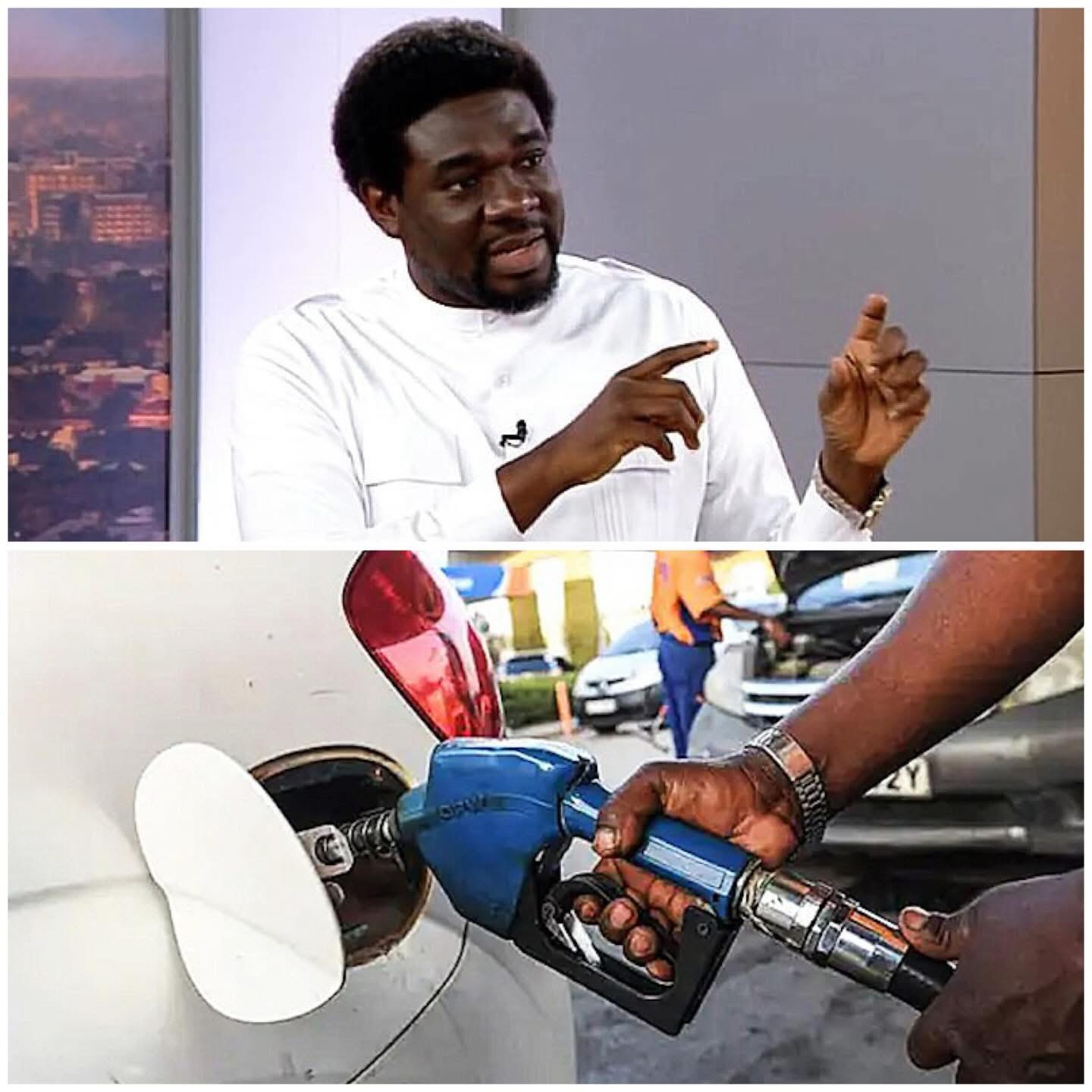
The Trade Union of Nigeria, TUC, has raised the alarm that the price of Premium Motor Spirit aka Petrol may climb to about N2,000 per litre if urgent measures are not taken to cushion the impact of rising global crude prices and the depreciating naira.
Speaking to newsmen on Thursday, April 9, the president of the TUC, Festus Osifo, called on the Federal Government to immediately deploy 60 percent of excess crude oil revenue above the 2026 budget benchmark to subsidise crude feedstock supplies to the Dangote Refinery and other modular refineries, a move it says will slash pump prices of petrol, diesel, and jet fuel within two weeks
“Today, comrades, we are seeing that the cost of petrol is edging towards N2,000 per litre depending on the part of the country that you are. Nigerian workers are already passing through excruciating pain as we speak.
The same way it is affecting transportation, it is also affecting manufacturing. The cost of diesel has also gone northward, meaning that the cost of production has increased. When production costs rise, the final price of goods on the shelves will also skyrocket.
If this continues unchecked, the inflation that we are currently celebrating as going downwards will reverse and start moving up again,” he stated.
Osifo outlined the proposal as an urgent intervention to cushion Nigerian workers from excruciating pain caused by petrol prices edging towards ₦2,000 per litre in some parts of the country
News
Cameroon’s President, Paul Biya Set To Get A Vice President For The First Time In His 43-Year Rule
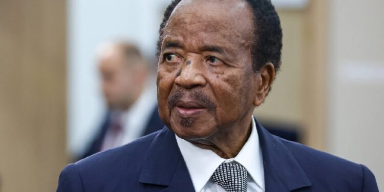
Cameroon’s president, Paul Biya, is set to get a vice president for the first time in his four-decade rule, following controversial constitutional changes backed by the parliament.
In a joint session of the ruling party-dominated National Assembly and Senate, lawmakers voted 200 to 18 in favour, with four abstentions, to pass the bill.
The bill stipulates that the vice president will automatically assume the presidency if President Paul Biya dies, resigns, or becomes incapacitated.
Biya, 93, has led the Central African country since 1982 and is the world’s oldest serving head of state. Public discussion about his health is banned.
According to the legislation, a copy of which was seen by Reuters, the vice president will be appointed and dismissed by the president, serving for the remainder of the president’s seven-year term.
However, the interim leader would be prohibited from initiating constitutional changes or running in a subsequent election.
Prior to the amendment, the constitution designated the leader of the Senate to briefly take over in case the sitting president d!es or is incapacitated. An election would then be held.
The Social Democratic Front (SDF) party, which has six representatives in parliament, boycotted the vote. It had pushed for a revision in favour of the vice-president being jointly elected with the president, rather than appointed.
The party also sought a constitutional provision that reflects the linguistic split between English and French-speaking regions. The SDF wanted the nation’s top two posts to be shared between Cameroon’s two communities, which was the position before 1972.
“This constitutional reform could have been a moment of political courage, but it is nothing less than a missed historic opportunity,” SDF chairman Joshua Osih said.
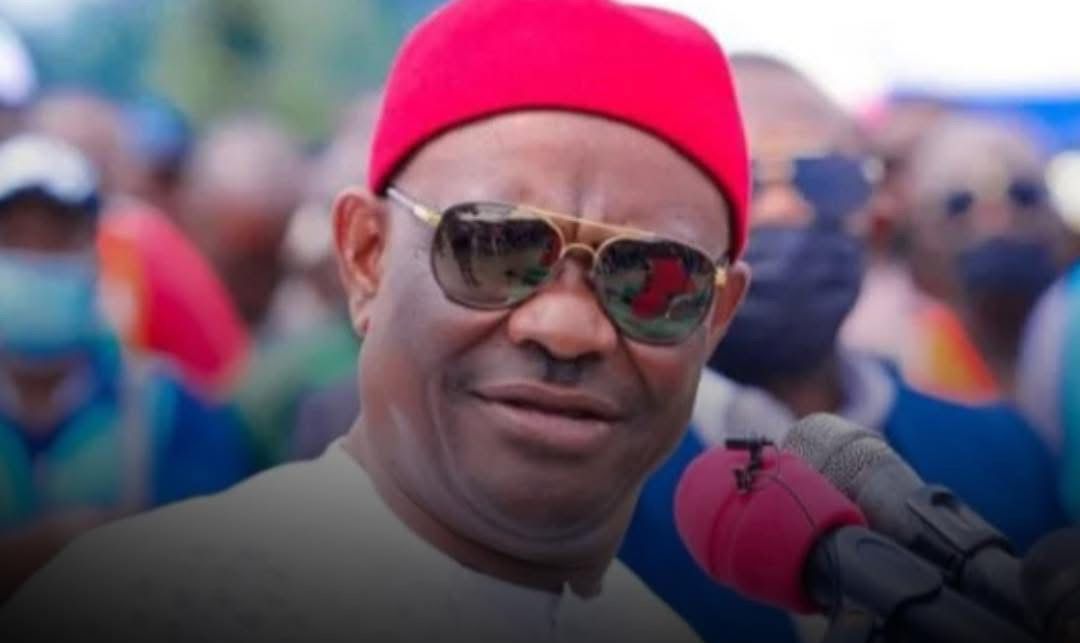
Minister of the Federal Capital Territory, Nyesom Wike, has highlighted the ongoing challenges of tax collection, pointing out the disparity between citizens’ expectations and the reality of government revenue.
Speaking with TVC NEWS live, he stressed that while Nigerians expect quality infrastructure and services, there is widespread reluctance to contribute through taxes.
On the difficulty of generating revenue, Wike said: “To collect tax, you know it’s not an easy thing. I don’t know how many of you here like to pay tax. Nigerians want everything for free. They want road, they want light. It is not easy.”
He further stated; “When I came to Abuja we were about 8, 9 billion. The money we get from the federal government is 1% of the allocation of federal government. So if federal government gets 1 trillion for example, they’ll give us one percent which is ten billion naira and that cannot carry the society. Our salary in a month is not less than 12–13 billion, so we must augment. How do we augment?”
Addressing public criticism, he added: “There’s no ab¥se that any politician has received than me. I think after the president, I’m the highest ab¥sed. There’s nothing we do that we won’t get ab¥sed. Well, what is important to me is that I want to be concentrated to do the job.”
On oversight and accountability, Wike explained how closely he monitors the finances: “The money we have gotten from tax challenge me, minister FCT, what are you doing? I’ll show you as I sit here.”

2027: More Than 50 Lawmakers Lose APC Reps Tickets in Major Primary Election

Bandits behind Ogbomoso school abduction will face full wrath of the law- President Tinubu

PDP to screen Goodluck Jonathan on Tuesday as its sole Presidential aspirant For 2027 race

-
Business2 years ago
US court acquits Air Peace boss, slams Mayfield $4000 fine
-
 Trending2 years ago
NYA demands release of ‘abducted’ Imo chairman, preaches good governance
-

 Politics2 years ago
Mexico’s new president causes concern just weeks before the US elections
-
 Politics2 years ago
Putin invites 20 world leaders
-
 Politics2 years ago
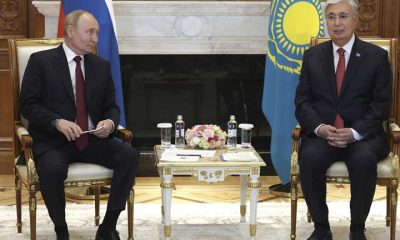
Russia bans imports of agro-products from Kazakhstan after refusal to join BRICS
-
Entertainment2 years ago
Bobrisky falls ill in police custody, rushed to hospital
-
Entertainment2 years ago
Bobrisky transferred from Immigration to FCID, spends night behind bars
-
Education2 years ago
GOVERNOR FUBARA APPOINTS COUNCIL MEMBERS FOR KEN SARO-WIWA POLYTECHNIC BORI