
News
Uzodimma rallies South East APC Stakeholders behind Tinubu’s 2027 reelection

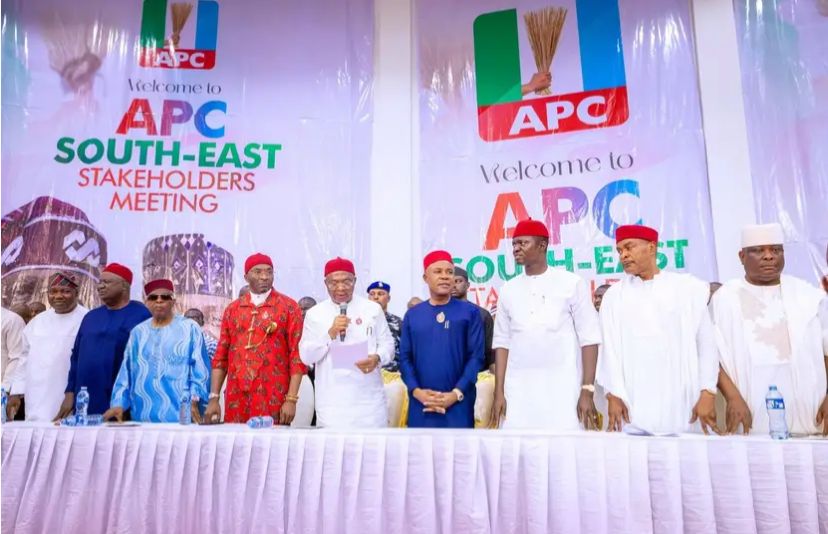
Governor of Imo State and Chairman of the All Progressives Congress (APC) in the South East, Senator Hope Uzodimma, has called on political leaders and stakeholders in the region to unite behind President Bola Ahmed Tinubu ahead of the 2027 general election, describing the task as a collective responsibility crucial to the South East’s place in Nigeria’s political future.
Governor Uzodimma made the call on Saturday, January 10, 2026, while addressing APC stakeholders from the five South East States at a meeting held at the Hotel Presidential, Enugu.
Speaking in his capacity as the APC’s South East leader and “Renewed Hope Ambassador,” the Imo State Governor said President Tinubu had entrusted the political fate of his re-election in the region to APC leaders, stressing that the responsibility to deliver electoral success in 2027 must be shared by all Party stakeholders.
“In practical political terms, this enormous responsibility is not mine alone, it is yours. A responsibility for one of us is a responsibility for all of us,” Uzodimma said.
He noted that the meeting provided an opportunity for reflection on the political direction of the South East, urging leaders to “honestly assess past electoral outcomes and reposition the zone within the national political equation.”
Uzodimma expressed concern over the region’s voting pattern in the 2023 presidential election, describing it as politically disadvantageous.
According to him, while the APC presidential candidate secured significant votes in other geopolitical zones, the South East contributed only a marginal percentage, making the region politically predictable and easy to ignore at the national level.
“When you become predictable in the game of power, it is easy to ignore you,” he warned.
The Governor, however, pointed to what he described as a changing political tide in the South East, citing the growing strength of the APC in the region since 2023.
He highlighted gains recorded by the Party, including an increase in the number of APC governors, senators, members of the House of Representatives, State legislators, and local government officials across the zone.
“In the House of Representatives, we moved from eight members to 23. That is nearly a 200 per cent increase. These figures show that the APC is gaining the confidence of political leaders and grassroots supporters in the South East,” Uzodimma said.
He added that no serious politician aligns with a Party that lacks prospects, noting that the steady influx of leaders into the APC reflects growing belief in the it’s future at both regional and national levels.
Uzodimma stressed that the challenge ahead was to translate elite-level support into mass votes at the ballot box in 2027, insisting that the South East must deliver votes commensurate with its growing political strength.
Declaring his support for Tinubu’s second-term bid, the Governor said the President deserved the opportunity to complete ongoing economic and security reforms, despite the initial hardships associated with them.
He listed improvements in security, currency stability, student loan access, and infrastructure development as evidence that the Tinubu administration’s policies were yielding results.
“The reforms came with discomfort, but today our currency is stabilising, security is improving, and our children can go to school without barriers,” he said.
Uzodimma argued that supporting Tinubu’s re-election would position the South East strategically for future negotiations, including the long-term aspiration of producing a President from the region.
“Politics is about give and take. If we support the President to complete his tenure, we are building a bridge our children will cross when it is our turn,” he said.
He called on stakeholders to adopt a formal resolution committing the South East APC to mobilising votes for President Tinubu across all States, local governments, and wards in the region.
The meeting concluded with Uzodimma inviting a former Senate President, Chief Anyim Pius Anyim to move a motion endorsing President Tinubu for a second term on behalf of South East leaders, supported by another former President of the Senate, Chief Ken Nnamani.
The Deputy Speaker, House of Representatives, Rt. Hon. Benjamin Kalu called on South East leaders to rethink sentimental politics and focus on strategic, numbers-based alliances that can restore the region’s influence at the centre.
He argued that supporting existing southern political partnerships, particularly the current administration, is the most practical path to relevance, warning that isolation and sectional thinking would weaken the South East’s bargaining power.
He commended President Tinubu’s leadership and reforms, noting that increased national revenue and improved federal allocations have benefited South East States.
Kalu urged APC stakeholders to intensify Party membership drives and voter registration ahead of 2027, stressing that political strength depends on numbers, inclusion of new members, and effective mobilisation at the grassroots.
Earlier, the National Vice Chairman of APC South East, Dr. Ijeomah Arodiogbu highlighted the positive impact of President Tinubu’s economic reforms, noting that Nigeria’s stock market has grown significantly and that the country is on course toward becoming a one-trillion-dollar economy. He said petroleum products prices are beginning to decline and described Nigeria as a leading exporter of aviation fuel. He cited these developments as evidence of a strengthening economy.
While acknowledging current challenges, he urged Nigerians, particularly supporters of the APC, to remain patient and confident that the government’s policies are steering the country in the right direction.
Arodiogbu later read the Communique that articulated the position of the Stakeholders.
Other speakers include the host Governor, Peter Mba, and Governor Francis Nwifuru of Ebony State.
The meeting attracted the presence of APC Deputy National Chairman, South, Chief Emma Enukwu, several federal legislators of APC extraction, ministers, former Governors (including Chief Ikedi Ohakim, Ifeanyi Ugwuanya), among other stakeholders of APC in the South East.
Oguwike Nwachuku
Chief Press Secretary/Special Adviser (Media) to the Governor
January 10, 2026


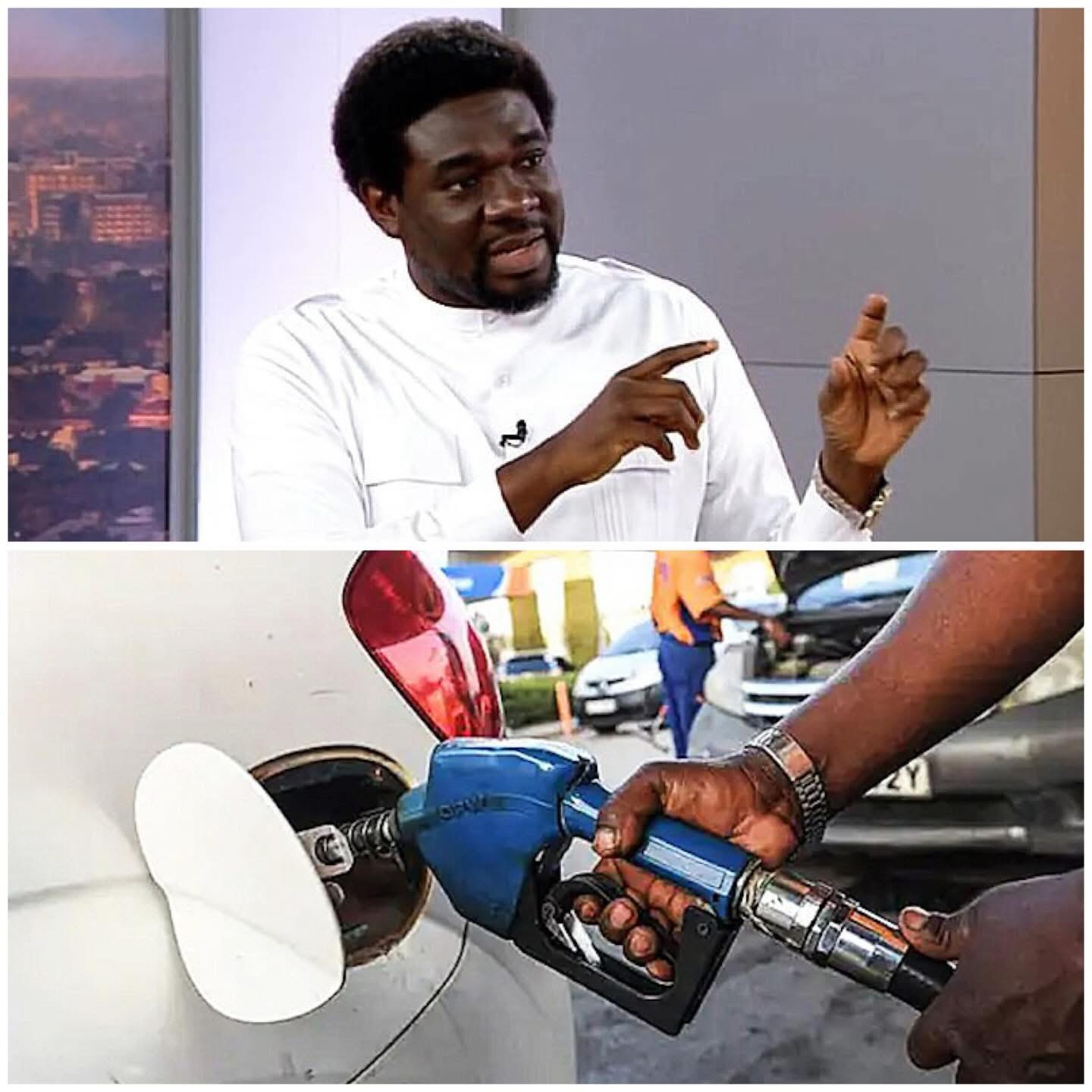
The Trade Union of Nigeria, TUC, has raised the alarm that the price of Premium Motor Spirit aka Petrol may climb to about N2,000 per litre if urgent measures are not taken to cushion the impact of rising global crude prices and the depreciating naira.
Speaking to newsmen on Thursday, April 9, the president of the TUC, Festus Osifo, called on the Federal Government to immediately deploy 60 percent of excess crude oil revenue above the 2026 budget benchmark to subsidise crude feedstock supplies to the Dangote Refinery and other modular refineries, a move it says will slash pump prices of petrol, diesel, and jet fuel within two weeks
“Today, comrades, we are seeing that the cost of petrol is edging towards N2,000 per litre depending on the part of the country that you are. Nigerian workers are already passing through excruciating pain as we speak.
The same way it is affecting transportation, it is also affecting manufacturing. The cost of diesel has also gone northward, meaning that the cost of production has increased. When production costs rise, the final price of goods on the shelves will also skyrocket.
If this continues unchecked, the inflation that we are currently celebrating as going downwards will reverse and start moving up again,” he stated.
Osifo outlined the proposal as an urgent intervention to cushion Nigerian workers from excruciating pain caused by petrol prices edging towards ₦2,000 per litre in some parts of the country
News
Cameroon’s President, Paul Biya Set To Get A Vice President For The First Time In His 43-Year Rule
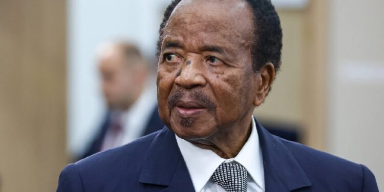
Cameroon’s president, Paul Biya, is set to get a vice president for the first time in his four-decade rule, following controversial constitutional changes backed by the parliament.
In a joint session of the ruling party-dominated National Assembly and Senate, lawmakers voted 200 to 18 in favour, with four abstentions, to pass the bill.
The bill stipulates that the vice president will automatically assume the presidency if President Paul Biya dies, resigns, or becomes incapacitated.
Biya, 93, has led the Central African country since 1982 and is the world’s oldest serving head of state. Public discussion about his health is banned.
According to the legislation, a copy of which was seen by Reuters, the vice president will be appointed and dismissed by the president, serving for the remainder of the president’s seven-year term.
However, the interim leader would be prohibited from initiating constitutional changes or running in a subsequent election.
Prior to the amendment, the constitution designated the leader of the Senate to briefly take over in case the sitting president d!es or is incapacitated. An election would then be held.
The Social Democratic Front (SDF) party, which has six representatives in parliament, boycotted the vote. It had pushed for a revision in favour of the vice-president being jointly elected with the president, rather than appointed.
The party also sought a constitutional provision that reflects the linguistic split between English and French-speaking regions. The SDF wanted the nation’s top two posts to be shared between Cameroon’s two communities, which was the position before 1972.
“This constitutional reform could have been a moment of political courage, but it is nothing less than a missed historic opportunity,” SDF chairman Joshua Osih said.
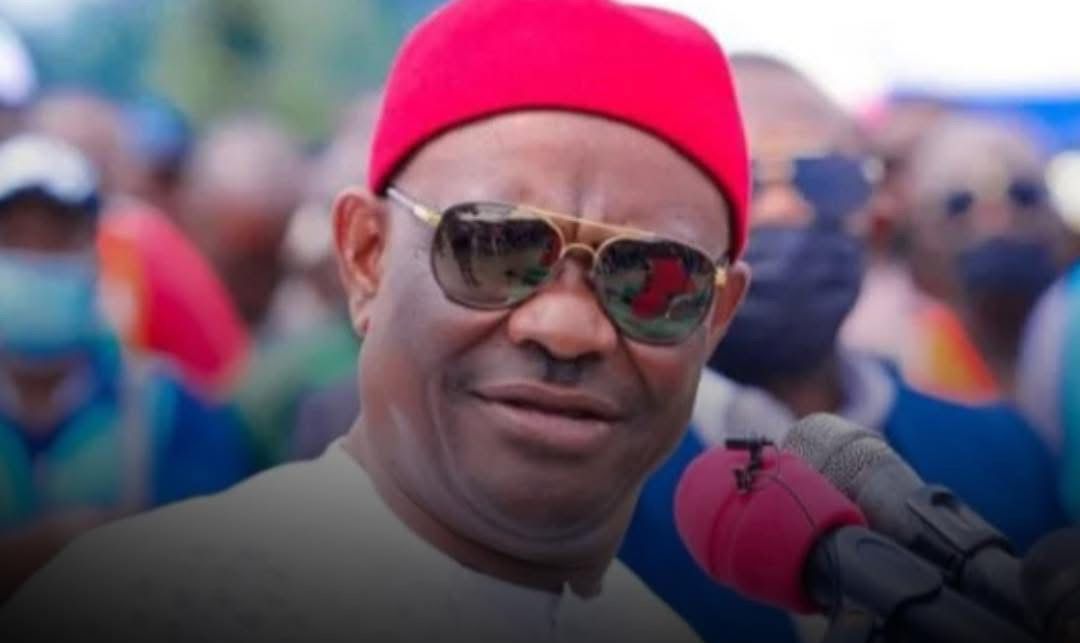
Minister of the Federal Capital Territory, Nyesom Wike, has highlighted the ongoing challenges of tax collection, pointing out the disparity between citizens’ expectations and the reality of government revenue.
Speaking with TVC NEWS live, he stressed that while Nigerians expect quality infrastructure and services, there is widespread reluctance to contribute through taxes.
On the difficulty of generating revenue, Wike said: “To collect tax, you know it’s not an easy thing. I don’t know how many of you here like to pay tax. Nigerians want everything for free. They want road, they want light. It is not easy.”
He further stated; “When I came to Abuja we were about 8, 9 billion. The money we get from the federal government is 1% of the allocation of federal government. So if federal government gets 1 trillion for example, they’ll give us one percent which is ten billion naira and that cannot carry the society. Our salary in a month is not less than 12–13 billion, so we must augment. How do we augment?”
Addressing public criticism, he added: “There’s no ab¥se that any politician has received than me. I think after the president, I’m the highest ab¥sed. There’s nothing we do that we won’t get ab¥sed. Well, what is important to me is that I want to be concentrated to do the job.”
On oversight and accountability, Wike explained how closely he monitors the finances: “The money we have gotten from tax challenge me, minister FCT, what are you doing? I’ll show you as I sit here.”

David Mark Holds Secret Meeting With PRP Leaders as ADC Crisis Deepens

Chaos As Military Officers Exchange Blows During Tinubu’s Visit To Bayelsa (Videos)

HRH Ekwueme of Ochia Kingdom Iynched & kiIIed in Imo.

-
Business1 year ago
US court acquits Air Peace boss, slams Mayfield $4000 fine
-

 Trending1 year ago
NYA demands release of ‘abducted’ Imo chairman, preaches good governance
-

 Politics1 year ago
Mexico’s new president causes concern just weeks before the US elections
-

 Politics1 year ago
Putin invites 20 world leaders
-

 Politics1 year ago
Russia bans imports of agro-products from Kazakhstan after refusal to join BRICS
-
Entertainment1 year ago
Bobrisky falls ill in police custody, rushed to hospital
-
Entertainment1 year ago
Bobrisky transferred from Immigration to FCID, spends night behind bars
-
Education2 years ago
GOVERNOR FUBARA APPOINTS COUNCIL MEMBERS FOR KEN SARO-WIWA POLYTECHNIC BORI