
Columns
A Reply to Chidi Odinkalu: NJC was unfair to Justice Inyang, JCA by Alex Morgan Esq

After reading the article entitled “Blessed Are The Crooked Judges’ by Prof. Chidi Odinkalu, a legal mind for whom I have nothing but respect, I can’t but agree that the article aptly captures the decisions reached at the 108th Meeting of the National Judiciary Commission (NJC) held on April 29 and 30, 2025.
However, the issues raised in the said article compelled one to do a little more research, and also make some enquiries, on the subject matter. It is based on my findings from these enquiries that, as a lawyer myself, I must disagree with Odinkalu on his inferences and conclusions, especially as they relate to the case of Justice Jane Inyang, JCA. And my areas of disagreement are as follows:
In that article, the highly respected Odinkalu, a former chairman of the Nigerian Human Rights Commission (NHRC), lamented the decay in the nation’s Judiciary and how corrupt judges were daily allowed to get away with hardly a slap on the wrist, recycled and then promoted into even higher offices to continue with their rape of the judiciary, and by extension, the country.
As deep and well-researched as Prof. Odinkalu’s submission is, however, it fell into the trap of not only generalisation, but wrong narrative which the NJC decision appears to have conveyed on the matter, and which the media and public commentators have since latched upon.

And the result? An action that could, at worst, be an honest professional misinterpretation of the law by a judge, was approximated to corruption by those who should, and indeed do, know better. And who have subsequently gone ahead to malign the judex as corrupt.
From his article, Odinkalu also got sold this false narrative that has no basis in the facts of the matter. For the facts of the matter, which actually speak for themselves, would have led to a completely different conclusion if there were no extraneous influences brought to bear on the matter.
On the surface, it accuses Justice Inyang of granting an ex parte order to a receiver manager to sell a property in dispute, even when the matter was still at the interlocutory stage.
But nothing can be farther from the truth. Inyang did not grant an ordinary ex parte order for the sale of the said property. Her order was made alongside other orders in aid of the receivership in line with the provisions of Sections 555 to 563 of the Companies and Allied Matters Act, 2020.
So, to start with, it wa-#s not an illegal order. And court records are replete with precedents of similar orders.
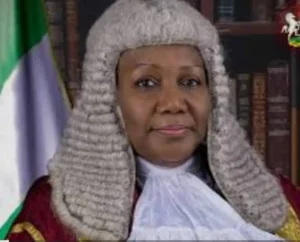
But that is not the only detail the NJC elected to look away from in its dizzying verdict on Justice Inyang.
To begin with, the said order was made on June 14, 2023, in a matter, Suit No. FHC/UY/CS/46/2023, before Justice Inyang at the Federal High Court Uyo Judiciary Division.
Two days later, on June 16, 2023, Justice Inyang’s name was published as a nominee for elevation to the Court of Appeal.
By convention, she was directed to stop sitting and return all files to the Administrative Judge for reassignment. She did just that, effectively taking her hands off the case.
She was not, therefore, in a position to know that her order, which, by the way, was not in finality, was not even served on the Respondent, as she directed.
As every diligent judge handling a receiver manager matter, she granted the order to protect the properties from being destroyed by the debtor, and directed that it be served by publication in a national daily to put everyone on notice.
That service, in fact, is the responsibility of the court bailiff and other court officials, supported by security personnel.
She further adjourned the matter for report of compliance, where all parties, if served would appear before the court to make their respective cases.
That was what was expected of a diligent judge, and was exactly what she did. And two days latter, she was promoted to the Appeal Court.
But the verdict of the NJC and the deliberate media spin and misinterpretation thereof tend to paint the picture that there was something fishy about the ex parte order granted by Justice Inyang. Ironically, what Justice Inyang did is professionally sound, and in keeping with global best practice.
The case which basically arose from a mortgage transaction that went sour, was brought by a Receiver Manager. In matters of this nature, the process is usually to grant an Ex parte order to protect the asset, in this case, Udeme Essiet’s companies, petrol stations and other businesses, from being plundered and dissipated, pending the final determination of the matter.
Since the order was interim, it is usually served on the Respondent, who on receipt files his own case and objections on the adjourned date. On the adjourned date, the court can decide to revoke or vary the interim order. This, Justice Inyang had no opportunity of doing because she had moved on.
The company affected, we hear, is on appeal, which is its right remedy.
But, for the avoidance of doubt, after Justice Inyang made the order, handed over the case file and moved on to assume duty at the Court of Appeal, the Federal High Court system, either by omission or commission, failed to serve the order on the Respondent, while the applicants, the bailiffs and all we went on to sell the said property, using this same temporary order – all these, without the knowledge of Justice Inyang who had since moved on.
We hear that the hearing of the substantive matter of the case, as well as all other related issues is still pending before the same court, while the Respondent has gone on appeal. So, why the hurry to move against Justice Inyang?
Curiously, the case/petition against this alleged offence of Justice Inyang was filed long after the matter had become statute barred. That petition should have been filed within six months of the order, but the petition which the NJC acted upon to indict Justice Inyang came a clear nine months after the said order. This is against NJC’s established regulations.
It gets even curiouser when the buyer of the property in dispute, Justice S. Essien, a judge of the National Industrial Court, who’s not known to Inyang, and who claimed to have bought it for an uncle, was let off the hook, while Inyang was put on trial, using the same facts and evidence. Similarly, neither the court officials, bailiffs, security operatives and all who facilitated this back-door sale was disciplined.
Justice Essien, we gathered, told another panel that he had never met Justice Inyang all his life. That it was, in fact, an uncle of his in the United States of America who saw an auction sales advert and asked him to represent him. He subsequently put in a bid, and was successful. All this while, Justice Inyang was at the Court of Appeal and did not know what was going on.
We gathered that this was why the petitioner apologized to Justice Inyang before the Mary Odili-chaired NJC panel, and withdrew his allegation of bribery, saying that he was now convinced that the order was not induced by any bribe to justice Inyang. In fact, this exchange was actually said to have been recorded by the NJC panel, which still went ahead to indict Inyang.
Even more curious, is the fact that even with the recording of these, the full NJC panel chaired by the CJN still went ahead to uphold the indictment of Justice Inyang, despite that the owner of the said businesses withdrew his allegation of bribery and corruption against Justice Inyang, insisting that the vexatious order was not bribe-induced, and that he only made the accusation out of anger.
In our opinion, once there’s no proof of bribery, corruption and undue influence, the decision of a judge cannot amount to a misconduct. The remedy is appeal.
Our view is that since both the Justice Odili panel and the full panel chaired by the CJN could not establish a case of corruption and bribery against Justice Inyang, the petition should have been struck out or, at the very worst, issue a warning or mild caution.
The NJC’s decisions in this circumstance have done incalculable damage to the name and reputation of Justice Inyang, who, like all of them on the panels, also has a name to protect.
For she has every right to be proud of, and jealously guard, her ancestry. After all, she is the granddaughter of the late Barr. Asuquo Etim Inyang of Ikono Ito, in the Odukpani area of Cross River State. Her grandfather, is the first lawyer from the old Eastern Region (and the South) to be called to bar in both the England and Nigerian. He was admitted to the Inner Temple in 1921 and called to bar in 1924 – in both England and Nigeria.
Of course, it is these and several other inconsistencies between evidence and conclusions that now seem to give grain to the speculations that Justice Inyang may indeed be a victim of conspiracy in high places. For instance, could it be true that Justice Inyang, who was appointed to the Court of Appeal barely two years ago, was not the preferred choice of the establishment? Is this seeming plot to rubbish her part of a bigger plot to take her out and nominate this other preferred judge?
How much of this has got to do with her well known independent and uncompromising stance on several cases where extraneous pressures have allegedly been mounted on judges? For Justice Jane Inyang it was, who gave a dissenting judgment in the Ogun State election petition that upheld Gov. Dapo Abiodun’s election. She had insisted that the Electoral laws were not substantially complied with in the governorship election and had called for a fresh election.
Justice Inyang also delivered the lead judgement which upheld the death sentence passed on Chief Rahman Adedoyin, the Ile-Ife hotelier convicted for the murder, in his hotel, of a post graduate student of the Obafemi Awolowo University who had lodged in the hotel.
Are we now stranded with a judiciary where career progression is directly related to the willingness to bend the rule and comply with the whims of politicians and those who wield political powers?
When did it become a crime for Appeal Court judges to differ on matters involving the ruling party? Must they always tow the official line of protecting persons in office?
Does it mean that the Nigerian judiciary no longer has a place for independent judges who stand by their conviction? Is Justice Inyang now a victim of her independence and impartial interpretation and administration of the law?
Finally how much of Justice Inyang’s travails can be put down to the insinuations of gossips and petty jealously, especially among female judges, whereby judges instigate, sometimes baseless, petitions against fellow judges to get rid of them? Did the recent recognition of Justice Inyang by a national newspaper, and the award that came with that recognition, play any part in winning her new enemies among envious female colleagues?
And, to think of it, why are women oftentimes the biggest obstacles to the advancement of fellow women?
With a woman as Chief Justice of Nigeria, and another woman as President of the Court of Appeal, one would have expected more protection for female judges – or in the least, fair hearing. But the reverse appears to be the case.
This writer recalls that it was also under the CJNship of another woman, Justice Aloma Muktar, that the duo of Justices Glady Olotu and Rita Ajumogobia were unfairly treated and dismissed as judges of the Federal High Court by the same NJC.
Thankfully, the courts would eventually void the decisions of the NJC on these two judges and reinstate them. It is gratifying, therefore, to learn that Justice Inyang has already filed to appeal the decision of the NJC.
But, if indeed the NJC has finally woken up to the yelling need to cleanse the judiciary and the corruption that stinks to high heaven therein, the Justice Jane Inyang case is the wrong place to start from, especially when several judges who have clearly compromised on election petitions and other partisan political matters have been allowed to go scot-free, even as they daily jeopardise Nigeria’s democracy and the country at large.
Wrongfully and mischievously scapegoating Justice Jane Iyang, cannot wipe out the mess. It only worsens it.
Who, for instance, would sanction (or petition against) a certain Kekere-Ekun who sat on the panel that, against all conventional reasoning, awarded the Imo State governorship election to the candidate who finished fourth at the polls? Or a Justice Monica Bolna’an Dongban-Mensem if she is accused, for instance, of having been backed by the local APC establishment to indirectly oversee the curious judicial annihilation of the PDP and its elected officers in her home state of Plateau?
Would these jurists also be the ones who should now sit in judgement over these and other allegations if and when the petitions do come?
To begin with, that several decisions of the NJC have been unable to stand the test of dispassionate interrogation before a competent court calls to question the constitution and the composition of the NJC, as well as the process of arriving at its verdicts. It also calls to question, the idea of allowing serving judges/Justices to sit on the NJC panels, as instances abound whereby these jurists are allowed to sit in judgement over matters in which they have verifiable pecuniary interests. Moreover, it can sometimes be difficult for some serving judges to be completely independent in matters that concern officials of the same government of the day, who are their employers.
It would not be out of place, therefore, to remove the CJN and serving judges from sitting on the NJC and also to thoroughly review and overhaul the powers of the NJC.
Increasingly, the NJC, instead of serving to help maintain the highest level of professionalism among judicial officers, has become a burial ground for some judges to intimidate colleagues and beat them into line whenever they show the slightest sign of independent mindedness.
Yes, this writer may not know Jane Iyang personally, but if her clearly outstanding footprints in the judiciary are anything to go by, it then means that this unmasked injustice against the Justice must not be allowed to stand.
If the NJC has a differing opinion from her understanding and/or interpretation of the law, the petitioner should have been encouraged to appeal the decision – an option that is already being explored. However, to insinuate corruption, and to go ahead and selectively punish the judge for this raises a lot of questions as to ulterior motives. A warning or caution should have sufficed in this instance. However, making it look like a case of corruption is like working towards a predetermined outcome: to indict Inyang by any means possible.
That probably explains why the Justice practically received no protection from the president of the Court of Appeal. Or why the advice of the Chief Judge of the Federal High Court did not appear to have been sought (or not considered) on this matter. For the Federal High Court has the expertise in receiver-manager cases as well as other corporate and commercial complex matters.
Incidentally, this writer believes there is still ample room for the NJC, and the establishment to wriggle themselves out of this messy misadventure. We hear that Justice Inyang’s solicitors, the respected Tayo Oyetibo (SAN) have made a passionate appeal to the CJN for a review of the matter. And we do hope that Justice will finally be served.
Similar, we hope that the respected Prof. Odinkalu now has a truer and better picture to draw a more informed conclusion. The same goes for the general public and other media commentators who have, until now, been fed with the wrong narrative of corruption, bribery and misconduct, even as we wait on the NJC to do the right thing.
*Alex Morgan Esq. lives in Port Harcourt










This photograph of Benita Enwonwu from the 1970s recalls a familiar face from Nigerian popular culture of that era. She was widely known as a model and actress, and is especially remembered for her appearance in Joy Soap advertisements, which made her one of the recognisable media personalities of the period.
Benita was also notable for her family background. She was the daughter of Ben Enwonwu, one of Nigeria’s most celebrated modern artists and sculptors. Ben Enwonwu’s career placed him among the leading figures in twentieth-century African art, so Benita’s public image carried an added layer of cultural significance, linking Nigerian advertising, performance, and elite artistic heritage.
While she is often remembered today through nostalgic references to the Joy Soap ad of the 1970s, available reliable public documentation on her wider filmography and career is limited. Because of that, it is safest to describe her as a popular model and screen personality associated with Nigerian advertising culture of the 1970s, rather than overstate details that are not strongly verified.
What makes the image especially interesting is that it reflects a period when print advertising, television commercials, and glamour photography were becoming more influential in shaping urban popular culture in Nigeria. Figures like Benita Enwonwu helped define the aspirational, stylish image of that period.
background
Ben Enwonwu is well documented as a major Nigerian artist, and auction-house and museum records confirm his international reputation and family legacy. Publicly accessible records also support the broad identification of Benita Enwonwu as his daughter, though detailed independent archival coverage of her own career appears limited.
Source note
The immediate source you gave is Benita Enwonwu’s Twitter page, which may be useful as a primary-source attribution for the photo itself, but I could not independently verify that page directly from accessible archival sources in this search.
References
Ben Enwonwu Foundation / related institutional material on Ben Enwonwu’s legacy.
Columns
Aliko was only 20 years old when he founded his company, Dangote Group. In 2011, he became the first nongovernmental figure to receive the distinction of the Grand Commander of the Order of the Niger (GCON), Nigeria’s second highest honour.
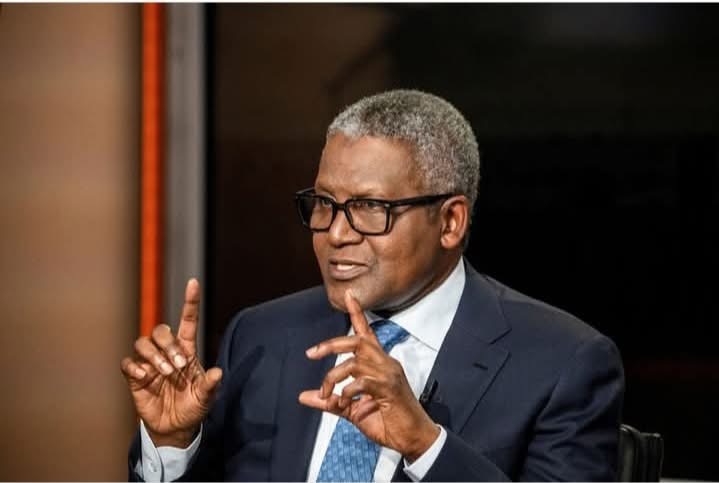
Born April 10, 1957, in Kano, northern Nigeria, Aliko Dangote has come to symbolize the transformative power of enterprise on the African continent. With a commercial instinct honed from youth and a formidable vision for self-reliance, Nigeria’s richest man has redefined industrial ambition in Africa.
In 1977, a young Dangote embarked on his entrepreneurial journey by establishing the Dangote Group, initially a modest trading firm dealing in imported commodities such as sugar, salt, and foodstuffs. As the business grew rapidly, he recognised the limitations of import dependency and set his sights on industrial production.
By 1981, he had launched Dangote Nigeria Limited and Blue Star Services, expanding his operations to include the importation of rice, steel, and aluminium products—a clear indication of his growing appetite for scale and influence. But it was in cement that his greatest impact would soon be felt.
Responding to the ever-increasing demand for building materials in Nigeria and across West Africa, Dangote founded Dangote Cement, positioning it to rival foreign giants such as Lafarge, the French multinational known at the time for dominating African markets through imports. With strategic foresight and substantial investment in local production, Dangote not only outpaced competitors but helped reposition Nigeria as a net exporter of cement.
By 2023, Dangote Cement had become a cornerstone of African infrastructure, generating approximately $3.7 billion in revenue, while Dangote Sugar rose to be one of the largest sugar producers in both Nigeria and the continent at large.
His entrepreneurial achievements are matched by his influence on public policy and national development. In 2011, President Goodluck Jonathan appointed Dangote to the Economic Management Team, recognising his pivotal role in shaping Nigeria’s industrial trajectory. That same year, Jonathan conferred on him the Grand Commander of the Order of the Niger (GCON)—the country’s second highest national honour.
A household name not just in Nigeria but across Africa, Dangote’s reach extends beyond business. In 2014, he was listed among Time magazine’s 100 most influential people in the world, a testament to his international stature. As of March 2025, Forbes estimates his personal fortune at $23.8 billion, making him the wealthiest Black person in the world.
Yet for all the headlines, Dangote’s legacy rests not merely in wealth, but in impact—in industries built, jobs created, and a continent nudged steadily toward economic self-sufficiency. With his flagship Dangote Refinery poised to revolutionise the energy landscape of West Africa, his vision continues to unfold—bold, pragmatic, and unmistakably African.
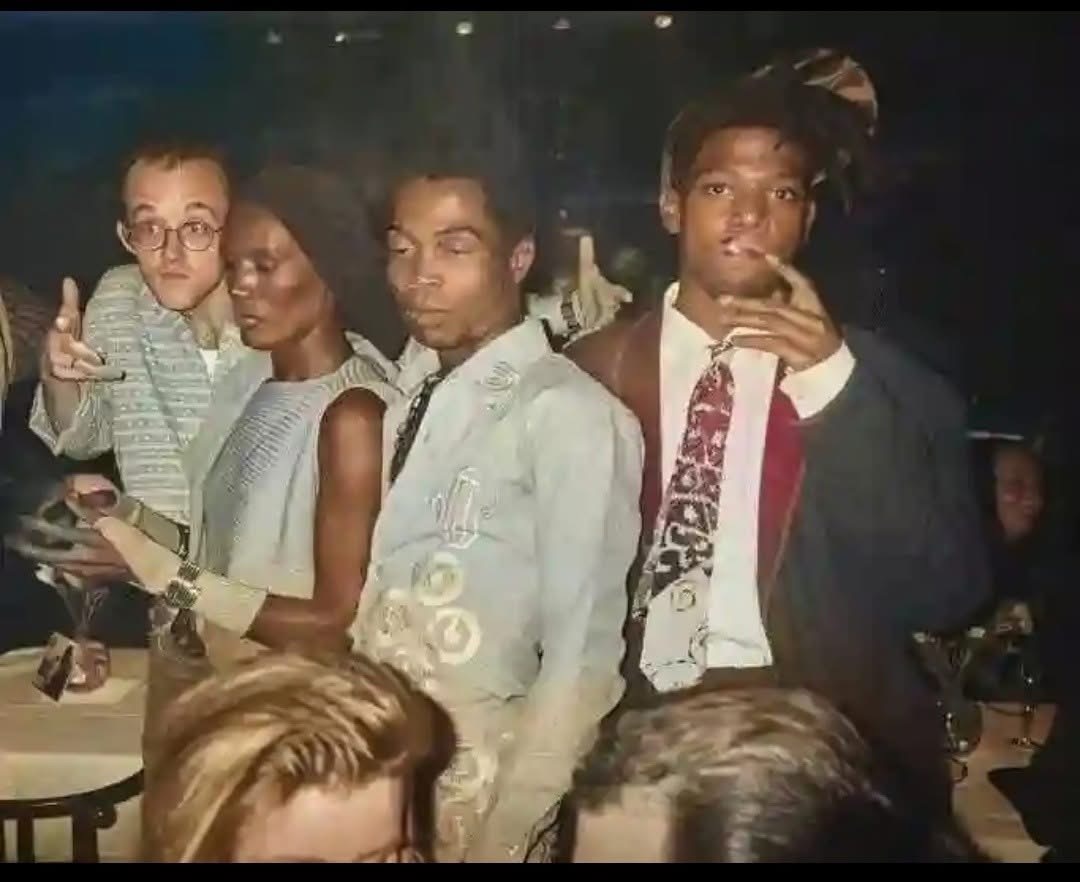
When Afrobeat intersected with 1980s New York’s vibrant art scene
In 1986, Nigerian Afrobeat pioneer Fela Anikulapo Kuti traveled to New York, a global epicentre of music, fashion, and contemporary art. During this trip, he was photographed alongside three towering figures of the city’s cultural scene: Keith Haring, the revolutionary pop artist; Jean-Michel Basquiat, the celebrated neo-expressionist painter; and Grace Jones, the avant-garde singer, model, and performer.
A Convergence of Art, Music, and Activism
Fela Kuti, already a legend in Africa, was known for blending traditional Yoruba rhythms, jazz, funk, and highlife to create Afrobeat, a genre that carried sharp political commentary and a call for African liberation. By the mid-1980s, Fela had achieved international recognition not just as a musician but also as a cultural and political icon.
New York during this period was a magnet for creativity. Downtown Manhattan’s clubs, galleries, and lofts were vibrant meeting points for emerging artists, musicians, and activists. Keith Haring was transforming public spaces with his bold graffiti-inspired imagery that celebrated social activism and community engagement.
Jean-Michel Basquiat, rising from the SAMO graffiti project, was redefining contemporary painting with references to African diasporic history, jazz, and street culture. Grace Jones, with her fearless performances and striking fashion, blurred the lines between music, visual art, and theatricality.
The photograph of Fela with Haring, Basquiat, and Jones embodies a cross-cultural dialogue: African Afrobeat meeting New York’s avant-garde art scene. The collaboration of ideas, energy, and rebellion against social norms created a powerful synergy that celebrated creative freedom and social critique.
Fela’s Impact and Resonance
Fela’s presence in New York in the 1980s extended his influence beyond African music:
Cultural Ambassador: He introduced the global audience to Afrobeat rhythms and political narratives about Nigerian governance and African unity.
Political Voice: Fela used music as activism, critiquing dictatorship, corruption, and inequality, which resonated with New York artists tackling social injustice in their mediums.
Artistic Exchange: His meetings with Haring and Basquiat symbolize the blending of visual and musical arts, showing how African rhythms inspired and were inspired by contemporary Western art.
The Icons of 1980s New York
Keith Haring (1958–1990): His art addressed AIDS awareness, apartheid, and social inequities through a distinctive graffiti style.
Jean-Michel Basquiat (1960–1988): Known for paintings that combined text, imagery, and social commentary, often highlighting African heritage and identity.
Grace Jones (b. 1948): A music and fashion trailblazer, known for her theatrical performances, gender-bending style, and influence on New Wave and disco music.
A Symbolic Moment
The photograph is more than a casual gathering—it is a representation of global cultural exchange. Here was a Nigerian musician whose voice challenged power structures, standing with avant-garde artists who were also pushing boundaries in their respective fields. It highlights how African cultural expression influenced and was celebrated internationally.
This moment also reflects the 1980s as a period of experimentation, cross-pollination, and dialogue among music, fashion, and visual art, creating enduring legacies that continue to inspire generations.
Source:
Veal, Michael. Fela: The Life and Times of an African Musical Icon.
Haring, Keith. Keith Haring Journals.
Basquiat, Jean-Michel. The Radiant Child: The Life of Jean-Michel Basquiat.
Personal archives and historical photographs of Fela Kuti in New York, 1986.

Benita Enwonwu in the 1970s: Model, Actress, and Daughter of Ben Enwonwu

Kidnappers Took Loan With My Phone – Victim Recounts Ordeal

11 more arrested over Ozoro “r@ping festival”

-
Business1 year ago
US court acquits Air Peace boss, slams Mayfield $4000 fine
-

 Trending1 year ago
NYA demands release of ‘abducted’ Imo chairman, preaches good governance
-

 Politics1 year ago
Mexico’s new president causes concern just weeks before the US elections
-

 Politics1 year ago
Putin invites 20 world leaders
-

 Politics1 year ago
Russia bans imports of agro-products from Kazakhstan after refusal to join BRICS
-
Entertainment1 year ago
Bobrisky falls ill in police custody, rushed to hospital
-
Entertainment1 year ago
Bobrisky transferred from Immigration to FCID, spends night behind bars
-
Education2 years ago
GOVERNOR FUBARA APPOINTS COUNCIL MEMBERS FOR KEN SARO-WIWA POLYTECHNIC BORI