News
A Trial Against Justice: The Case Of Senator Natasha Akpoti Uduaghan And The Weaponization Of Law In Nigeria, By Dr. Oludare Ogunlana
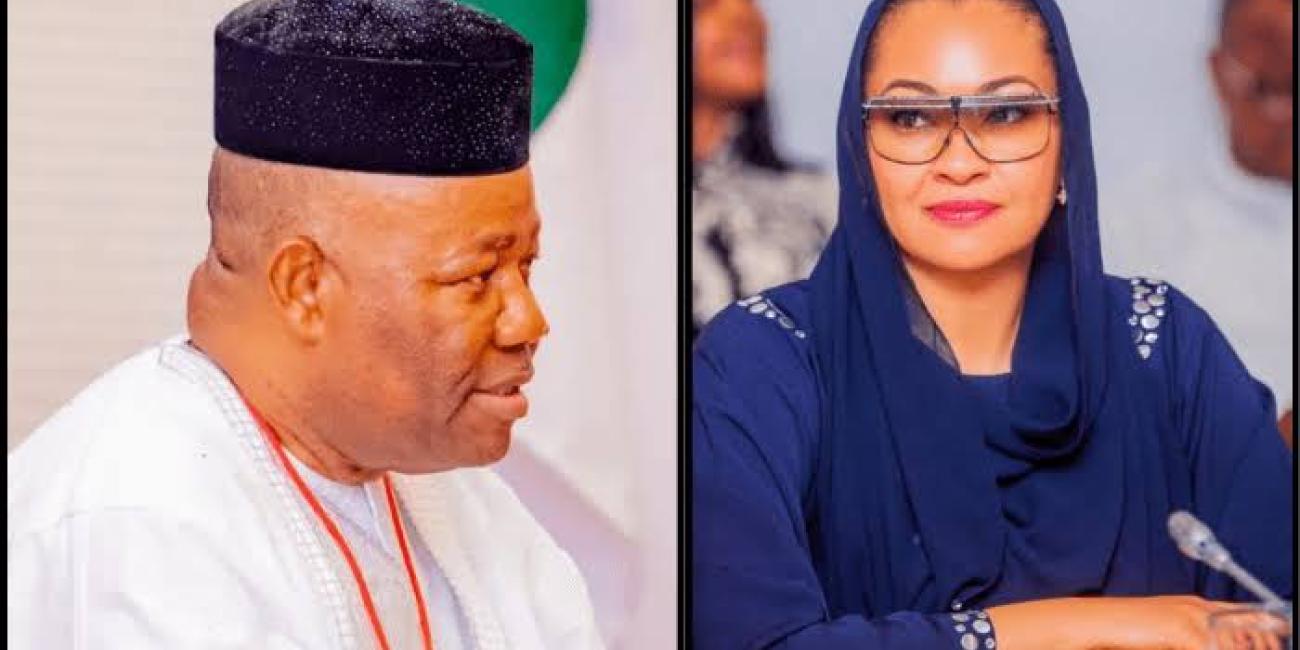
The Federal Government of Nigeria has filed criminal charges against one of the only four female senators in the Nigerian Senate, Senator Natasha Akpoti Uduaghan. On June 3, 2025, she is expected to appear before a court, not because she has misappropriated public funds or betrayed her office, but because she dared to speak out against alleged sexual harassment by the President of the Senate. Instead of encouraging a transparent investigation and allowing her to tender evidence in pursuit of justice, the state has chosen to pursue her through criminal prosecution. This is not a search for the truth. It is a punishment for courage.
At the heart of the prosecution’s case is a deeply troubling figure. Sandra Duru, who also goes by the alias “Professor Mgbeke,” is widely known for her false academic claims, fraudulent behavior, and history of blackmail and impersonation. She has presented herself as a doctor and professor with no proof, has no known legitimate source of income, and reportedly survives on government welfare in the United States. She has used online platforms to defame others and is rumored to have a felony record and unresolved immigration issues. That the Nigerian government would rely on such an individual as its principal witness against a sitting senator raises grave concerns. It tarnishes the credibility of the justice system and makes a mockery of due process.
If it is indeed true that Ms. Duru was planted to pose as a sympathizer, to befriend Senator Natasha and extract private information only to turn it over for political purposes, then this is not merely a legal misstep. It is entrapment disguised as prosecution. It is a gross abuse of power and a betrayal of the constitutional guarantee of fairness. This should alarm every citizen who believes in the sanctity of law and the responsibility of government to protect, not persecute, its people.
Your Excellency, President Bola Ahmed Tinubu, I appeal to your conscience. You are no stranger to state repression. You were one of the faces of defiance during Nigeria’s struggle against military rule. You suffered exile and persecution for championing democracy, civil liberties, and good governance. Today, you are at the helm of that same republic. It is under your watch that a woman is being dragged to court, not for wrongdoing, but for naming her abuser. This is not the Nigeria you fought to build. This is not the democracy you envisioned when you stood against the military’s grip on our country. If your administration becomes known for silencing women and shielding power through legal intimidation, history will not be kind.
I also call on Senator Michael Opeyemi Bamidele, fondly known as MOB, the current Leader of the Nigerian Senate. Many of us remember your days as a student activist in the early 1990s, your sharp legal mind and your fearless commitment to justice. You were a symbol of resistance and one of the few who stood up when silence would have been safer. Today, you occupy a position of great influence. You are no longer at the margins of power. You are within the walls where decisions are made and wrongs can be righted. The world is watching you. History is watching you. Will you speak now, or will you be silent when your voice matters most?
This moment is larger than Senator Natasha. It is about the integrity of our institutions, the dignity of our democracy, and the message we send to women and youth across the country. If we allow the courts to be used as weapons against the vulnerable, if we permit those with power to prosecute those who speak truth, then we have surrendered the very principles on which our democracy stands. John Locke warned that where law ends, tyranny begins. The Nigerian justice system must not become a servant of vengeance. It must not be reduced to a theatre of political puppetry.
I urge President Tinubu and all those who still believe in justice to act now. Build a legacy of fairness, not fear. Uphold institutions that endure beyond your administration. Protect the dignity of every Nigerian, regardless of gender, status, or political alignment. Senator Natasha Akpoti Uduaghan deserves justice, not persecution. Her courage should be commended, not criminalized. If we fail to defend her now, we risk losing the very soul of our democratic promise. May we not look back with regret, but act now with resolve, and let history record that we stood on the side of truth when it mattered most.
By Dr. Oludare Ogunlana
Distinguished Cybersecurity Professor, Digital Forensic Examiner, and Principal Investigator, OSRS

News
58-year-old man be@ts wife to de@th in Imo
Operatives of the Ahiazu Mbaise Divisional Headquarters have arrested one Vitalis Nwoko (58), of Umuagba, Ahiazu Mbaise LGA, for the alleged murder of his wife, Uloma.
The arrest followed a report lodged at the Division by the deceased’s sister, who alleged that the suspect violently ass@ulted his wife during a domestic dispute. Acting promptly on the report, operatives of the Division arrested the suspect.
Confirming the arrest, the command’s spokesperson, SP Henry Okoye, said during preliminary investigation, the suspect stated that a misunderstanding between him and his wife on December 11th, 2025 escalated into a physical altercation, during which the victim collapsed. She was rushed to Cecilia Hospital, Ogbe, where she was confirmed de@d by a medical doctor.
Okoye said the suspect has been transferred to the State Criminal Investigation Department (SCID), Owerri, for thorough investigation and prosecution.
The Commissioner of Police, Imo State Command, CP Aboki Danjuma, while reacting to the incident, urged residents to promptly report cases of domestic v!olence, assuring the public of the Command’s resolve to deal decisively with perpetrators.
News
Afenifere, Ohanaeze, Arewa youths take stand on state police
The call for the establishment of state police received a major boost at the weekend with the backing of major socio-cultural organizations in Nigeria- Afenifere, Ohanaeze and Arewa youths.
Ekwutosblog reports that for decades, there has been an intense debate on the necessity of establishing state police in Nigeria and the fear of politicization by state governors.
On February 15, 2024, President Bola Tinubu met with state governors in Abuja, where the possibility of setting up the state police was extensively discussed.
While the discussion brought a sigh of relief to some Nigerians, some stakeholders raised concerns that the country is not fit to have state police yet, expressing fear of abuse by state governors.
While some argued that the centralized Nigeria Police remains overstretched and ill-equipped to effectively police 230 million people across complex terrains, others said the governors may misuse the local police forces especially for political intimidation.
Ekwutosblog reports that the State Police Constitution Alteration Bill currently on the floor of the Senate and the House of Representatives, is among the 44 harmonized bills now ready for consideration and voting by the two chambers.
Reports indicated that the red and green chambers may vote on the bills this week before it is further sent to state Houses of Assembly.
In separate interviews with Ekwutosblog, Afenifere, Ohanaeze and Arewa youths backed the creation of state police, expressing optimism that local police may help in quelling the decade-long security challenges.
DAILY POST reports that the State Police Constitution Alteration Bill currently on the floor of the Senate and the House of Representatives, is among the 44 harmonised bills now ready for consideration and voting by the two chambers.
Reports indicated that the red and green chambers may vote on the bills this week before it is further sent to state Houses of Assembly.
In separate interviews with Ekwutosblog , Afenifere, Ohanaeze and Arewa youths backed the creation of state police, expressing optimism that local police may help in quelling the decade-long security challenges.
He argued that if governors don’t have the “apparatus of security at their command”, they would be unable to effectively discharge their duties as chief security officers of their respective states.
Ajayi advised that clauses should be inserted in the state police law that would restrain the governors from outright abuse or politicization of the local police.
Afenifere also called on the Federal Government to identify financiers of terrorism and prosecute them.
According to Ajayi, the menace of terrorism has reached an unacceptable level such that “no-one can predict where next the monster is going to rear its ugly head.
“The situation could not have been this bad were those perpetrating it not having the backing of people in high places.
“Concentrating only on kidnappers arrested in the bush would not bring an end to the scourge.
“Without the financing, endorsement, sponsorship and protection of people of means and people in high places, bandits would not be able to sustain their dastardly act for this long.”
He gave kudos to the National Assembly for the call on the Executive Arm of the government not only to name financiers of banditry but to also prosecute them.
“The step being taken by the lawmakers to also strengthen the law on terrorism is very welcomed.
“In view of the devastating nature banditry and terrorism have reached in Nigeria today, prescribing capital punishment for the perpetrators without the option of fine is in order.
“Innocent lives of thousands have been lost, some families have been wiped out just as properties running into billions, if not trillions, have been destroyed.
“So, those perpetrating such evil acts deserve no mercy when proven guilty as they themselves show no mercy on their victims,” he stated.
Northern govs may use state police to unseat President Tinubu in 2027 – Ohanaeze
On his part, Mazi Okechukwu Isiguzoro, factional Deputy President General of Ohanaeze Ndigbo Worldwide said though the establishment of state police is the only way to go due to the surge in killings and other activities of the bloodthirsty assailants, some Northern governors may use the local police against President Tinubu in 2027.
Isiguzoro noted that without substantive police reforms instituted by the National Assembly, which would establish frameworks to preclude the abuse of power by the 36 state governors, the creation of state police “might become a vehicle for electoral manipulation.”
According to him, “The ongoing attempts by Nigerian governors to circumvent the Supreme Court verdict regarding the autonomy of the 774 local government areas, in collusion with various State Houses of Assembly, epitomizes a disconcerting pattern of governance characterized by corruption and a flagrant disregard for constitutional rights.
“It is imperative to recognize that should appropriate police reforms not be enacted and implemented forthwith, there exists a tangible risk that certain state governors will exploit state police mechanisms to perpetrate electoral malfeasance, potentially allowing them to unseat President Tinubu in 2027—particularly given the Northern Governors’ proclivity towards such stratagems.”
Isiguzoro lamented that insecurity in Nigeria has “rapidly deteriorated, inflicting irrevocable damage to Nigeria’s international reputation”.
He reiterated the urgent necessity for comprehensive police reforms, accompanied by unwavering vigilance from the National Assembly, to ensure that the establishment of state police serves the interests of law and order, rather than becoming an instrument of political subversion.
Arewa youths back state police, call for oversight framework to stop abuse by govs
In an exclusive interview with DAILY POST, President of the Arewa Youth Consultative Forum, AYCF, Alhaji Shettima Yerima said the insurgency in the northeast, banditry in the northwest, and communal clashes in the middle-belt regions required tailored responses that a centralized police force often “struggles to provide”.
According to Shettima, establishing state police would allow for localized security measures, which according to him, would enable law enforcement to respond more effectively to the unique security needs of each region.
“State police officers, being residents of the communities they serve, would possess intimate knowledge of local dynamics, enabling them to address issues with greater sensitivity and effectiveness.
“Moreover, a localized approach to policing could significantly enhance trust and cooperation between law enforcement and citizens.
“When community members see familiar faces in their police force, individuals who understand their concerns and cultural nuances—they are more likely to engage positively with law enforcement.
“This trust is crucial in fostering a collaborative environment where citizens feel empowered to report crimes and cooperate with police investigations, ultimately leading to a more secure society”.
He further stated that the establishment of state police in Nigeria aligns with global trends in decentralizing law enforcement, citing some countries like the United States, Canada, and Germany, where regional policing structures were established to cater for local security needs.
Shettima said: “These models demonstrate that localized policing can lead to more effective crime prevention and community engagement. Nigeria, with its diverse regions and unique security challenges, stands to benefit significantly from a policing system that is tailored to its specific contexts.
“By adopting a decentralized approach, Nigeria can create a policing framework that not only addresses the immediate security concerns but also promotes regional autonomy and empowerment.
“This shift would reflect a commitment to democratic governance, where local governments play a pivotal role in ensuring the safety and security of their constituents.
“Despite the potential benefits, concerns regarding the potential abuse of power by state governors loom large, particularly given the historical context of political manipulation of state resources to suppress dissent.
“Critics argue that the politicization of law enforcement under state governors’ control could lead to the misuse of state police for personal or political gain, undermining the very essence of justice and accountability.”
However, on the fear of politicization of the local police by state governors, Shettima advised that the “establishment of state police is accompanied by a robust accountability and oversight framework.
“Regulations must govern recruitment, training, and operational protocols to ensure that state police operate with integrity and professionalism.
“An independent oversight body should be established to monitor the activities of state police, providing a check against potential abuses of power and ensuring that law enforcement remains accountable to the communities it serves.
“The federal government plays a crucial role in ensuring that state police operate within a defined legal framework. Clear guidelines outlining the powers and limitations of state police are essential to prevent overreach and ensure adherence to democratic principles.
“Protocols regarding the use of force, community engagement, and the protection of citizens’ rights must be explicitly articulated to safeguard against potential abuses”.
Business
Dangote demands probe of NMDPRA Chief over alleged economic sabotage
President and Chief Executive Officer of Dangote Industries Limited, Aliko Dangote, has urged the Federal Government to investigate and prosecute the Chief Executive Officer of the Nigerian Midstream and Downstream Petroleum Regulatory Authority, NMDPRA, Engr. Farouk Ahmed, over allegations of economic sabotage and actions he claims are undermining domestic refining in Nigeria.
Dangote made the call while addressing journalists at the Dangote Petroleum Refinery, where he accused the leadership of the NMDPRA of working in concert with international oil traders and fuel importers to frustrate local refining efforts.
He alleged that the continuous approval of import licenses for petroleum products was deliberately weakening Nigeria’s refining capacity.
The industrialist also claimed that the NMDPRA chief was living beyond his legitimate income, further raising concerns about the integrity of regulatory oversight in the downstream petroleum sector.
Despite his criticisms, Dangote reassured Nigerians that petrol prices would continue to decline, announcing that the pump price of Premium Motor Spirit, PMS, would not exceed N740 per liter from Tuesday, beginning in Lagos.
He explained that the reduction follows the refinery’s decision to cut its gantry price to N699 per litre, with MRS filling stations expected to be the first to reflect the new pricing.
Dangote expressed deep concern over the structure of Nigeria’s downstream petroleum industry, warning that the country’s continued dependence on imported fuel was stifling local production and discouraging investment in domestic refining.
He revealed that import licenses amounting to about 7.5 billion liters of PMS had reportedly been approved for the first quarter of 2026, despite the existence of substantial local refining capacity.
According to him, the policy environment has placed modular refineries under severe pressure, pushing many to the verge of collapse.
“I am not asking for his removal, but for a transparent investigation. He should be made to explain his actions and prove that his office has not been compromised.
“What we are witnessing amounts to economic sabotage,” Dangote said, adding that agencies such as the Code of Conduct Bureau could be tasked with conducting the probe.
He further described the downstream sector as being dominated by powerful interests that profit from fuel imports at the expense of national development.
Dangote lamented that many African countries, including Nigeria, continue to rely on imported refined products despite longstanding calls for value addition and local refining.
According to him, the volume of fuel imports being permitted into the country is unethical and undermines Nigeria’s economic interests.
Dangote stressed the importance of clearly separating regulatory responsibilities from commercial activities, warning that allowing traders to influence regulatory decisions would erode confidence in the sector.
“The downstream industry must not be sacrificed to personal interests. A trader should never act as a regulator. Dozens of licences have been issued, yet no new refineries are emerging because the operating environment is hostile,” he said.
He maintained that Nigerians stand to benefit significantly from local refining, even as fuel importers bear losses.
Dangote reaffirmed his commitment to ensuring that citizens enjoy the full benefits of domestic refining, noting that the company is working tirelessly to ensure that recent gantry price reductions translate to lower pump prices nationwide.
From Tuesday, he said, MRS filling stations in Lagos would commence the sale of PMS at prices not exceeding N740 per litre.
He also disclosed that the refinery has reduced its minimum purchase requirement from two million litres to 500,000 litres, enabling more marketers, including members of the Independent Petroleum Marketers Association of Nigeria, IPMAN, to access products directly.
“So, any marketer coming to the refinery today can lift PMS at N699 per litre,” Dangote added.
-
Business1 year ago
US court acquits Air Peace boss, slams Mayfield $4000 fine
-

Trending1 year agoNYA demands release of ‘abducted’ Imo chairman, preaches good governance
-
Politics1 year agoMexico’s new president causes concern just weeks before the US elections
-

Politics1 year agoPutin invites 20 world leaders
-

Politics1 year agoRussia bans imports of agro-products from Kazakhstan after refusal to join BRICS
-
Entertainment1 year ago
Bobrisky falls ill in police custody, rushed to hospital
-
Entertainment1 year ago
Bobrisky transferred from Immigration to FCID, spends night behind bars
-
Education1 year ago
GOVERNOR FUBARA APPOINTS COUNCIL MEMBERS FOR KEN SARO-WIWA POLYTECHNIC BORI