
Politics
Biden and Netanyahu speak on Israel’s plans for retaliation against Iran

The call is the leaders’ first known chat since August and comes amid a sharp escalation of Israel’s conflict with Hezbollah in Lebanon
US President Joe Biden spoke by phone with Israeli Prime Minister Benjamin Netanyahu on Wednesday and the two leaders were expected to discuss Israeli plans for a retaliatory strike on Iran.
The call, under way late Wednesday morning US time, was the leaders’ first known chat since August and coincided with a sharp escalation of Israel’s conflict with both Iran and the Iran-backed Lebanese Hezbollah with no sign of an imminent ceasefire to end the conflict with Iran-backed Hamas in Gaza.
The Middle East has been on edge awaiting Israel’s response to a missile attack last week that Tehran carried out in retaliation for Israel’s military escalation in Lebanon. The Iranian attack ultimately killed no one in Israel and Washington called it ineffective.
Do you have questions about the biggest topics and trends from around the world? Get the answers with SCMP Knowledge, our new platform of curated content with explainers, FAQs, analyses and infographics brought to you by our award-winning team.
Netanyahu has promised that arch-foe Iran will pay for its missile attack, while Tehran has said any retaliation would be met with vast destruction, raising fears of a wider war in the oil-producing region which could draw in the United States.
The White House did not respond to a request for comment.
Relations between Biden and Netanyahu have been tense, strained over the Israeli leader’s handling of the war in Gaza and the conflict with Hezbollah.
In War, a book out next week, journalist Bob Woodward reports that Biden regularly accused Netanyahu of having no strategy, and shouted “Bibi, what the f***?” at him in July, after Israeli strikes near Beirut and in Iran.
Asked about the book, one US official familiar with the two leaders’ past interactions said Biden has used sharp, direct, unfiltered and colourful language both with and about Netanyahu while in office.
Israeli Defence Minister Yoav Gallant cancelled a Wednesday visit to the Pentagon, the Pentagon said, as Israeli media reported Netanyahu wanted first to speak with Biden.
Tensions have increased in recent weeks as US officials were repeatedly blindsided by Israeli actions, according to a person familiar with the matter.
These included Israel’s killing of Hezbollah leader Hassan Nasrallah and the detonation of pagers and walkie-talkies used by Hezbollah members in Lebanon that Israel has neither confirmed nor denied carrying out.
Israel has also been slow to share details of its planning for retaliation against Iran’s ballistic missile attack, the person said.
Biden has been hit by sharp criticism from international partners as well as members of his own Democratic Party over his inability to use leverage, including the US role as Israel’s chief arms supplier, to curb Netanyahu’s attacks.
By extension, Kamala Harris, Biden’s vice-president and the Democrats’ presidential candidate in the November 5 election, has been challenged to defend the administration’s policy on the campaign trail.
Many Arab-American voters in Michigan, a key battleground state, are backing independent candidate Jill Stein instead, a move that could cost Democrats the state and perhaps the White House in a race with Republican former US president Donald Trump that opinion polls show to be very tight.
Harris joined the call with Biden and Netanyahu, according to a person familiar with the matter.
Israel’s retaliation is a key subject, with Washington hoping to weigh in on whether the response is appropriate, a separate person briefed on the discussions said.
Israel and Netanyahu in particular have faced widespread condemnation over the nearly 42,000 Palestinians killed in the Gaza war, according to the Palestinian health ministry in Hamas-ruled Gaza, and the deaths of over 2,000 people in Lebanon.
Israel says it is defending itself after Hamas militants attacked southern Israel on Oct. 7, 2023, killing 1,200 people and taking 250 hostages, according to Israeli tallies, and from attacks by other militants including Hezbollah who support Hamas.

A damaged building is seen on Wednesday in the aftermath of an Israeli strike in the town of Wardaniyeh, Lebanon. Photo: Reuters
Biden said last Friday he would think about alternatives to striking Iranian oilfields if he were in Israel’s shoes, adding he thought Israel had not concluded how to respond to Iran. Last week, he also said he would not support Israel striking Iranian nuclear sites.
Israel has faced calls by the United States and other allies to accept a ceasefire deal in Gaza and Lebanon but has said it will continue its military operations until Israelis are safe.
Biden and Netanyahu were also expected to discuss the conflicts with Hamas in Gaza and with Hezbollah in Lebanon, along with other topics.
The United States has said it supports Israel going after Iran-backed targets like Hezbollah and Hamas.
About 3 million people in Gaza and Lebanon have been displaced by Israel’s military campaigns, according to Palestinian and Lebanese officials, and Gaza is also facing a humanitarian crisis with a lack of food and fresh water.
Israel has said some 70,000 Israelis have been displaced from northern Israel by Hezbollah attacks the past year.
More Articles from SCMP
Li Qiang to tout ‘righteous’ China as Asean forum mutes criticism of Beijing: analysts
Time will show worth of strategy laid out by China’s top economic planner
Hong Kong must follow country’s lead in push for ‘new quality productive forces’: John Lee
How do US ‘swing states’ decide presidential elections?








March 20, 2026
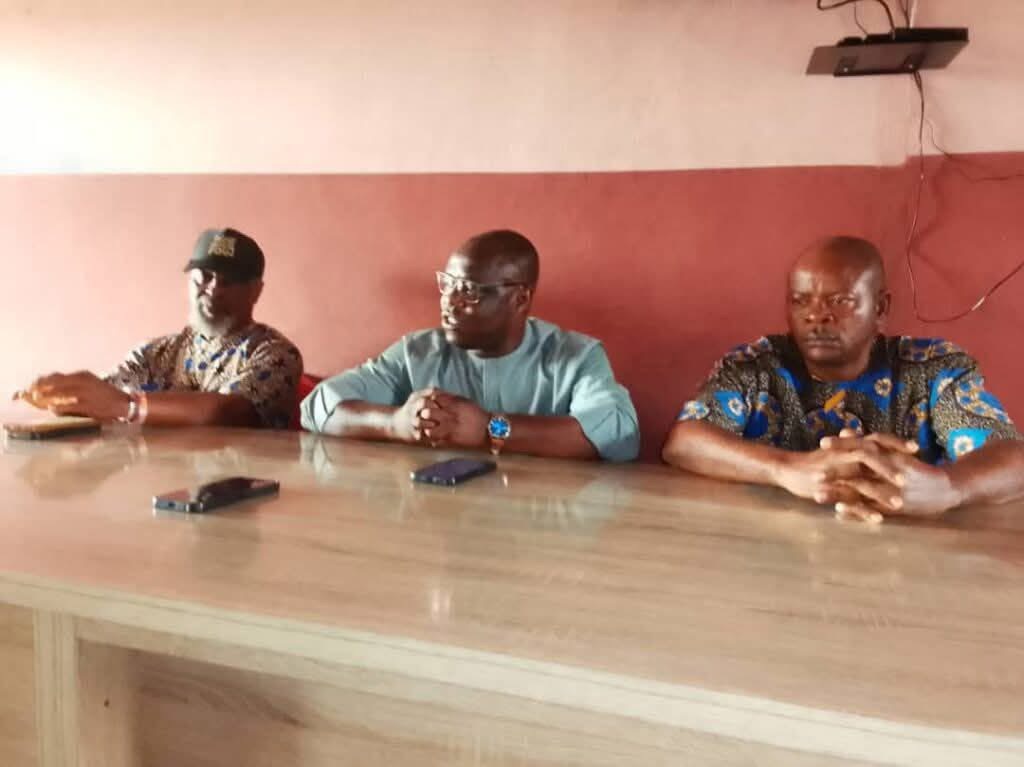
The All Progressives Grand Alliance in Abia State has called on the Senate to declare the seat of the Senator representing Abia South, Enyinnaya Abaribe, vacant following his resignation from the party.
The party made the call on Thursday during a press briefing in Umuahia, where its leadership, led by a former member of the Abia State House of Assembly, Obinna Ichita, insisted that Abaribe voluntarily resigned from APGA and was not sacked, contrary to his claim at the Senate.
Ichita argued that Abaribe’s exit from the party that sponsored his election violates constitutional provisions, stressing that there was no leadership crisis within APGA to justify his defection.
“The senator resigned in his ward. He did so voluntarily, which is his right. However, if you leave the party that gave you the platform for another party when there is no leadership crisis, that seat must be declared vacant,” he said.
He further alleged that Abaribe misrepresented the circumstances of his exit by claiming he was sacked.
“The party has documentary evidence to show that Senator Abaribe was not sacked. He resigned three months after disciplinary measures were taken against him over actions the court did not consider appropriate,” Ichita added.
According to him, the mandate belongs to the people and the party, not the individual office holder.
“They gave him the mandate on the platform of APGA, not any other party. There was nothing like ADC when he was elected. He cannot take the mandate elsewhere without consulting the people who gave it to him,” he said.
Ichita maintained that the constitution is clear on defection, noting that any lawmaker who leaves a party without a valid internal crisis must vacate the seat.
“My message to Senator Abaribe is to honourably vacate the seat instead of waiting for the National Assembly to declare it vacant. That would amount to national embarrassment,” he added.
Also speaking, the APGA State Chairman, Sunday Onukwubiri, and the party’s Public Relations Officer, Chukwuemeka Nwokoro, reiterated that Abaribe had distanced himself from the party’s activities at various levels in the state.
They insisted that he neither holds dual membership nor was he expelled, maintaining that his resignation was voluntary.
“He was invited by the party but failed to appear and was subsequently suspended in line with the party’s constitution. Three months later, he resigned,” the officials said.
Reacting, Abaribe defended his position, insisting that he acted within his constitutional rights.
“When you are no longer a member of a party by virtue of being sent away, you have the fundamental right of association to join another party,” he said.
He argued that his indefinite suspension by APGA effectively amounted to expulsion.
“If a party places you on indefinite suspension for more than six months, what does that mean? It means you have been told to go elsewhere, and that is exactly what I did,” he stated.
The senator added that the proper constitutional procedure for removing him from office would be through a recall process by his constituents.
“If the people who elected me no longer want me, the right thing to do is to initiate a recall. That is the position of the law,” he said.
Politics
Tinubu’s Reforms May Be Challenging, but They’ve Boosted Nigeria’s Global Respect — Information Minister Mohammed Idris
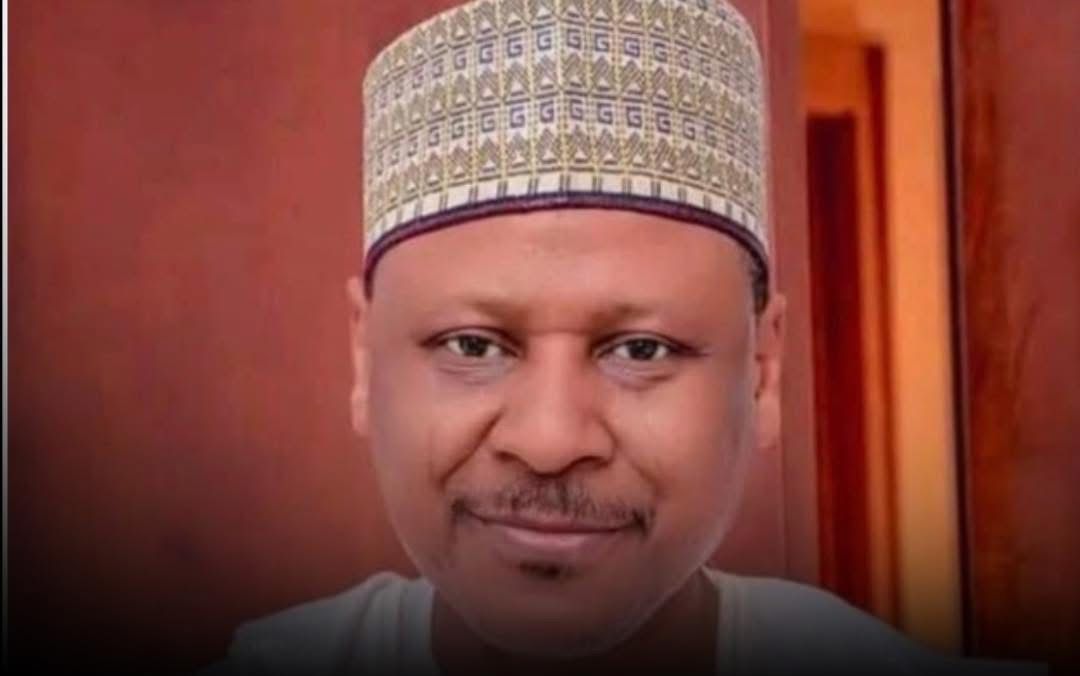
The Minister of Information and National Orientation, Mohammed Idris, has stated that Nigeria is receiving greater respect internationally under the leadership of President Bola Tinubu.
Speaking on Friday after attending Jumaat prayers at Yahaya Road Mosque in Kaduna, Mr Idris said, “Nigeria is indeed taking its rightful place. The country is respected more than ever before on the international scene. The reforms that the president has instituted, as challenging as they are, are meant for the benefit of all Nigerians.”
He urged Nigerians to stay calm as the government continues its efforts to restore security across the nation. Referring to the recent multiple b%mb att@cks in Maiduguri, Borno State, the minister assured that such incidents would not be allowed to recur.
“Indeed, our country is facing challenges, and the government is working tirelessly to ensure security throughout Nigeria. We have seen what has happened, particularly in Borno State. We pray to Allah to make this the last one, as the government is committed to preventing any repetition of such incidents,” he said.
Mr Idris also stressed the importance of citizens being prayerful and working together to address the country’s challenges. He encouraged both Muslims and non-Muslims to unite in the interest of Nigeria’s growth and development.
“This is a time for reflection for all Nigerians. We pray that everyone will consider this moment and recognize the need for unity, progress, and national development. All hands must be on deck for the unity of the country. As we earn respect internationally, we also hope and pray that unity will strengthen within our nation,” he added.
By Dan Opara
Following the successful conduct of the Imo State APC Congress held in Owerri, Imo State, on March 3rd, 2026, the leadership of the party has officially released the list of victorious candidates who emerged from the exercise.
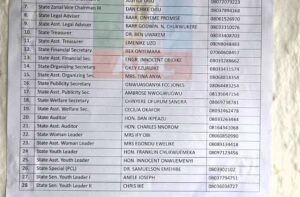
The announcement, made on Friday, March 20th, 2026, came 17 days after the Congress, as gathered by ThePressman Newspaper.
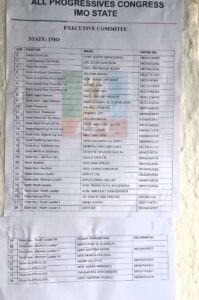
According to the released list, Chief Austin Onyedebelu emerged as the Imo State APC Chairman, while Arc. Allen Enwerem was elected as the State Deputy Chairman. Hon. Onyekachi Ibezim secured the position of State Secretary, alongside 33 other members who now constitute the State Party Executive Committee, including Ex-Officio members in Imo State.
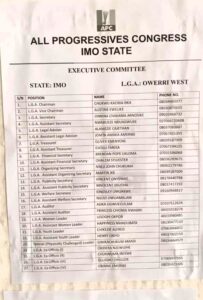
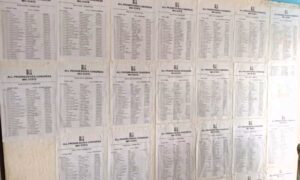
In addition, the leadership of the ruling APC across the 27 Local Government Areas of Imo State has also been announced.
The Ward Party Executive Committee Members for the 305 wards are, however, yet to be fully confirmed.
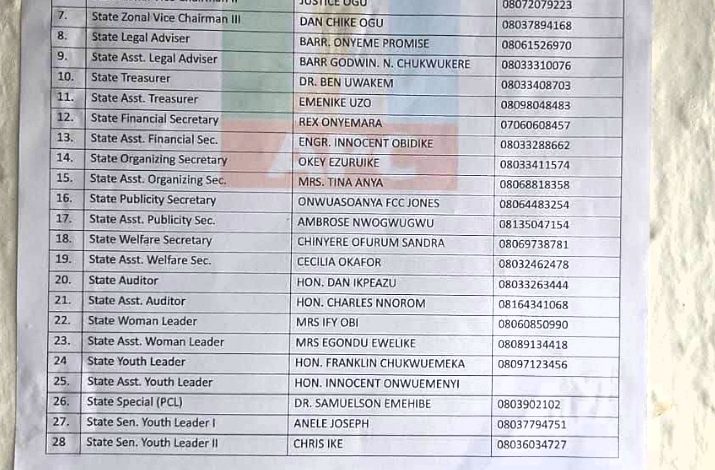
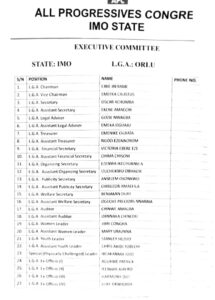
Below is the comprehensive list of the All Progressives Congress State Executive Committee Members for Imo State, including their respective telephone numbers.
ALL PROGRESSIVES CONGRESS
STATE: IMO STATE EXECUTIVE COMMITTEE
State Chairman, Chief Austin Onyedebelu, 08033101685.
State Deputy Chairman, Arc. Allen Enwerem, 08036301966.
State Secretary, Hon. Onyekachi Ibezim, 08033416291.
State Assistant Secretary, Nzenwa Nwoju, 08037717167.
State Zonal Vice Chairman I, Hon. Frank Onyejiaka, 0803314564.
State Zonal Vice Chairman II, Justice Ogu, 08072079223.
State Zonal Vice Chairman III, Dan Chike Ogu, 08037894168.
State Legal Adviser, Barr. Onyeme Promise, 08061526970.
State Assistant Legal Adviser, Barr. Godwin N. Chukwukere, 08033310076.
State Treasurer, Dr. Ben Uwakem, 08033408703.
State Assistant Treasurer, Emenike Uzo, 08098048483.
State Financial Secretary, Rex Onyemara, 07060608457.
State Assistant Financial Secretary, Engr. Innocent Obidike, 08033288662
State Organizing Secretary, Okey Ezuruike, 08033411574.
State Assistant Organizing Secretary, Mrs. Tina Anya, 08068818358.
State Publicity Secretary, Onwuasoanya FCC Jones, 08064483254.
State Assistant Publicity Secretary, Ambrose Nwogwugwu, 08135047154.
State Welfare Secretary, Chinyere Ofurum Sandra, 08069738781.
State Assistant Welfare Secretary, Cecilia Okafor, 08032462478.
State Auditor, Hon. Dan Ikpeazu, 08033263444.
State Assistant Auditor, Hon. Charles Nnorom, 08164341068.
State Woman Leader, Mrs. Ify Obi, 08060850990.
State Assistant Woman Leader, Mrs. Egondu Ewelike, 08089134418.
State Youth Leader, Hon. Franklin Chukwuemeka, 08097123456.
State Assistant Youth Leader, Hon. Innocent Onwuemenyi.
State Special (PCL), Dr. Samuelson Emehibe, 0803902102.
State Senatorial Youth Leader I, Anele Joseph, 08037794751.
State Senatorial Youth Leader II, Chris Ike, 08036034727.
State Senatorial Youth Leader III, Ifeanyi Nwannenna, 08020988164.
State Senatorial Women Leader I, Mrs. Iheako O. Elizabeth.
State Senatorial Women Leader II, Lady Martina Okere, 08036689003.
State Senatorial Women Leader III, Mrs. Franca Onuoha.
State Ex Officio I, Henry Oguguo, 08035001354.
State Ex Officio II, Hon. Alban Amasiatu, 08060564561.
State Ex Officio III, Chukwuma Onyedindere, 08037756307.
State Ex Officio IV, Chief Monday Ikokwu, 08086803626.
Meanwhile, the leadership structure of the All Progressives Congress (APC) in Imo State has been duly constituted, with officials elected across the State, Local Government Area, and Ward levels, reflecting a comprehensive and well-organized party framework.
At the Local Government Area level, notable individuals have emerged as party chairmen in various LGAs.
In Owerri West LGA, Mr. Chikadibia Okpe, was elected as the APC Local Government Chairman.
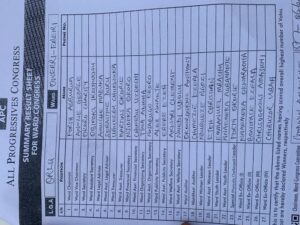
Similarly, in Orlu LGA, Mr. Ejike Iberame, emerged as the duly elected Party Chairman, while in Oguta LGA, Mr. Obed Onyebuchi, was elected as the APC Chairman, alongside 24 LGA Party Chairmen, to further strengthening the party’s grassroots leadership.
These developments extend across other Local Government Areas and wards, where Party Chairmen and Ward Chairmen have also been elected to provide leadership and coordination at their respective levels.
The successful emergence of party executives at the State, LGA, and Ward levels underscores the APC’s commitment to internal democracy, effective organization, and sustained grassroots mobilization across Imo State.
The release of the list marks a significant step in consolidating the party’s structure across the state, as the newly elected executives are expected to steer the affairs of the APC in Imo State moving forward.

Fuel price hike: Gov Makinde announces N10,000 transport support for workers

Former Acting Accountant-General of the Federation bags 72years imprisonment for diverting N868.46 million security funds

Benita Enwonwu in the 1970s: Model, Actress, and Daughter of Ben Enwonwu

-
Business1 year ago
US court acquits Air Peace boss, slams Mayfield $4000 fine
-

 Trending1 year ago
NYA demands release of ‘abducted’ Imo chairman, preaches good governance
-

 Politics1 year ago
Mexico’s new president causes concern just weeks before the US elections
-

 Politics1 year ago
Putin invites 20 world leaders
-

 Politics1 year ago
Russia bans imports of agro-products from Kazakhstan after refusal to join BRICS
-
Entertainment1 year ago
Bobrisky falls ill in police custody, rushed to hospital
-
Entertainment1 year ago
Bobrisky transferred from Immigration to FCID, spends night behind bars
-
Education2 years ago
GOVERNOR FUBARA APPOINTS COUNCIL MEMBERS FOR KEN SARO-WIWA POLYTECHNIC BORI