
News
DSS disputes Nnamdi Kanu’s deteriorating sickness, opposes transfer to National Hospital


The Department of the State Service, DSS, has disputed the deteriorating health claims made by the Biafra nation agitator, Mazi Nnamdi Kanu to support and justify his new request for transfer from the custody of the Department of the State Service DSS to the National Hospital in Abuja.
The security agency while faulting the claims argued that the health issue of Kanu by his Medical Consultant was exaggerated and made in bad faith to send false health narrative challenges to the public.
In a 37-paragraph counter affidavit, opposing Kanu’s bid on movement to the Abuja hospital, DSS averred that it has one of the best medical facilities in the country with capable and qualified personnel that can handle the health issues of the leader of the proscribed Indigenous People of Biafra IPOB.
The counter affidavit deposed to by Dr Mohammed Nasir, a Medical Officer with DSS averred that Kanu is enjoying maximum comfort in its custody, safe, secured and enjoying meals of his choice upon demands.
The agency asserted that at Kanu’s request, several medical Specialists from the National Hospital and the University of Abuja Teaching Hospital were brought for him to cater for his medical care.
DSS insisted that the Biafra nation agitator is in stable health condition and dismissed the claims of suffering deteriorating sickness.








The Oyo State Police Command has apprehended three suspects, including a pastor and an Islamic cleric, for allegedly possessing human body parts in Ibadan.
The spokesperson for the command, DSP Ayanlade Olayinka, disclosed this in a statement on 24th March, 2026.
According to the PPRO, a patrol team intercepted an unregistered motorcycle and arrested the rider.
Upon searching the pillion, a package containing human intestine was recovered.
The suspect confessed that he had obtained the items from an unknown individual and sells them to one Alfa Onaolapo Taiwo and Pastor Ayodele Taiwo.
Onaolapo and Ayodele were subsequently tracked and arrested.
The duo confessed to purchasing the suspected human parts from Oyategbe Joseph.
“The Oyo State Police Command wishes to inform members of the public of a recent arrest involving the unlawful possession and sale of suspected human parts in Ibadan, highlighting the Command’s commitment to proactive policing and the protection of lives and public health,” the statement read
“In line with its proactive measures to rid the state of criminal activities, the Command routinely conducts stop-and-search operations, which serve as a key strategy for detecting and preventing illegal acts before they escalate.
“It was during one such operation along Adekile area of Agugu that a patrol team intercepted an unregistered Bajaj Boxer motorcycle.
“During a search of the pillion, the rider was apprehended on the spot, and a package containing flesh suspected to be human parts (intestine) was recovered.
“Following this discovery, the apprehended pillion rider, identified as Oyategbe Joseph, male, of Ibadan, was interrogated.
“He confessed that he had obtained the suspected human parts from an unknown individual at Oritaperin area and further admitted to selling the items to two persons: Alfa Onaolapo Taiwo, male, aged 46 years, and Pastor Ayodele Taiwo, male, aged 55 years.
“Acting promptly on this intelligence, the Command swiftly apprehended Alfa Onaolapo Taiwo and Pastor Ayodele Taiwo and brought them to the station for interrogation.
“Both suspects confessed to purchasing the suspected human parts from Oyategbe Joseph.
“The Commissioner of Police, Oyo State Command, has directed that the case be transferred to the State Criminal Investigation Department (CID) for a discreet and thorough investigation.
“Upon the conclusion of investigations, all suspects will be charged to court.
“As a result of these coordinated actions, all three suspects are currently in police custody, and the Command reassures the public that every necessary measure is being taken to ensure that those involved are brought to justice.
“In conclusion, the Oyo State Police Command appeals to members of the public to remain vigilant and to promptly report any information regarding the possession or sale of human parts to the nearest police station or security agency, emphasizing that community cooperation remains critical in maintaining law and order.”
News
12-Year-Old Boy Arrested for S£xually Ass@ulting Woman In Her 60s And Leaving Her With Serious Injuries

A12-year-old boy has appeared in a UK court after he was accused of s£xually ass@ulting a woman in her 60s, leaving her seriously injured.
The woman was found in a property north of Birmingham city centre at around 6.15pm on March 18, bleeding heavily from several wounds and barely conscious, a court heard on Tuesday.
The woman was lying on the floor, n@ked apart from a t-shirt, with cuts to her chest and face, prosecutor Colin Charvill told Birmingham Youth Court.
She remains in hospital in a serious condition, having been placed in an induced coma.
A boy aged 12 has been charged with segxwal assault and wounding, as well as an offence of theft on the same day and intentional strangulation in relation to an alleged incident on February 11.
The defendant, who cannot be identified for legal reasons, appeared in court today where he indicated pleas of not guilty to all of the charges.
He was remanded to youth detention accommodation by District Judge David Murray ahead of an appearance at Birmingham Crown Court on April 21.
West Midlands Police said in a statement: ‘Our enquiries remain ongoing, but we understand how concerning this will be within the community.
‘Our officers will be continuing to provide reassurance in the local area.
‘If anyone has any information regarding suspicious behavior on 18 March or in the days leading up to last Wednesday, details can be submitted via the Major Incident Public Portal or via 101 quoting log 4888 of 18 March.’
News
Christian And Muslim Women Unite To Form Vigilante Group In Jos, Patrol Streets At Night To Combat Crime (Video)
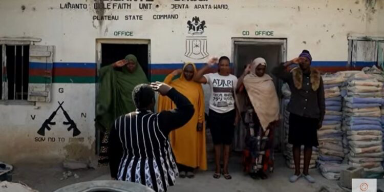
Amid growing insecurity and its escalating effects on local communities, a group of women in Jos has established an all-female vigilante group to tackle violence, theft, and drug-related crimes in the area.
The initiative, highlighted in a Reuters feature on Tuesday, brings together women who say they were compelled to act following what they described as repeated failures of government security promises.
According to members, the group was created as a grassroots effort to contribute to the safety and stability of their communities.
Armed with little more than whips and identification cards, the women patrol neighbourhoods and confront suspected drug dealers and petty criminals. Despite limited resources, they say their presence has begun to yield results.
“We have been able to help reduce thefts, taking of drugs and other vices,” Blessing Ngozi Emmanuel, identified as the group’s leader, was quoted as saying.
The vigilante team currently comprises about 20 women from both Muslim and Christian backgrounds, reflecting a rare show of unity across religious lines in a region often marked by tension.
They conduct nightly patrols between 9 p.m. and 1 a.m., focusing on areas they consider most vulnerable to crime.
However, their work has not come without risks. Some members have reportedly been injured during operations, while others have received threats.
One member said she was warned that she could be made to “disappear” if she continued her involvement.
Despite these dangers, the women insist their mission is strictly to support community security, not to replace formal law enforcement.
They also expressed frustration over the lack of official recognition or support, noting that it was only weeks ago that local government officials visited them, despite months of active operations.
The emergence of the group underscores the worsening security situation in Plateau State, where incidents of violence, abduction, and communal attacks have persisted.
Earlier on Tuesday, SaharaReporters reported the abduction of a senior cleric of the Evangelical Church Winning All (ECWA) and Chairman of its Board of Trustees.
The cleric was reportedly taken by unknown gunmen from his residence in Farin Gida, Jos. The incident was confirmed by a source at the church’s headquarters, while a message circulated on its official WhatsApp platform urged members to pray for his safety and swift release.
Jos is not the only part of Plateau grappling with insecurity. In February, survivors recounted how suspected Berom militias allegedly intercepted a commercial vehicle in Barkin Ladi Local Government Area, dragged out five trader-passengers, and k!lled them.
The attack reportedly occurred along the Nding axis, just hours after seven people were said to have been k!lled in Ratatis community, Dorowa Babuje, by suspected armed bandits.
One survivor, Abdulazeez Ibrahim, a resident of Gangare in Jos North Local Government Area, described how the victims, identified as Hausa traders travelling to Pankshin for business, were stopped and attacked.
Against this backdrop of persistent violence, the women-led vigilante group in Jos represents both a response to insecurity and a reflection of growing public frustration over gaps in official protection.
Promises by the government to ensure safer communities have failed to materialise with many k!lled, kidnapped from time to time.

Actress Biola Adebayo Tenders Apology Over Interview With Baba Ijesha (Video)

Police Arrest Pastor, Islamic Cleric And One Other Over Possession Of Human Parts In Oyo

Man Arrested For Allegedly Shouting “No Water, No Light” During Governor Bago’s Visit To Suleja

-
Business1 year ago
US court acquits Air Peace boss, slams Mayfield $4000 fine
-

 Trending1 year ago
NYA demands release of ‘abducted’ Imo chairman, preaches good governance
-

 Politics1 year ago
Mexico’s new president causes concern just weeks before the US elections
-

 Politics1 year ago
Putin invites 20 world leaders
-

 Politics1 year ago
Russia bans imports of agro-products from Kazakhstan after refusal to join BRICS
-
Entertainment1 year ago
Bobrisky falls ill in police custody, rushed to hospital
-
Entertainment1 year ago
Bobrisky transferred from Immigration to FCID, spends night behind bars
-
Education2 years ago
GOVERNOR FUBARA APPOINTS COUNCIL MEMBERS FOR KEN SARO-WIWA POLYTECHNIC BORI