
EVENTS
Economic Crisis: Job Losses As 16 Multinationals Exit Nigeria In 3 Years


As Nigeria battles an economic crisis sparked by the government’s twin policies of petrol subsidy removal and unification of FX windows, United Kingdom-based Diageo joined about 15 other multinational companies that have exited the country in the past three years.
Diageo is the latest to announce its departure on Tuesday, June 11 when it said it will sell its 58.02% stake in Guinness Nigeria to Tolaram.
Diageo joins others like Kimberly-Clark, manufacturers of Huggies and Kotex brands of diapers; US-based Procter and Gamble (P&G); GlaxoSmithKline (GSK); Unilever and Sanofi-Aventi Nigeria, who are either exiting completely or reducing their exposure in a country facing its worst cost-of-living crisis in decades.
Unilever Nigeria announced its exit from the home care and skin cleansing markets in Nigeria in November 2023, saying it did so “to find a more sustainable and profitable business model.”
Procter & Gamble was the last to announce its exit from the country the same year.
Similar reasons given by these and other companies include high energy costs, currency depreciation, insecurity etc.
The Federal Government itself acknowledged these challenges in an interview granted by Minister of Finance, Wale Edun on Channels Television’s Sunday Politics programme, where he said “lack of a liquid foreign exchange market was the major reason why some multinational companies exited Nigeria,” explaining that the inability of the exiting multinationals to access foreign exchange was a major impediment to their operations in the country.
Weighing-in, the Director-General of Nigeria Employers’ Consultative Association, NECA, Adewale Oyerinde, disclosed that at least 15 multinationals have either divested or partially closed operations in the country in the last three years.
Oyerinde, in his assessment, stated: “Over 15 organisations, with a combined value-chain staff strength of over 20,000 employees, have either divested or partially closed operations,” lamenting that this has “dire consequences not only for organised businesses but also for labour, government revenue and the households; massive job losses across sectors, which would continue to create insecurity challenges”.
Oyerinde added, “When NECA examined the exit of prominent companies like GSK, Sanofi, Procter & Gamble, Nampak, and others, who had been doing business in Nigeria for decades and were huge employers of labour, it was worried about the ripple effect on the broader business ecosystem.
“Within the value chain, numerous enterprises serve as suppliers to these major corporations, and their sustainability is significantly compromised when the primary businesses they cater to face extinction.
“The survival prospects of these secondary businesses are at stake, and their employees are also at risk, as the departure of the main clients could lead to their demise. The crisis within the value chain deserves more attention than it currently receives”.
Related NewsJob losses: 10,733 affected workers get N4.5b part pension paymentJob Losses: 10,733 affected workers get N4.5bn part pension paymentReactions as Warri lady ‘tired of life’ jumps from flyover to death
Other sectoral group leaders and analysts maintain that the continuous exit of multinational firms would dampen Nigeria’s $1trn GDP target of President Bola Tinubu’s administration.
The President had, at the 29th Nigeria Economic Summit in Abuja, told business leaders and Nigerians that Nigeria’s economy can grow to $1 trillion by 2026.
Analysts believe the persistent exit of multinational companies from the country is set to impact negatively on this target.
Data from the National Bureau of Statistics (NBS) revealed that the performance of the GDP in the first quarter of 2024 was driven mainly by the services sector, which recorded a growth of 4.32 per cent and contributed 58.04 per cent to the aggregate GDP, whereas the nominal GDP growth of the manufacturing sector in the first quarter of 2024 was recorded at 8.21 per cent (year-on-year), 9.64 per cent points lower than the figure recorded in the corresponding period of 2023.
Real GDP growth in the manufacturing sector in the first quarter of 2024, on its part, was 1.49 per cent (year-on-year), lower than the same quarter of 2023.
Reacting to this, President of the Manufacturers Association of Nigeria (MAN), Otunba Francis Meshioye said, “MAN expects the government to frontally address insecurity, improve electricity supply, promote fiscal sustainability and ensure policy consistency.
“Among other priorities, the fiscal authority must also lend supportive measures by adequately incentivising the manufacturing sector and other productive sectors.
“This is very important to boost non-oil export earnings in addition to the increase in oil export proceeds occasioned by increased oil production, rising global oil prices and the coming on stream of the Dangote Refinery”.
Director-General of Lagos Chamber of Commerce and Industry (LCCI), Dr. Chinyere Almona, also speaking on the issue, said: “Over the last few months, there has been a consistent increase in exit plans or a reduction in involvement in the Nigerian market by the multinationals, and this trend is worrisome.
“We have seen the likes of Unilever Nigeria, GlaxoSmithKline, and recently now Guinness Nigeria Plc.
“In Nigeria, lingering foreign exchange scarcity, poor power supply, port congestion, multiple taxation, insecurity, and poor infrastructure, among others, have taken a toll on many businesses in the country.”
The chamber recommended that the government should implement measures to stabilise and ensure the availability of foreign exchange for businesses, particularly those operating in dollar-denominated environments, also imploring the government to create a more flexible and transparent foreign exchange policy to address scarcity issues.
“Further, the Chamber urges the government to engage multinational corporations and the business community to understand their challenges and gather input and feedback on policy decisions to collaboratively develop solutions that will forestall the exodus of businesses from Nigeria. The CBN should prioritise the stability of the country’s currency and adopt the right policy mix to ensure price stability,” Almona said.
National President of the Association of Small Business Owners of Nigeria, ASBON, Femi Egbesola, maintained that multinationals are among the companies that contribute largely to the country’s GDP and earnings.
“We cannot be talking of growing our economy when the real investors are leaving. Assuming they are leaving and the indigenous ones are increasing, it would have been a different thing. But that is not the case. You make income as a nation when you have investments and investors,” he said.
However, since the coming of the Tinubu administration, Tinubu and Edun, among others, have been speaking on efforts being put in place towards revamping the economy, encouraging Foreign Direct Investment (FDI) and also making local industries vibrant and competitive.
Whether the assurances of Edun, who, on the Channels Television’s Sunday Politics programme, said, “recent executive orders signed by President Bola Tinubu have improved the investment climate … and also disclosed that tax reform proposals aimed at simplifying doing business for local and foreign manufacturers are being considered as part of an Economic Stabilisation Package,” would stem the flow of multinationals exiting the country, only time will tell.







EVENTS
EID-EL-FITR: IGP DISU FELICITATES MUSLIM FAITHFUL, ORDERS NATIONWIDE DEPLOYMENT OF TACTICAL ASSETS

The Inspector-General of Police, IGP Olatunji Rilwan Disu, psc(+), NPM, has extended warm felicitations to the Muslim faithful across Nigeria on the successful completion of the holy month of Ramadan and the celebration of Eid-el-Fitr.
In furtherance of his commitment to ensuring a safe and secure environment during the festive period, the Inspector-General has directed Commissioners of Police and Tactical Commanders across all states of the Federation and the Federal Capital Territory to implement robust security arrangements.
Operational measures include:
Strategic deployment of tactical teams and intelligence operatives.


Deployment of the Special Intervention Squad and conventional police personnel to Eid prayer grounds and critical infrastructure.
Increased presence at highways, motor parks, recreational centers, and other public spaces to ensure peaceful, hitch-free celebrations.
The IGP has also ordered heightened visibility policing, coordinated patrols, enhanced surveillance operations, and intelligence-led stop-and-search duties. These actions are aimed at proactively deterring criminal activities and ensuring a swift response to any emerging threats.
IGP Disu calls on members of the public to remain vigilant, cooperate with law enforcement agencies, and promptly report any suspicious activities to the nearest police station or through the following emergency lines:
08057000001, 08057000002, 09133333785, and 09133333786.
IGP Tunji Disu wishes all Muslim faithful a peaceful and joyous Eid-el-Fitr.

DCP ANTHONY OKON PLACID psc(+) mni
Force Public Relations Officer
Force Headquarters, Abuja
20th March, 2026
EVENTS
Hon Success Opara celebrates Mothering Sunday with St. Peter women, hails them as the ‘neck that controls the household
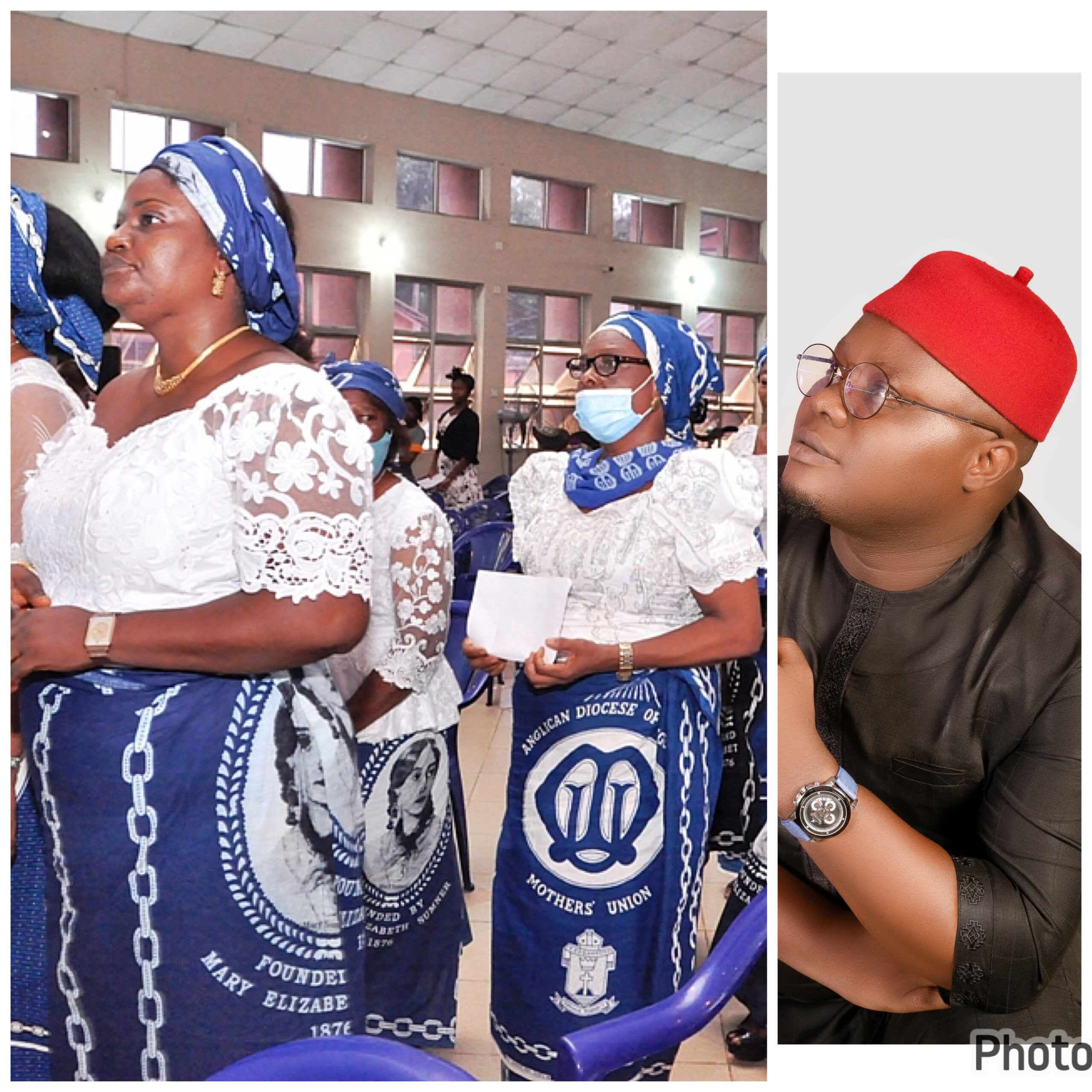
Hon Success Opara, former councilorship candidate for Ikenegbu Ward 2, celebrated Mothering Sunday with the women of St. Peter Anglican Church, Ikenegbu, extolling them as the backbone of their households.
He described them as the “neck that controls the household,” acknowledging their vital role in shaping families and communities.
Opara’s gesture is seen as a testament to his commitment to uplifting and empowering women.
The celebration, which coincided with the Christian observance of Mothering Sunday, featured fellowship and words of encouragement from Opara, who prayed for the women’s well-being.
This event highlights the importance of recognizing and appreciating mothers and mother figures in Nigerian society.
EVENTS
“Early marriage is better than fornication” – Mixed reactions as young Nigerian couple trends after welcoming a child

A young Nigerian couple are currently trending on Arewa social media circles after they welcomed their first child.
The pictures taken by a Kaduna-based photographer have sparked mixed reactions, with some people saying that the girl is underaged and not old enough to be a wife and mother.



ADC Congress Ideato South: New Leadership Team Emerges

Fuel may hit N2000/litre. Subsidize crude feedstock now – TUC tells FG

ADC Owerri Municipal Gets New Chairman: Hon. Success Opara Emerges Amidst State Leadership Tussle

-
Business1 year ago
US court acquits Air Peace boss, slams Mayfield $4000 fine
-

 Trending1 year ago
NYA demands release of ‘abducted’ Imo chairman, preaches good governance
-

 Politics1 year ago
Mexico’s new president causes concern just weeks before the US elections
-

 Politics1 year ago
Putin invites 20 world leaders
-

 Politics1 year ago
Russia bans imports of agro-products from Kazakhstan after refusal to join BRICS
-
Entertainment1 year ago
Bobrisky falls ill in police custody, rushed to hospital
-
Entertainment1 year ago
Bobrisky transferred from Immigration to FCID, spends night behind bars
-
Education2 years ago
GOVERNOR FUBARA APPOINTS COUNCIL MEMBERS FOR KEN SARO-WIWA POLYTECHNIC BORI