
Politics
Ekiti 2026: Zoning, rivalries, battle for power reignite old political fires

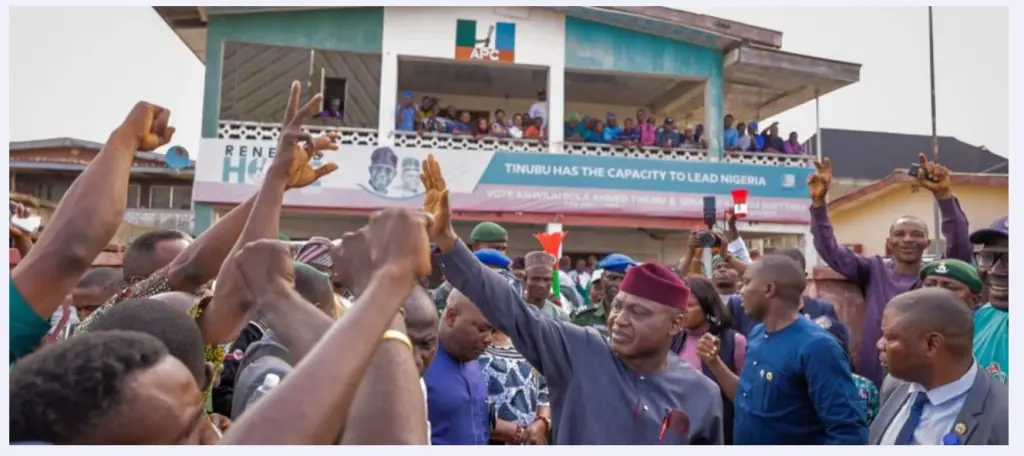
As activities gear up ahead of the 2026 gubernatorial election in Ekiti State, old questions have resurfaced about zoning, trust, party supremacy and the state’s complex political history that continues to shape its democratic future.
Although parties are yet to conduct primary elections to select their flag bearers, electioneering has begun with actors declaring their interests to run for the most coveted office in the state.
Ekiti’s return to civil rule in 1999 under the Fourth Republic began with Otunba Niyi Adebayo of the Alliance for Democracy (AD), the son of Nigeria’s former military governor, General Adeyinka Adebayo.
His one-term stint gave way to the political juggernaut that would define the early 2000s in Ekiti, Ayodele Fayose of the Peoples Democratic Party, PDP, elected in 2003.
Fayose’s first tenure was cut short by impeachment in 2006 amid allegations of corruption and abuse of office.
Though controversial, the impeachment set off a wave of instability, a succession of acting governors, including the then Speaker of the House and eventually General Tunji Olurin as administrator, before the emergence of Engineer Segun Oni, also of the PDP.
Oni’s time in office was itself contested. Kayode Fayemi of the then Action Congress of Nigeria (ACN) challenged the results of the 2007 election, and after a prolonged legal battle, Oni was sacked in 2010, making way for Fayemi.
Thus began a fierce rivalry between the PDP and the ACN (later APC), a pattern that still defines Ekiti politics today.
Since 1999, power in Ekiti has rotated largely between Ekiti Central and Ekiti North. The South Senatorial District, which include Ekiti East, Ekiti South West, Emure, Aiyekire (Gbonyin), Ikere, and Ise/Orun, has long complained of marginalization.
Despite producing political heavyweights, such as Adebayo Clement Adeyeye, it remains the only district yet to complete a full term in the governor’s seat.
Segun Oni, who hails from Ekiti North, only got a partial term. Fayemi (Ekiti North) had two terms. Fayose (Ekiti Central) also served two terms. The current governor, Biodun Oyebanji, hails from Ikogosi-Ekiti in Ekiti Central.
Ahead of 2026, voices from Ekiti South, including traditional rulers, youth associations, and political leaders, have grown louder, demanding that justice and equity be done through zoning.
The clamour for zoning has again been brought to the front burner despite the incumbent, Oyabenji seeking re-election.
The argument is that every major district should have a fair shot at the governorship to foster inclusivity and a sense of belonging.
Although zoning of political offices has never been an issue in Ekiti politics from time immemorial, the clamour for power shift to Ekiti South ahead of next year’s election is already giving Governor Oyebanji and the leadership of his party and the opposition PDP headache and sleepless nights.
Political pundits opined that next year’s election is widely expected to be a fierce contest among the three districts, but Ekiti South is insisting that it is its turn to occupy the most exalted seat in the state.
Soji Solomon, a former chairman of the APC in Emure, Ekiti South, has strongly criticized the long-standing marginalization of the region in the state’s political leadership.
He expressed that the 2026 governorship election offers the best opportunity for the ruling party to right this historic wrong.
In a conversation with our report in Ado-Ekiti, Solomon stated: “For years, Ekiti South has been sidelined in the power equation. We have capable, qualified leaders, but the political structure has consistently overlooked us.
“The upcoming 2026 election is the perfect moment for the APC to address this imbalance.
“It is time to give the South its rightful chance to lead this state, and I believe the party must rise to this challenge, or risk alienating a significant portion of its base.”
Ahead of the 2026 Governorship election in Ekiti, a group of concerned politicians across the registered political parties has emerged under the umbrella of ‘EKITI NEW DIMENSION’, with the sole aim of rescuing the state from what they describe as the “clueless government” of the All Progressives Congress (APC).
The group’s spokesperson, Chief Segun Akinwumi, outlined the movement’s conservative vision and its commitment to revitalising governance in Ekiti.
Akinwumi said the new coalition intends to offer an alternative political direction, unite disenchanted leaders across party lines, and “unseat the current government that has failed to meet the aspirations of the people.”
The ruling APC retains a strong hold on Ekiti, especially with Oyebanji’s relatively calm administration and continuity from the Fayemi legacy. However, internal party tensions remain, particularly around succession planning and zoning within the party.
The PDP, tagged the main opposition but now weakened nationally and within Ekiti, is searching for a revival.
Adding further intrigue to the developing political scene, a chieftain of the PDP, Emmanuel Fayose, has declared his intention to join the 2026 Ekiti gubernatorial race.
Fayose, the immediate younger brother of former Governor Ayodele Fayose, made his declaration in Ado-Ekiti while addressing reporters.
He expressed confidence in securing the PDP ticket and ultimately unseating incumbent Governor Biodun Oyebanji of the APC.
According to him, his decision is driven by a burning desire to reposition the state and restore people’s trust in governance.
“I am not just riding on my name. I have a vision and capacity to deliver transformative governance in Ekiti. The state deserves more, and I believe I represent the generational shift and seriousness our people need,” he said.
Analysts believe that his brother and former governor, Ayodele Fayose may still influence the race, directly or indirectly.
The belief in some quarters is that Ayo Fayose would be running his brother’s third term agenda despite him giving his nod to the incumbent Oyebanji recently at an event at Ado Ekiti.
There’s also talk of a “third force,” possibly a Labour Party or Social Democratic Party (SDP) candidate emerging to disrupt the APC-PDP duopoly, though Ekiti has not historically embraced third-party candidates.
The interplay of zoning demands, old rivalries, emerging political forces, and questions of equity are shaping what could be the most unpredictable gubernatorial election in the state’s history.
The coming months will test the strength of party structures, the sincerity of political actors and the resolve of the electorate.
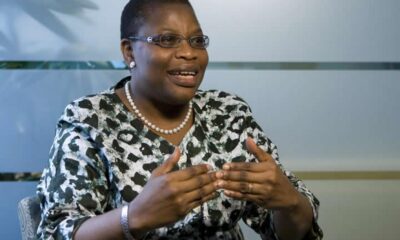





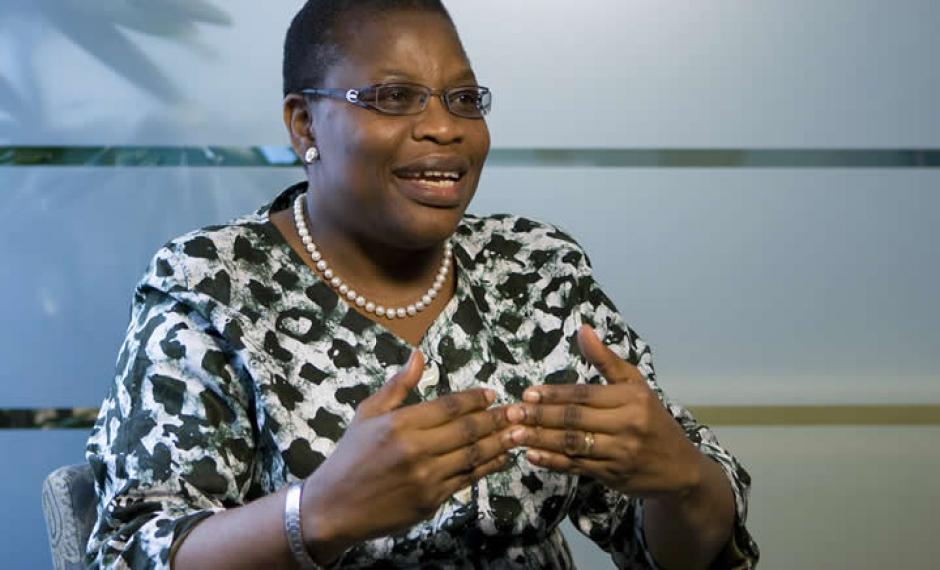
Former Minister of Education, Oby Ezekwesili, has said Nigerians have every reason to be mad at the Senate over the ongoing debate on e-transmission of election results.
Ezekwesili made this known on Friday when she featured in an interview on Arise Television’s ‘Morning Show’ monitored by DAILY POST.
DAILY POST reports that the Senate on Wednesday turned down a proposed change to Clause 60, Subsection 3, of the Electoral Amendment Bill that aimed to compel the electronic transmission of election results.
Reacting to the matter, Ezekwesili said, “The fundamental issue with the review of the Electoral Act is that the Senate retained the INEC 2022 Act, Section 60 Sub 5.
“This section became infamous for the loophole it provided INEC, causing Nigerians to lose trust. Since the law established that it wasn’t mandatory for INEC to transmit electoral results in real-time, there wasn’t much anyone could say.
“Citizens embraced the opportunity to reform the INEC Act, aiming to address ambiguity and discretionary opportunities for INEC. Yet, the Senate handled it with a “let sleeping dogs lie” approach. The citizens have every reason to be as outraged as they currently are.”
Politics
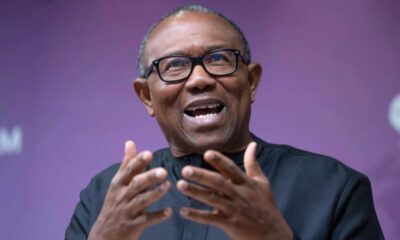
Electoral act: Senate’s action confirms Nigeria ‘fantastically corrupt’, ‘disgraced’ – Peter Obi
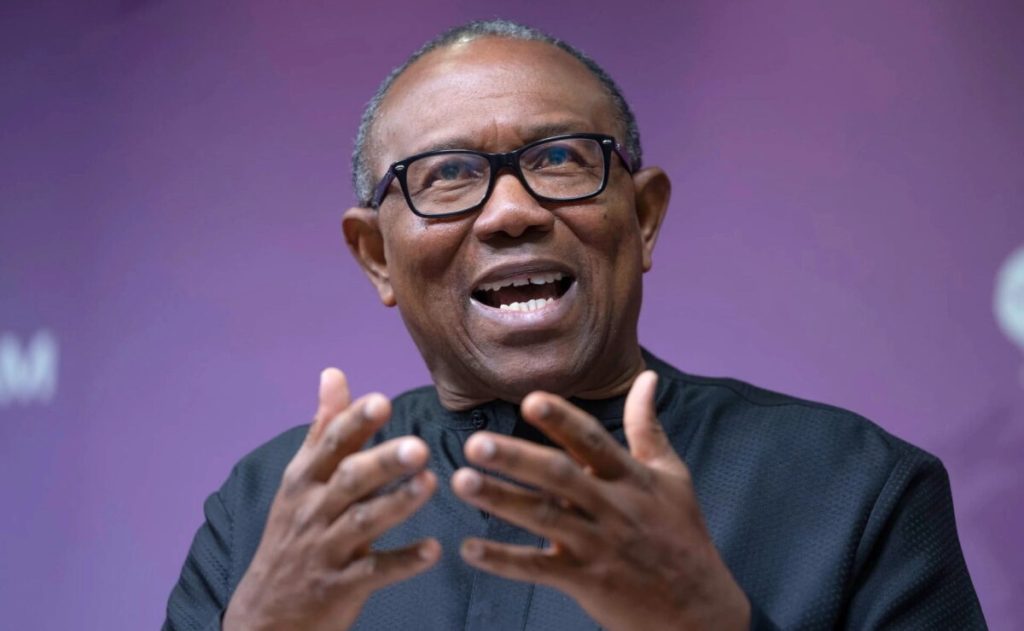
Former Labour Party presidential candidate, Peter Obi, has condemned the Senate’s refusal to make electronic transmission of election results mandatory, saying the move further exposes Nigeria as a fantastically corrupt and disgraced country.
Obi expressed his views in a statement shared on X on Friday, where he accused lawmakers of deliberately weakening Nigeria’s democratic process ahead of the 2027 general elections.
He explained that his reaction came after a brief pause to mourn victims of a deadly tragedy in Kwara State, where over 150 people reportedly lost their lives.
“Let us first pray for the souls of the innocent Nigerians lost in Kwara. That painful incident is why I delayed responding to the shameful development surrounding our electoral system,” he wrote.
Describing the Senate’s decision as intentional and dangerous, Obi said rejecting mandatory electronic transmission was not a simple oversight but a calculated attempt to block transparency.
“The Senate’s open rejection of electronic transmission of results is an unforgivable act of electoral manipulation ahead of 2027,” he said.
According to him, the action strikes at the heart of democracy and raises serious questions about the true purpose of governance in Nigeria.
“This failure to pass a clear safeguard is a direct attack on our democracy. By refusing these transparency measures, the foundation of credible elections is being destroyed. One must ask whether government exists to ensure justice and order or to deliberately create chaos for the benefit of a few.”
The former Anambra State governor linked the post-election controversies of the 2023 general elections to the failure to fully deploy electronic transmission of results, insisting that Nigerians were misled with claims of technical failures.
“
The confusion, disputes and manipulation that followed the 2023 elections were largely due to the refusal to fully implement electronic transmission,” he said.
He added that the so-called system glitch never truly existed.
Obi compared Nigeria’s electoral process with those of other African countries that have embraced technology to improve credibility, lamenting that Nigeria continues to fall behind.
“Many African nations now use electronic transmission to strengthen their democracy. Yet Nigeria, which calls itself the giant of Africa, is moving backwards and dragging the continent along.”
He criticised Nigeria’s leadership class, saying the country’s problems persist not because of a lack of ideas but because of deliberate resistance to meaningful reform.
“We keep organising conferences and writing policy papers about Nigeria’s challenges. But the truth is that the leaders and elite are the real problem. Our refusal to change is pushing the nation backwards into a primitive system of governance.”
Warning of the dangers ahead, Obi said rejecting electronic transmission creates room for confusion and disorder that only serves the interests of a small group.
He also recalled past remarks by foreign leaders who described Nigeria as corrupt, arguing that actions like this continue to justify those statements.
“When a former UK Prime Minister described Nigeria as ‘fantastically corrupt,’ we were offended. When former US President Donald Trump called us a ‘disgraced nation,’ we were angry. But our continued resistance to transparency keeps proving them right.”
Obi warned that Nigerians should not accept a repeat of the electoral irregularities witnessed in 2023.
“Let there be no mistake. The criminality seen in 2023 must not be tolerated in 2027.”
He urged citizens to be ready to defend democracy through lawful and decisive means, while also calling on the international community to closely monitor developments in Nigeria’s electoral process.
“The international community must pay attention to the groundwork being laid for future electoral manipulation, which threatens our democracy and development,” Obi stated.
He concluded by expressing hope that change is still possible if Nigerians take collective responsibility.
“A new Nigeria is possible but only if we all rise and fight for it.”
By Comrade Igboayaka O. Igboayaka
President OHANEZE YOUTH COUNCIL
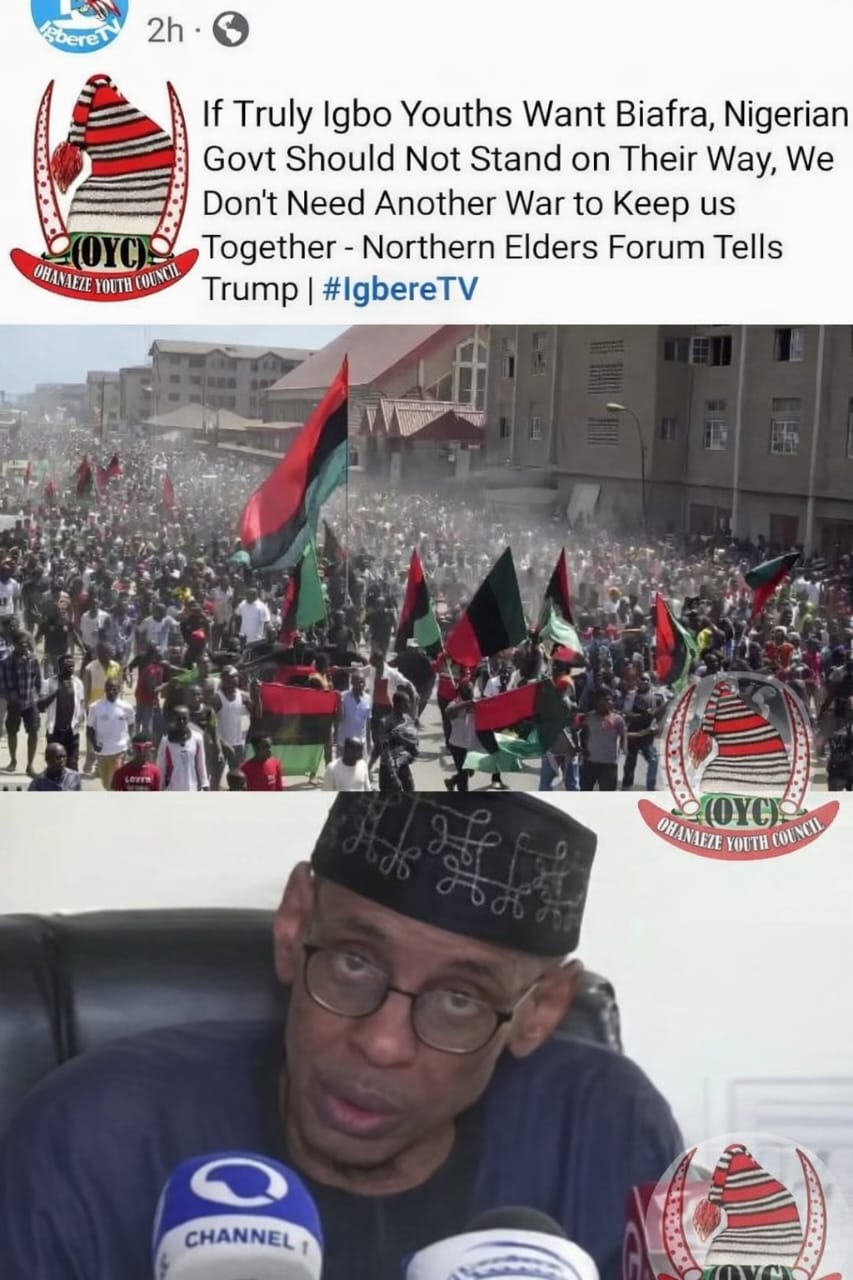
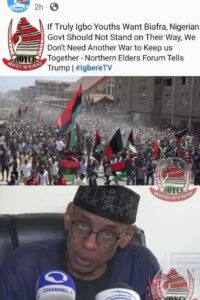
The Ohanaeze Youth Council (OYC) has formally replied to the recent statement credited to the Northern Elders Forum, wherein they suggested that if Igbo youths truly desire Biafra, the Nigerian government should not stand in their way.
While we acknowledge this rare moment of honesty, OYC states clearly and unequivocally:-Yes — Igbo youths want Biafra. And this desire is not born out of hatred, but out of decades of injustice, exclusion, and systemic oppression.
The agitation for Biafra is the direct consequence of Nigeria’s persistent failure to build an equitable and inclusive federation.
WHY IGBO YOUTHS ARE DEMANDING BIAFRA
Our position is anchored on undeniable realities:-
*1. Political Differences:-Nigeria’s political structure has consistently marginalized the Southeast. Since the return to democracy in 1999, the Igbo nation has been deliberately excluded from key leadership positions, particularly the Presidency and critical security offices. Federal appointments, resource control, and political representation remain grossly imbalanced against Ndigbo.The so-called federal system operates more like a unitary arrangement where certain regions dominate while others are reduced to spectators.*
*2. Social Differences:-Social integration in Nigeria has collapsed. Igbo citizens face profiling, harassment, and selective enforcement of laws across different parts of the country. Peaceful protests in Igboland are met with military brutality, while violent extremism elsewhere often receives negotiation and amnesty.This double standard has deepened alienation among Igbo youths.*
*3. Cultural Differences:-Our language, traditions, and values are neither protected nor promoted within the Nigerian framework. Instead, Igbo culture is routinely undermined and treated as inferior. A nation that fails to respect the cultural identity of its people cannot claim unity.*
*4. Religious Differences:-Religious intolerance has become normalized. Christian communities in the Southeast feel increasingly threatened in a country where religious bias influences policy, security response, and governance. The absence of genuine religious neutrality further widens the divide.*
*5. Ethnic Hate Against Ndigbo:- Anti-Igbo rhetoric has been openly displayed in national discourse. From threats of expulsion to hate speeches and coordinated attacks, Ndigbo have become targets within their own country. Properties belonging to Igbos are often destroyed during crises, with little or no compensation or justice.This persistent hostility sends a clear message;we are not wanted.*
*6. Systemic Marginalization:- From abandoned federal roads to exclusion from major infrastructure projects, from poor seaport development to economic strangulation, the Southeast remains deliberately underdeveloped. Igbo youths graduate into unemployment, poverty, and despair while watching other regions benefit disproportionately from national resources.*
*This is not accidental. It is structural.*
*OUR MESSAGE IS SIMPLE*
*Igbo youths are not asking for war.*
*Igbo youths are asking for dignity.*
*Igbo youths are asking for freedom.*
*Igbo youths are asking for self-determination.*
*If Nigeria cannot guarantee justice, equity, and equal opportunity for all, then the call for Biafra becomes not just legitimate — but inevitable.*
*To the Northern Elders Forum: we appreciate your acknowledgment. Now let the Nigerian state also have the courage to respect the democratic will of a people.*
*You cannot force unity where there is no justice.*
*Powered by OHANAEZE YOUTH COUNCIL (OYC)*

Electoral Act: Nigerians have every reason to be mad at Senate – Ezekwesili

Electoral act: Senate’s action confirms Nigeria ‘fantastically corrupt’, ‘disgraced’ – Peter Obi

Bosso replaces Danjuma as Imo Police Command CP

-
Business1 year ago
US court acquits Air Peace boss, slams Mayfield $4000 fine
-

 Trending1 year ago
NYA demands release of ‘abducted’ Imo chairman, preaches good governance
-

 Politics1 year ago
Mexico’s new president causes concern just weeks before the US elections
-

 Politics1 year ago
Putin invites 20 world leaders
-

 Politics1 year ago
Russia bans imports of agro-products from Kazakhstan after refusal to join BRICS
-
Entertainment1 year ago
Bobrisky falls ill in police custody, rushed to hospital
-
Entertainment1 year ago
Bobrisky transferred from Immigration to FCID, spends night behind bars
-
Education1 year ago
GOVERNOR FUBARA APPOINTS COUNCIL MEMBERS FOR KEN SARO-WIWA POLYTECHNIC BORI