
Columns
Flora Azikiwe and Oba Adeniji Adele II of Lagos, circa 1961: A Glimpse into the Personal World of Nnamdi Azikiwe

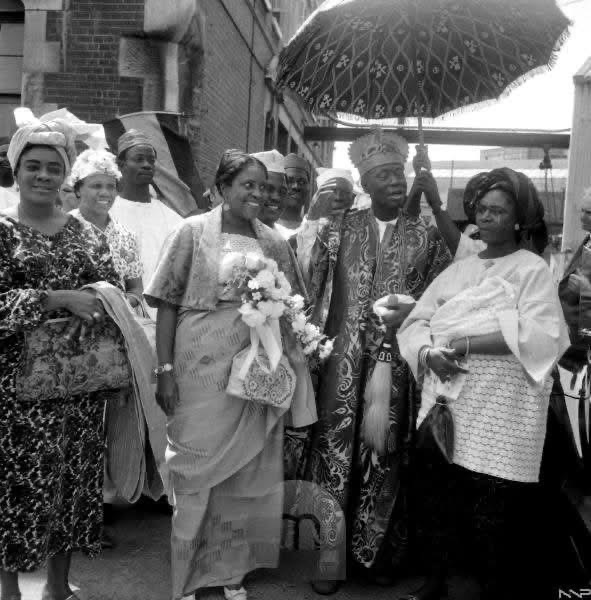
The photograph of Flora Azikiwe neé Ogoegbunam with Oba Adeniji Adele II of Lagos, taken around 1961, offers more than a simple historical image. It opens a small window into the family and social world surrounding Dr Nnamdi Azikiwe, one of Nigeria’s foremost nationalist leaders and the country’s first President. When read alongside A Life of Azikiwe by K. A. B. Jones-Quartey (1965), the image also connects to the deeply personal experiences that shaped Azikiwe’s early outlook on family, marriage and domestic life.
In the excerpt from A Life of Azikiwe, Azikiwe reflects on his youth with unusual honesty. At the age of thirteen, after reuniting with his parents in Kaduna, he became directly exposed to the tensions created by polygamy in his father’s household. What had at first seemed like a happy reunion gradually revealed itself as a home marked by jealousy, conflict and emotional strain. Azikiwe recalled his father’s dry but memorable view of polygamy: “One wife, one trouble; two wives, two troubles.” This was not a theoretical observation. It was a lesson drawn from lived experience.
For the young Azikiwe, the family conflict was disturbing and formative. He watched quarrels erupt between his parents and between his mother and his father’s new wife. These repeated clashes left a strong impression on his mind and led him to develop an early hostility to polygamy. He saw not only the emotional damage it caused within the home, but also the instability it brought to family life.
The eventual separation of his parents after seventeen years of marriage deepened that impression and shaped his later reflections on human relationships.
Yet the passage also reveals a more complex emotional story. Azikiwe admitted that, as a boy, he sided instinctively with his mother and even wrote to his father in condemnation. His father, however, responded with a measured note, cautioning him not to judge too quickly until he himself had become a husband and gained a fuller understanding of life. In later years, Azikiwe looked back on that exchange with greater maturity, recognising both his youthful loyalty to his mother and the complexity of adult relationships. The recollection is important because it shows that one of Nigeria’s greatest statesmen was shaped not only by public struggles and political ideas, but also by intimate family tensions.
That is what makes the 1961 image of Flora Azikiwe especially meaningful.
Flora was not just the wife of a famous statesman. She was a significant figure in her own right, moving within elite social and ceremonial circles at a time when Nigeria had just attained independence and was defining its identity. Her appearance beside Oba Adeniji Adele II, the traditional ruler of Lagos, reflects the close relationship between the emerging postcolonial political class and established traditional institutions. In early independent Nigeria, these relationships mattered enormously. Traditional rulers remained influential symbols of continuity and legitimacy, while nationalist leaders and their families represented the aspirations of a modern nation-state.
The image therefore stands at the intersection of two important histories. On one hand, it points to the domestic and marital dimension of Azikiwe’s life story. On the other, it reflects the broader political and cultural setting of the early 1960s, when Nigeria’s elite families often moved between official, ceremonial and communal spheres. Flora Azikiwe’s presence in such a setting suggests grace, poise and social significance. She embodied the role of the political wife in an era when public representation carried enormous symbolic weight.
Oba Adeniji Adele II himself was a major traditional figure in Lagos. As a custodian of Lagos chieftaincy and custom, his presence alongside Flora Azikiwe reinforces the importance of royal institutions even within the framework of a newly independent republic. Lagos in 1961 was not only Nigeria’s federal capital but also a city where old and new forms of authority constantly interacted. A photograph such as this captures that balance beautifully: the wife of a nationalist icon in the company of a revered monarch, each representing different but intertwined strands of Nigerian history.
The Azikiwe family story also reminds us that public greatness is often forged in private struggle. Nnamdi Azikiwe’s reflections on his parents’ troubled marriage reveal a young boy wrestling with pain, loyalty and moral judgement. Those experiences likely contributed to the emotional depth and realism with which he later viewed society and leadership. Leaders are often remembered only for speeches, offices and achievements, but their formative years are just as important in understanding who they became. In Azikiwe’s case, the household conflicts of his youth left a permanent mark on his understanding of human nature.
Seen in that light, the 1961 photograph gains added depth. It does not merely show Flora Azikiwe at a public occasion. It represents the stabilising and dignified family image that stood beside one of Nigeria’s founding fathers. It also contrasts sharply with the domestic turbulence described in Azikiwe’s youth, suggesting a later stage of life in which public decorum, maturity and established family standing had taken centre stage.
In the end, both the photograph and the literary excerpt contribute to a fuller portrait of the Azikiwe legacy. They show that history is not only made in parliaments, rallies and state houses, but also in homes, marriages and personal relationships. Flora Azikiwe’s image with Oba Adeniji Adele II is therefore more than a rare archival photograph. It is a reminder that the story of Nigeria’s first generation of leaders was deeply human, shaped by both personal trials and public responsibilities.
Source: K. A. B. Jones-Quartey, A Life of Azikiwe (1965).








Columns
Obaro Ikime was only 29 years old when he bagged his PhD at the University of Ibadan, and only 37 years old when he became a full professor of History in the same university. He then retired at 53.
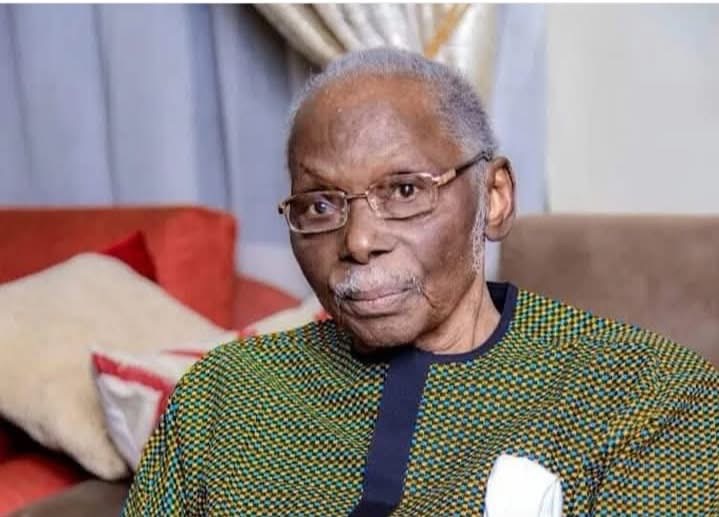
Born on December 30, 1936, in the village of Anibeze, now Isoko South, Delta State, Obaro Ikime emerged from humble rural roots (his father a fisherman, his mother a farmer), yet rose to become one of Nigeria’s most towering historians.
He attended Government College Ughelli between 1950 and 1956, where early leadership roles foreshadowed a distinguished academic career.
Ikime pursued History at the University of Ibadan, graduating with Second Class Honours (Upper Division), before earning his doctorate by the age of 29. At 37, he became a full professor, head of the Department of History at Ibadan and a pillar of the celebrated Ibadan School of History, known for advancing histories from Nigerian and African perspectives.
Professor Ikime published extensively, authoring and editing foundational works such as Leadership in 19th Century Africa (1974), The Fall of Nigeria (1977), and Groundwork of Nigerian History (1980).
His later books, including History, the Historian, and the Nation (2006) and Can Anything Good Come Out of History? (2018), reflect a deep concern for the role of history in shaping democratic consciousness and national unity.
Beyond scholarship, Ikime served as President of the Historical Society of Nigeria (1984–88), Director of the Institute of African Studies, Dean of Arts at the University of Ibadan, and held visiting professorships at prestigious institutions including UCLA, Berkeley, Harvard, and the University of Benin.
In 1990, the same year he retired, the 53-year-old Ikime was detained by the Babangida military regime for publicly opposing Nigeria’s membership of the Organisation of Islamic States and was in military incarceration for 96 days, where he wore the same clothes all through and slept on the bare floor.
Ikime’s intellectual legacy lies in his belief that the nation cannot succeed without a collective awareness of its past. He championed the teaching of inter‑group relations as a safeguard against ethnic strife, and famously warned against sidelining history in education, a battle eventually won when history re‑entered the national curriculum in 2018 after years of neglect.
Professor Obaro Ikime passed away on April 25, 2023, in Ibadan. He was 86. HistoryVille
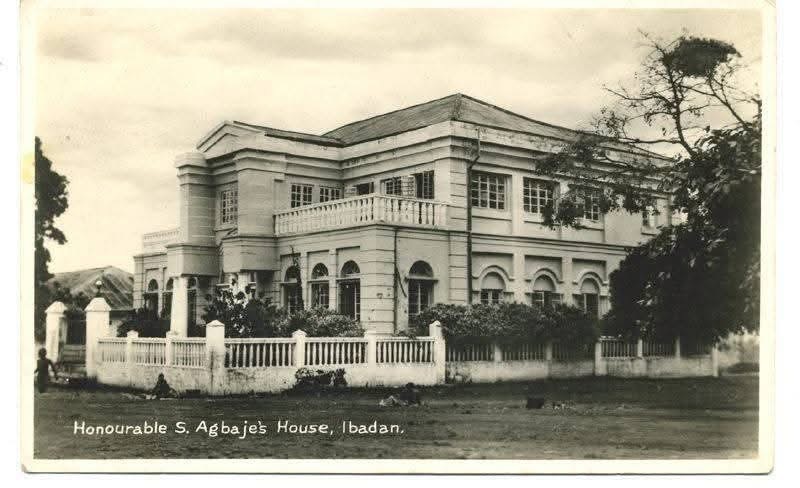
The photograph titled “Honourable S. Agbaje’s House, Ibadan, Nigeria, 1930s” points to one of the most striking symbols of wealth, ambition and urban change in colonial Ibadan. The house is generally associated with Chief Salami Agbaje (1880–1953), a renowned businessman and public figure who rose to prominence during the colonial era and became one of the wealthiest men in Ibadan. Historical accounts describe him as a pioneering indigenous entrepreneur whose lifestyle and investments reflected the emergence of a new African elite in southwestern Nigeria.
Salami Agbaje was born in Lagos in 1880 but made his name in Ibadan, where he built a remarkable commercial career. He first worked as a tailor before moving into timber contracting, produce trade and other lines of business that flourished under the colonial economy. Over time, he became one of the city’s most powerful businessmen, with interests that expanded beyond trade into transport and public life. His success placed him among the leading indigenous figures who demonstrated that Africans could compete in sectors often dominated by foreign firms and colonial commercial structures.
His house became famous because it represented more than private comfort. It was widely remembered as a landmark of modernity in Ibadan. Historical references linked to Akinpelu Obisesan’s writings state that Agbaje was the first person in Ibadan to own a cement-built two-storey house and also the first to own a car in the city. In an era when most buildings were still constructed with more traditional materials, a cement two-storey residence stood out as a statement of wealth, innovation and changing taste. The building therefore became part of the story of how Ibadan was transforming from a nineteenth-century war camp into a major colonial city with a growing merchant elite.
The title “Honourable” attached to Agbaje’s name also reflects his growing public standing. He was not only a businessman but also a figure of political and social importance in Ibadan. Sources indicate that he rose within the city’s leadership structure and became an influential public personality. His career illustrates how wealth in colonial Yorubaland could translate into social prestige, civic visibility and political relevance. Men like Agbaje occupied an important place between traditional authority, colonial administration and the new world of commerce that was reshaping urban life.
Seen in this broader context, Agbaje’s house was not simply an elegant residence. It was a visible expression of aspiration and status in a period of transition. In colonial Nigerian cities, architecture often carried symbolic weight. A grand modern house announced not only economic success but also access to new materials, new forms of consumption and a new sense of urban identity. In Ibadan, where lineage compounds and traditional political structures long shaped the cityscape, a building like Agbaje’s stood as evidence that commerce was beginning to redefine prestige. The house therefore belongs to the social history of class formation in western Nigeria as much as it belongs to architectural memory.
Agbaje’s story, however, was not without tension. Historical commentary preserved in studies of Akinpelu Obisesan notes that by the late 1940s he faced criticism from some community leaders, who accused him of hoarding wealth rather than distributing it in ways expected by society. That criticism reveals an important feature of the time: successful African businessmen were admired for enterprise, yet they were also judged by communal expectations about generosity, public responsibility and the use of wealth. In that sense, Agbaje’s mansion could be seen both as a monument to success and as a symbol in debates about inequality, modernity and social obligation.
The postcard or photograph itself appears to have circulated as a real photo postcard, which suggests that the house had enough visual and social importance to be reproduced and sold as an image. Auction and collector listings identify it as “Honourable S.
Agbaje’s House, Ibadan”, confirming that this title has been attached to the image in postcard history. That said, while the association of Salami Agbaje with a famous Ibadan mansion is well supported, the precise documentation for the specific postcard image is thinner than the broader biographical evidence. So the identification is strong and plausible, but the exact photographic chain is less firmly documented in easily accessible scholarly records.
Today, the historical importance of Agbaje’s house lies in what it reveals about Ibadan in the early twentieth century. It speaks to the rise of indigenous capital, the emergence of a new urban elite, and the way architecture became part of public memory. It also helps us understand how individuals like Salami Agbaje shaped the city’s transition into a centre of commerce and influence. Far from being just an old building, the house stands in historical imagination as a marker of an era when private enterprise, prestige and public identity were becoming deeply intertwined in colonial Nigeria.
Source
Akinpelu Obisesan entry, which summarises references to Salami Agbaje’s pioneering status in Ibadan.
Salami Agbaje biographical entry, with references to his life and career in colonial Nigeria.
Collector listing for the postcard titled Nigeria Old Real Photo Postcard Honourable S. Agbaje’s House, Ibadan.
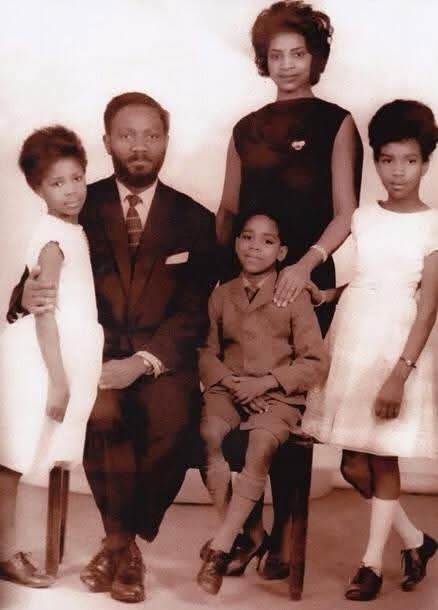
This photograph shows Prof. Wensley Vidal Mobolaji Fowler (1923–2015) with his family in the 1960s, offering a rare glimpse into the personal life of one of Nigeria’s medical pioneers. Fowler is remembered as an Emeritus Professor of Anaesthesia and is widely described as the first Nigerian to specialise in anaesthesiology, a landmark achievement in the history of modern medicine in Nigeria.
Born in Lagos in 1923, Fowler was the son of William Fowler, a retired accountant. He received his early education at Igbobi College, one of Lagos’s notable secondary schools, before travelling to Scotland to study medicine. He enrolled at the University of Glasgow in 1945 and graduated MB ChB in 1950, later taking further classes in clinical surgery and pathology in 1951. This training placed him among the early generation of Nigerian doctors who obtained advanced professional education abroad and returned home to help build the country’s postcolonial institutions.
On his return to Nigeria, Dr Fowler entered a field that was still developing as a recognised specialty. Anaesthesia at the time was not yet firmly established in the way other branches of medicine were, making his decision to specialise especially significant. By 1960, he had become a Fellow of the West African College of Surgeons as an anaesthetist, further confirming his standing as a pioneer in the discipline. His work helped lay the professional foundation for anaesthesia in Nigeria at a time when the country was expanding its hospitals, medical schools and specialist services.
The importance of Fowler’s career goes beyond personal distinction. As one of the earliest Nigerian specialists in anaesthesia, he belonged to the generation that transformed medicine from a colonial-era service into a more locally led profession.
Specialists like him were essential to the development of surgery, intensive care, obstetrics and emergency medicine, since safe anaesthesia is central to all of them. His academic title as Emeritus Professor of Anaesthesia reflects a long career not only in medical practice but also in teaching and mentorship.
This family image from the 1960s therefore carries both human and historical value. It captures Fowler not simply as a distinguished doctor, but as a husband and father during a decade when Nigeria itself was defining its modern identity. In that sense, the photograph belongs to a broader story: the rise of Nigerian professionals whose expertise, education and public service shaped the country’s institutions in the years after independence. The picture preserves the domestic side of a man whose public legacy rests on professional excellence and pioneering service in Nigerian healthcare.
Source: The Elites Nigeria obituary notice on Prof. Wensley Vidal Mobolaji Fowler.

Outrage in South Africa as Unlawful ‘Igwe Ndigbo’ Coronation Challenges Local Chieftaincy

Tinubu’s Reforms May Be Challenging, but They’ve Boosted Nigeria’s Global Respect — Information Minister Mohammed Idris

Nigerian MSc Nursing student arrested for fra¥d in India

-
Business1 year ago
US court acquits Air Peace boss, slams Mayfield $4000 fine
-

 Trending1 year ago
NYA demands release of ‘abducted’ Imo chairman, preaches good governance
-

 Politics1 year ago
Mexico’s new president causes concern just weeks before the US elections
-

 Politics1 year ago
Putin invites 20 world leaders
-

 Politics1 year ago
Russia bans imports of agro-products from Kazakhstan after refusal to join BRICS
-
Entertainment1 year ago
Bobrisky falls ill in police custody, rushed to hospital
-
Entertainment1 year ago
Bobrisky transferred from Immigration to FCID, spends night behind bars
-
Education2 years ago
GOVERNOR FUBARA APPOINTS COUNCIL MEMBERS FOR KEN SARO-WIWA POLYTECHNIC BORI