
Law parliament
I took some guys from Lagos to Abuja for Lab0ur w0rk, they are not underage ooo Atanda, these guys ran away from site and as am speaking to you I don’t know their whereabouts, their ph0ne number is not reachable Their wives and family are on my neck In fact, they have rep0rted me to the Police already and i don’t know the extent they want to drag me this matter to I don’t know when they will show up If i submit myself to the P0lice now, won’t they detain me till they show up How long will i be remanded in pris0n before coming out just because two foolish adult i gave w0rk decides to run away?


You should have reported the matter to the police immediately you can’t find them again.
Well, it’s not too late
Go to the nearest station to make official report about the incident and connect them to the police station they are calling you from in Lagos.
Regardless of how it goes
Your presence will be highly needed to aid investigation in searching for them.
Don’t fear, you maybe lucky to get police bail just as an assurance that you will not run away too or they may forward the matter to court so you can habe sureties to guarantee you won’t run away or go out of abuja for the main time while investigation goes on
Since you did not employ them fully like giving them employment letter.
The liability on you is less
Cos they are artisan and you mobilised them for work
But you will be needed to aid the investigation
Nothing to fear sir
The police are friendly, i can assure you that
They will do their j0b to find them out
Be available to give them any information needed to help the police out
Just dey find another work for abuja cos your bail conditions may not allow you leave the state
Thats all
Ignorance of the law is no excuse









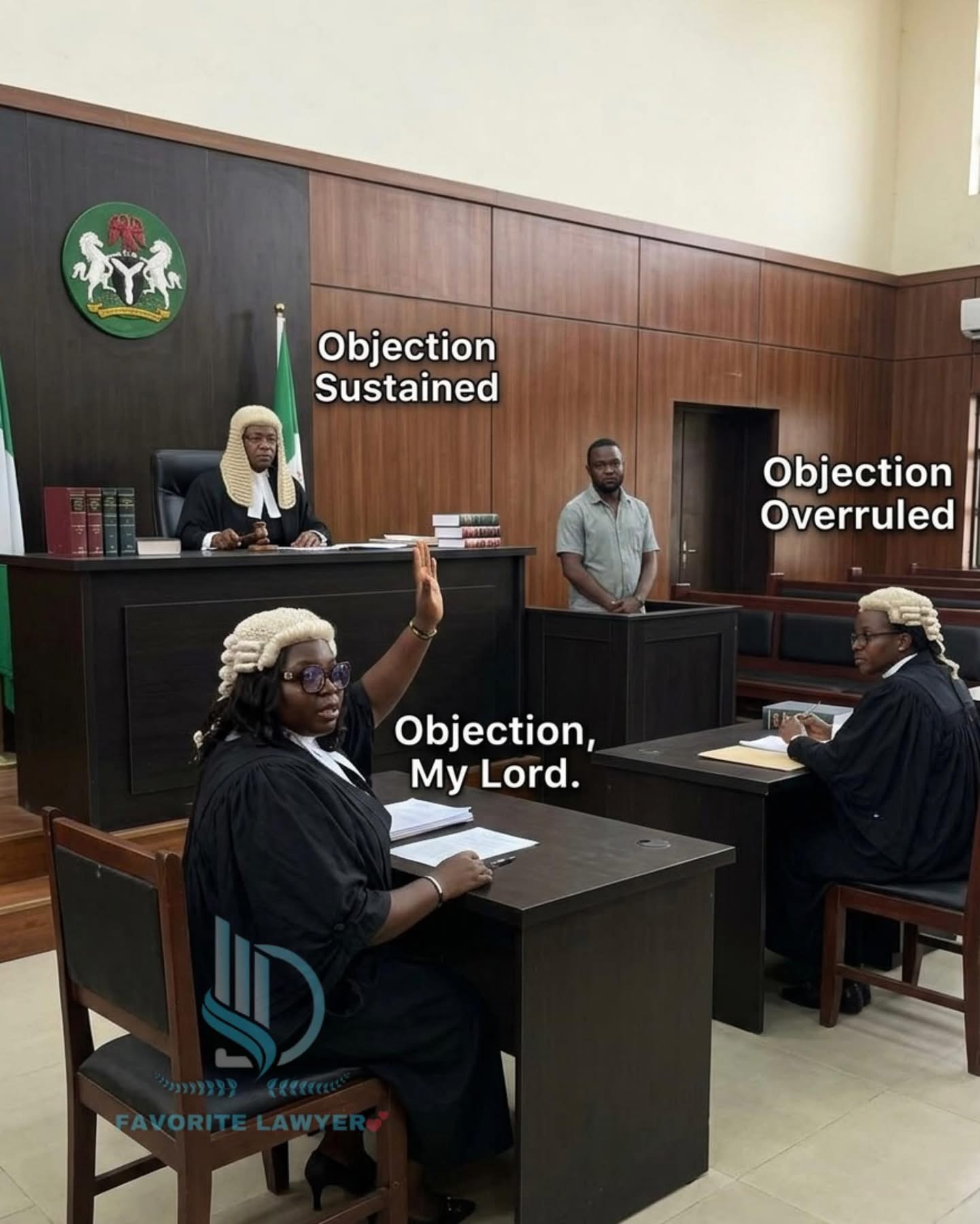
If you have ever watched a courtroom scene in movies or followed a real case, you’ve probably heard a lawyer shout:
“Objection, My Lord!”
Then the judge responds either:
“Objection Sustained.”
or
“Objection Overruled.”
To many people, those words sound technical and confusing. But the truth is, the meaning is actually very simple.
Let me break it down the way it works inside a real courtroom.
In court, an objection is when a lawyer believes that something happening is not legally proper.
For example, a lawyer may object if:
🥢 A question is irrelevant
🥢 The lawyer is leading the witness improperly
🥢 The evidence being mentioned is not allowed by law
🥢 The question is unfair or prejudicial
So the lawyer immediately says:
“Objection, My Lord.”
This simply means:
“My Lord, what is happening right now is not legally correct.”
At that moment, the judge must decide whether the lawyer is right or wrong.
When the judge says:
“Objection Sustained.”
It means:
The judge agrees with the lawyer who objected.
In simple terms:
✔ The objection is valid
✔ The question or evidence is not allowed
So the lawyer who asked the question must stop or rephrase the question.
Example:
Lawyer
“Isn’t it true that the accused has always been a troublesome person in the community?”
Opposing Lawyer:
“Objection, My Lord. That question is irrelevant.”
Judge:
“Objection Sustained.”
This means the question cannot be answered.
When the judge says:
“Objection Overruled.”
It means the judge disagrees with the lawyer who objected.
In simple terms:
❌ The objection fails
✔ The question or evidence is allowed
So the witness must answer the question.
Example:
Lawyer
“Did you see the accused at the scene that night?”
Opposing Lawyer:
“Objection, My Lord.”
Judge:
“Objection Overruled.”
This means the question is proper, and the witness must answer it.
The Simple Way to Remember It
Think of it like this:
Objection Sustained → The judge agrees with the objection ✔
Objection Overruled → The judge rejects the objection ❌
Objections are not just courtroom drama. They are very important tools lawyers use to protect fairness in a trial.
They help to ensure that:
•Only relevant evidence is considered
• Witnesses are properly questioned
•The trial follows the rules of evidence
A good lawyer must know when to object and when to stay silent.
As someone who spends time explaining law to everyday people, one thing I always say is this.
Courtroom language may sound complicated, but once you understand it, you realize it is simply a system designed to keep trials fair.
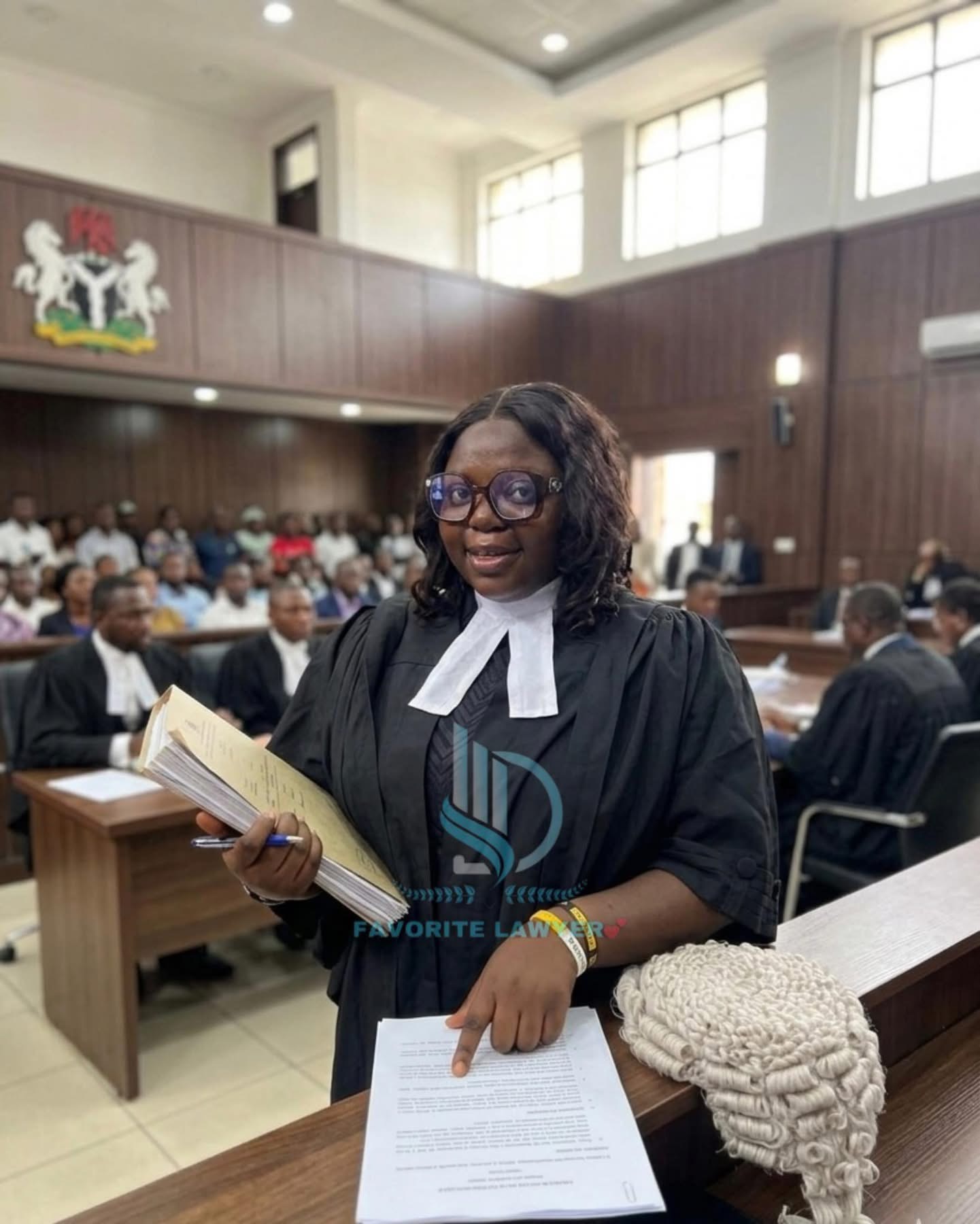
Many people ask this question whenever they hear that a lawyer has a case in court. The common belief is that once someone is a lawyer, he will automatically defend himself. But courtroom practice is not always that simple.
Under Nigerian law, a lawyer can represent himself in court. There is no law that stops a lawyer from appearing in his own case. In fact, every person has the right to appear before a court and conduct his own case, so a lawyer who is trained in the law is also entitled to do the same.
However, once a lawyer is the one involved in the case, he is no longer just a lawyer. He becomes a party to the suit. This means he is wearing two different caps in the same proceeding;
•the cap of the litigant and;
• the cap of the counsel.
In practice, this is where some procedural issues begin to arise during trial.
For instance, if the lawyer representing himself is also a witness in the case, he cannot stand in the witness box and at the same time act as the lawyer asking the questions. Courtroom procedure does not allow a person to ask himself questions during examination-in-chief. When a witness enters the witness box, the lawyer conducting the case must be the one asking the questions.
So if the lawyer who filed the case needs to give evidence, he must step into the witness box like any other witness. At that point, another lawyer may have to conduct the examination-in-chief or the court may rely on his written witness statement as his evidence. After his evidence is taken and he steps down from the witness box, he can continue to conduct the case as counsel.
Another important thing many people do not know is that courtroom practice may differ slightly depending on the court. In Magistrate Courts, proceedings are generally less technical and the rules are applied with more flexibility. Self-representation happens more frequently there.
But in the High Court, proceedings are more structured because trials strictly follow the Rules of Court and the Evidence Act. Issues like examination-in-chief, cross-examination, re-examination and tendering of documents follow a more formal process. Because of this, when a lawyer is personally involved in a matter before the High Court, it is often more convenient to brief another lawyer to handle the advocacy, especially where witnesses will testify.
There is also the practical side of litigation. When someone is personally involved in a dispute, emotions can easily interfere with judgment. Cross-examination, objections and legal strategy sometimes require a level of detachment that is difficult when the lawyer is also the person affected by the case. This is why many experienced lawyers prefer to brief another colleague to represent them whenever they are parties to a case.
There is even a popular saying within the legal profession that “a lawyer who represents himself has a fool for a client.” The point is not that the lawyer lacks knowledge of the law, but that personal involvement can sometimes cloud professional judgment.
So the simple answer is that a lawyer can defend himself in court, and he can also be represented by another lawyer. But once the lawyer becomes a witness in his own case, courtroom procedure makes self-representation more complicated, particularly during examination-in-chief and cross-examination.
That is why, in practice, many lawyers still choose to be defended by another lawyer when they find themselves involved in litigation.

The National President of the Judiciary Staff Union of Nigeria, JUSUN, Marwan Adamu, has indicated a willingness to engage in dialogue with the judiciary management in Osun State regarding the industrial action embarked upon by the state chapter.
The Osun JUSUN Chairman, Comrade Idris Adedayo Adeniran, made this disclosure in a statement issued and made available to Ekwutosblog after the union’s monthly congress in Osogbo on Monday.
According to Adeniran, Adamu also expressed openness to meeting and discussing the pressing issues affecting Osun JUSUN members.
He disclosed that the JUSUN president stated that resolving the strike depended on whether the judiciary management in the state was genuinely committed to finding a resolution to the impasse.
The statement reads, “The National President of JUSUN has extended an olive branch, indicating a willingness to engage in dialogue with the Judiciary management. He has expressed openness to meeting and discussing the pressing issues affecting our members, provided that the management is genuinely committed to finding a resolution.”
While condemning the Osun State Chief Judge, Justice Oyebola Adepele Ojo, for her indifference towards the ongoing JUSUN strike, Adeniran commended the Osun State Council of the Nigerian Labour Congress, NLC, and the leadership of the Nigerian Bar Association, NBA, for their tireless efforts to resolve the industrial action.
“The Congress vehemently condemns the Honorable Chief Judge’s egregious display of indifference to the ongoing JUSUN strike. Her abrupt departure from the state on the strike’s commencement day, coupled with her persistent absence from the state, demonstrates a shocking lack of commitment to engaging with JUSUN leadership.
“Instead of addressing the pressing concerns of judiciary staff, lawyers, and the general public, Her Lordship has chosen to travel abroad. This blatant disregard for the welfare of those who serve the judiciary and the public they serve is unacceptable.
“We appreciate Comrade Christopher Abimbola Arapasopo, Chairman, NLC Osun State, for standing with us during this tough time. Your support and commitment to justice and fairness inspire us. We are honored to have you as an ally.
“Thanks for championing workers’ rights and welfare. We are proud to have you as a partner. We also thank the leadership of NBA for their tireless efforts to resolve the ongoing JUSUN strike,” the statement added.
The congress also condemned attempts by the judiciary management to use JUSUN members as security guards.
While insisting that such a practice is unacceptable, the congress affirmed that members were not employed as security personnel and that their concerns must be addressed accordingly.

Benita Enwonwu in the 1970s: Model, Actress, and Daughter of Ben Enwonwu

Kidnappers Took Loan With My Phone – Victim Recounts Ordeal

11 more arrested over Ozoro “r@ping festival”

-
Business1 year ago
US court acquits Air Peace boss, slams Mayfield $4000 fine
-

 Trending1 year ago
NYA demands release of ‘abducted’ Imo chairman, preaches good governance
-

 Politics1 year ago
Mexico’s new president causes concern just weeks before the US elections
-

 Politics1 year ago
Putin invites 20 world leaders
-

 Politics1 year ago
Russia bans imports of agro-products from Kazakhstan after refusal to join BRICS
-
Entertainment1 year ago
Bobrisky falls ill in police custody, rushed to hospital
-
Entertainment1 year ago
Bobrisky transferred from Immigration to FCID, spends night behind bars
-
Education2 years ago
GOVERNOR FUBARA APPOINTS COUNCIL MEMBERS FOR KEN SARO-WIWA POLYTECHNIC BORI