
Politics
I’m Not Playing Politics with Nnamdi Kanu’s Release – Gov Otti Replies Chief Ogbonna

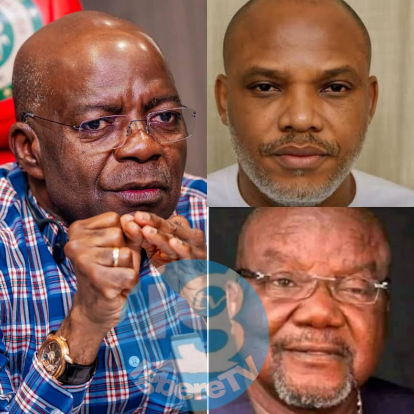
Our attention has been drawn to a statement credited to a Former Commissioner for Local Government and Chieftaincy Affairs in Abia State, Chief Charles Ogbonna, wherein he called Governor Alex Otti unprintable names and also alleged that Governor Otti didn’t visit President Tinubu to discuss the issue of Mazi Nnamdi Kanu, but to plan on how to defect to the APC, among other childish verbal attacks.
Chief Ognonna has been unleashing unprovoked verbal venom and vituperation on the Governor, but we chose to ignore him, not only because we have been busy with the task of governance, but because we also know that he is traumatised by the obscurity he was plunged into after the 2023 general election and felt he should be allowed to experience some healing that could help normalise his reasoning.
Ordinarily, we would have still ignored Chief Ognonna’s latest idle tirade and allow him delude himself with fantasies of fury, but because the Nnamdi Kanu issue is both sensitive and very important to this government, we felt we should respond and put the records straight.
In continuation of Governor Otti’s efforts aimed at securing Kanu’s release, the Governor subsequently had a meeting with the President after visiting the IPOB leader at the Sokoto Correctional Centre on Sunday, November 30 2025. This is in continuation of earlier meetings the Governor had been having with the FG on this matter in the past two years.
The issue of Kanu was the only subject matter that took Governor Otti to Aso Rock and to the Glory of God, the meeting was both positive and fruitful, as the President was so gracious and generous.
Chief Ogbonna’s allegation of Governor Otti going to lobby to join the APC is both petty, ignoble, laughable and very irresponsible. At the risk of sounding immodest, any political party Governor Otti chooses to join today would roll out the drums and red carpet to welcome him with joy and excitement. If anything, many notable and respected APC leaders are not just desirous of having him in their fold, but are strongly appealing to Governor Otti to join their party because they know that he is not a liability.
Ogbonna accused Otti of betrayal, but he didn’t say who Otti betrayed, how and when.
He claimed that Otti doesn’t have capacity, yet Otti defeated him in his Polling Unit, Ward and LGA where his PDP Candidates from House of Assembly to President lost woefully.
He accused Governor Otti of inconsistency, yet he abandoned Alhaji Atiku Abubarkar less than 48 hours after the result of the Presidential Election was announced, in spite of the empty noise and boast he made about the PDP’s Presidential Candidate, all for Atiku’s money when it was needed and available.
He alleged that Governor Otti is playing politics with Nnamdi Kanu, yet, he is angry that the Governor is engaging the FG to secure Kanu’s freedom. Is there anything more contradictory and ridiculous than Ogbonna’s utterances?
At this point, the general public needs to know the genesis of Chief Ogbonna’s anger and aggression.
Having acquired Agbozu Cocoa Plantation when he was in government, the present government decided to reclaim the Plantation which was yielding nothing to the state under Charles Ogbonna. In line with Governor Otti’s policy of operating a government with human face, which sees him pay compensation so as not to hurt any citizen or investor, he approved a compensation package which was paid to Chief Ogbonna. He was excited and full of thanks and appreciation to Governor Otti for the gesture, because he knew he didn’t deserve it. Unfortunately and in line with his insatiable quest for power and money, he thought that another opportunity had opened for him to surreptitiously sneak into the government as he later nominated his son to be appointed by Governor Otti. The Governor flatly declined the request and subsequently appointed another person from the same Ogbonna’s Community, a development that made him feel slighted, diminished and broken and has since then gone out of control, throwing tantrums and hoping to be invited for settlement.
Chief Ogbonna’s problem, like some of his co-travellers is his failure to wake up from his slumber and realise that the era of ruins is over and that Abia has moved forward, never to be dragged back.
His primitive arrogance and mediocre mindset that limit his understanding of government and governance to political appointments, settlement and sharing of public funds without service to the people has so blinded him to the extent that he attacked the Governor recently for awarding the badly broken Umuahia-Ikot Ekpene road, claiming that the FG had aleady awarded it and thus should not be awarded by the Governor. How could any human being with conscience prefer that his people continue to suffer and die in their numbers just because he feels that building the strategic road would earn the Governor a huge political capital? Ogbonna needs to be reminded that such evil mindset has no place in the New Abia.
Even though Ogbonna’s character deficiency doesn’t position him for any modicum of respect, however, having advanced in age, he is expected to conduct himself honourably and responsibly so as not to attract insults to himself.
Finally, Ogbonna needs to be educated that one of the hallmarks of a great leader is his ability to apply wisdom, emotional intelligence and deploy the instrument of diplomacy in solving problems that have the propensity to impact the security of life and property of the people negatively if handled wrongly.
Governor Otti didn’t campaign with Mazi Nnamdi Kanu’s name in 2023, and doesn’t need to campaign with his plight for 2027, however, he strongly believes that resolving the problem of Kanu’s conviction is one of the ways to achieving peace, security and healing in our land. Unfortunately, Chief Ogbonna is not grounded, both in character and knowledge of the ingredients of modern leadership, hence his kindergarten politicisation of Governor Otti’s engagements with the FG and visit to the President.
Now that Ogbonna has become an errand boy in the APC, he needs to be reminded that he can pursue his stomach agenda without necessarily carrying out this misplaced aggression against Governor Otti, because it makes him look more pathetic than he can ever imagine.
Ferdinand Ekeoma
Special Adviser to the Governor
(Media and Publicity)
December 4, 2025.







March 20, 2026
The All Progressives Grand Alliance in Abia State has called on the Senate to declare the seat of the Senator representing Abia South, Enyinnaya Abaribe, vacant following his resignation from the party.
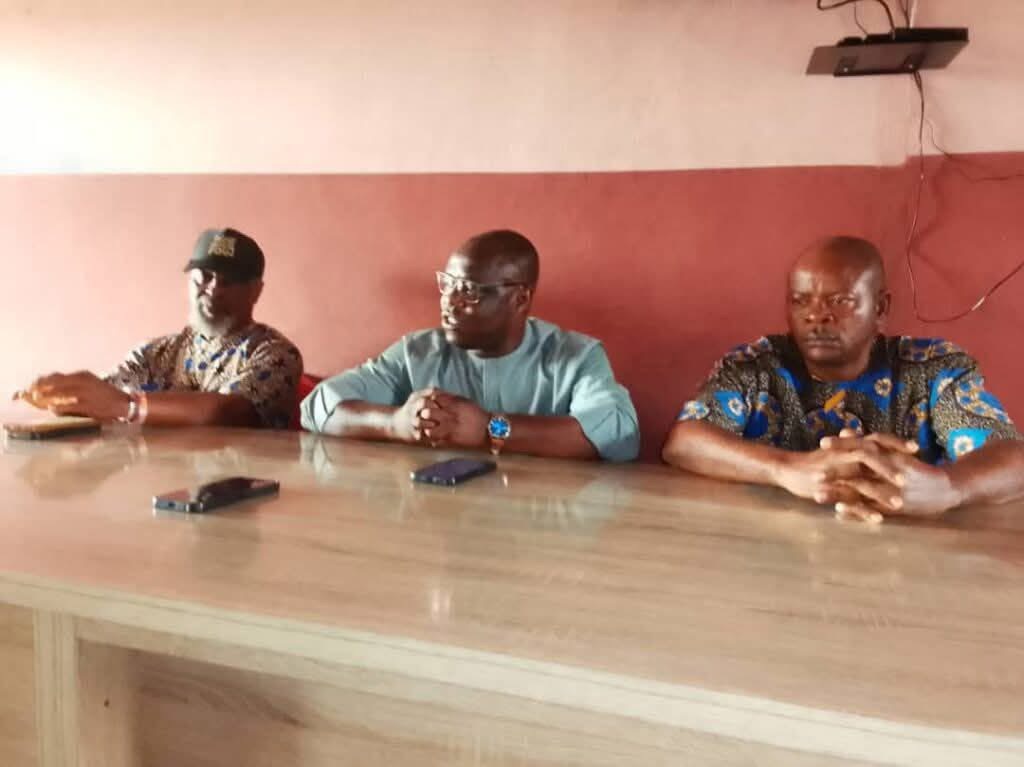
The party made the call on Thursday during a press briefing in Umuahia, where its leadership, led by a former member of the Abia State House of Assembly, Obinna Ichita, insisted that Abaribe voluntarily resigned from APGA and was not sacked, contrary to his claim at the Senate.
Ichita argued that Abaribe’s exit from the party that sponsored his election violates constitutional provisions, stressing that there was no leadership crisis within APGA to justify his defection.
“The senator resigned in his ward. He did so voluntarily, which is his right. However, if you leave the party that gave you the platform for another party when there is no leadership crisis, that seat must be declared vacant,” he said.
He further alleged that Abaribe misrepresented the circumstances of his exit by claiming he was sacked.
“The party has documentary evidence to show that Senator Abaribe was not sacked. He resigned three months after disciplinary measures were taken against him over actions the court did not consider appropriate,” Ichita added.
According to him, the mandate belongs to the people and the party, not the individual office holder.
“They gave him the mandate on the platform of APGA, not any other party. There was nothing like ADC when he was elected. He cannot take the mandate elsewhere without consulting the people who gave it to him,” he said.
Ichita maintained that the constitution is clear on defection, noting that any lawmaker who leaves a party without a valid internal crisis must vacate the seat.
“My message to Senator Abaribe is to honourably vacate the seat instead of waiting for the National Assembly to declare it vacant. That would amount to national embarrassment,” he added.
Also speaking, the APGA State Chairman, Sunday Onukwubiri, and the party’s Public Relations Officer, Chukwuemeka Nwokoro, reiterated that Abaribe had distanced himself from the party’s activities at various levels in the state.
They insisted that he neither holds dual membership nor was he expelled, maintaining that his resignation was voluntary.
“He was invited by the party but failed to appear and was subsequently suspended in line with the party’s constitution. Three months later, he resigned,” the officials said.
Reacting, Abaribe defended his position, insisting that he acted within his constitutional rights.
“When you are no longer a member of a party by virtue of being sent away, you have the fundamental right of association to join another party,” he said.
He argued that his indefinite suspension by APGA effectively amounted to expulsion.
“If a party places you on indefinite suspension for more than six months, what does that mean? It means you have been told to go elsewhere, and that is exactly what I did,” he stated.
The senator added that the proper constitutional procedure for removing him from office would be through a recall process by his constituents.
“If the people who elected me no longer want me, the right thing to do is to initiate a recall. That is the position of the law,” he said.
Politics
Tinubu’s Reforms May Be Challenging, but They’ve Boosted Nigeria’s Global Respect — Information Minister Mohammed Idris
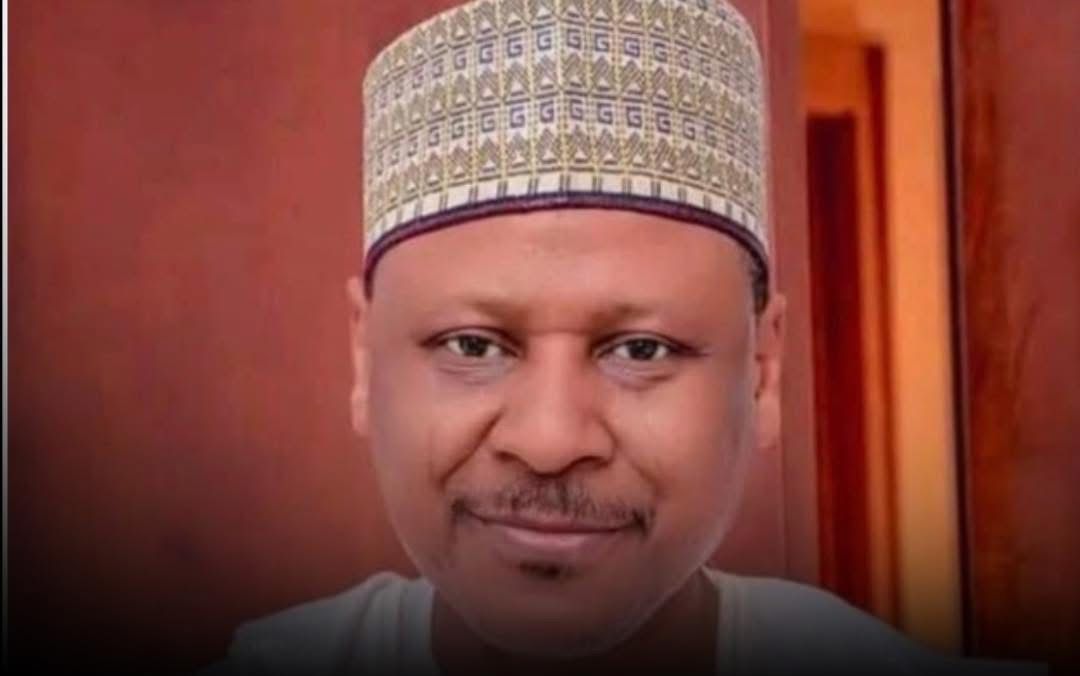
The Minister of Information and National Orientation, Mohammed Idris, has stated that Nigeria is receiving greater respect internationally under the leadership of President Bola Tinubu.
Speaking on Friday after attending Jumaat prayers at Yahaya Road Mosque in Kaduna, Mr Idris said, “Nigeria is indeed taking its rightful place. The country is respected more than ever before on the international scene. The reforms that the president has instituted, as challenging as they are, are meant for the benefit of all Nigerians.”
He urged Nigerians to stay calm as the government continues its efforts to restore security across the nation. Referring to the recent multiple b%mb att@cks in Maiduguri, Borno State, the minister assured that such incidents would not be allowed to recur.
“Indeed, our country is facing challenges, and the government is working tirelessly to ensure security throughout Nigeria. We have seen what has happened, particularly in Borno State. We pray to Allah to make this the last one, as the government is committed to preventing any repetition of such incidents,” he said.
Mr Idris also stressed the importance of citizens being prayerful and working together to address the country’s challenges. He encouraged both Muslims and non-Muslims to unite in the interest of Nigeria’s growth and development.
“This is a time for reflection for all Nigerians. We pray that everyone will consider this moment and recognize the need for unity, progress, and national development. All hands must be on deck for the unity of the country. As we earn respect internationally, we also hope and pray that unity will strengthen within our nation,” he added.
By Dan Opara
Following the successful conduct of the Imo State APC Congress held in Owerri, Imo State, on March 3rd, 2026, the leadership of the party has officially released the list of victorious candidates who emerged from the exercise.
The announcement, made on Friday, March 20th, 2026, came 17 days after the Congress, as gathered by ThePressman Newspaper.
According to the released list, Chief Austin Onyedebelu emerged as the Imo State APC Chairman, while Arc. Allen Enwerem was elected as the State Deputy Chairman. Hon. Onyekachi Ibezim secured the position of State Secretary, alongside 33 other members who now constitute the State Party Executive Committee, including Ex-Officio members in Imo State.
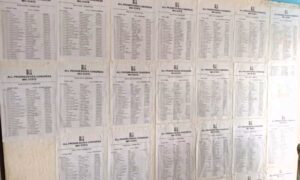
In addition, the leadership of the ruling APC across the 27 Local Government Areas of Imo State has also been announced.
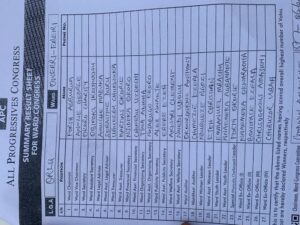
The Ward Party Executive Committee Members for the 305 wards are, however, yet to be fully confirmed.
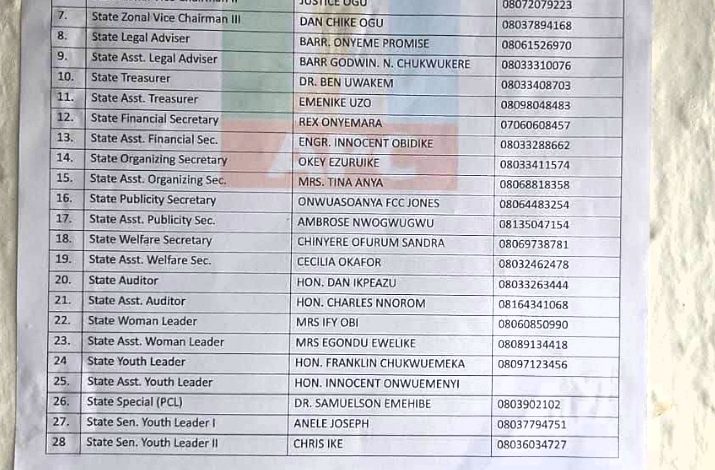
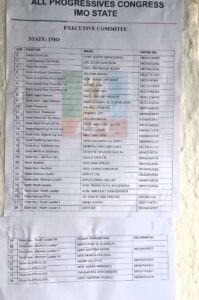
Below is the comprehensive list of the All Progressives Congress State Executive Committee Members for Imo State, including their respective telephone numbers.
ALL PROGRESSIVES CONGRESS
STATE: IMO STATE EXECUTIVE COMMITTEE
State Chairman, Chief Austin Onyedebelu, 08033101685.
State Deputy Chairman, Arc. Allen Enwerem, 08036301966.
State Secretary, Hon. Onyekachi Ibezim, 08033416291.
State Assistant Secretary, Nzenwa Nwoju, 08037717167.
State Zonal Vice Chairman I, Hon. Frank Onyejiaka, 0803314564.
State Zonal Vice Chairman II, Justice Ogu, 08072079223.
State Zonal Vice Chairman III, Dan Chike Ogu, 08037894168.
State Legal Adviser, Barr. Onyeme Promise, 08061526970.
State Assistant Legal Adviser, Barr. Godwin N. Chukwukere, 08033310076.
State Treasurer, Dr. Ben Uwakem, 08033408703.
State Assistant Treasurer, Emenike Uzo, 08098048483.
State Financial Secretary, Rex Onyemara, 07060608457.
State Assistant Financial Secretary, Engr. Innocent Obidike, 08033288662
State Organizing Secretary, Okey Ezuruike, 08033411574.
State Assistant Organizing Secretary, Mrs. Tina Anya, 08068818358.
State Publicity Secretary, Onwuasoanya FCC Jones, 08064483254.
State Assistant Publicity Secretary, Ambrose Nwogwugwu, 08135047154.
State Welfare Secretary, Chinyere Ofurum Sandra, 08069738781.
State Assistant Welfare Secretary, Cecilia Okafor, 08032462478.
State Auditor, Hon. Dan Ikpeazu, 08033263444.
State Assistant Auditor, Hon. Charles Nnorom, 08164341068.
State Woman Leader, Mrs. Ify Obi, 08060850990.
State Assistant Woman Leader, Mrs. Egondu Ewelike, 08089134418.
State Youth Leader, Hon. Franklin Chukwuemeka, 08097123456.
State Assistant Youth Leader, Hon. Innocent Onwuemenyi.
State Special (PCL), Dr. Samuelson Emehibe, 0803902102.
State Senatorial Youth Leader I, Anele Joseph, 08037794751.
State Senatorial Youth Leader II, Chris Ike, 08036034727.
State Senatorial Youth Leader III, Ifeanyi Nwannenna, 08020988164.
State Senatorial Women Leader I, Mrs. Iheako O. Elizabeth.
State Senatorial Women Leader II, Lady Martina Okere, 08036689003.
State Senatorial Women Leader III, Mrs. Franca Onuoha.
State Ex Officio I, Henry Oguguo, 08035001354.
State Ex Officio II, Hon. Alban Amasiatu, 08060564561.
State Ex Officio III, Chukwuma Onyedindere, 08037756307.
State Ex Officio IV, Chief Monday Ikokwu, 08086803626.
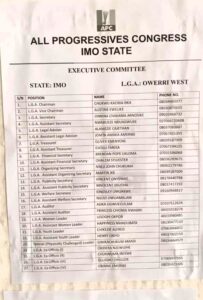
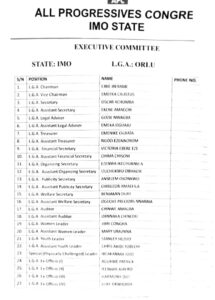
Meanwhile, the leadership structure of the All Progressives Congress (APC) in Imo State has been duly constituted, with officials elected across the State, Local Government Area, and Ward levels, reflecting a comprehensive and well-organized party framework.
At the Local Government Area level, notable individuals have emerged as party chairmen in various LGAs.
In Owerri West LGA, Mr. Chikadibia Okpe, was elected as the APC Local Government Chairman.
Similarly, in Orlu LGA, Mr. Ejike Iberame, emerged as the duly elected Party Chairman, while in Oguta LGA, Mr. Obed Onyebuchi, was elected as the APC Chairman, alongside 24 LGA Party Chairmen, to further strengthening the party’s grassroots leadership.
These developments extend across other Local Government Areas and wards, where Party Chairmen and Ward Chairmen have also been elected to provide leadership and coordination at their respective levels.
The successful emergence of party executives at the State, LGA, and Ward levels underscores the APC’s commitment to internal democracy, effective organization, and sustained grassroots mobilization across Imo State.
The release of the list marks a significant step in consolidating the party’s structure across the state, as the newly elected executives are expected to steer the affairs of the APC in Imo State moving forward.

Fuel price hike: Gov Makinde announces N10,000 transport support for workers

Former Acting Accountant-General of the Federation bags 72years imprisonment for diverting N868.46 million security funds

Benita Enwonwu in the 1970s: Model, Actress, and Daughter of Ben Enwonwu

-
Business1 year ago
US court acquits Air Peace boss, slams Mayfield $4000 fine
-

 Trending1 year ago
NYA demands release of ‘abducted’ Imo chairman, preaches good governance
-

 Politics1 year ago
Mexico’s new president causes concern just weeks before the US elections
-

 Politics1 year ago
Putin invites 20 world leaders
-

 Politics1 year ago
Russia bans imports of agro-products from Kazakhstan after refusal to join BRICS
-
Entertainment1 year ago
Bobrisky falls ill in police custody, rushed to hospital
-
Entertainment1 year ago
Bobrisky transferred from Immigration to FCID, spends night behind bars
-
Education2 years ago
GOVERNOR FUBARA APPOINTS COUNCIL MEMBERS FOR KEN SARO-WIWA POLYTECHNIC BORI