
Trending
Israel-backed food aid group admits it won’t be able to reach most vulnerable in Gaza

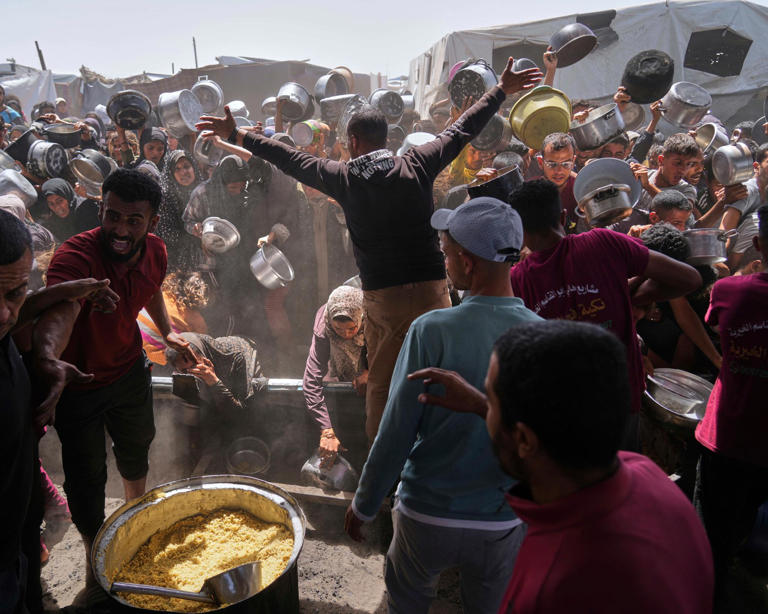
The organisation backed by Israel to take over food distribution in Gaza as famine looms has admitted it would not be able to feed some of the most vulnerable civilians from the militarised compounds it plans to set up.
Aid groups and the United Nations have already refused to work with the Gaza Humanitarian Foundation (GHF), a Swiss-registered organisation led by a former US marine. They say it does not have the capacity to end hunger in Gaza and would make it harder to get aid to civilians caught up in other wars by undermining their neutrality.
Israel has not officially laid out its plans for food distribution in Gaza, but statements from the GHF and briefings from Israeli officials envisage four or five militarised distribution centres in southern Gaza, run by private security companies, under the oversight of Israeli military bases.
Related: Trump says people in Gaza are starving and US will take care of situation
GHF is in “advanced discussions” with Israel on details and timing and hopes to have news soon, a person involved with planning at the foundation said.
Heads of household would be expected to collect boxes weighing up to 20kg with several days’ supply of food and basic hygiene items like soap for their families. There is no provision for those too sick or weakened by famine to walk long distances across Gaza’s ruined landscape with heavy loads.
“From what we have understood, the plan would increase the ongoing suffering of children and families in the Gaza Strip,” said United Nations Children’s Fund spokesperson Jonathan Crickx.
“How is a mother of four children, who has lost her husband, going to carry 20kg back to her makeshift tent, sometimes several kilometres away?” Crickx said. “The most vulnerable people, including the elderly, people with disabilities, the sick and wounded, and orphans, will face huge challenges to access aid.”
Beyond logistical problems with Israel’s plans, humanitarian organisations say that agreeing to work under Israel’s military would compromise the neutrality that is the most crucial protection for their unarmed teams.
It would also make it harder for them to operate in other conflict zones, where neutrality is key to being able to reach civilians in contested areas.
“These plans are basically instrumentalising humanitarian aid, putting it into the hands of a party to the conflict, which goes against the principles of impartiality and independence. We don’t work with parties to (any) conflict,” said Bushra Khalidi, policy lead for the Palestinian territory at Oxfam.
“Giving Israel power over who receives the aid and where basically turns it into a tool of coercion, and it blurs the line between the humanitarian assistance and Israel’s military objectives, which in turn puts civilians and aid workers at serious risk.”
That is a particular concern because Israeli attacks have killed hundreds of aid workers during the war, including both Palestinians and foreign citizens.
Over two months into a siege of Gaza, with famine edging closer, Israel appears to be using Palestinian lives to try to coerce the UN and aid groups into cooperating with its new plans for militarised aid delivery, one western diplomat said.
They have been presented with a bleak choice – to either cooperate or let Palestinians continue to go hungry. “When the consequences are starvation, that is a very hard decision to make,” the diplomat said.
For now UN and major international aid groups have presented a unified rejection, and Israel may be forced to partly back down if it wants to avert full-blown famine.
Under international law Israel, as an occupying power, has a responsibility to provide for the basic needs of civilians in Gaza, including food and medicine.
Despite the government’s insistence that there are no food shortages, some military officials are now privately admitting that Palestinians are on the brink of starvation, the New York Times reported.
GHF acknowledged this week it would not be able to reach the most vulnerable Palestinians.
“In order to provide all Gazans, including those that are infirm, immobile, or unwilling to travel to a secure distribution site, with access to food aid, GHF will require aid distribution mechanisms that expand beyond the currently scoped model,” the organisation said in a statement.
Israeli forces are already preparing sites that match descriptions of militarised aid hubs planned by GHF, a BBC investigation found. But only the UN and aid groups on the ground at the moment have the capacity to distribute aid in the community.
Israel’s siege and its apparent new plan to control food going into Gaza has been justified by repeated claims that Hamas is systematically stealing a significant proportion of food aid intended for civilians.
Despite intense scrutiny of aid networks in Gaza, Israeli officials have never provided evidence to back up these claims, which diplomats and humanitarians say are not true. Monitoring and audit systems to account for public money can track deliveries from arrival in Gaza to the moment they are handed over.
This openness contrasts with the GHF’s secrecy in its first few weeks of existence. It does not have a website or public contact details beyond a postal address. Its communications about one of the most pressing humanitarian crises in the world have been largely limited to two statements circulating online.
It has burnished its credentials by listing the names of two high-profile humanitarian figures as part of its senior team, the former head of the World Food Programme David Beasley and the former CEO of World Central Kitchen Nathan Mook. But both have told CNN they are not currently involved. The GHF did not respond to requests for comments about personnel.
Even if Israel decides to back down over food supply networks in the short-term, few expect pressure on international humanitarian groups to let up.
Last week 55 organisations called for the international community to take action on new rules for registration inside Israel, saying the regulations threaten to shut their work down.
“Based on vague, broad, politicised, and open-ended criteria, these rules appear designed to assert control … [and] silence advocacy grounded in international humanitarian and human rights law,” they said in an open letter.
Israeli officials are seeking not only control of aid supplies, but the people delivering it, Khalidi said. With foreign journalists and diplomats barred from entering Gaza, humanitarians on the ground have been some of the only external witnesses to the impact of Israel’s campaign there.
“We have been monitoring, reporting, and calling for accountability on what we’re witnessing on the ground. And Israel is not happy about that.”










A woman has shared a disturbing account of her abduction in Abuja, detailing how kidnappers allegedly exploited her personal information during captivity.
According to her, she was kidnapped while going home in a bus and kept blindfolded for two days as her captors demanded a ransom of ₦5 million from her family and friends.
She further alleged that while she was still in captivity, the abductors accessed her phone and used it to download a loan application.
With her ATM card and identification documents in her possession at the time, they reportedly secured a loan of ₦148,000 without her knowledge.
The victim said she remained unaware of the transaction throughout her ordeal, as she was blindfolded and focused on pleading for her life.
She revealed that when she later found out and wrote to the loan app, they insisted she must pay off the loan.
“I was kidnapped in a bus in Abuja. They blindfolded my eyes for two days. Even after asking for ransom of 5 million from my family and friends, they took a loan. They downloaded a loan app on my phone, and I always carry my ATM card and my ID cards in my bag, so they used it to up the loan app and took a loan of 148 thousand Naira. I didn’t even know about the loan all the time I was there cause I was blindfolded and just begging for my life….” she partly said.
Trending
Man Ends His Marriage After Finding Photographs Of His Wife With Another Man While Browsing Google Maps

A husband was left shocked and reportedly had to end his marriage after discovering photos of his wife with another man while using Google Maps.
The man was using Google Maps to plan a route before setting off on a journey when he noticed an image of his wife sitting on a bench, stroking the hair of another man whose head rested in her lap.
Captured by a Google camera vehicle in Lima, the Peruvian capital, the stunned husband said the photograph grabbed his attention because the woman pictured seemed to be wearing identical clothing to pieces his wife owned.
Although the photo dated back to 2013, the furious husband challenged his wife with proof of her previous betrayal.

The pair, whose identities remain anonymous, subsequently divorced after the woman confessed to having an affair.
In a twist of fate, she was photographed with her lover on a bench near the city’s Puente de los Suspiros de Barranco (Bridge of Sighs of the Ravine).
The husband recently posted the photographs on Facebook where they sparked considerable reaction amongst users.
One social media commenter, San Pateste, said: “What a small world it is… It would have been enough if she said to her husband that she did not love him any more.”
Guillermo Sanchez added: “Out of 100 women, 90 per cent are not loyal, the rest are loyal and only have one eye (hahaha) or are immortal (hahaha).”
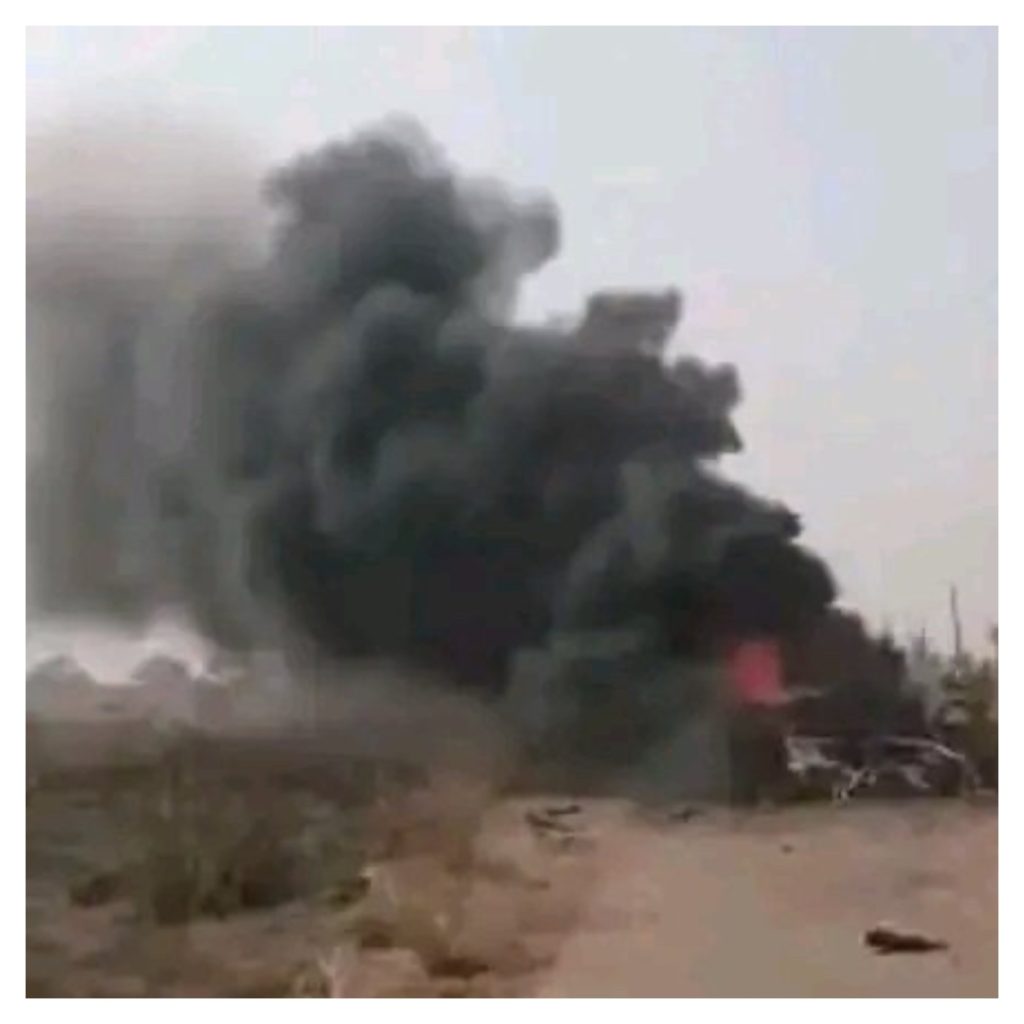
An Improvised Explosive Device, IED, explosion injured a soldier and a personnel of the Nigeria Security and Civil Defense Corps, NSCDC, in Orsu Local Government Area of Imo State.
A counter-insurgency and security expert in the Lake Chad region, Zagazola Makama, made this disclosure on X.
Makama disclosed that the incident occurred at about 8:35am on March 18 during a joint operation by troops of 34 Artillery Brigade in the Orsu general area.
According to the source, the personnel were operating around a suspected hideout of Indigenous People of Biafra, IPOB, and its armed wing, the Eastern Security Network, ESN, when they stepped on a concealed pressure-activated IED.
It noted that the device detonated, leaving both operatives injured.
“They were immediately administered first aid and subsequently evacuated to a medical facility for further treatment.
“Operations are ongoing in the area to dismantle criminal hideouts and enhance safety,” the source said.

IMO STATE LABOUR PARTY DESCENDS INTO FACTIONAL WAR

EFCC evicts Malami from Abuja home amid forfeiture dispute

Fuel price hike: Gov Makinde announces N10,000 transport support for workers

-
Business1 year ago
US court acquits Air Peace boss, slams Mayfield $4000 fine
-

 Trending1 year ago
NYA demands release of ‘abducted’ Imo chairman, preaches good governance
-

 Politics1 year ago
Mexico’s new president causes concern just weeks before the US elections
-

 Politics1 year ago
Putin invites 20 world leaders
-

 Politics1 year ago
Russia bans imports of agro-products from Kazakhstan after refusal to join BRICS
-
Entertainment1 year ago
Bobrisky falls ill in police custody, rushed to hospital
-
Entertainment1 year ago
Bobrisky transferred from Immigration to FCID, spends night behind bars
-
Education2 years ago
GOVERNOR FUBARA APPOINTS COUNCIL MEMBERS FOR KEN SARO-WIWA POLYTECHNIC BORI