
Columns
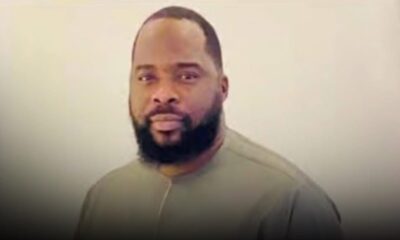
Kenneth Okonkwo During His NYSC Days

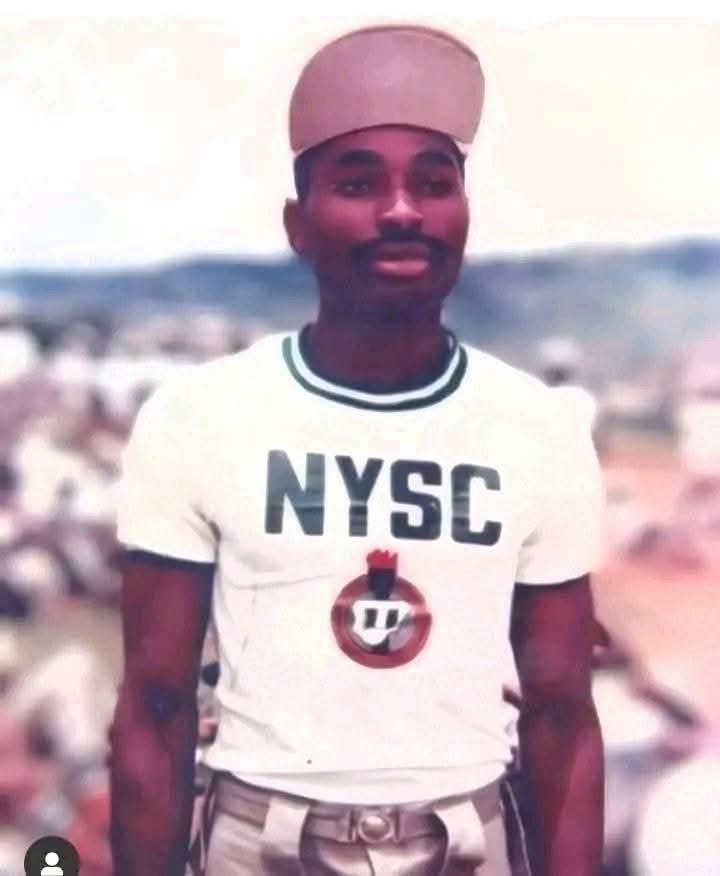
A rare throwback photograph showing the early years of one of Nollywood’s most recognizable actors.
This throwback photograph shows Kenneth Okonkwo during his National Youth Service Corps (NYSC) year, a period that marks an important stage in the lives of many Nigerian graduates.
Long before becoming one of Nollywood’s most recognizable faces, Okonkwo participated in the National Youth Service Corps, a one-year national service programme designed to promote national unity, cultural integration, and youth development in Nigeria.
Early Life and Education
Kenneth Okonkwo was born on 6 November 1968 in Nsukka, Enugu State, Nigeria. He attended the University of Nigeria Nsukka, where he studied Law.
After completing his university education, like many Nigerian graduates, he proceeded to undertake the compulsory NYSC programme, which allows young graduates to serve in states other than their own.
The NYSC Programme
The National Youth Service Corps (NYSC) was established in 1973 by the Nigerian government following the Nigerian Civil War. The programme was designed to encourage national integration and reconciliation by posting graduates to different regions of the country.
Participants serve for one year in sectors such as:
Education
Public administration
Healthcare
Community development
For many Nigerians, the NYSC year is remembered as a period of personal growth, cultural exchange, and professional development.
Rise to Nollywood Fame
After completing his NYSC service, Okonkwo went on to become one of the early stars of Nigeria’s film industry, Nollywood.
He rose to national prominence after starring in the landmark 1992 film Living in Bondage, widely regarded as one of the movies that launched the modern Nollywood video film industry.
The film’s success made him a household name and opened the door to a long acting career in Nigerian cinema.
Career Beyond Acting
In addition to acting, Kenneth Okonkwo is also:
A lawyer
A political commentator
A public speaker
His career reflects the diverse paths many Nigerian entertainers pursue beyond the entertainment industry.
Historical Significance of the Photo
Photographs like this serve as valuable reminders that many public figures once experienced the same national milestones as ordinary citizens.
Seeing Kenneth Okonkwo during his NYSC service year highlights:
The early stage of his professional journey
The shared national experience of Nigerian graduates
The humble beginnings behind many successful careers
Such images help connect Nigeria’s entertainment history with the everyday life experiences of its people.
Sources
National Youth Service Corps – History and purpose of the NYSC scheme.
University of Nigeria Nsukka – Educational background of Kenneth Okonkwo.
Encyclopaedia Britannica – Information on Nollywood and Nigerian film history.



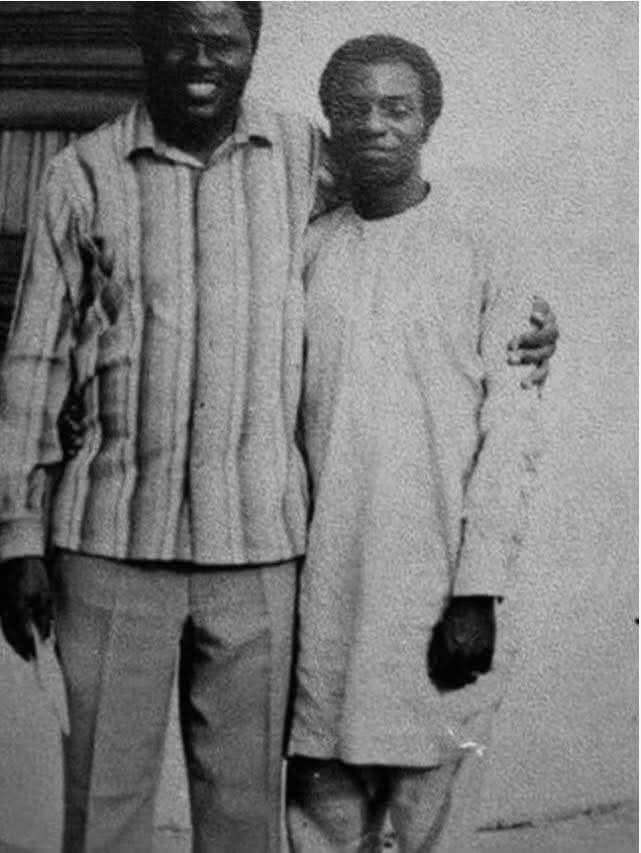
A historic 1985 photo capturing the connection between two of Nigeria’s most influential Pentecostal leaders.
Archbishop Benson Idahosa, father of Nigerian Pentecostalism, with Bishop David Oyedepo, founder of Living Faith Church Worldwide, in 1985, highlighting mentorship and religious influence.
This vintage 1985 photograph captures a remarkable moment in Nigerian religious history, featuring two iconic Pentecostal leaders: Archbishop Benson Idahosa (left) and Bishop David Oyedepo (right).
Archbishop Benson Idahosa: Father of Nigerian Pentecostalism
Archbishop Benson Idahosa (1938–1998) is widely regarded as a pioneering figure in Pentecostal Christianity in Nigeria.
Founder: Church of God Mission International
Influence: He played a critical role in spreading Pentecostal teachings in Nigeria during the 1970s and 1980s.
Legacy: Known for his bold preaching style, miracles, and charismatic leadership, he mentored several future church leaders, including David Oyedepo.
Bishop David Oyedepo: Founder of Living Faith Church Worldwide
Bishop David Oyedepo (born 1954) is the founder of Living Faith Church Worldwide.
Calling: In 1981, Oyedepo said he received a divine vision to start his church.
Ordination: In 1983, he was ordained as a pastor by Enoch Adeboye, two years before this photograph.
Impact: Today, Living Faith Church Worldwide is one of the largest Pentecostal ministries in Nigeria and globally.
The 1985 Meeting
The photograph shows Benson Idahosa and David Oyedepo together, highlighting:
Mentorship: Idahosa’s guidance and influence on Oyedepo in his early ministry years.
Historical Context: This period marked a rapid expansion of Pentecostalism in Nigeria.
Spiritual Legacy: Their connection symbolizes the passing of knowledge, vision, and leadership within the Nigerian church community.
Legacy
This historic interaction between Archbishop Idahosa and Bishop Oyedepo reflects the foundation of modern Pentecostalism in Nigeria:
Mentorship as a core principle of ministry growth
Expansion of evangelical influence across Nigeria and Africa
Laying the groundwork for globally recognized ministries
The image remains a testament to the enduring influence of these two leaders on Nigerian Christianity.
Sources
Benson Idahosa – Biography, Influence, and Ministry Overview, Vanguard Nigeria.
David Oyedepo – Official Church Profile, Living Faith Church Worldwide Website.
ThisDay Newspaper – Coverage of Nigerian Pentecostal History and Mentorship Networks.
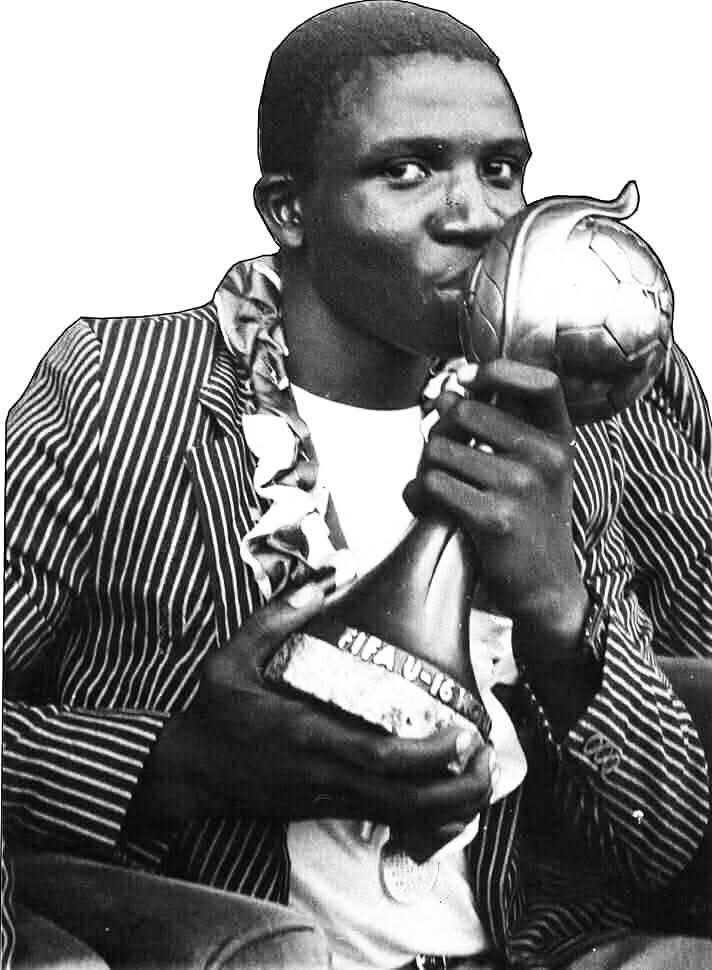
How Nigeria’s Golden Eaglets captain made history at the inaugural FIFA youth world championship in 1985.
Nduka Ugbade captained Nigeria’s Golden Eaglets to victory at the 1985 FIFA U-16 World Championship in China, becoming the first player to lift the youth world cup trophy.
Nduka Ugbade holds a special place in Nigerian football history. In 1985, he became the first captain ever to lift the FIFA U-16 World Championship trophy—a tournament now known as the FIFA U-17 World Cup.
His leadership helped Nigeria achieve a historic victory that not only transformed youth football in the country but also established Nigeria as a global force in youth football development.
The Historic Tournament in China
The tournament took place in China and was the first-ever global youth football competition organized by FIFA.
Nigeria’s youth team, popularly known as the Golden Eaglets, stunned the world with their skill, pace, and tactical discipline throughout the competition.
The final match saw Nigeria face West Germany national under-17 team, one of Europe’s strongest youth sides at the time.
Nigeria defeated West Germany 2–0, securing the championship and making history.
Ugbade’s Role as Captain
As captain and left full-back, Nduka Ugbade played a crucial leadership role in organizing the defence and motivating his teammates throughout the tournament.
The iconic image of Ugbade kissing and lifting the trophy after the final whistle symbolized not only Nigeria’s victory but also Africa’s first triumph in a FIFA youth competition.
His captaincy demonstrated maturity and confidence far beyond his age, helping guide the young team through the pressure of a global tournament.
A Landmark Moment for Nigerian Football
Nigeria’s victory in 1985 was historic for several reasons:
It was Nigeria’s first FIFA tournament trophy.
It was the first edition of the global youth championship.
It marked Africa’s emergence as a major force in youth football.
The win also helped establish Nigeria’s reputation for producing talented young footballers, a legacy that continued with multiple future victories in the tournament.
Life After Playing
After his playing career, Nduka Ugbade remained involved in football as a coach and football analyst.
He has worked with youth teams and contributed to the development of young Nigerian footballers, helping to pass on the experience and lessons gained from his historic 1985 victory.
Legacy
Nduka Ugbade’s achievement remains one of the most celebrated moments in Nigerian sports history.
His legacy includes:
Leading Nigeria to its first FIFA trophy
Becoming the first captain in history to lift the youth world cup
Inspiring generations of Nigerian footballers
The image of him holding the trophy remains a powerful reminder of the moment when Nigeria first announced itself to the world of international football.
Sources
FIFA – Official records of the 1985 FIFA U-16 World Championship.
BBC Sport – Historical coverage of Nigeria’s youth football achievements.
Punch Newspapers – Profiles and interviews about Nduka Ugbade and the Golden Eaglets’ 1985 victory.
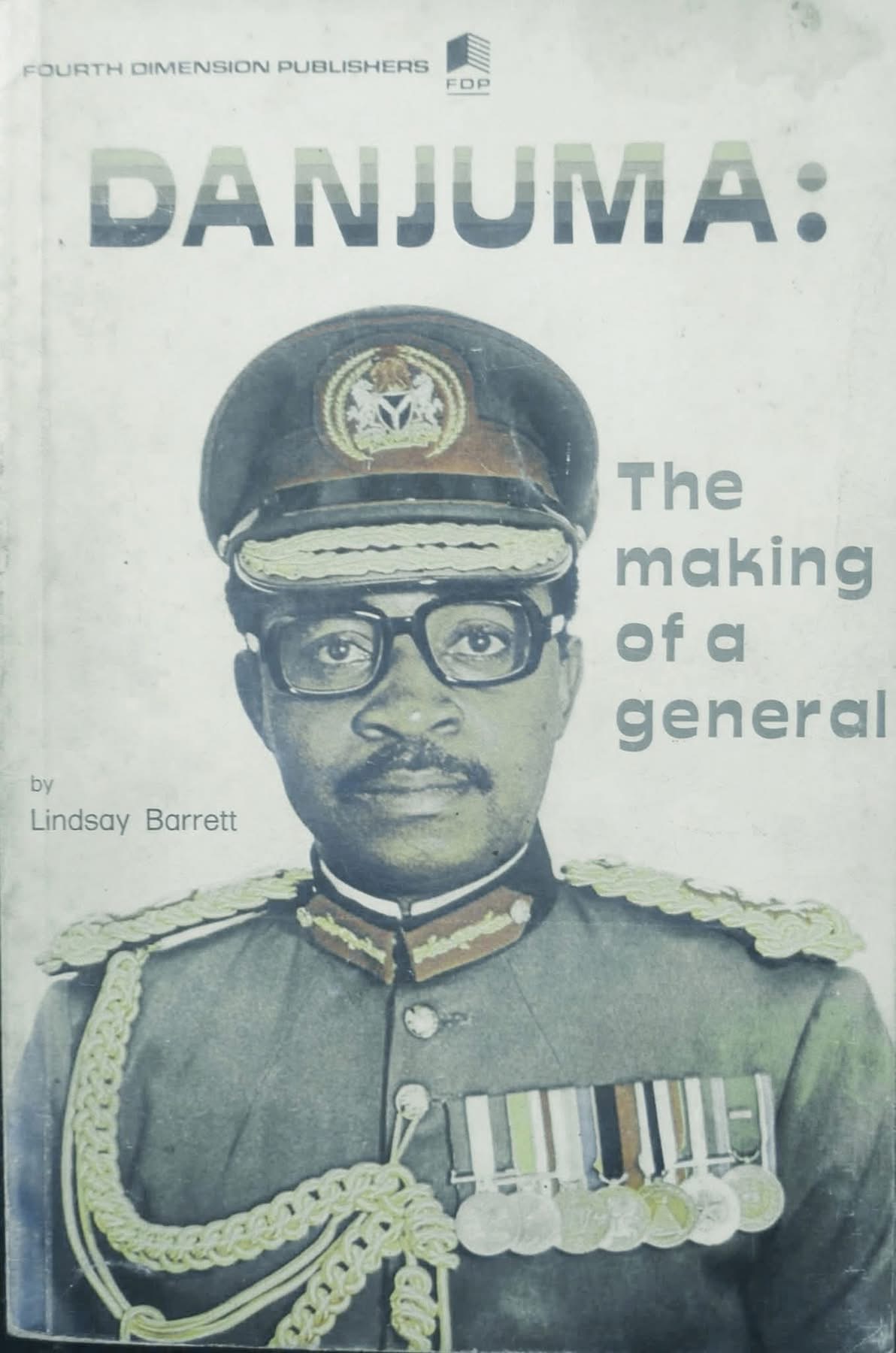
From Nigeria’s battlefields to boardrooms and philanthropy, the enduring influence of T.Y. Danjuma.
General Theophilus Yakubu Danjuma (born 1938) is a retired Nigerian Army officer, former Chief of Army Staff, businessman, and philanthropist known for his role in Nigeria’s military history and national development.
Theophilus Yakubu Danjuma, popularly known as T.Y. Danjuma, is one of Nigeria’s most prominent military leaders and elder statesmen. Born on 9 December 1938, he built a distinguished career that spans military service, government leadership, business success, and philanthropy.
Early Life and Military Career
Danjuma joined the Nigerian Army in the early 1960s and quickly gained recognition for his leadership abilities. Over the years, he rose steadily through the ranks, eventually becoming one of the most influential officers in Nigeria’s military establishment.
Role in the 1966 Counter-Coup
In July 1966, Danjuma, then a Captain, played a significant role in the counter-coup that overthrew the government of Johnson Aguiyi-Ironsi.
The counter-coup marked a turning point in Nigeria’s political history, contributing to a series of events that eventually led to the Nigerian Civil War.
Nigerian Civil War (1967–1970)
During the Nigerian Civil War, Danjuma rose rapidly within the military hierarchy.
He served as Commander of the 1st Infantry Brigade and led troops in several important military operations. One notable event associated with his service was the liberation of Nigerian politician Jaja Wachuku, who had been detained during the conflict.
His leadership during the war further solidified his reputation as a capable and disciplined officer.
Chief of Army Staff (1975–1979)
Danjuma reached the peak of his military career when he was appointed Chief of Army Staff under the military government of Olusegun Obasanjo.
During his tenure, he worked on:
Strengthening the professionalism of the Nigerian Army
Reorganising military structures
Supporting the transition from military rule to civilian governance
The military government successfully handed power to a civilian administration in 1979, marking an important moment in Nigeria’s political development.
International Assignment
In 1970, Danjuma also represented Nigeria at an International Court Martial in Trinidad and Tobago, reflecting the level of trust placed in him by the Nigerian government in matters involving military justice and international cooperation.
Post-Military Career
Minister of Defence (1999–2003)
After retiring from the army, Danjuma returned to public service when President Olusegun Obasanjo appointed him Minister of Defence in 1999 during Nigeria’s return to democratic rule.
As minister, he helped oversee the restructuring of Nigeria’s defence institutions in the early years of the Fourth Republic.
Business Achievements
Outside government, Danjuma became one of Nigeria’s most successful businessmen.
He founded:
NAL-Comet Group, a major Nigerian shipping and maritime company
South Atlantic Petroleum Limited (SAPETRO), an oil exploration and production company
Through these ventures, he built a significant presence in Nigeria’s maritime and energy industries.
Philanthropy
In 2009, Danjuma established the TY Danjuma Foundation, a charity dedicated to improving lives across Nigeria.
The foundation focuses on:
Healthcare access
Education initiatives
Community development projects
Support for vulnerable populations
Since its creation, the foundation has funded numerous programmes across several Nigerian states.
Legacy
General T.Y. Danjuma remains one of Nigeria’s most respected elder statesmen.
His legacy rests on several pillars:
Military Leadership – A key figure during Nigeria’s formative military era.
Public Service – Served as Chief of Army Staff and Minister of Defence.
Business Leadership – Built successful companies in shipping and energy.
Philanthropy – Invested heavily in humanitarian development through his foundation.
His life story reflects the evolution of Nigeria itself—from the turbulent years of military rule to the era of democratic governance and economic development.
Sources
Encyclopaedia Britannica – Biography of Theophilus Yakubu Danjuma.
TY Danjuma Foundation – Official records of Danjuma’s philanthropic activities.
Nigerian Army – Historical records on Nigeria’s military leadership.

Archbishop Benson Idahosa and Bishop David Oyedepo: Mentorship in Nigerian Pentecostalism

Nduka Ugbade: The First Captain to Lift the FIFA U-17 World Cup

General Theophilus Yakubu Danjuma: Soldier, Statesman, and Philanthropist

-
Business1 year ago
US court acquits Air Peace boss, slams Mayfield $4000 fine
-

 Trending1 year ago
NYA demands release of ‘abducted’ Imo chairman, preaches good governance
-

 Politics1 year ago
Mexico’s new president causes concern just weeks before the US elections
-

 Politics1 year ago
Putin invites 20 world leaders
-

 Politics1 year ago
Russia bans imports of agro-products from Kazakhstan after refusal to join BRICS
-
Entertainment1 year ago
Bobrisky falls ill in police custody, rushed to hospital
-
Entertainment1 year ago
Bobrisky transferred from Immigration to FCID, spends night behind bars
-
Education2 years ago
GOVERNOR FUBARA APPOINTS COUNCIL MEMBERS FOR KEN SARO-WIWA POLYTECHNIC BORI