
Columns
Late Herbert Onyewunbu Wigwe(15th August,1966- 9th February,2024)









Columns
Mrs. Deborah Adebola Fasoyin (Born March 1940) The gospel music icon behind the beloved Yoruba Christmas song “Odun Nlo Sopin.”
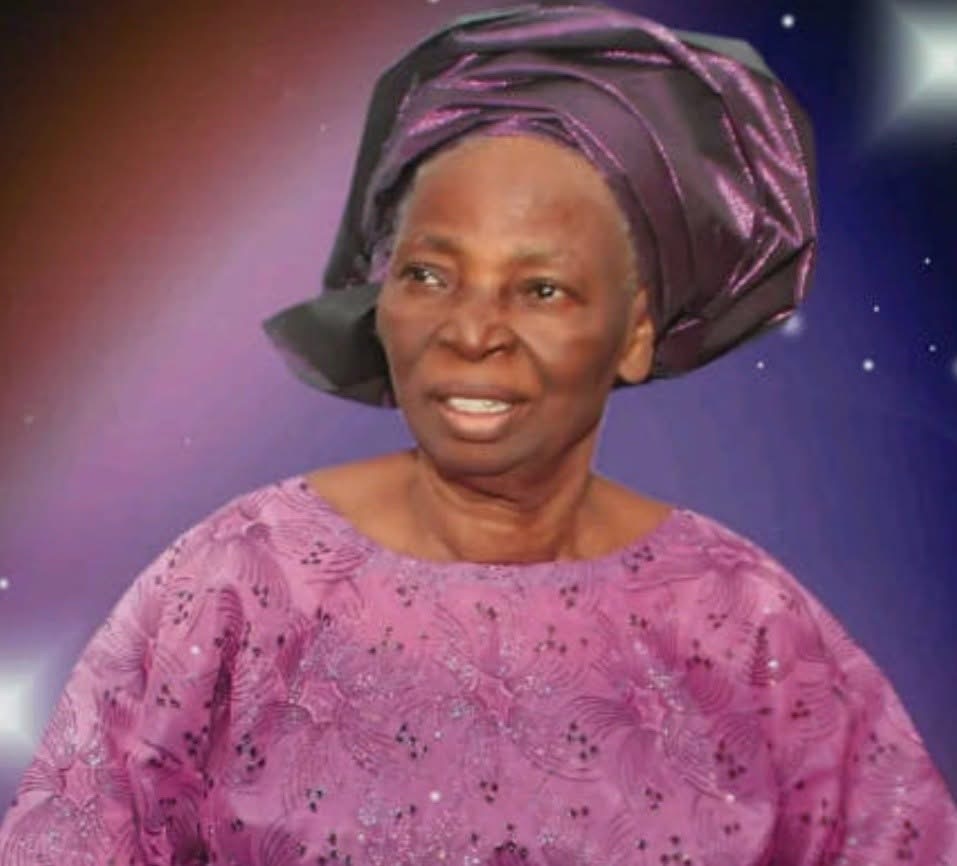
Mrs. Deborah Adebola Fasoyin (Born March 1940)
The gospel music icon behind the beloved Yoruba Christmas song “Odun Nlo Sopin.”
Mrs. Deborah Adebola Fasoyin is a renowned Nigerian gospel singer and leader of the C.A.C. Good Women Choir, best known for the classic Yoruba Christmas song “Odun Nlo Sopin.”
Deborah Adebola Fasoyin is a respected Nigerian gospel musician and choir leader whose music has played a major role in shaping Yoruba Christian worship, especially during the Christmas season.
She gained nationwide recognition as the leader of the C.A.C. Good Women Choir, a choir associated with the Christ Apostolic Church.
Early Life
Mrs. Deborah Adebola Fasoyin was born in March 1940 in Nigeria. She grew up in a deeply Christian environment where church music played an important role in worship and community life.
Her passion for singing and leading choirs developed early, eventually leading her into a lifelong ministry through gospel music.
The Song “Odun Nlo Sopin”
Mrs. Fasoyin is best known for the timeless Yoruba Christmas song Odun Nlo Sopin.
The song has become one of the most recognizable Christmas songs in southwestern Nigeria, particularly among Yoruba-speaking Christians.
“Odun Nlo Sopin” is traditionally played during:
Christmas celebrations
End-of-year thanksgiving services
New Year crossover gatherings
The song reflects gratitude to God as the year comes to an end and expresses hope for the coming year.
The C.A.C. Good Women Choir
Under Deborah Fasoyin’s leadership, the C.A.C. Good Women Choir became widely known for their spiritually uplifting music and powerful choral arrangements.
The choir helped popularize several Yoruba gospel hymns that are still sung in churches today.
Their recordings played an important role in spreading Yoruba gospel music across Nigeria and among the diaspora.
Impact on Nigerian Gospel Music
Mrs. Fasoyin’s influence extends beyond a single song. Her contributions helped:
Preserve Yoruba-language gospel music traditions
Strengthen the role of church choirs in worship
Inspire generations of Nigerian gospel singers
Her music remains an essential part of Christmas and end-of-year celebrations in many Nigerian homes and churches.
Legacy
Today, Deborah Adebola Fasoyin is celebrated as a pioneer of Yoruba gospel choir music.
Her legacy includes:
Leading one of Nigeria’s most recognized church choirs
Producing a timeless Christmas classic
Influencing the development of gospel music in Nigeria
Her work continues to inspire believers and musicians, ensuring that her music remains part of Nigeria’s spiritual and cultural heritage.
Sources
Christ Apostolic Church – Church historical records.
Nigerian Gospel Music Archives – Documentation of Yoruba gospel music history.
Interviews and profiles on Nigerian gospel musicians in The Guardian Nigeria and Vanguard News.
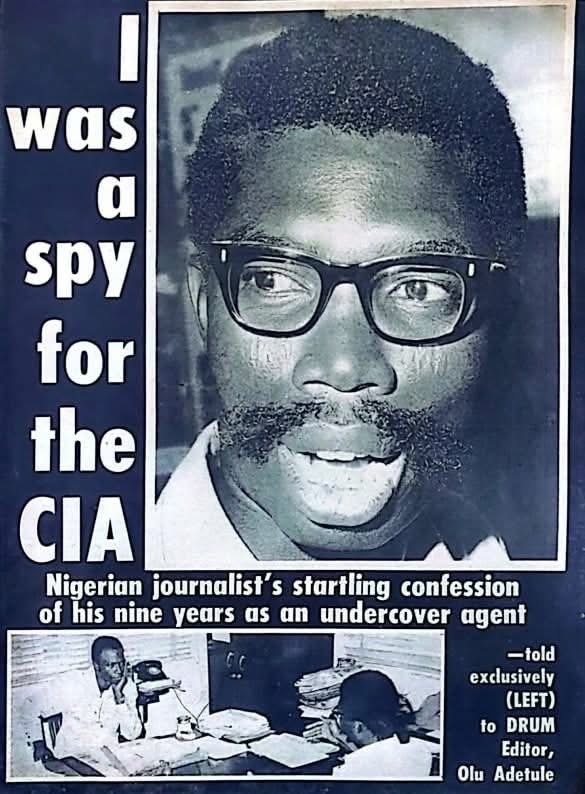
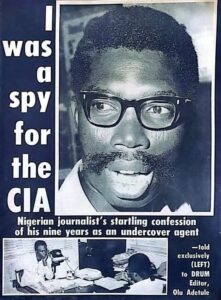
A dramatic magazine cover story about a Nigerian journalist who claimed to have worked undercover for the CIA for nine years.
A historic Drum Magazine cover featured a Nigerian journalist claiming he worked undercover for the CIA for nine years, revealing Cold War intrigue and media sensationalism in African journalism.
This image shows a striking magazine cover from Drum Magazine, carrying the headline “I Was a Spy for the CIA.” The cover promoted a sensational story in which a Nigerian journalist claimed he had secretly worked as an undercover agent for the Central Intelligence Agency for nine years.
According to the feature, the journalist made a “startling confession” revealing his alleged involvement in intelligence operations while working within the media. The story was reportedly narrated to the editor of Drum Magazine, which was known for publishing investigative reports, human-interest stories, and dramatic confessions during the mid-20th century.
Drum Magazine and Investigative Storytelling
Founded in South Africa in 1951, Drum Magazine became one of the most influential magazines in Africa during the 1950s, 1960s, and 1970s.
The magazine was known for publishing:
Investigative journalism
Crime and espionage stories
Celebrity and lifestyle features
Political commentary
Because of its bold editorial style, Drum often ran dramatic headline stories designed to attract readers across Africa.
The Cold War Context
If the confession was genuine, it would place the story within the broader global tensions of the Cold War.
During this period, intelligence agencies such as the Central Intelligence Agency frequently recruited informants and agents around the world. Journalists sometimes became valuable contacts because they:
Had access to information
Travelled frequently
Interacted with politicians and influential figures
Africa was also an important region during the Cold War, as global powers competed for political influence in newly independent nations.
Sensational Journalism and Public Curiosity
Stories like this attracted widespread attention because they blended real-world politics with intrigue and secrecy.
Magazine readers were fascinated by:
Claims of espionage
Secret intelligence networks
Personal confessions from insiders
However, like many dramatic magazine features of that era, some stories were written in a sensational narrative style, which sometimes blurred the line between strict investigative reporting and storytelling.
Historical Significance
Whether taken as investigative journalism or dramatic storytelling, the cover reflects several important aspects of African media history:
The influence of print magazines in shaping public discussion
Public fascination with espionage during the Cold War era
The bold editorial style that made Drum Magazine one of Africa’s most widely read publications
The story remains an interesting example of how African magazines captured the imagination of readers with tales of politics, secrets, and international intrigue.
Sources
Drum Magazine – Historical archives and editorial history
Studies on African journalism and media history in the 20th century
Documentation on the Central Intelligence Agency and Cold War intelligence activities.
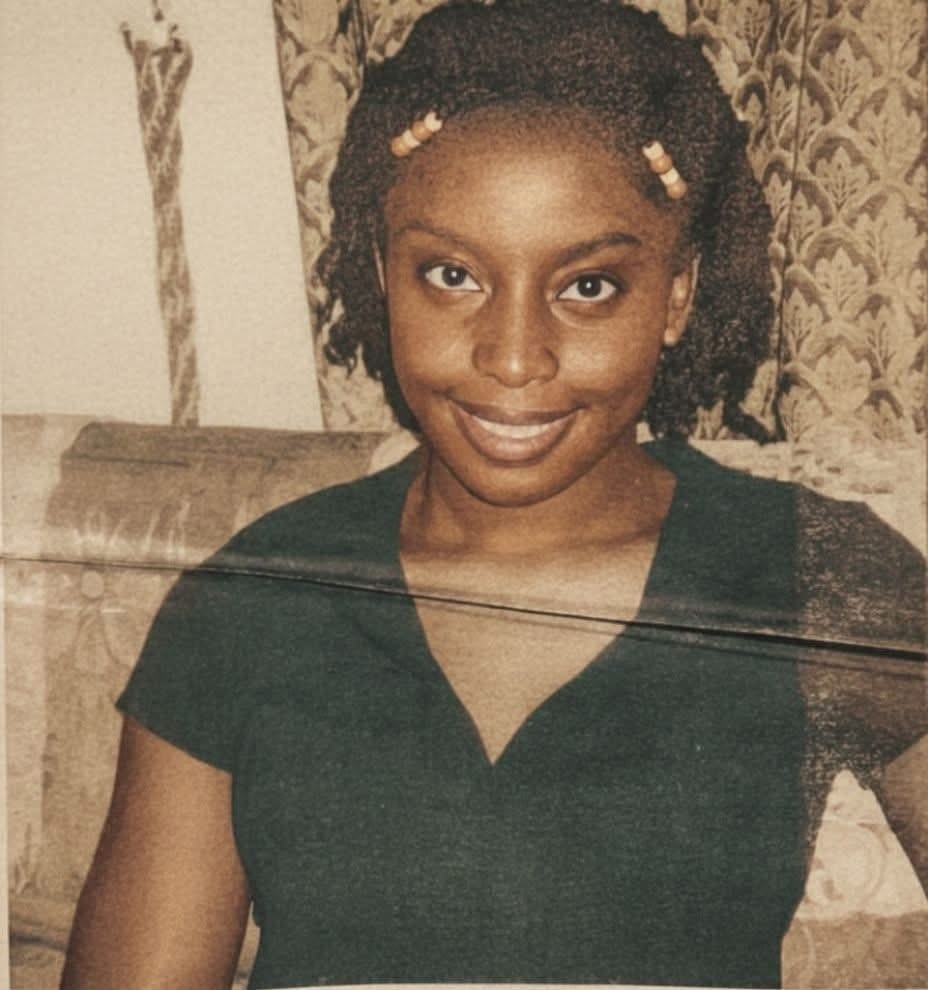
The Nigerian novelist and feminist whose stories reshaped global conversations on identity, gender, and history.
Chimamanda Ngozi Adichie is an internationally acclaimed Nigerian author known for Purple Hibiscus, Half of a Yellow Sun, and Americanah, as well as influential TED Talks on feminism and storytelling.
This photograph features Chimamanda Ngozi Adichie, one of the most influential writers of the 21st century. Known for her powerful storytelling and intellectual voice, Adichie has earned global recognition for novels and essays that explore themes of identity, colonial history, race, and gender.
Early Life and Background
Chimamanda Ngozi Adichie was born on 15 September 1977 in Enugu, Nigeria, and grew up in Nsukka, Enugu State. Her father worked as a professor at the University of Nigeria, while her mother served as the university’s first female registrar.
Growing up on a university campus exposed Adichie to literature and intellectual discussions from an early age, which helped shape her passion for writing.
Major Literary Works
Adichie rose to international prominence through a series of critically acclaimed novels.
Purple Hibiscus (2003)
Her debut novel explores family life, religious authority, and political tension in Nigeria through the story of a young girl growing up in a strict household.
Half of a Yellow Sun (2006)
This award-winning novel focuses on the Nigerian Civil War, telling the human stories behind one of Nigeria’s most significant historical periods.
Americanah (2013)
A global bestseller, this novel examines migration, race, identity, and the experience of Africans living in the United States and returning home to Nigeria.
Global Influence Through TED Talks
Adichie’s influence extends beyond literature. Her talks on the global stage have reached millions.
The Danger of a Single Story
In this widely viewed talk, she explains how stereotypes and limited narratives shape how people understand cultures and identities.
We Should All Be Feminists
This talk became a global feminist manifesto and was later adapted into a bestselling essay.
Awards and Recognition
Chimamanda Ngozi Adichie has received numerous international honors, including:
Orange Prize for Fiction
MacArthur Fellowship
Honorary degrees from several global universities
Her works have been translated into more than 30 languages, making her one of Nigeria’s most globally recognized literary figures.
Themes in Her Writing
Adichie’s works often explore:
The legacy of colonialism in Africa
Racism and identity in global societies
Gender equality and feminism
Nigerian political and cultural history
Through vivid characters and emotionally rich storytelling, she has helped bring African narratives to global audiences.
Legacy
Today, Chimamanda Ngozi Adichie stands as one of the most powerful literary voices from Africa. Her novels, essays, and speeches continue to inspire conversations about identity, equality, and storytelling across the world.
Her influence proves that stories have the power to challenge stereotypes, reshape narratives, and connect cultures.
Sources
Chimamanda Ngozi Adichie – Author biography and official publications
TED – Official TED Talk transcripts and profiles
The Guardian Nigeria – Profiles and interviews with Chimamanda Ngozi Adichie
Britannica – Biography of Chimamanda Ngozi Adichie.

Mrs. Deborah Adebola Fasoyin (Born March 1940) The gospel music icon behind the beloved Yoruba Christmas song “Odun Nlo Sopin.”

“I Was a Spy for the CIA”: A Controversial DRUM Magazine Confession

“I Don’t Have A Car Or House, Things Have Never Been Easy” – Papa Ajasco Cries Out, Opens Up On Struggles After Fame (Video)

-
Business1 year ago
US court acquits Air Peace boss, slams Mayfield $4000 fine
-

 Trending1 year ago
NYA demands release of ‘abducted’ Imo chairman, preaches good governance
-

 Politics1 year ago
Mexico’s new president causes concern just weeks before the US elections
-

 Politics1 year ago
Putin invites 20 world leaders
-

 Politics1 year ago
Russia bans imports of agro-products from Kazakhstan after refusal to join BRICS
-
Entertainment1 year ago
Bobrisky falls ill in police custody, rushed to hospital
-
Entertainment1 year ago
Bobrisky transferred from Immigration to FCID, spends night behind bars
-
Education2 years ago
GOVERNOR FUBARA APPOINTS COUNCIL MEMBERS FOR KEN SARO-WIWA POLYTECHNIC BORI