
EVENTS
Nigerian Customs Grounds 60 Private Jets Of Bank Executives, Oil Moguls, Others Amid Crackdown On Unpaid Duties


The clampdown also led to the sealing of private jet hangars at Lagos and Abuja airports.
The Nigerian Government has grounded at least 60 private jets across major Nigerian airports as part of a crackdown on owners who have allegedly failed to pay import duties running into several billions of naira.
According to The PUNCH, the Nigeria Customs Service (NCS), which spearheaded the operation, confirmed that several luxury aircraft—including Bombardier Global 6000, 6500, and 7500 series—were affected.
The clampdown also led to the sealing of private jet hangars at Lagos and Abuja airports.
The reports stated that the aviation and customs sectors disclosed on Wednesday that the move followed a verification exercise launched to identify private jet owners who had defaulted.
The initiative, originally slated to commence on October 14, 2024, was delayed after the NCS extended the deadline to November 14, 2024.
Among the affected are high-profile individuals, including bank executives, oil industry magnates, and executives of multinational companies.
Many of them are reportedly lobbying the Presidency in a bid to secure the release of their grounded aircraft.
However, despite the expiration of the initial deadline on November 14, 2024, the NCS remained silent about its planned enforcement against private jet owners who had failed to pay outstanding customs duties.
When questioned about the agency’s inaction at the time, the NCS spokesperson, Abdullahi Maiwada, explained that multiple court cases had delayed enforcement.
However, fresh findings on Wednesday revealed that the NCS had quietly begun grounding both privately and corporately owned jets.
The clampdown reportedly started on Monday without any new public notice, according to affected stakeholders.
Sources disclosed to The PUNCH that NCS officials sealed several aircraft at the Murtala Muhammed International Airport in Lagos and the Nnamdi Azikiwe International Airport in Abuja. This marks a major enforcement step by the agency, seven months after it issued final warnings to defaulters.
When contacted, Maiwada confirmed the development, stating that the NCS had commenced enforcement and would continue until all outstanding payments were made.
“Yes, enforcement has started. The aircraft are grounded for the non-payment of customs duty, and as soon as they come over to regularise their payment and give what is due to Nigerians, they will get it back,” he said.
He added, “We issued a statement when we started the verification, and we extended the period and even ‘over extended the period’, now that we are acting, everyone already knows our reason.
“We just have to enforce, we have to collect revenue for Nigerians so that it will be used for Nigerians.”
Maiwada emphasised that several appeals were made to the defaulting aircraft owners to regularise their documentation or pay applicable duties, but many failed to comply.
“Now that they’re grounded, they will have to respond. We believe they will comply,” he said.
Meanwhile, credible sources within the Customs Service disclosed that some jet owners have started lobbying for the release of their aircraft, with some even reaching out to the Presidency.
One major commercial bank has reportedly pledged to settle its outstanding duties by next Tuesday, while another is negotiating indirectly through its representatives.
An energy company operating three jets has also made commitments to resolve its dues within the week.
Amidst the pressure, there are reports that the NCS is considering temporary relief for some owners. A document dated June 4, 2025, allegedly signed by Deputy Comptroller-General C.K. Niagwan on behalf of the Comptroller-General, indicates that some grounded jets are being “temporarily unsealed.”
According to the document, the temporary measure is aimed at allowing operators to submit relevant documentation and engage with the agency to agree on modalities for settling outstanding duties and taxes.
It stressed that the action does not amount to a waiver of statutory obligations but is intended solely to facilitate compliance. Only a select number of aircraft are affected by this measure.
Reacting to the development, Frank Oruye, a former deputy director of engineering at the now-defunct Nigeria Airways, urged both private jet operators and the Customs Service to adopt global best practices in their operations.
He appealed to aircraft owners to pay what is due to the government and advised the Customs to act professionally in their dealings.
Oruye also recounted long-standing disputes between the defunct Nigeria Airways and the NCS over aircraft components, specifically high-cost items known as Rotables.
Similarly, retired Group Captain John Ojikutu raised security concerns, revealing that many of the grounded jets are foreign-registered—a situation he described as a threat to national security.
He blamed both the Customs and the Nigerian Civil Aviation Authority (NCAA) for failing to control the influx and operation of undocumented aircraft.
“When I was at the airport, I seized Abiola’s aircraft twice! Why are people behaving this way nowadays? In Demuren’s days, such wouldn’t have happened,” he recalled.
“All these things happening are risky, not even now that we don’t know the people in charge of the insurgency. To now fly foreign aircraft without clearance is a threat to national security. Both customs and the NCAA should be blamed for allowing them to fly such aircraft in the country,” he said.








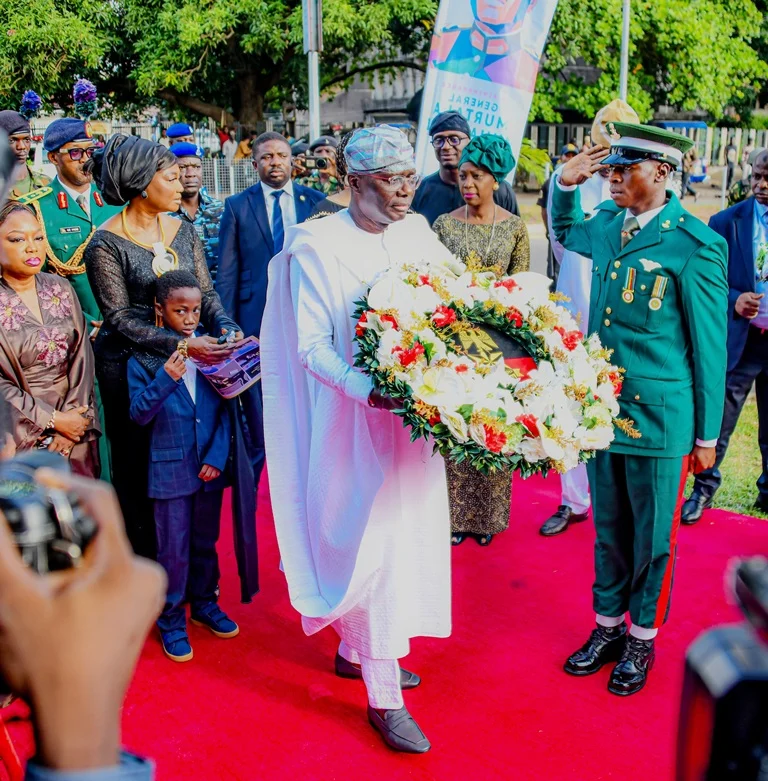
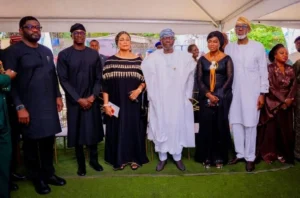
Governor Babajide Sanwo-Olu of Lagos State on Friday participated in a wreath-laying ceremony marking the 50th anniversary of the death of the late General Murtala Ramat Muhammed, GCFR.
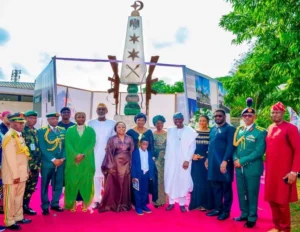
The event was attended by notable dignitaries, including Senator Daisy Danjuma, wife of retired Lt. General Theophilus Danjuma; Dr Aisha Muhammed Oyebode, daughter of the late General and CEO of the Murtala Muhammed Foundation; her husband, Gbenga Oyebode; and Hon. Bola Oladunjoye, Chairman of Ikoyi-Obalende LCDA, among other officials and guests.
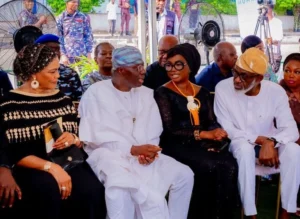
Wreaths were laid at the cenotaph in honour of General Muhammed, celebrating his life, leadership, and enduring contributions to Nigeria.
General Murtala Ramat Muhammed served as Nigeria’s Head of State from July 1975 until his assassination on February 13, 1976.
His leadership was abruptly ended when his convoy was ambushed in Ikoyi, Lagos, during a failed coup attempt, resulting in his death alongside his driver and aide-de-camp.
Following his assassination, leadership passed to his deputy, Lieutenant General Olusegun Obasanjo, who continued the transition to civilian governance.
Fifty years later, commemorative activities are being held throughout February 2026, including exhibitions, policy dialogues, memorial gatherings, and wreath-laying ceremonies, highlighting General Muhammed’s legacy and enduring impact on Nigeria’s history.
EVENTS
GOVERNOR SOLUDO’S ULTIMATUM AND THE BATTLE FOR ANAMBRA’S MONDAYS, SHUTS DOWN ONITSHA MAIN MARKET FOR A WEEK
By Christian ABURIME
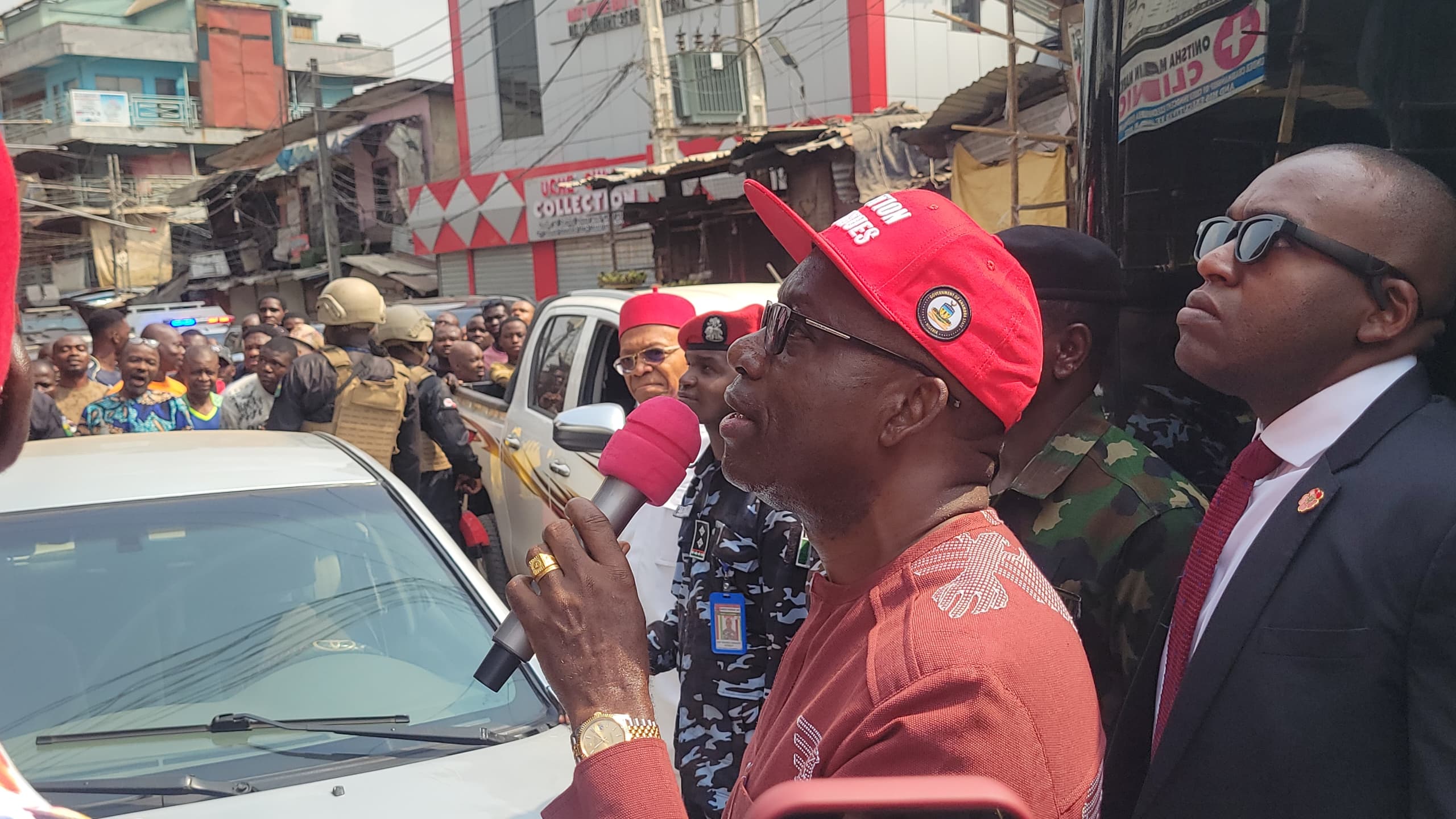
Anambra State Governor, Prof Chukwuma Charles Soludo has ordered the immediate shut down of the Onitsha Main Market for one week, following defiance of the market leadership to open, against government directive.
Governor Soludo’s order for a one-week shutdown of the sprawling market is more than an administrative penalty. It is the latest, and perhaps most drastic, salvo in a protracted war over who controls time and economic life in Southeast Nigeria on mondays. The enemy is the long-standing, fear-enforced Monday sit-at-home order, a ghostly mandate from non-state actors that has strangled businesses and normalized weekly monday sit-at-home for years.
The Governor’s move is a direct response to what the government sees as baffling defiance. Despite repeated assurances of enhanced security and appeals to reclaim public spaces, many traders at the iconic market again chose to keep their stalls locked. Their absence was a quiet rebellion, but one that spoke volumes about the lingering climate of apprehension.
“The government cannot stand by while a few individuals willfully undermine public safety and disregard official directives meant to restore normalcy, this is plain economic sabotage. We are not going to allow this”, Governor Soludo stated, framing the closure as a protective measure for the “law-abiding citizen.” But his subsequent warning carried the weight of an escalating ultimatum: if the market does not reopen for business after this one-week shutdown, it will be sealed for a month. “And so on and so forth,” he added, drawing a line in the sand.
“You either decide that you are going to trade here or you go elsewhere. I am very serious about this”, the Governor insisted.
The scene at the market was one of tense enforcement. A joint task force of police, army, and other security personnel moved swiftly to secure the perimeter, turning away the few hopefuls who approached.
For the Soludo administration, the solution is unwavering enforcement to break a psychological barrier. The strategy is clear: make the cost of compliance with the illegal sit-at-home order higher than the fear that drives it. By targeting the economic heart of the region, the government aims to trigger a collective shift in behavior, betting that the traders’ desire to trade will ultimately outweigh their fear.
As the gates remain locked this week, the standoff in Onitsha encapsulates the broader struggle in the Southeast. It is a fight over normalcy, authority, and the fragile psyche of a populace caught between enforced directives and imposed orders. When the gates are scheduled to reopen next Monday, all eyes will be on the traders. Will they return to their stalls, emboldened by the state’s show of force? Or will the silent, empty aisles deliver a different verdict?
The answer will determine not just the fate of a market, but the rhythm of life in Anambra for Mondays to come.
https://www.instagram.com/reel/DT-PAX-DIAi/?igsh=bzVxOGgzcTF0OG5k

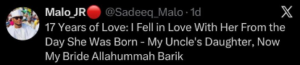
A Nigerian man has gone viral on X (formerly Twitter) after sharing throwback photos of himself and his wife from when they were both still children.
In the post, @Sadeeq_Malo revealed that he has loved his wife for 17 years, describing her as his uncle’s daughter, a statement that immediately caught the attention of social media users.
Sharing the photos, he wrote:
“17 years of love. I fell in love with her from the day she was born — my uncle’s daughter, now my bride. Allahummah Barik.”
The old photos, which show the couple as children, were shared alongside recent pictures of them as a married couple, sparking massive engagement online.
The post has since divided opinions on social media. While some users defended the union noting that cousin marriages are culturally acceptable in some communities, others focused on the unusual wording of his declaration.


Reacting, one user wrote, “Fell in love from the day she was born? That sentence alone is wild.” Another commented, “People should calm down. Cousin marriage is normal in many cultures.”
Despite the mixed reactions, the man appears unfazed, celebrating what he describes as a 17-year journey of love that eventually led to marriage.
Check post below….

Police bust syndicate behind nude photo blackmail in Lagos

Man in shock after lady he lodged with in a hotel in Abuja flees with his car and other valuables

US Reacts As De@th Toll In Kwara Terror Attacks Hits 200

-
Business1 year ago
US court acquits Air Peace boss, slams Mayfield $4000 fine
-

 Trending1 year ago
NYA demands release of ‘abducted’ Imo chairman, preaches good governance
-

 Politics1 year ago
Mexico’s new president causes concern just weeks before the US elections
-

 Politics1 year ago
Putin invites 20 world leaders
-

 Politics1 year ago
Russia bans imports of agro-products from Kazakhstan after refusal to join BRICS
-
Entertainment1 year ago
Bobrisky falls ill in police custody, rushed to hospital
-
Entertainment1 year ago
Bobrisky transferred from Immigration to FCID, spends night behind bars
-
Education1 year ago
GOVERNOR FUBARA APPOINTS COUNCIL MEMBERS FOR KEN SARO-WIWA POLYTECHNIC BORI