
News
Nnamdi Kanu: 8-day vacuum after Appeal Court acquital nullified trial – Global defence team

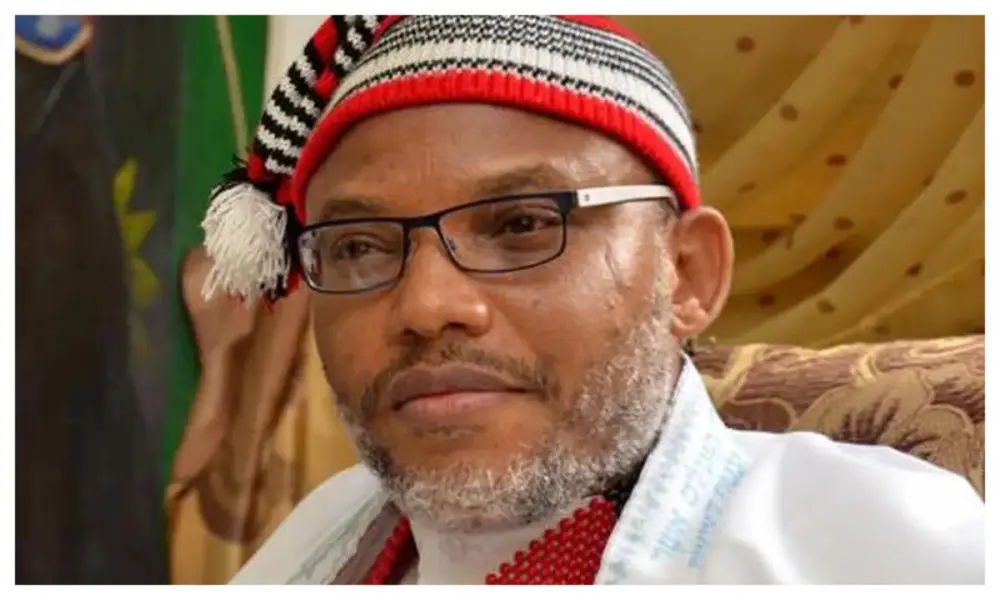
The Mazi Nnamdi Kanu Global Defence Consortium has asserted that an eight-day ‘jurisdictional’ vacuum which ensued after the detained leader of the Indigenous People of Biafra, IPOB, was acquitted by the Court of Appeal had nullified his prosecution by the Nigerian government.
The consortium, comprising lawyers fighting for Kanu’s freedom, made the demand in an advocacy brief, dated 12th October 2025.
The statement, titled “Exposing the Jurisdictional Farce: The Eight-Day Death of Nnamdi Kanu’s Prosecution and the Corrupt Panel Stay That Defied Justice”, is signed by
Dr. Idawarifa C. Ebirien, Co-Chair, Mazi Nnamdi Kanu Global Defence Consortium, on behalf of the consortium’s international legal and advocacy teams.
The consortium noted that between October 13, 2022, when the Court of Appeal acquitted Kanu, to October 21, 2022, when a panel led by Justice Haruna Tsammani issued a stay of execution of the acquittal, eight days elapsed during which a jurisdictional vacuum existed, rendering the trial extinct under law.
Parts of the statement read: “The ongoing persecution of Mazi Nnamdi Kanu, leader of the Indigenous People of Biafra (IPOB), exemplifies a grotesque perversion of Nigeria’s judicial system—a ‘zombie proceeding’ propped up by executive lawlessness, statutory repeal, and a corrupt appellate panel’s ultra vires intervention.
“At the heart of this travesty lies an irrefutable eight-day jurisdictional vacuum from October 13 to 21, 2022, during which Kanu’s discharge and acquittal by the Court of Appeal rendered his prosecution legally extinct.
“Yet, in a brazen display of institutional rot, a full panel of three justices of the Court of Appeal, led by Justice Haruna Tsammani and comprising equally compromised colleagues, issued an ex parte stay on October 21, 2022, invoking inapplicable civil procedures to resurrect a corpse.
“This brief dissects the legal deceit, drawing on unimpeachable Supreme Court precedents to reveal how Nigeria’s authorities have weaponized the courts against a non-violent advocate for self-determination.
“Kanu’s Global Defence Consortium (KGDC) calls on the international community, human rights bodies, and global leaders to demand his immediate release, an end to this sham trial, and accountability for those who have subverted justice. Silence in the face of such anarchy invites tyranny worldwide.”
Highlighting what it described as “The eight-day jurisdictional vacuum: A fatal chasm that killed the prosecution in law,” the statement said: “On October 13, 2022, the Court of Appeal, Abuja Division, delivered a landmark unanimous judgment in Federal Republic of Nigeria v. Nnamdi Kanu (Appeal No. CA/ABJ/CR/625C/2018), discharging and acquitting Kanu on all counts in Charge No. FHC/ABJ/CR/383/2015.
“The panel unequivocally struck out the charges, affirmed the Federal High Court’s lack of jurisdiction ab initio due to Kanu’s unlawful rendition from Kenya, and vindicated his presumption of innocence under Section 36(5) of the 1999 Constitution of the Federal Republic of Nigeria (CFRN).
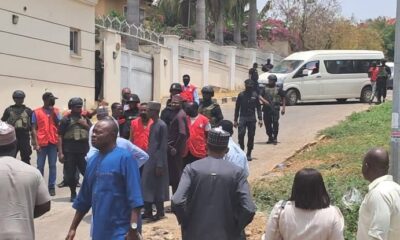





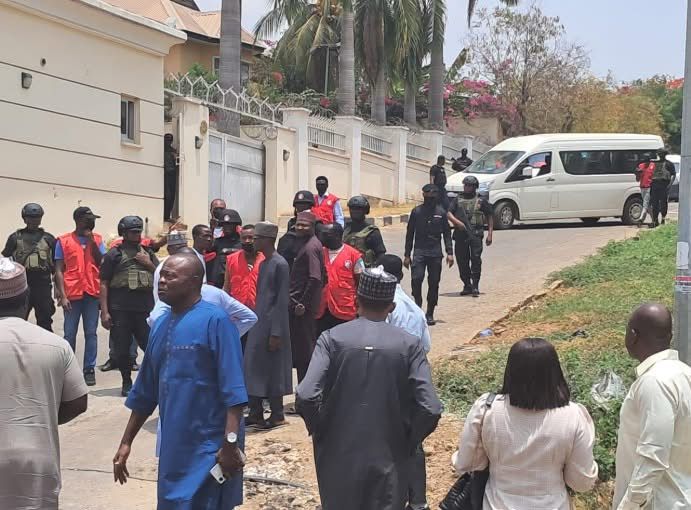
Former Attorney-General Abubakar Malami says Economic and Financial Crimes Commission operatives forcefully evicted him and his family from their Abuja residence despite ongoing court proceedings over the property’s forfeiture.
He described the action as unlawful and vowed to challenge it in court.
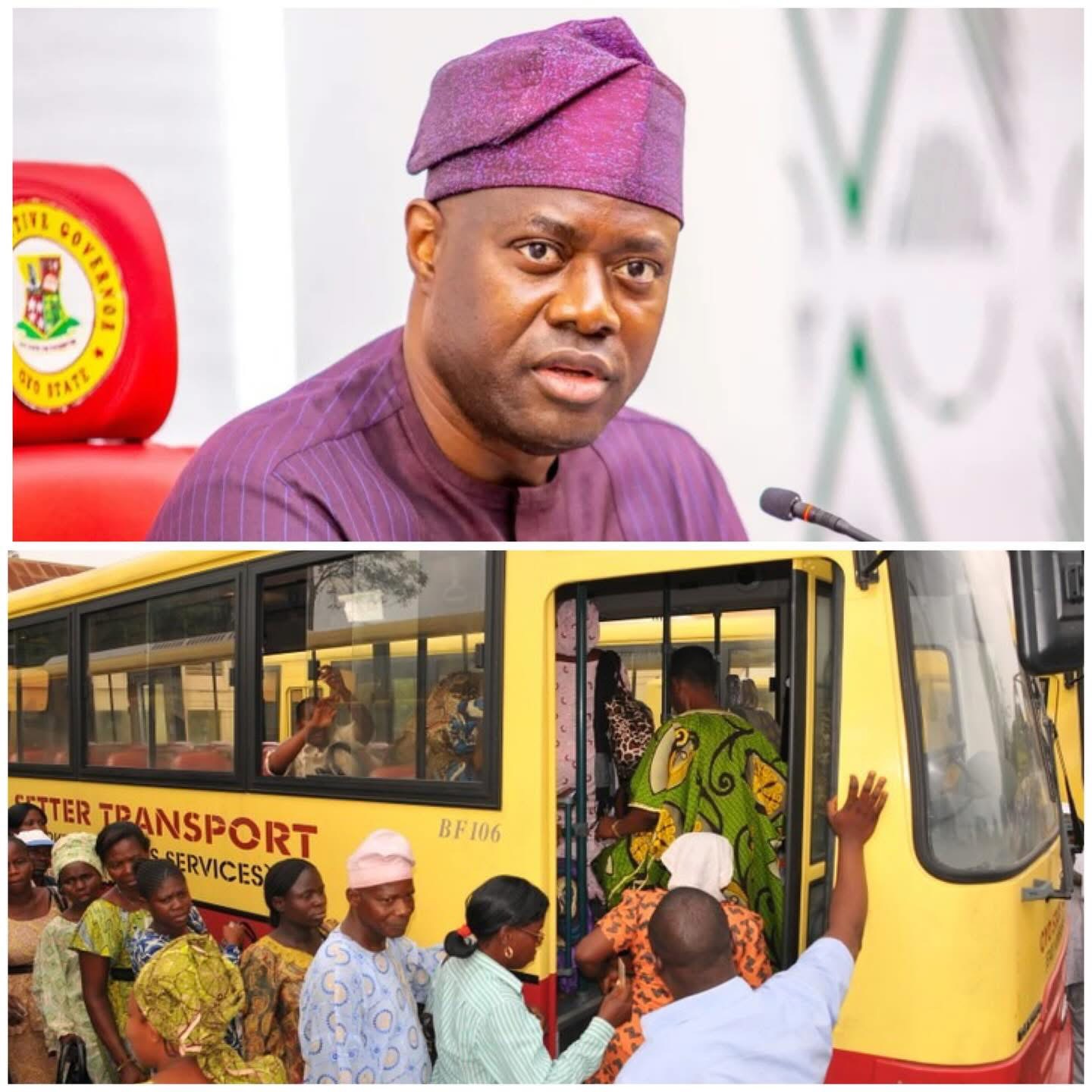
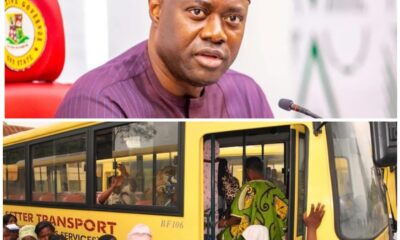
The governor of Oyo state, Seyi Makinde, has approved a N10,000 transportation allowance as a palliative for the state workforce to cushion the effects of the increase in the pump price of Premium Motor Spirit, otherwise known as petrol.
The Chairman of the Nigeria Labour Congress (NLC), Oyo State chapter, Kayode Martins, in a statement released on Monday, March 23, disclosed that the governor has granted the request of the union on the issue of transportation allowance.
The statement read
“Following the intervention and formal request made by the State Council of the Nigeria Labour Congress (NLC) earlier this morning, the state government has approved a N10,000 transportation allowance for all workers in the state.
The newly approved allowance is set to take effect from April 2026, providing much-needed relief to workers grappling with rising transportation costs amid current economic challenges.
This development comes as a direct response to sustained advocacy by the state NLC, aimed at cushioning the impact of increased living expenses on the workforce.
Further details on implementation are expected to be communicated by the relevant government authorities in due course.”
News
Former Acting Accountant-General of the Federation bags 72years imprisonment for diverting N868.46 million security funds
Justice James Omotosho of the Federal High Court in Abuja, on Monday, March 23, convicted and sentenced Chukwunyere Nwabuoku, former acting Accountant-General of the Federation (AGoF), to a 72-year jail term without an option of fine.
DailyTrust reports that in the judgment delivered, Justice Omotosho held that the Economic and Financial Crimes Commission (EFCC) had been able to prove the nine-count money laundering charge beyond reasonable doubt.
According to the judge, the defendant is hereby convicted as charged.
Justice Omotosho convicted Nwabuoku in all the nine counts and sentenced him to eight years imprisonment in each of the counts, making 72 years.
The judge, however, ordered that the counts shall run concurrently.
Justice Omotosho, who described Nwabuoku’s act of diverting funds meant for security and defence while he served as Director of Finance and Account in the Ministry of Defence as “appalling,” commended the EFCC for being detailed in its prosecution.
The judge observed that the evidence of the 9th prosecution witness that Nwabuoku voluntarily refunded part of the siphoned money of over N200 million during investigation was not controverted by the defence.
Nwabuoku served as the Director of Finance and Accounts in the Ministry of Defence between 2019 and 2021. He became acting Accountant General of the Federation in May 2022.

IMO STATE LABOUR PARTY DESCENDS INTO FACTIONAL WAR

EFCC evicts Malami from Abuja home amid forfeiture dispute

Fuel price hike: Gov Makinde announces N10,000 transport support for workers

-
Business1 year ago
US court acquits Air Peace boss, slams Mayfield $4000 fine
-

 Trending1 year ago
NYA demands release of ‘abducted’ Imo chairman, preaches good governance
-

 Politics1 year ago
Mexico’s new president causes concern just weeks before the US elections
-

 Politics1 year ago
Putin invites 20 world leaders
-

 Politics1 year ago
Russia bans imports of agro-products from Kazakhstan after refusal to join BRICS
-
Entertainment1 year ago
Bobrisky falls ill in police custody, rushed to hospital
-
Entertainment1 year ago
Bobrisky transferred from Immigration to FCID, spends night behind bars
-
Education2 years ago
GOVERNOR FUBARA APPOINTS COUNCIL MEMBERS FOR KEN SARO-WIWA POLYTECHNIC BORI