
Columns
Omotola Jalade Ekeinde Welcomes Meraiah: A 2000 Family Moment

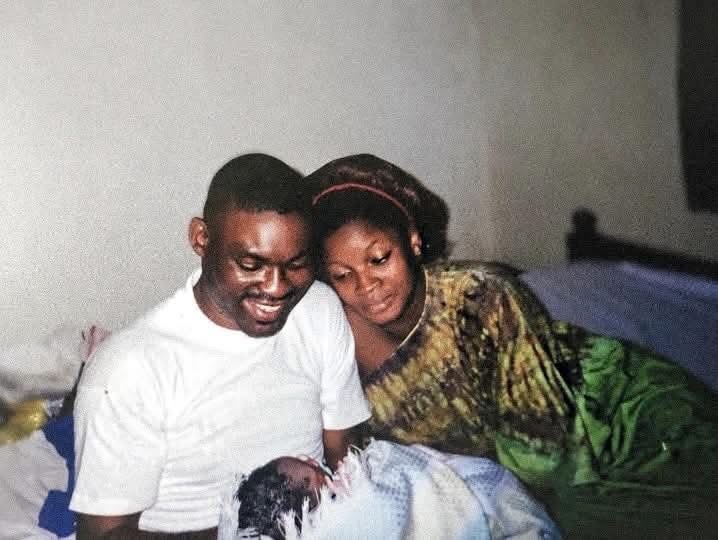
A glimpse into the life of Nollywood star Omotola Jalade Ekeinde as she welcomes her daughter and begins a journey of activism and humanitarian work
The Photograph
A heartwarming photograph from 2000 shows Omotola Jalade Ekeinde and her husband Captain Matthew Ekeinde in the hospital as they welcome their newborn daughter, Meraiah Ekeinde. This intimate moment marks the beginning of a new chapter for one of Nigeria’s most celebrated actresses.
Humanitarian and Advocacy Work
Beyond her celebrated acting career, Omotola Ekeinde has been an influential advocate for youth, women, and human rights:
United Nations Engagement: Became a UN World Food Programme Ambassador in 2005, participating in missions in Sierra Leone and Liberia
Youth Empowerment: Founded the Omotola Youth Empowerment Program (OYEP), which brought hundreds of youths together for conventions and empowerment walks
Walk the World Project: Participated in campaigns with leaders like President Ellen Johnson Sirleaf in Liberia
Save the Children UK: Lent her voice to the “Rewrite The Future” campaign in 2010
Amnesty International: Engaged in maternal mortality advocacy in Sierra Leone (2011) and environmental justice in Nigeria’s Niger Delta (2012), urging Shell and the government to take responsibility for oil spills
Orphanage Support: In June 2020, visited Tanzania Mitindo House, an orphanage supporting HIV-infected children, alongside Tanzanian actress Wema Sepetu
#SmokeFreeNollywood Campaign: In 2021, alongside actors Dakore Egbuson-Akande, Daniel Effiong, Meg Otanwa, Michelle Dede, and Osas Ighodaro, pledged to stop smoking in movie scenes to protect impressionable audiences. The campaign was backed by Tobacco-Free Kids, a US nonprofit.
Legacy
Omotola’s work reflects a holistic approach to influence: balancing a thriving entertainment career with humanitarian service, advocacy for youth and women, and participation in global campaigns addressing public health, social justice, and environmental responsibility.
Her family photograph from 2000 is not just a personal keepsake—it serves as a reminder of her journey from devoted mother to global advocate, illustrating the fusion of personal and professional dedication in shaping a meaningful legacy.
References
United Nations World Food Programme: Ambassador Profiles
Amnesty International: Campaign Reports (2011–2012)
Save the Children UK: Rewrite the Future Initiative, 2010
Gatefield & Tobacco-Free Kids: #SmokeFreeNollywood Campaign, 2021
Public interviews and archives of Omotola Jalade Ekeinde
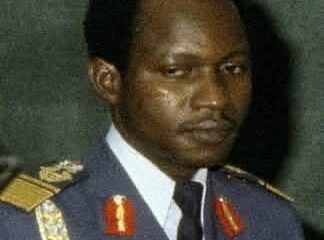




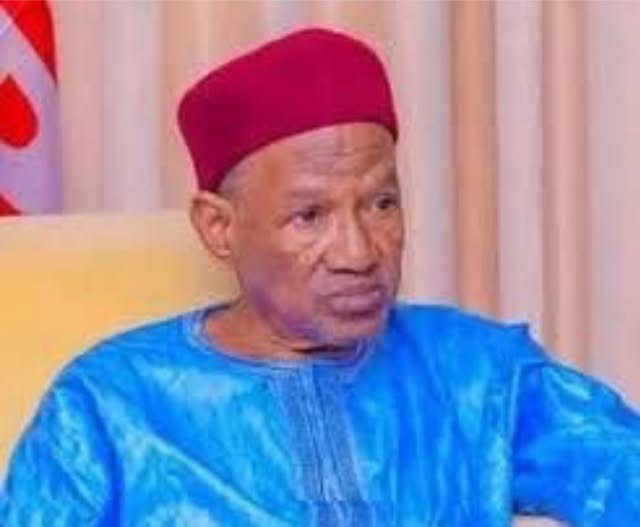
Bukar Abba Ibrahim (October 1950 – 4 February 2024) was a prominent Nigerian politician who served as Governor of Yobe State and later as Senator representing Yobe East from 2007 to 2019.
Early Life and Education
Born in October 1950, Ibrahim did not know his exact date of birth. He began his early education in 1957 and proceeded to Government College, Maiduguri in 1965. After completing his West African School Certificate Examination in 1970, he gained admission into Ahmadu Bello University, Zaria in 1972, where he earned a Bachelor of Science degree in Quantity Surveying in 1975.
He later undertook postgraduate professional training in the United Kingdom between 1981 and 1982, becoming an associate member of the Nigerian Institute of Quantity Surveyors.
Early Career
Between 1985 and 1988, Ibrahim worked in the Borno State civil service, rising to the position of Commissioner for Works. His background in public service and technical administration helped shape his later political career.
Governor of Yobe State
Following the creation of Yobe State in 1991, Bukar Abba Ibrahim contested and won the gubernatorial election under the Social Democratic Party (SDP). He served as governor from 1992 to 1993 until the military takeover ended civilian rule.
With Nigeria’s return to democracy, he was again elected governor in January 1999, this time under the All People’s Party (APP), which later became the All Nigeria People’s Party (ANPP). He was sworn in on 29 May 1999 and re-elected in 2003, serving until 2007.
During his time in office, one of his most notable and controversial policies was the restructuring of traditional emirates in the state. In 1993, he expanded the number of emirates from four to thirteen, a move later reversed by the military government of General Sani Abacha. After returning to power in 1999, he reintroduced the policy in January 2000, creating additional emirates including Ngazargamu, Gujba, Nguru, Tikau, Potiskum, Yusufari, Gudi, Fune, and Jajere.
The decision sparked opposition, particularly from the Emir of Fika, Muhammadu Abali, who challenged the move in court but eventually accepted the restructuring.
Senatorial Career
In 2007, Ibrahim transitioned to national politics, winning election as Senator for Yobe East. He was re-elected in 2011 on the platform of the ANPP, defeating Lawan Jalo Zarami of the People’s Democratic Party (PDP) with 115,763 votes to 67,438.
He served in the Senate until 2019, contributing to legislative activities and representing his constituency at the federal level.
Personal Life and Death
Bukar Abba Ibrahim was a Muslim and was married to three wives: Hajiya (Dr) Maryam Ibrahim, Hajiya Aishatu Ibrahim, and Khadija Ibrahim.
He died on 4 February 2024 in Madinah, Saudi Arabia, at the age of 73.
Legacy
Bukar Abba Ibrahim is remembered as one of the foundational political figures in Yobe State, having led the state both at its creation and during Nigeria’s return to democracy. His career spanned public service, executive leadership, and legislative representation, leaving a lasting imprint on the state’s political development.
#BygoneNarratives #NigerianHistory #YobeState #PoliticalHistoryBukar Abba Ibrahim: Two-Time Governor and Senator of Yobe State
Bukar Abba Ibrahim (October 1950 – 4 February 2024) was a prominent Nigerian politician who served as Governor of Yobe State and later as Senator representing Yobe East from 2007 to 2019.
Early Life and Education
Born in October 1950, Ibrahim did not know his exact date of birth. He began his early education in 1957 and proceeded to Government College, Maiduguri in 1965. After completing his West African School Certificate Examination in 1970, he gained admission into Ahmadu Bello University, Zaria in 1972, where he earned a Bachelor of Science degree in Quantity Surveying in 1975.
He later undertook postgraduate professional training in the United Kingdom between 1981 and 1982, becoming an associate member of the Nigerian Institute of Quantity Surveyors.
Early Career
Between 1985 and 1988, Ibrahim worked in the Borno State civil service, rising to the position of Commissioner for Works. His background in public service and technical administration helped shape his later political career.
Governor of Yobe State
Following the creation of Yobe State in 1991, Bukar Abba Ibrahim contested and won the gubernatorial election under the Social Democratic Party (SDP). He served as governor from 1992 to 1993 until the military takeover ended civilian rule.
With Nigeria’s return to democracy, he was again elected governor in January 1999, this time under the All People’s Party (APP), which later became the All Nigeria People’s Party (ANPP). He was sworn in on 29 May 1999 and re-elected in 2003, serving until 2007.
During his time in office, one of his most notable and controversial policies was the restructuring of traditional emirates in the state. In 1993, he expanded the number of emirates from four to thirteen, a move later reversed by the military government of General Sani Abacha. After returning to power in 1999, he reintroduced the policy in January 2000, creating additional emirates including Ngazargamu, Gujba, Nguru, Tikau, Potiskum, Yusufari, Gudi, Fune, and Jajere.
The decision sparked opposition, particularly from the Emir of Fika, Muhammadu Abali, who challenged the move in court but eventually accepted the restructuring.
Senatorial Career
In 2007, Ibrahim transitioned to national politics, winning election as Senator for Yobe East. He was re-elected in 2011 on the platform of the ANPP, defeating Lawan Jalo Zarami of the People’s Democratic Party (PDP) with 115,763 votes to 67,438.
He served in the Senate until 2019, contributing to legislative activities and representing his constituency at the federal level.
Personal Life and Death
Bukar Abba Ibrahim was a Muslim and was married to three wives: Hajiya (Dr) Maryam Ibrahim, Hajiya Aishatu Ibrahim, and Khadija Ibrahim.
He died on 4 February 2024 in Madinah, Saudi Arabia, at the age of 73.
Legacy
Bukar Abba Ibrahim is remembered as one of the foundational political figures in Yobe State, having led the state both at its creation and during Nigeria’s return to democracy. His career spanned public service, executive leadership, and legislative representation, leaving a lasting imprint on the state’s political development.
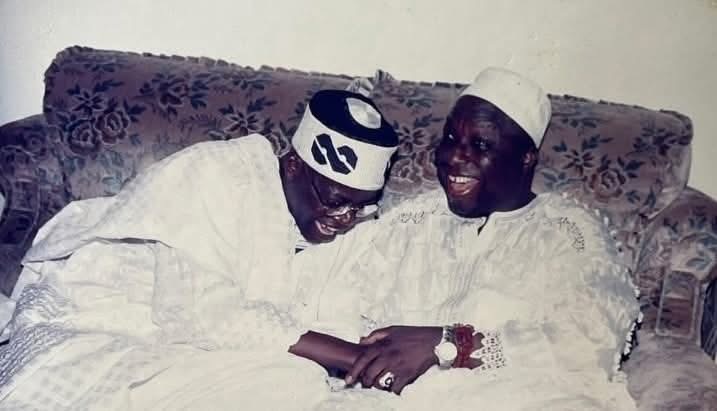
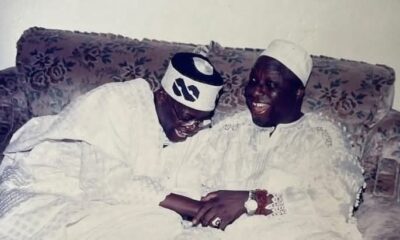
A historic glimpse into the bond between political leadership and traditional authority in Lagos State
The Photograph
A historic photograph, now over 26 years old, captures a heartfelt interaction between Bola Ahmed Tinubu, then Governor of Lagos State, and the late Oba Yekini Adeniyi Elegushi, Kusenla II. Taken during Tinubu’s visit to the Oba’s palace in Elegushi, the image shows the two figures sharing a hearty laugh, reflecting a moment of warmth and mutual respect.
Political and Cultural Context
The photo is emblematic of the longstanding relationship between political leaders and traditional rulers in Nigeria. For leaders like Tinubu, forging strong ties with Obas and local chiefs is not merely ceremonial—it is a vital connection to communities and their cultural heritage. This relationship fosters collaboration on governance, development, and social cohesion within the state.
Tinubu’s Governance Legacy in Lagos
During his tenure as Governor (1999–2007), Tinubu implemented transformative initiatives across Lagos State, focusing on:
Infrastructure development: Expanding road networks, bridges, and the Lagos Light Rail Mass Transit project
Economic growth: Establishing the Lekki Free Trade Zone to attract investment and create jobs
Education and healthcare: Improving public schools and hospitals, including better staffing and facilities
Housing and urban planning: Constructing residential units and promoting orderly urban development
Transportation: Enhancing the Lagos-Epe Expressway and introducing initiatives to ease traffic congestion
These reforms positioned Lagos State as a model of economic development and urban transformation in Nigeria.
Oba Elegushi’s Role
As Oba Yekini Adeniyi Elegushi, Kusenla II, the Oba played a key role in fostering cultural continuity and community leadership in Lagos. His collaboration with political authorities helped ensure that modernization and development were balanced with the preservation of tradition and local identity.
Significance of the Image
This iconic photograph is more than a personal moment; it is a symbol of:
Mutual respect between political and traditional leadership
Community engagement as a cornerstone of effective governance
Cultural continuity amid urban and economic transformation
It captures the essence of Nigerian politics, where cultural institutions and elected offices often work in tandem to shape society.
Legacy
Tinubu’s administration laid the groundwork for Lagos State’s ongoing growth, while Oba Elegushi’s stewardship reinforced the importance of traditional authority in civic life. Together, their collaboration exemplified a harmonious interplay between political vision and cultural leadership—a dynamic still relevant in contemporary Nigeria.
Source
Lagos State government archives
Nigerian political and cultural history reports
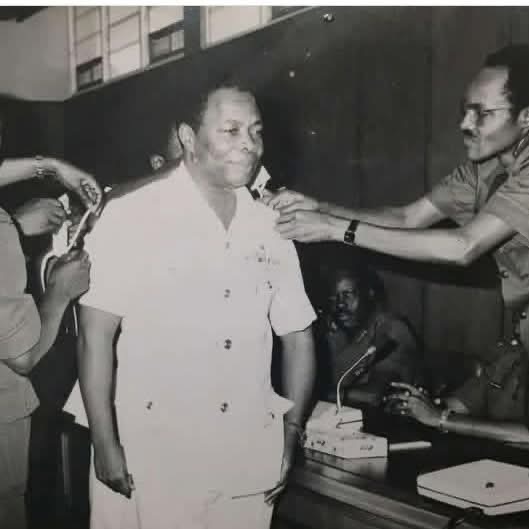
From naval command to Nigeria’s highest military office, the enduring legacy of a disciplined statesman
Explore the life of Admiral Augustus Aikhomu, Nigerian naval officer and former Chief of General Staff, whose leadership shaped a critical era in Nigeria’s political history.
Early Life and Education
Augustus Aikhomu was born on 20 October 1939 in Irrua, located in present-day Edo State. Raised in a disciplined environment, he began his early education at Irrua Government School before proceeding to Yaba College of Technology, where he studied between 1954 and 1958.
Driven by a passion for military service, Aikhomu furthered his training at the prestigious Britannia Royal Naval College. His professional development also included specialised training such as the Long Gunnery Course in India and strategic studies at the National Institute for Policy and Strategic Studies in 1982.
Rise Through the Nigerian Navy
Aikhomu’s naval career was marked by steady advancement and professional excellence. His dedication and technical expertise earned him respect within the ranks of the Nigerian Navy.
In 1985, he was decorated with a new rank by Muhammadu Buhari, then Head of State, symbolising his growing influence within Nigeria’s military establishment.
Notably, Aikhomu became one of the first naval officers in Black Africa to attain the rank of Admiral, a milestone that underscored both his personal achievements and the evolving stature of the Nigerian Navy on the continent.
Chief of General Staff and De Facto Vice President
A defining chapter of Aikhomu’s career came under the military regime of Ibrahim Babangida, where he served as Chief of General Staff from 1986 to 1993.
In this role, he functioned as the de facto Vice President of Nigeria, making him one of the most powerful figures in the country during a politically sensitive era. His responsibilities included overseeing government operations, advising on national policy, and supporting the administration’s strategic direction.
Role in Nigeria’s Political Transition
Aikhomu played a significant role during one of Nigeria’s most controversial political moments—the aftermath of the June 12 1993 presidential election annulment.
Following the annulment, he became the first signatory to the document that authorised the formation of the Interim National Government (ING), which was led by Ernest Shonekan.
This decision remains a subject of historical debate, as the June 12 election is widely regarded as one of the freest and fairest in Nigeria’s history. Aikhomu’s involvement places him at the centre of a pivotal moment that shaped the country’s democratic evolution.
Personal Tragedy and Later Years
Beyond his public life, Aikhomu experienced profound personal loss. His son, Ehime Aikhomu, was among the 165 victims of the Dana Air Flight 992 crash, a tragic aviation disaster that occurred on 3 June 2012 in Lagos.
This tragedy added a deeply human dimension to the life of a man often associated with authority and national service.
Death and Legacy
Admiral Aikhomu passed away in 2015 and was widely eulogised by colleagues and former leaders. Ibrahim Babangida described him as “a firm man who paid attention to all details… handling everything with a great sense of maturity.”
He was honoured with the prestigious national award of Grand Commander of the Order of the Niger (GCON), one of Nigeria’s highest recognitions for service to the nation.
Historical Significance and Verification Note
Admiral Augustus Aikhomu remains a key figure in Nigeria’s military and political history. While widely recognised as one of the earliest naval officers in Black Africa to attain the rank of Admiral, specific “first” claims may vary across sources and should be interpreted within broader historical context.
Source
Nigerian military and political archives
National honours records (GCON recipients)
Historical accounts of Nigeria’s military era (1980s–1990s)
Reports on the Dana Air Flight 992 crash (2012)

Bukar Abba Ibrahim: Two-Time Governor and Senator of Yobe State

Bola Ahmed Tinubu and Oba Yekini Adeniyi Elegushi, Kusenla II – A 2000 Lagos Moment

Admiral Augustus Aikhomu: A Life of Service, Power, and National Transition

-
Business1 year ago
US court acquits Air Peace boss, slams Mayfield $4000 fine
-

 Trending1 year ago
NYA demands release of ‘abducted’ Imo chairman, preaches good governance
-

 Politics1 year ago
Mexico’s new president causes concern just weeks before the US elections
-

 Politics1 year ago
Putin invites 20 world leaders
-

 Politics1 year ago
Russia bans imports of agro-products from Kazakhstan after refusal to join BRICS
-
Entertainment1 year ago
Bobrisky falls ill in police custody, rushed to hospital
-
Entertainment1 year ago
Bobrisky transferred from Immigration to FCID, spends night behind bars
-
Education2 years ago
GOVERNOR FUBARA APPOINTS COUNCIL MEMBERS FOR KEN SARO-WIWA POLYTECHNIC BORI