
Politics
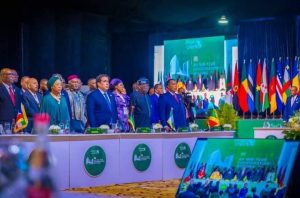
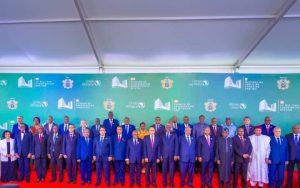
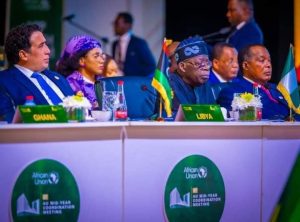
President Bola Tinubu on Sunday in Accra, Ghana addressed African leaders on the status of ECOWAS, highlighting the progress so far made by the West African economic bloc and the prevailing challenges.


Presenting the achievements of ECOWAS in the past one year at the Sixth Mid-Year Coordination Meeting of the African Union, President Tinubu, who is the Chairman of ECOWAS Authority of Heads of State and Government, said the Community has activated a Standby Force to counter terrorism and will continue to explore funding options.
The President said ECOWAS has been supporting member states to enhance electoral and governance processes, and recently deployed Election Observation Missions to Senegal and Togo – both of which elections were adjudged to be peaceful, transparent, and fair.
He also highlighted the facilitation of the signing of an Agreement for National Unity in Sierra Leone, noting that the sub-regional body will continue to work with stakeholders in the country to implement the provisions of the Agreement.
The President disclosed that consultations are ongoing to revise the ECOWAS 2001 Supplementary Protocol on Democracy and Good Governance.
On economic integration, President Tinubu said ECOWAS has implemented activities to consolidate the free trade area, customs union, and common market.
“We supported six Member States in ratifying the WTO Fisheries Subsidies Agreement, and thirteen Member States have ratified the AFCFTA agreement.
“The ECOWAS interconnected System for the Management of Goods in Transit (SIGMAT) is also operational in twelve Member States,” the President stated.
Detailing the efforts on the humanitarian and social development front, President Tinubu said ECOWAS has allocated $9 million to assist persons of concern, including refugees, internally displaced persons, and asylum seekers.
“The frontline Member States in the fight against terrorism have also been supported with USD4 million under the ECOWAS Counter Terrorism Humanitarian Response.
“On education, the West African Network of National Academies of Sciences, and the African Forum for Research and Innovation have been established. Our regional Academic Mobility Scheme has continued to equip the youth with practical skills and is harmonizing education systems.
“While in the area of health, ECOWAS continues to provide support to women with obstetric fistula, empowered women entrepreneurs in agribusiness, and focused on gender equality in education and the green economy,” the ECOWAS Chairman stated.
Foregrounding the progress on energy, mines, and agriculture, President Tinubu said ECOWAS is advancing electrification efforts in The Gambia, Guinea Bissau, and Mali through the ECOWAS-Regional Electricity Access Project (ECOREAP).
“It is also implementing the Regional Off Grid Electricity Access Project (ROGEAP). 32 Solar Off Grid SMEs have been approved, including 9 SMEs led by women. A total of 3 million US dollars will be disbursed to finance the SMEs. More than 400 SMEs in 13 countries were trained in 2023 and 2024.
“To achieve sustainable electricity access within the ECOWAS and Sahel countries, we will provide a total grant of 38 million US dollars to SMEs in Member States. ECOWAS will extend this to Mauritania, Central African Republic, Chad and Cameroon through Commercial and Financial Institutions. An additional loan of 140 million US dollars will also be made available to the solar SMEs.
“Within the period under review, ECOWAS has supported Experts from Member States in international meetings and negotiations on environmental issues, including environmental governance. We provided support to our members in the implementation of the Paris Agreement and the establishment of a regional carbon market.
“With respect to food security, the ECOWAS Bank for Investment and Development (EBID) has approved the instruments to operationalize the Regional Fund for Agriculture and Food (RFAF). A Regional Food Security was developed to achieve self-sufficiency in rice production.
“Furthermore, our support for pastoralism in the Sahel has targeted the improvement of animal health, with a record vaccination of over 490 million livestock. We have established common rules for controlling veterinary medicine products at borders. In addition, ECOWAS launched a project for Member States to access the Green Climate Fund. This will promote climate-smart agriculture through the use of technologies,” the President said.
On other ECOWAS institutions, President Tinubu stated that the Sixth Legislature of the ECOWAS Parliament elected its first female President, the Right Honourable Maimunatu Ibrahim from Togo, and that The ECOWAS Community Court of Justice reviewed fifteen new cases, held thirty-three court sessions, and delivered eleven judgments.
However, the President noted that the bloc faces multiple threats, including member states withdrawing, geopolitical rivalries, terrorism, food insecurity, climate change, and the spread of misinformation and disinformation.
He said ECOWAS will continue to dialogue with Burkina Faso, Mali, and Niger to maintain unity and will convene a Special Extra-ordinary Summit on the future of the Community.
“Finally, Your Excellencies, I am happy to report that the ECOWAS Commission has assumed the rotating Chairmanship of the Inter-REC platform since February this year. Earlier this year, the ECOWAS Commission hosted the East African Community (EAC) and the Intergovernmental Authority on Development (IGAD), to exchange views on various issues and review best practices. We will continue to collaborate with all AU regional communities and mechanisms in order to strengthen our continental integration,” the President concluded.
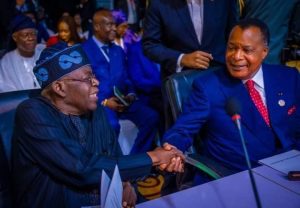
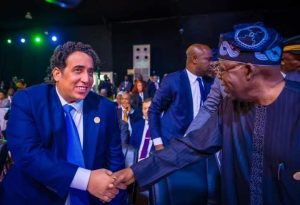
On the margins of the AU meeting, President Tinubu held a bilateral meeting with President Ismail Omar Guelleh of Djibouti.
President Guelleh emphasized the importance of Nigeria’s role as a leader in West Africa and the continent.
He appealed for Nigeria’s support on development concerns and common challenges in his country.
President Tinubu and President Guelleh agreed to continue to work together to advance bilateral interests.
The Mid-Year Coordination Meeting was conceptualized in 2017 as the principal forum for the AU and Regional Economic Communities (RECs) to align their work and coordinate the implementation of the continental integration agenda, replacing the June/July summits.
It is a meeting between the Bureau of the AU Assembly and Regional Economic Communities (RECs), with the participation of the Chairpersons of RECs, the AU Commission and Regional Mechanisms (RMs).
This year’s meeting was convened under the AU theme on Education, “Educate and Skill Africa for the 21st Century”.
Remember to follow me for More updates …..




The Independent National Electoral Commission, INEC, has announced the postponement of the proposed nationwide voter revalidation exercise until after the 2027 General Election.
This follows a meeting with the Resident Electoral Commissioners, RECs, on Friday, April 10.
A statement signed by INEC’s National Commissioner, Chairman, Informationa and Voter Education Committee, Mohammed Kudu Haruna, said
“the voter revalidation exercise is a critical component of the Commission’s mandate to maintain a credible and up-to-date National Register of Voters.
It is designed to verify and review existing voter records, ensure the accuracy of personal data, eliminate duplicate and ineligible entries, and strengthen the overall integrity of the voter register.
The exercise also aims to provide an opportunity for registered voters to confirm their details and make necessary corrections where required.
INEC remains committed to the conduct of free, fair, credible, and inclusive elections.”
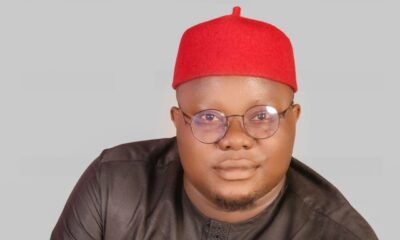
Following the just conducted ADC Congress, the African Democratic Congress (ADC) in Ideato South Local Government Area, Imo State, has announced its new leadership team. The team, led by Chairman Hon. Eze Chijioke, includes:
– Chairman: Hon. Eze Chijioke
– Secretary: Chief Duru Maurice
– Youth Leader: Mr. Obinwanne Okwara
– Woman Leader: Mrs. Anueyiagu Ogechi
– Organizing Secretary: Hon. Godian Egemba
The team is expected to lead the party to victory in future elections.
Politics
ADC Owerri Municipal Gets New Chairman: Hon. Success Opara Emerges Amidst State Leadership Tussle
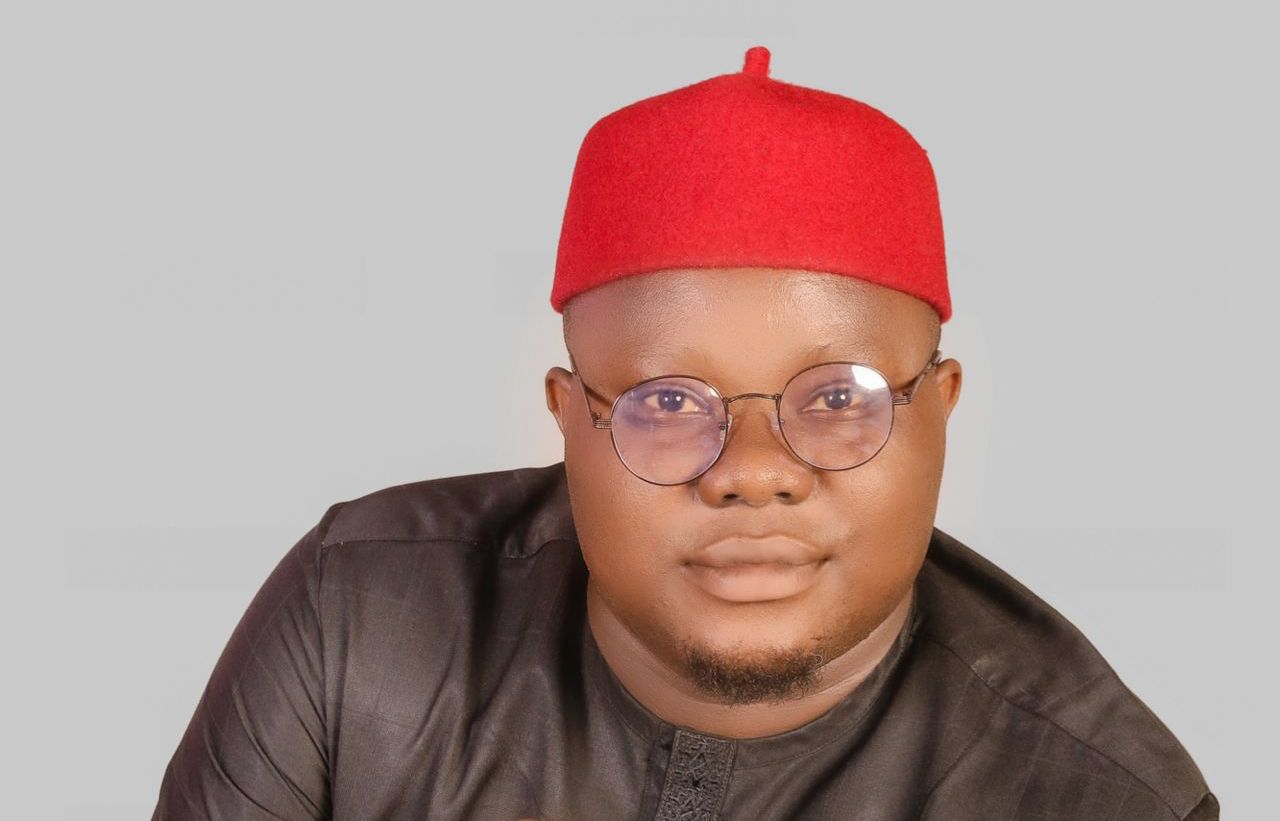
The African Democratic Congress (ADC) in Owerri Municipal, Imo State, has concluded its Local Government Area Congress, with Hon. Success Opara emerging as the new Chairman. The congress, conducted in all wards across Owerri Municipal, saw party faithfuls voting for Opara, who is expected to lead the party to victory in future elections.
However, there’s an ongoing leadership tussle within the Imo State ADC, with Chief Emmanuel Amushie claiming to be the authentic state chairman, recognized by the Independent National Electoral Commission (INEC). On the other hand, Prof. James Okoroma has also been declared the authentic state chairman by the national leadership of the ADC.
Furthermore the Independent National Electoral Commission (INEC) has removed the faction led by Prof. James Okoroma as the recognized leadership of the African Democratic Congress (ADC) in Imo State, as of April 9, 2026. INEC recognizes only the Amuchie-led Executive as the lawful and legitimate leadership of the ADC in Imo State.
The removal follows a Court of Appeal ruling directing parties to maintain the status quo pending the determination of a substantive suit before the Federal High Court. INEC has also suspended recognition of all leadership factions of the ADC until the court reaches a final decision.

INEC postpones nationwide voter revalidation until after 2027 elections

ADC Congress Ideato South: New Leadership Team Emerges

Fuel may hit N2000/litre. Subsidize crude feedstock now – TUC tells FG

-
Business1 year ago
US court acquits Air Peace boss, slams Mayfield $4000 fine
-

 Trending1 year ago
NYA demands release of ‘abducted’ Imo chairman, preaches good governance
-

 Politics1 year ago
Mexico’s new president causes concern just weeks before the US elections
-

 Politics1 year ago
Putin invites 20 world leaders
-

 Politics1 year ago
Russia bans imports of agro-products from Kazakhstan after refusal to join BRICS
-
Entertainment1 year ago
Bobrisky falls ill in police custody, rushed to hospital
-
Entertainment1 year ago
Bobrisky transferred from Immigration to FCID, spends night behind bars
-
Education2 years ago
GOVERNOR FUBARA APPOINTS COUNCIL MEMBERS FOR KEN SARO-WIWA POLYTECHNIC BORI