
Politics
President of the Senate, Senator Godswill Akpabio on Friday, said that the 10th National Assembly will produce a constitution that will take into cognizance the collective aspirations of Nigerians, shape, unite, and accelerate the development of the country.

Senator Akpabio gave the assurance while delivering his remarks at the beginning of a 2-Day retreat of the House of Representatives committee on the review of the 1999 Constitution, organized by Policy and Legal Advocacy Center (PLAC) and United Kingdom International Development in Ikot Expene, Akwa Ibom State.
The Senate President urged the federal lawmakers to be thorough in the ongoing review of the constitution, stressing that every bill and proposal must receive the needed consideration.
The assurance came on a day the deputy speaker of the House of Representatives and Chairman, Committee on Constitutional Review, Hon. Benjamin Kalu revealed that a total of 305 proposals from Nigerians and 112 bills on various national issues are before the Committee of the House for consideration in the ongoing review of the 1999 Constitution.
This is as the 36 Speakers of State Houses of Assembly and the government of Akwa Ibom State respectively declared their support for the establishment of state police, resource control, decentralization of power amongst other national issues.
Applauding the work of the House committee, Akpabio said that time has come for Nigerians to take their destiny into their hands.
He said: “I believe that at the end of the day, the Senate and the House of Representatives will create a blueprint that guides us towards a more united and prosperous Nigeria. This journey has just begun in this retreat. So, ladies and gentlemen, the challenges before us are significant, but so are the opportunities.
“This opportunity is to ensure that the bills, all bills we consider and comprehend are fair, reflective of the aspiration of the Nigerian people.
We must take into account the diverse perspectives and experiences that make up our great nation. By doing so, we lay a solid foundation for a constitution that truly represents the hope and dreams of every single Nigerian alive.
“Distinguished brothers and sisters, now is the time for us to take our destiny in our hands. Change will not occur if we passively wait for someone else for another institution or for a different time to undertake this venture with all the power to bring about a change ourselves and change the purpose, and trajectory of our new country. We are the ones our country has been waiting for. We are the embodiment of the change our country needs.
“Let us rise to this duty and answer our country’s call, particularly at a time when we have a vice president as a legislator a president as a legislator, and even the wife of the president as a legislator. This is the right time for us to shape the future of our country through legislation”.
In his address, the deputy speaker, Hon. Kalu highlighted the areas of top priority in the review process.
The areas, he said included local govt autonomy, judiciary, electoral matters, state police, gender, human rights issues, and others.
Hon. Kalu said that the thematic areas have been shared amongst the experts to handle.
Recall that the committee has held a series of public engagements from its pre-inaugural meeting to the unveiling of sub-committees on work development; the inauguration of the Committee; the call for memoranda; appointment and inauguration of Consultants; retreat of the secretariat and consultants of the House; a joint committee secretariat and consultants of both the Senate and the House, incidentally setting a timeline to achieve the first set of amendment by December 2025.
Giving the details of the thematic areas, Kalu said that the consultants are expected to dig deep into the thematic areas.
According to him, local government matters are given to Professor Nuhu M. Jamo, the judiciary assigned to Barrister Mike Osuman; electoral matters to Hon. Samson Osagie; State Policing given to Dr. Usman Ibrahim to handle; gender issues given to Professor Anthonia Simbine; human right issues given to Chief Chris Uche while other special matters are assigned to Professor Yusuf Yusuf to handle.
The Deputy Speaker further explained that the amendment of the Constitution is imperative to conform to the wishes of Nigerians and to also meet up with the present economic realities.
He said: “In keeping faith with the timeline it set for itself to achieve the first set of amendments by December 2025, the Committee has undertaken the following activities: pre-inaugural meeting; sub-committees on work plan development; inauguration of the Committee; call for memoranda
appointment and inauguration of Consultants; retreat of the Secretariat and Consultants of the House
joint Committee Secretariat and Consultants of both the Senate and the House
“Today, the Committee will now be presented with the outcome of the review of the bills and memos received.
“Furthermore, the Constitutional amendments are instrumental in achieving better economic outcomes by modernizing legal frameworks, enhancing institutional capacity, better enhancing Nigeria’s economic potentials, addressing emerging economic challenges, and facilitating inclusive development.
“Constitutional amendments have become imperative for a couple of reasons including the need to adapt to changing economic realities; to strengthen property rights and the rule of law; to promote economic freedom and fear competition; to foster fiscal responsibilities and budgetary discipline; to enhance governance and accountability; to empower subnational government and; to facilitate for structural reforms.”
According to him, the Committee’s consultations will extend to the Judiciary, election stakeholders, women groups, traditional rulers, and civil society organizations among others.
He said: “Presently we have received 305 proposals from Nigerians and 112 bills sponsored by Members are at various stages of consideration in the House. These memos have been analysed by the Committee Consultants and a report will be presented to the Members during these deliberations.
“We will also engage the citizens from across Nigeria’s six geo-political zones and will cap our consultations with a National Public hearing in Abuja before the end of 2024.
In his remarks, Governor Umo Eno of Akwa Ibom state, represented by his Deputy, Senator Akon Eyakenyi expressed support for the establishment of state police, asking the committee to also consider devolution of powers amongst others.
“The issue of devolution of powers from the center to sub-nationals to make Nigeria a proper federation has been a recurrent decimal since the promulgation of decree 34 of 1966 by the military, which sets the nation on the path of unitary federalism.
“The result was an overburdened center and over-dependent federating units, thus making it impossible for sub-nationals to look inwards for development in a manner peculiar to their natural endowment and circumstances.
“Thankfully, recent efforts at constitutional amendments have removed some of these bottlenecks.
However, a lot remains to be done, especially in the areas of security and revenue allocation.
“At this point in our history, vis-a-vis the seemingly intractable security problems across the nation, I doubt if we can still debate the necessity or otherwise of state police. Experience has shown that a centralized security architecture cannot effectively tackle localized crimes.
“The creation of state police does not mean the abolition of federal police. Presently, the synergy between the state minister of internal Security and Waterways and security agencies is yielding enormous benefits in the state.
“This particular issue of national importance is, to my mind, a labor test for your committee in particular and the 10th assembly as a whole on revenue allocation. It is an incontrovertible fact that all Nigerians live in the 36 states and the Federal Capital Territory. The responsibilities of states are huge and they definitely need more money to meet their obligations.
“More so, in the spirit of federalism, the constitution should make provisions for states to benefit more from natural resources obtained within their territories. I believe a constitution which truly exposes the principles of federalism will help to de-escalate tension in the country, resolve some of our most serious challenges, and bear a prosperous nation,” he said.
Also speaking, the chairman of the Conference of Speakers of State Legislatures of Nigeria and Oyo State House of Assembly Speaker, Hon. Adebo Ogundoyin said that the conference is more interested in state police, local government autonomy, resource control and revenue allocation, devolution of powers to the states amongst others.
He said: “There are fundamental National issues that must be reviewed and considered for constitutional amendments, issues such as state police, local government autonomy, resource control, and revenue allocation, centralisation of powers in the center or devolution of powers to state amongst other pressing matters.
“I strongly believe the leadership of the National Assembly and Speakers at the States Assembly will collaborate to ensure the passage of some of these critical issues in the ongoing Sixth Alteration of the Nigeria Constitution especially when critical issues such as security are considered. Let me say for the record that the conference of speakers of state legislators strongly supports the establishment of State Police and other amendments that promote Federalism.
“As Chairman, Conference of Speakers of State Legislatures of Nigeria, in this task of Constitutional review process, I want to believe my roles will be multi-dimensional in engaging my colleagues at State levels, the leadership of National Assembly, Governors’ forum, and other critical stakeholders in stimulating discussions on some of the identified grey areas moving forward as a Nation,” he said.










March 20, 2026
The All Progressives Grand Alliance in Abia State has called on the Senate to declare the seat of the Senator representing Abia South, Enyinnaya Abaribe, vacant following his resignation from the party.
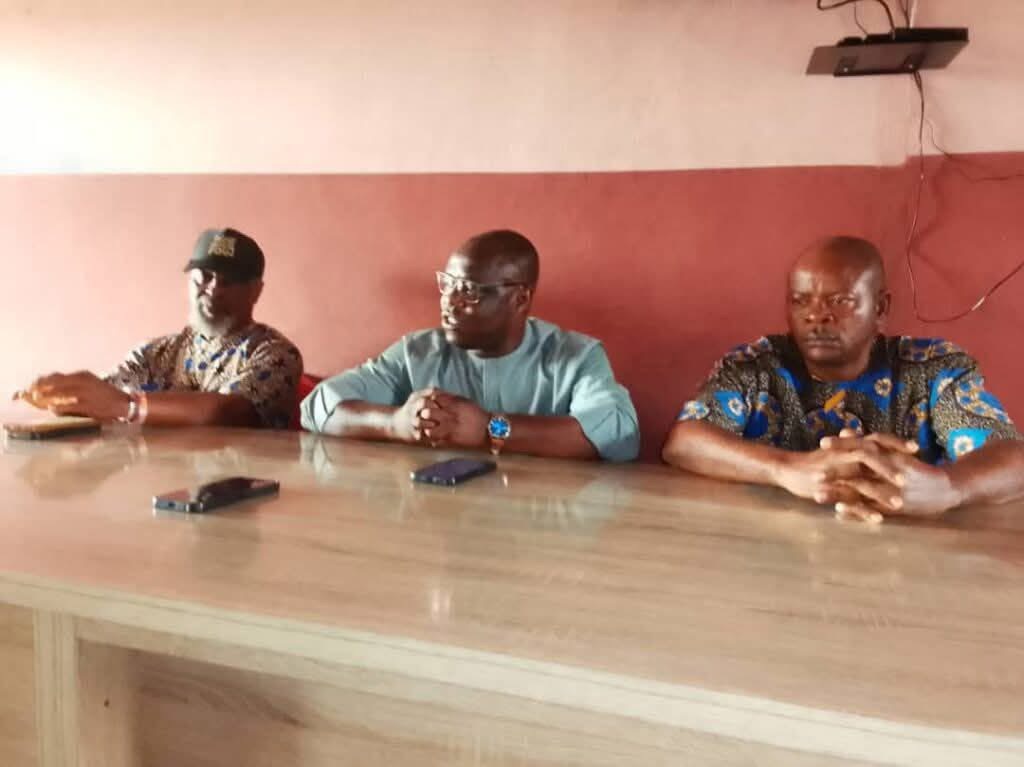
The party made the call on Thursday during a press briefing in Umuahia, where its leadership, led by a former member of the Abia State House of Assembly, Obinna Ichita, insisted that Abaribe voluntarily resigned from APGA and was not sacked, contrary to his claim at the Senate.
Ichita argued that Abaribe’s exit from the party that sponsored his election violates constitutional provisions, stressing that there was no leadership crisis within APGA to justify his defection.
“The senator resigned in his ward. He did so voluntarily, which is his right. However, if you leave the party that gave you the platform for another party when there is no leadership crisis, that seat must be declared vacant,” he said.
He further alleged that Abaribe misrepresented the circumstances of his exit by claiming he was sacked.
“The party has documentary evidence to show that Senator Abaribe was not sacked. He resigned three months after disciplinary measures were taken against him over actions the court did not consider appropriate,” Ichita added.
According to him, the mandate belongs to the people and the party, not the individual office holder.
“They gave him the mandate on the platform of APGA, not any other party. There was nothing like ADC when he was elected. He cannot take the mandate elsewhere without consulting the people who gave it to him,” he said.
Ichita maintained that the constitution is clear on defection, noting that any lawmaker who leaves a party without a valid internal crisis must vacate the seat.
“My message to Senator Abaribe is to honourably vacate the seat instead of waiting for the National Assembly to declare it vacant. That would amount to national embarrassment,” he added.
Also speaking, the APGA State Chairman, Sunday Onukwubiri, and the party’s Public Relations Officer, Chukwuemeka Nwokoro, reiterated that Abaribe had distanced himself from the party’s activities at various levels in the state.
They insisted that he neither holds dual membership nor was he expelled, maintaining that his resignation was voluntary.
“He was invited by the party but failed to appear and was subsequently suspended in line with the party’s constitution. Three months later, he resigned,” the officials said.
Reacting, Abaribe defended his position, insisting that he acted within his constitutional rights.
“When you are no longer a member of a party by virtue of being sent away, you have the fundamental right of association to join another party,” he said.
He argued that his indefinite suspension by APGA effectively amounted to expulsion.
“If a party places you on indefinite suspension for more than six months, what does that mean? It means you have been told to go elsewhere, and that is exactly what I did,” he stated.
The senator added that the proper constitutional procedure for removing him from office would be through a recall process by his constituents.
“If the people who elected me no longer want me, the right thing to do is to initiate a recall. That is the position of the law,” he said.
Politics
Tinubu’s Reforms May Be Challenging, but They’ve Boosted Nigeria’s Global Respect — Information Minister Mohammed Idris
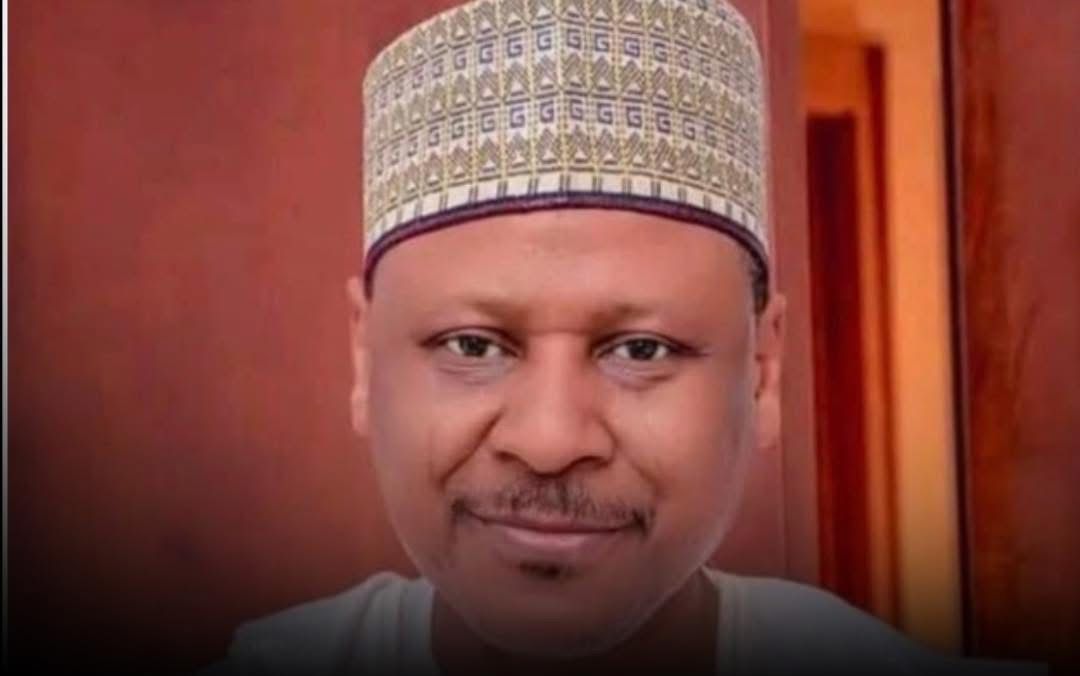
The Minister of Information and National Orientation, Mohammed Idris, has stated that Nigeria is receiving greater respect internationally under the leadership of President Bola Tinubu.
Speaking on Friday after attending Jumaat prayers at Yahaya Road Mosque in Kaduna, Mr Idris said, “Nigeria is indeed taking its rightful place. The country is respected more than ever before on the international scene. The reforms that the president has instituted, as challenging as they are, are meant for the benefit of all Nigerians.”
He urged Nigerians to stay calm as the government continues its efforts to restore security across the nation. Referring to the recent multiple b%mb att@cks in Maiduguri, Borno State, the minister assured that such incidents would not be allowed to recur.
“Indeed, our country is facing challenges, and the government is working tirelessly to ensure security throughout Nigeria. We have seen what has happened, particularly in Borno State. We pray to Allah to make this the last one, as the government is committed to preventing any repetition of such incidents,” he said.
Mr Idris also stressed the importance of citizens being prayerful and working together to address the country’s challenges. He encouraged both Muslims and non-Muslims to unite in the interest of Nigeria’s growth and development.
“This is a time for reflection for all Nigerians. We pray that everyone will consider this moment and recognize the need for unity, progress, and national development. All hands must be on deck for the unity of the country. As we earn respect internationally, we also hope and pray that unity will strengthen within our nation,” he added.
By Dan Opara
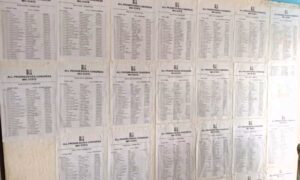
Following the successful conduct of the Imo State APC Congress held in Owerri, Imo State, on March 3rd, 2026, the leadership of the party has officially released the list of victorious candidates who emerged from the exercise.
The announcement, made on Friday, March 20th, 2026, came 17 days after the Congress, as gathered by ThePressman Newspaper.
According to the released list, Chief Austin Onyedebelu emerged as the Imo State APC Chairman, while Arc. Allen Enwerem was elected as the State Deputy Chairman. Hon. Onyekachi Ibezim secured the position of State Secretary, alongside 33 other members who now constitute the State Party Executive Committee, including Ex-Officio members in Imo State.
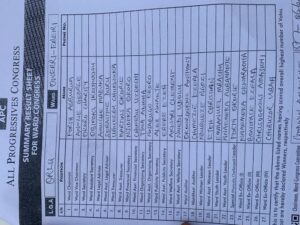
In addition, the leadership of the ruling APC across the 27 Local Government Areas of Imo State has also been announced.
The Ward Party Executive Committee Members for the 305 wards are, however, yet to be fully confirmed.
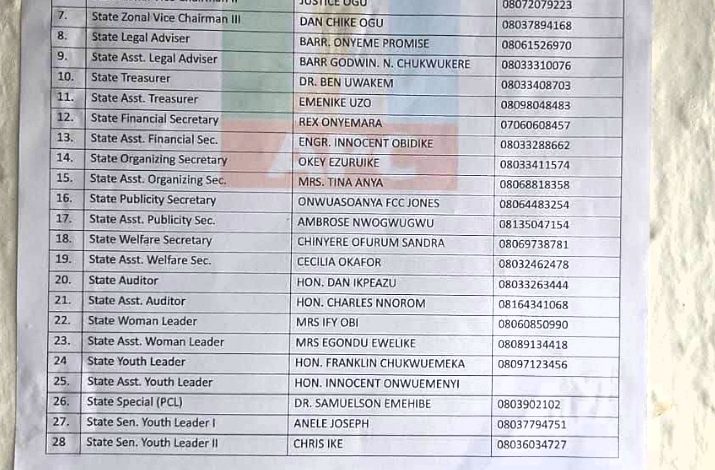
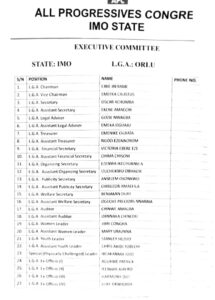
Below is the comprehensive list of the All Progressives Congress State Executive Committee Members for Imo State, including their respective telephone numbers.
ALL PROGRESSIVES CONGRESS
STATE: IMO STATE EXECUTIVE COMMITTEE
State Chairman, Chief Austin Onyedebelu, 08033101685.
State Deputy Chairman, Arc. Allen Enwerem, 08036301966.
State Secretary, Hon. Onyekachi Ibezim, 08033416291.
State Assistant Secretary, Nzenwa Nwoju, 08037717167.
State Zonal Vice Chairman I, Hon. Frank Onyejiaka, 0803314564.
State Zonal Vice Chairman II, Justice Ogu, 08072079223.
State Zonal Vice Chairman III, Dan Chike Ogu, 08037894168.
State Legal Adviser, Barr. Onyeme Promise, 08061526970.
State Assistant Legal Adviser, Barr. Godwin N. Chukwukere, 08033310076.
State Treasurer, Dr. Ben Uwakem, 08033408703.
State Assistant Treasurer, Emenike Uzo, 08098048483.
State Financial Secretary, Rex Onyemara, 07060608457.
State Assistant Financial Secretary, Engr. Innocent Obidike, 08033288662
State Organizing Secretary, Okey Ezuruike, 08033411574.
State Assistant Organizing Secretary, Mrs. Tina Anya, 08068818358.
State Publicity Secretary, Onwuasoanya FCC Jones, 08064483254.
State Assistant Publicity Secretary, Ambrose Nwogwugwu, 08135047154.
State Welfare Secretary, Chinyere Ofurum Sandra, 08069738781.
State Assistant Welfare Secretary, Cecilia Okafor, 08032462478.
State Auditor, Hon. Dan Ikpeazu, 08033263444.
State Assistant Auditor, Hon. Charles Nnorom, 08164341068.
State Woman Leader, Mrs. Ify Obi, 08060850990.
State Assistant Woman Leader, Mrs. Egondu Ewelike, 08089134418.
State Youth Leader, Hon. Franklin Chukwuemeka, 08097123456.
State Assistant Youth Leader, Hon. Innocent Onwuemenyi.
State Special (PCL), Dr. Samuelson Emehibe, 0803902102.
State Senatorial Youth Leader I, Anele Joseph, 08037794751.
State Senatorial Youth Leader II, Chris Ike, 08036034727.
State Senatorial Youth Leader III, Ifeanyi Nwannenna, 08020988164.
State Senatorial Women Leader I, Mrs. Iheako O. Elizabeth.
State Senatorial Women Leader II, Lady Martina Okere, 08036689003.
State Senatorial Women Leader III, Mrs. Franca Onuoha.
State Ex Officio I, Henry Oguguo, 08035001354.
State Ex Officio II, Hon. Alban Amasiatu, 08060564561.
State Ex Officio III, Chukwuma Onyedindere, 08037756307.
State Ex Officio IV, Chief Monday Ikokwu, 08086803626.
Meanwhile, the leadership structure of the All Progressives Congress (APC) in Imo State has been duly constituted, with officials elected across the State, Local Government Area, and Ward levels, reflecting a comprehensive and well-organized party framework.
At the Local Government Area level, notable individuals have emerged as party chairmen in various LGAs.
In Owerri West LGA, Mr. Chikadibia Okpe, was elected as the APC Local Government Chairman.
Similarly, in Orlu LGA, Mr. Ejike Iberame, emerged as the duly elected Party Chairman, while in Oguta LGA, Mr. Obed Onyebuchi, was elected as the APC Chairman, alongside 24 LGA Party Chairmen, to further strengthening the party’s grassroots leadership.
These developments extend across other Local Government Areas and wards, where Party Chairmen and Ward Chairmen have also been elected to provide leadership and coordination at their respective levels.
The successful emergence of party executives at the State, LGA, and Ward levels underscores the APC’s commitment to internal democracy, effective organization, and sustained grassroots mobilization across Imo State.
The release of the list marks a significant step in consolidating the party’s structure across the state, as the newly elected executives are expected to steer the affairs of the APC in Imo State moving forward.

Benita Enwonwu in the 1970s: Model, Actress, and Daughter of Ben Enwonwu

Kidnappers Took Loan With My Phone – Victim Recounts Ordeal

11 more arrested over Ozoro “r@ping festival”

-
Business1 year ago
US court acquits Air Peace boss, slams Mayfield $4000 fine
-

 Trending1 year ago
NYA demands release of ‘abducted’ Imo chairman, preaches good governance
-

 Politics1 year ago
Mexico’s new president causes concern just weeks before the US elections
-

 Politics1 year ago
Putin invites 20 world leaders
-

 Politics1 year ago
Russia bans imports of agro-products from Kazakhstan after refusal to join BRICS
-
Entertainment1 year ago
Bobrisky falls ill in police custody, rushed to hospital
-
Entertainment1 year ago
Bobrisky transferred from Immigration to FCID, spends night behind bars
-
Education2 years ago
GOVERNOR FUBARA APPOINTS COUNCIL MEMBERS FOR KEN SARO-WIWA POLYTECHNIC BORI