
News
Real reasons Justice Nyako can’t decide Nnamdi Kanu’s case – Lawyer Ejimakor

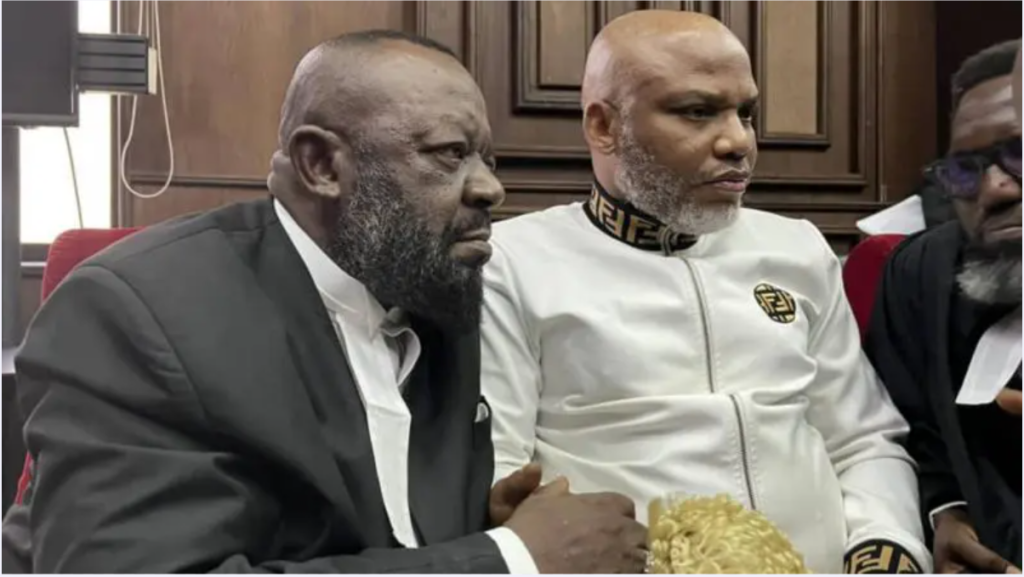
The lead Counsel of Nnamdi Kanu, leader of the Indigenous People of Biafra, IPOB, Aloy Ejimakor on Monday explained why Justice Binta Nyako of the Abuja Federal High Court can no longer conduct the trial of the Biafra agitator.
Ejimakor explained that the constitution permits Kanu to be tried within a period, hence the trial of the IPOB leader has extended for years.
He disclosed that Kanu has filed a petition bordering on judicial misconduct against Nyako which is enough to get her off the case.
This is coming when Nyako adjourned Kanu’s trial “sin die.”
Nyako had initially recused herself from Kanu’s trial after the IPOB made the demand in open court last year.
But the judge’s decision was turned down after the Chief Judge of the Federal High Court, John Tsoho refused to accept Kanu’s case file and reassign the matter to another judge.
Consequently, Nyako resumed the hearing on Monday, after which, she adjourned indefinitely.
Reacting, Ejimakor maintained that the judge lacked the constitutional powers to continue with Kanu’s trial.
In a statement he issued, Ejimakor said: “We have been informed by our Client (Mazi Nnamdi Kanu) and we have obtained a copy thereof … that he has initiated a Petition or a Complainant bordering on judicial misconduct against Honorable Justice Binta Murtala-Nyako. This alone, without more, is enough to oust the Justice from subjecting Mazi Kanu to any trial before her court. It is against the rule of natural justice, equity and good conscience (and even the Cons) for a Judge against whom a defendant has preferred a Petition to – before the disposition of such Petition – continue to preside over the trial of such a defendant. This is very easy to understand – for lawyers and lay people alike. Compare and contrast with someone being a judge in his or her own case, or being a Judge over you when she is a defendant in the case you initiated against her. The Petition or Complaint was filed on 14th January 2025 and it is pending.
“As a BACKGROUND to the current impasse, below are the reasons Mazi Nnamdi Kanu had to take the drastic step of requesting the RECUSAL:
“First, back in June 2021, the same Judge conducted a hearing by which Mazi Kanu (an awaiting-trial) was ordered remanded without notice to, and the presence of his former Counsel (of record) at the hearing. That was a grave constitutional error that turned highly prejudicial against Mazi Kanu and it continues to be constitutionally injurious to him to this day.
“Second, Mazi Kanu was ordered detained in DSS cell instead of a prison facility as the law contemplates. The excuse then (which – by the way – fell outside the exceptions) was that every penitentiary in Nigeria is porous or pathetically low-security. This excuse suggested a judicial state of mind that imputed a proclivity for jailbreak to Mazi Kanu. That’s wrong and unacceptable.
“Third, when the DSS detention posed grave risks to Mazi Kanu’s constitutional right to fair hearing and to Counsel, the Judge summarily refused his application for transfer to prison or other less restrictive facility and instead ordered an accelerated trial. That’s manifest injustice.
“Fourth, when the Supreme Court ruled against Mazi Kanu’s bail revocation, the same Judge who had revoked his bail refused to reinstate the bail. That’s an egregious violation of the Constitution and the doctrine of stare decisis.
“Fifth, the Supreme Court had held that, by revoking Mazi Kanu’s bail, the Judge’s impartiality has become suspect. In the face of this damning indictment from the apex court, it would amount to a dangerous gamble for Mazi Nnamdi Kanu to ignore this and take his chances in a trial that has six capital offenses arrayed against him.
“And sixth, despite the enormous risks to Mazi Kanu’s right to fair trial posed by the strict conditions of his detention at the DSS and the illegality of the charges, the Judge summarily refused our meritorious application to adjourn the trial until the exhaustion our appeal challenging her jurisdiction to try the case. For Mazi Kanu, this is the last straw that broke the camel’s back.
“Above all, when Mazi Nnamdi Kanu was presented in Court on 29th June 2021, following his rendition from Kenya, the Court had a duty to make inquiries regarding the locale of his “arrested” (whether in Nigeria or abroad); and if abroad, whether his “arrest and surrender” to Nigeria complied with the pertinent laws of the country of his refuge, as well as that of Nigeria and the international laws on point. We are aware that the Court never made such inquiry because if it did, it would have revealed the earliest indication of the infamous extraordinary rendition that has complicated jurisdiction to this day. You will recall that the former Attorney-General had falsely claimed that Mazi Nnamdi Kanu was lawfully extradited. If not for the dexterity of one Mazi Nnamdi Kanu’s Counsel who had told Nigerians what actually happened, this grave falsity would have persisted as the truth to this day.
“The post-recusal Summons issued to Mazi Nnamdi Kanu that brought us to Court on 10th February 2024 cannot be blamed on the Court alone. The prosecution grandfathered it by a Letter it wrote to the Court on 5th December 2024, requesting that the case be re-calendared for a hearing before Justice Murtala-Nyako. In our reaction and after a considered view that the said Letter strained the boundaries of prosecutorial misconduct, we countered with a reply, vehemently opposing the re-calendaring the case to be heard before a Judge who is bound by an extant Order of recusal.
“In our efforts to stave off what we reckoned to be burgeoning unconstitutionality that lies in sending the case back to the recused Judge, we took the responsible step of generating a Letter to the Honorable Chief Judge of the Federal High Court, requesting for transfer of the case to the Southeast. We took this step because we were reliably informed that the “official” reason for sending the case back to the recused Judge is because no other Judge in the Abuja Division of the Federal High Court is willing to take the case. And the reason why Southeast is in play (to the exclusion of other zones) is because, being the place where the offenses were alleged to have impact, it possesses far superior jurisdiction to every other division, including Abuja.”
Highlighting the solution to the impasse, Ejimakor reiterate that Kanu’s trial should be transferred to the Southeast if no judge is willing to take it up.
He added: “Having come thus far, the next logical question is: What’s the way forward? The answers are simple and they are as follows:
“If no Judge (other the recused Judge) in Abuja is willing to try the case, the next lawful thing to do is to – on the authority of Section 45, Federal High Court Act & James Ibori v. FRN – transfer the case to any of the Federal High Court divisions in the Southeast.
“If there’s some sort of a “secret official embargo” in having Mazi Nnamdi Kanu tried in the Southeast, you cannot keep him in an endless limbo while he’s detained as an awaiting-trial. Awaiting which trial? A trial that cannot happen in Abuja or Southeast?
“In every common law country, when a State has an insurmountable difficulty in putting a detainee on trial within a reasonable time, the next responsible and lawful option is to release such a detainee until such a time his trial can be properly conducted, subject to any statute of limitation that may be applicable.
“Under the Constitution, every criminal suspect, especially a detainee, deserves to be tried within a reasonable time, not an indefinite time, not being in detention for almost four years awaiting trial that never happens for no fault of the detainee but of the State. Additionally, the Administration of Criminal Justice Act prescribed a day-to-day trial for every criminal suspect. It becomes more urgent and compelling when such a suspect is in detention, and a lengthy to boot.
“In summation, we make bold to say that the ball is firmly and exclusively in the court of the Federal Government, in the sense that since it has proved unable to bring Mazi Nnamdi Kanu to trial within a reasonable time, then the next best thing (which is also lawful and constitutional) is to end this whole saga honorably by releasing Mazi Nnamdi Kanu either through restoration of his bail or otherwise – by a discontinuance of a case that was burdened by the indices of internecine politics from its inception ten years ago in 2015.”








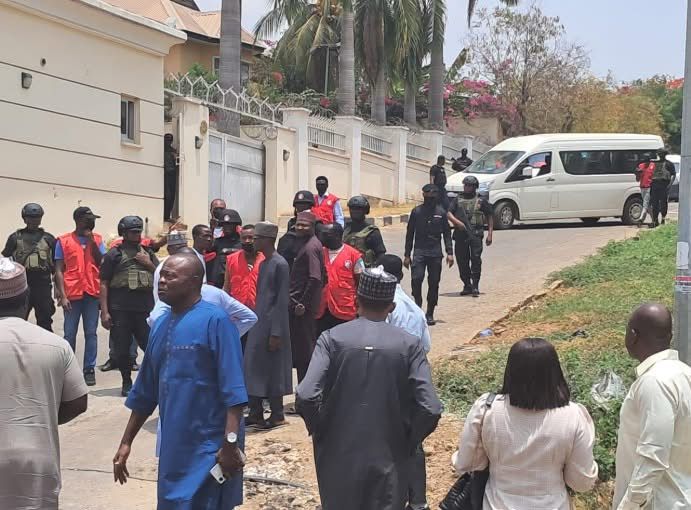
Former Attorney-General Abubakar Malami says Economic and Financial Crimes Commission operatives forcefully evicted him and his family from their Abuja residence despite ongoing court proceedings over the property’s forfeiture.
He described the action as unlawful and vowed to challenge it in court.
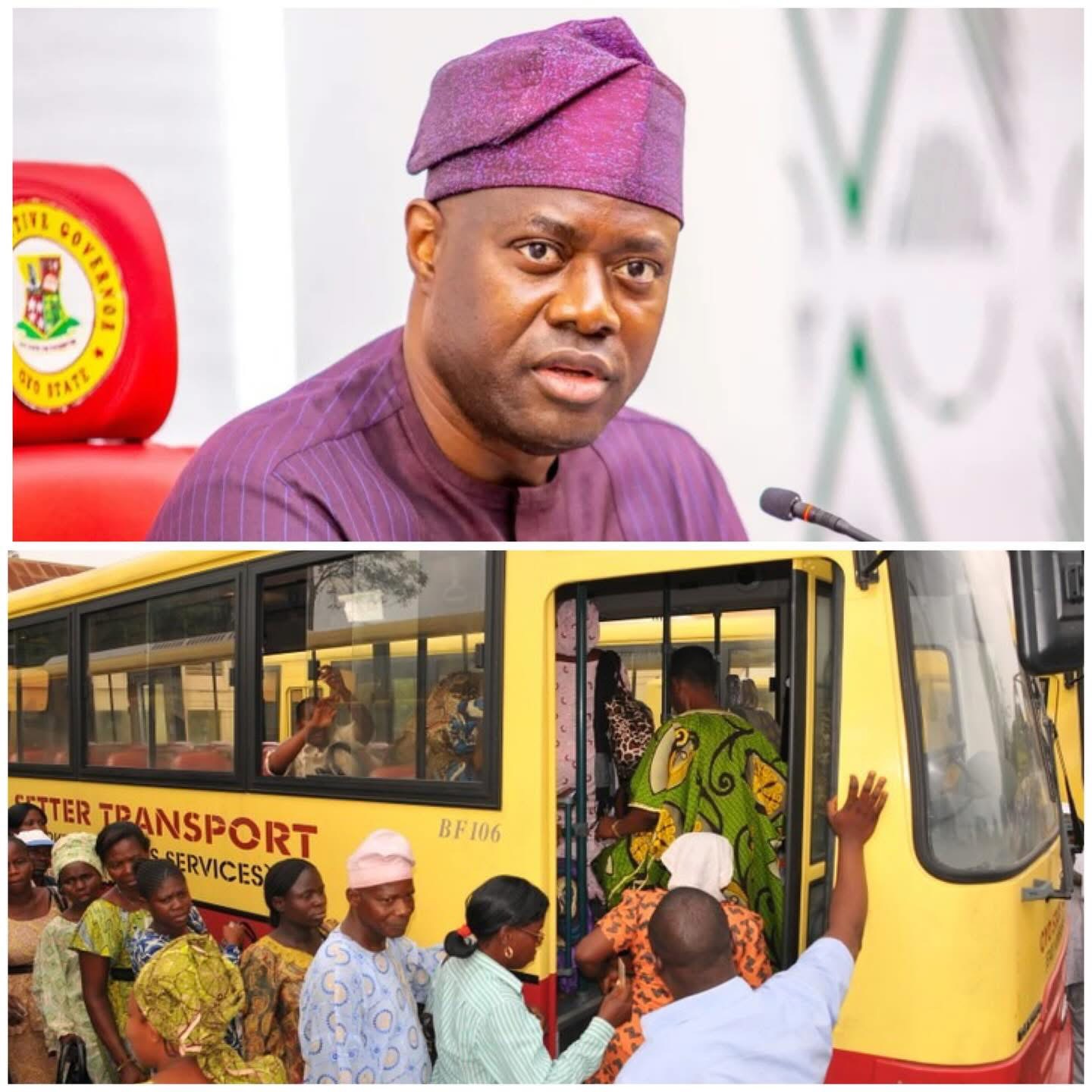
The governor of Oyo state, Seyi Makinde, has approved a N10,000 transportation allowance as a palliative for the state workforce to cushion the effects of the increase in the pump price of Premium Motor Spirit, otherwise known as petrol.
The Chairman of the Nigeria Labour Congress (NLC), Oyo State chapter, Kayode Martins, in a statement released on Monday, March 23, disclosed that the governor has granted the request of the union on the issue of transportation allowance.
The statement read
“Following the intervention and formal request made by the State Council of the Nigeria Labour Congress (NLC) earlier this morning, the state government has approved a N10,000 transportation allowance for all workers in the state.
The newly approved allowance is set to take effect from April 2026, providing much-needed relief to workers grappling with rising transportation costs amid current economic challenges.
This development comes as a direct response to sustained advocacy by the state NLC, aimed at cushioning the impact of increased living expenses on the workforce.
Further details on implementation are expected to be communicated by the relevant government authorities in due course.”
News
Former Acting Accountant-General of the Federation bags 72years imprisonment for diverting N868.46 million security funds
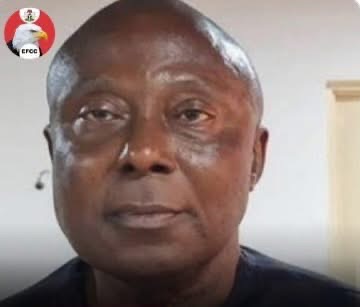
Justice James Omotosho of the Federal High Court in Abuja, on Monday, March 23, convicted and sentenced Chukwunyere Nwabuoku, former acting Accountant-General of the Federation (AGoF), to a 72-year jail term without an option of fine.
DailyTrust reports that in the judgment delivered, Justice Omotosho held that the Economic and Financial Crimes Commission (EFCC) had been able to prove the nine-count money laundering charge beyond reasonable doubt.
According to the judge, the defendant is hereby convicted as charged.
Justice Omotosho convicted Nwabuoku in all the nine counts and sentenced him to eight years imprisonment in each of the counts, making 72 years.
The judge, however, ordered that the counts shall run concurrently.
Justice Omotosho, who described Nwabuoku’s act of diverting funds meant for security and defence while he served as Director of Finance and Account in the Ministry of Defence as “appalling,” commended the EFCC for being detailed in its prosecution.
The judge observed that the evidence of the 9th prosecution witness that Nwabuoku voluntarily refunded part of the siphoned money of over N200 million during investigation was not controverted by the defence.
Nwabuoku served as the Director of Finance and Accounts in the Ministry of Defence between 2019 and 2021. He became acting Accountant General of the Federation in May 2022.

EFCC evicts Malami from Abuja home amid forfeiture dispute

Fuel price hike: Gov Makinde announces N10,000 transport support for workers

Former Acting Accountant-General of the Federation bags 72years imprisonment for diverting N868.46 million security funds

-
Business1 year ago
US court acquits Air Peace boss, slams Mayfield $4000 fine
-

 Trending1 year ago
NYA demands release of ‘abducted’ Imo chairman, preaches good governance
-

 Politics1 year ago
Mexico’s new president causes concern just weeks before the US elections
-

 Politics1 year ago
Putin invites 20 world leaders
-

 Politics1 year ago
Russia bans imports of agro-products from Kazakhstan after refusal to join BRICS
-
Entertainment1 year ago
Bobrisky falls ill in police custody, rushed to hospital
-
Entertainment1 year ago
Bobrisky transferred from Immigration to FCID, spends night behind bars
-
Education2 years ago
GOVERNOR FUBARA APPOINTS COUNCIL MEMBERS FOR KEN SARO-WIWA POLYTECHNIC BORI