
Politics
TINUBU-BUHARI PARTNERSHIP AND OPPOSITION’S DESPERATE SEARCH FOR VALIDATION

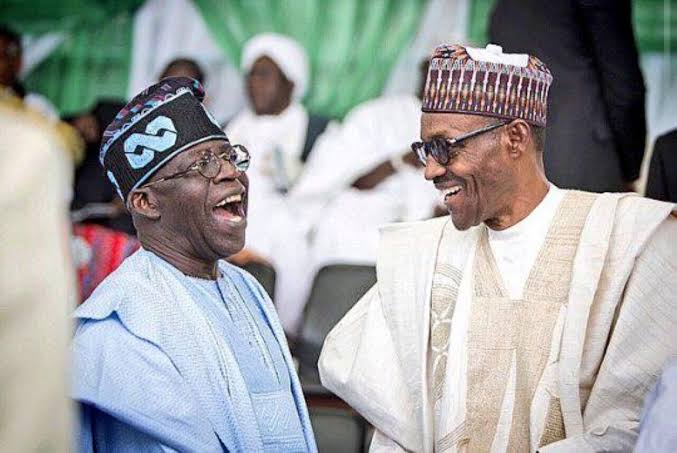
TINUBU-BUHARI PARTNERSHIP AND OPPOSITION’S DESPERATE SEARCH FOR VALIDATION
By Tunde Rahman
The special relationship between President Bola Tinubu and former President Muhammadu Buhari has witnessed many remarkable moments. It has experienced dramatic and exciting times, just as there have been challenging moments. Life changing and sweet memories abound between the two great leaders. Between the two great men, there are recollections of might-have-beens. There are also open testimonies about the gains of the partnership and words of commendation as well as scornful moments.
Nonetheless, the two leaders have trudged on to the admiration of their mutual friends and associates, and bewilderment – I dare say, disappointment – of others who would wish both had long parted ways.
About pleasant times, one important moment readily comes to mind. It was towards the end of 2017, two years into the Buhari presidency. The former president was traveling to Abidjan, Cote d’Ivoire, for the 5th African Union-European Union Summit, which took place from November 28th to 30th, and had invited Asiwaju Tinubu to join his entourage. Coming from Buhari, the invitation was a pleasant surprise to the then All Progressives Congress National Leader, given that the administration he worked very hard, with others, to bring into existence, had largely sidelined him after taking over power in 2015. The Cote d’Ivoire invitation, therefore, represented one of the few occasions he would be directly contacted.
As it turned out, taking Tinubu along on that trip proved helpful. Tinubu attended a couple of official meetings and engagements with the former president, including the meeting with the Nigerian Community in Cote d’Ivoire. Buhari alluded to this during that trip.
Speaking about Tinubu, while addressing the Nigerian Community in that country on the sidelines of the summit, the former president had said: “I must thank our Leader, Asiwaju Bola Ahmed Tinubu. He has brought me a very beautiful piece of information, which I was not aware of until I sat down and read it. Thank you very much for your hard work, and I will discuss that paper with you.”
Many were wondering at the time as to what piece of information Tinubu had offered Buhari. But at that time, 2019 was around the corner, and Buhari needed to rally his troops for re-election. There was a need, in my view, to tap Tinubu again for his strategic support and rich political network. Each time Tinubu had any opportunity to visit Buhari at the Presidential Villa, it was to offer ideas and suggestions about the way forward for the government and the country. I know this as a fact because I was always there with him.
Tinubu had helped Buhari to power in 2015 after the General’s three previous unsuccessful attempts. An alliance between Buhari’s Congress for Progressives Change (CPC) and Tinubu’s Action Congress of Nigeria (ACN) that had earlier hit the rocks in 2011 was resuscitated in the run-up to the 2015 election, engendering a working alliance between the North-west and South-west. This was the alliance that put the wind in Buhari’s sail and fired him to the presidency.
For the first time in a long while, the former president recently spoke on this valuable support and fine relationship with Tinubu in a telephone call to the President on his 73rd birthday. According to a statement by his spokesperson, Mallam Garba Shehu, Buhari underscored the bond between him and Tinubu. He disclosed that his family and himself remain indebted to President Tinubu and other APC leaders for the invaluable contributions they made towards the formation of the party, which catapulted him to the presidency for two terms, and helped to produce another APC administration with Tinubu himself at its head.
“No doubt, the annals of the country will not be complete without bringing into mention, and a recognition of the varied and numerous roles of President Tinubu as an entrepreneur, a party stalwart, a staunch activist, party organiser, party builder, a reliable ally and a serial winner of democratic elections. I am truly proud of my association with the Asiwaju,” the former president said.
President Tinubu, on his part, has at every turn extolled the virtues of former President Buhari. For instance, during Buhari’s 82nd birthday last December 17, Tinubu penned a moving tribute to the former president.
He wrote: “Dear President Muhammadu Buhari, on behalf of the government and people of Nigeria, I extend my warmest congratulations and best wishes to you on your 82nd Birthday.
“As you celebrate this remarkable milestone in Daura, we reflect on your years of dedicated service and leadership, which have significantly shaped the course of our nation. Your steadfast commitment to Nigeria’s advancement and unity inspires many, and your enduring legacy continues to guide our nation’s journey towards prosperity and stability.”
Praising Buhari for his doggedness and resilience in contesting presidential elections in 2003, 2007 and 2011 before winning in 2015 and 2019, inspiring “us never to give up,” President Tinubu assured him: “I will continue to build on the infrastructure legacy you bequeathed to our nation as the leader of our country’s first All Progressives Congress administration.”
From the foregoing, notwithstanding the minor strain engineered by some palace courtiers when the former president was in office, it is apparent that the relationship between Tinubu and Buhari continues to flourish as it was built on mutual respect and affection. And like every association, there are bound to be challenges. About that of Buhari and Tinubu, this strain manifested in the sidelining of Asiwaju, particularly during Buhari’s first term in office, and in the orchestrated moves by some people in the Buhari government to thwart Tinubu’s ascension to the presidency in 2023.
However, it would appear that this relationship has weathered the storms. It is waxing stronger. Contrary to the impression in some quarters, particularly in the camps of some opposition politicians, the remarks by the former president during a visit by APC Governors, who paid him Eid-el-Fitri homage in his Kaduna residence, did not in any way undermine the accord. Underlining his cult-like following in the North, the governors had, during the visit, reportedly urged Buhari to dissuade his CPC associates from leaving APC, noting that doing so would strengthen the governing party against the opposition.
During the visit, Buhari had called on political leaders to embrace humility, transparency, and a citizen-first approach to governance, disclosing that he left office with no personal material gain, emphasizing that true leadership is measured not by personal accumulation, but by public service and impact. Garba Shehu again quoted the former president in a statement he issued: “Leaders must always prioritize the welfare of citizens over personal or partisan interests. I left office with the same physical assets I had before becoming President.” Buhari also expressed satisfaction with the renovations to his Kaduna home and thanked the Tinubu administration for the improvements made inside the building. “Outwardly, the house looks the same, but the renovations have been significant,” he said.
However, regarding the APC Governors’ request that he implore his CPC associates not to leave the party, the former president reportedly declined to commit. While reaffirming his loyalty to APC, he was said to have insisted that others must be allowed to make their own political choices. Some analysts and commentators had interpreted that to mean Buhari was pitching his camps with the opposition.
A deeper analysis of Buhari’s politics lends useful perspectives to his convictions as expressed during the visit by the governors elected on the platform of APC. That remark, embodying a laissez faire attitude, is consistent with Buhari’s politics. A vivid example was during the build-up to the 2019 governorship election in Ogun State when as President he appeared in Abeokuta, Ogun State capital, to give the APC flag to Prince Dapo Abiodun, the then candidate of the party for the election. The former president had urged the people of the state to vote for any candidate of their choice. That remark drew flaks from many, but it underscored a principle Buhari has upheld throughout his political career.
It should also be recalled that recently when former Kaduna Governor Nasir el-Rufai defected to the Social Democratic Party and he (el-Rufai) claimed in a BBC Hausa interview that he left the APC with Buhari’s blessings, the former president also used the opportunity to clear the air, insisting he remains fully loyal to the APC and would never abandon the party that made his presidency possible. “I am a proud APC member and I want to always be known as one. I will continue to do everything I can to promote and support the party,” Buhari stated, without directly addressing el-Rufai’s claims.
At the moment, opposition politicians are desperately seeking Buhari’s support and endorsement to validate their 2027 plan. Former Vice President Atiku Abubakar and his cohorts like el-Rufai, former House of Representatives Speaker Aminu Tambuwal and former Governor Bindow Jibrilla of Adamawa State, among others, visited the former president in Kaduna on Thursday to also pay homage to him for the end of Ramadan fasting/Sallah celebrations that occurred two weeks ago.
In all of that and his remarks to the APC Governors that visited him in Kaduna, has former President Buhari, thus far, deviated from or dumped the accord between him and President Tinubu and the spirit of friendship, mutual understanding, cooperation and reciprocal support that underpins their relationship? There is nothing that suggests so. The special relationship between President Tinubu and former President Buhari remains rock solid. The two eminent leaders will continue to cooperate and collaborate to sustain party unity and promote progressive governance.
Rahman is Senior Special Assistant to President Tinubu on Media, Publicity & Special Duties





Politics
ADC Owerri Municipal Gets New Chairman: Hon. Success Opara Emerges Amidst State Leadership Tussle
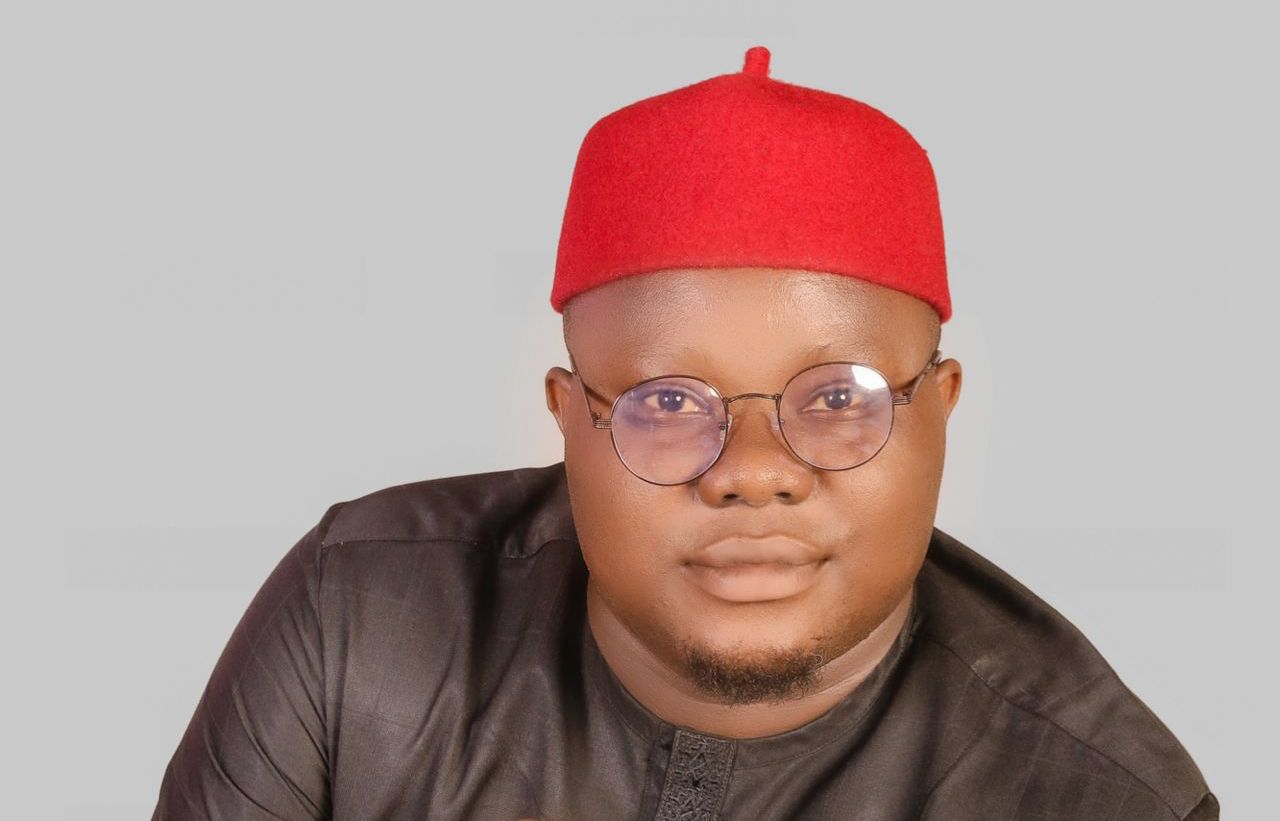
The African Democratic Congress (ADC) in Owerri Municipal, Imo State, has concluded its Local Government Area Congress, with Hon. Success Opara emerging as the new Chairman. The congress, conducted in all wards across Owerri Municipal, saw party faithfuls voting for Opara, who is expected to lead the party to victory in future elections.
However, there’s an ongoing leadership tussle within the Imo State ADC, with Chief Emmanuel Amushie claiming to be the authentic state chairman, recognized by the Independent National Electoral Commission (INEC). On the other hand, Prof. James Okoroma has also been declared the authentic state chairman by the national leadership of the ADC.
Furthermore the Independent National Electoral Commission (INEC) has removed the faction led by Prof. James Okoroma as the recognized leadership of the African Democratic Congress (ADC) in Imo State, as of April 9, 2026. INEC recognizes only the Amuchie-led Executive as the lawful and legitimate leadership of the ADC in Imo State.
The removal follows a Court of Appeal ruling directing parties to maintain the status quo pending the determination of a substantive suit before the Federal High Court. INEC has also suspended recognition of all leadership factions of the ADC until the court reaches a final decision.
Politics
‘If Wike Fails To Apologize To Okinbaloye, We Will Boycott All Press Briefings’ – Broadcasters Warn
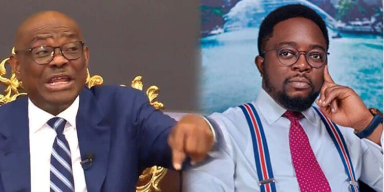
The Independent Broadcast Association of Nigeria (IBAN) has asked the Minister of the Federal Capital Territory, Nyesom Wike, to retract a controversial remark he made about a journalist with Channels Television, Seun Okinbaloye.
IBAN, the umbrella body for independent broadcast stations in Nigeria, also warned that it may boycott all media engagements organized by the minister if he fails to issue a public apology.
In a statement signed by Ahmed Ramalan, IBAN Chairman, and Fidelis Duker, Acting General Secretary, the association expressed concern about the implications of the comment aired during a live television interview.
The controversy stemmed from a remark made by Wike during a routine media chat on Friday, when he reacted to Okinbaloye’s commentary on the trajectory of Nigeria’s democracy while watching the program Politics Today.
“If there was any way to break the screen, I would have shot him,” Wike had said.
The minister later clarified to journalists present that the statement was not a literal threat.
On Saturday, Lere Olayinka, Senior Special Assistant on Public Communications to the minister, described the comment as “hyperbolic”, arguing that it had been taken out of context by critics.
However, IBAN maintained that the remark was inappropriate for a public official, even if it was not intended as a literal threat.
The association said statements suggesting violence could easily be interpreted as intimidation of journalists.
IBAN warned that comments implying violence could contribute to a hostile environment for media practitioners.
The group noted that Nigeria currently ranks 122 out of 180 countries on the global press freedom index, adding that journalists already face numerous challenges.
According to the association, these include surveillance, attacks, and arbitrary arrests.
The association called on the minister to withdraw the remark and apologise publicly to the journalist and the wider media community.
IBAN also urged Wike to reaffirm his commitment to press freedom in accordance with Sections 22 and 39 of the 1999 Constitution.
“Should the minister fail to meet these requests within a reasonable period, IBAN will have no choice but to advise all independent broadcast stations to suspend coverage of all press briefings, media chats, and official news conferences hosted by the FCT minister,” the statement read.
Despite its warning, the association said it remains open to constructive engagement with public officials.
“We hope the minister will take the necessary corrective action so that normal coverage can continue without interruption,” IBAN added.
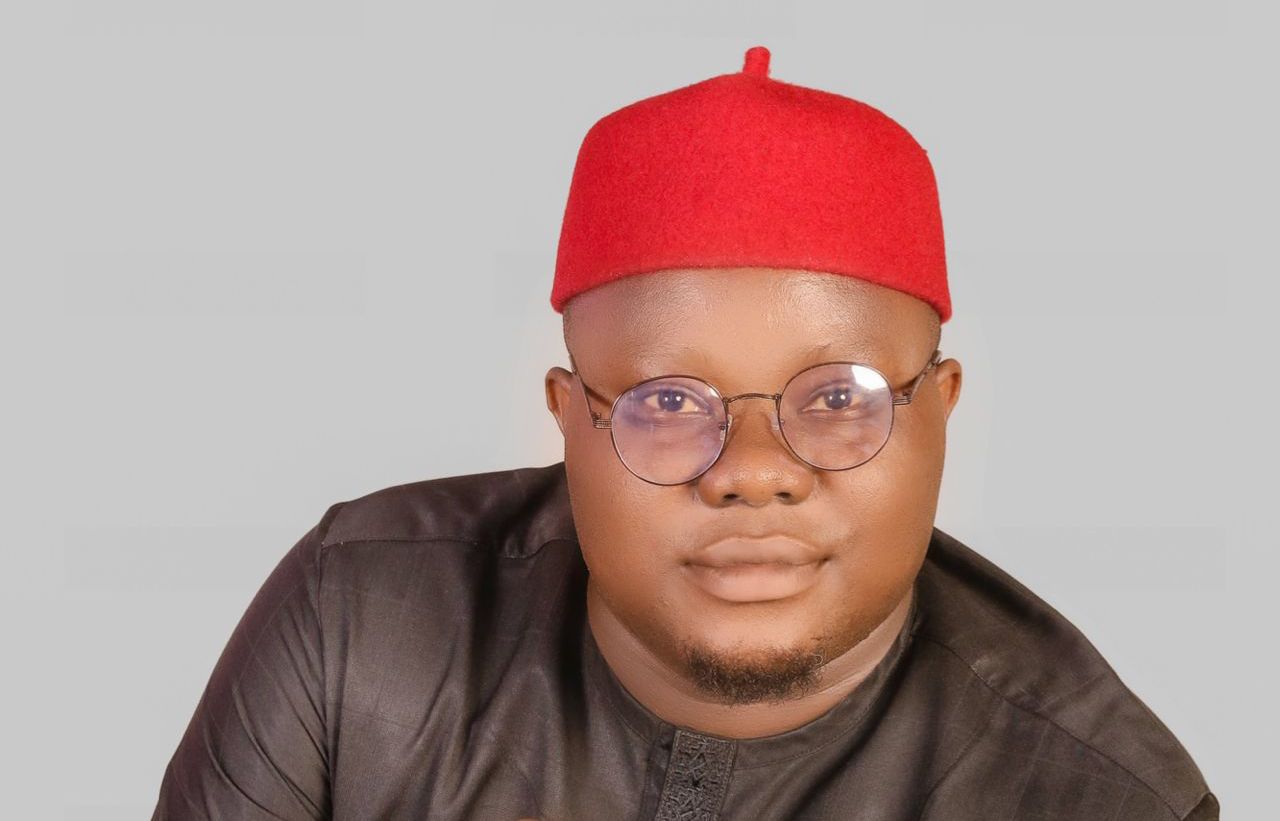
In a heartfelt message, Hon Success Opara has extended warm Easter greetings to Nigerians, celebrating the resurrection of Jesus Christ. Speaking at St. Peter Anglican Church Ikengbu, Opara emphasized the significance of Easter, saying, “He is risen! May the miracle of Easter bring you renewed hope, faith, and joy. Rejoice in the promise of new life and the joy that conquered everything.”
The lawmaker prayed for Nigerians to experience the transformative power of the resurrection, urging them to find solace in the promise of eternal life. “As we commemorate this sacred occasion, let us reflect on the values of love, compassion, and forgiveness that Jesus Christ embodied,” he said.
Hon Opara’s message was filled with Easter cheer, as he wished Nigerians a joyous celebration with family and loved ones. “May the spirit of Easter fill your heart with peace, hope, and renewed faith. Happy Easter!”
The Easter celebration at St. Peter Anglican Church Ikengbu was marked with prayers, hymns, and reflections on the significance of Christ’s resurrection.

Fuel may hit N2000/litre. Subsidize crude feedstock now – TUC tells FG

ADC Owerri Municipal Gets New Chairman: Hon. Success Opara Emerges Amidst State Leadership Tussle

Abuja hotel collapse: Wike orders arrest of owner, to convert land to public use

-
Business1 year ago
US court acquits Air Peace boss, slams Mayfield $4000 fine
-

 Trending1 year ago
NYA demands release of ‘abducted’ Imo chairman, preaches good governance
-

 Politics1 year ago
Mexico’s new president causes concern just weeks before the US elections
-

 Politics1 year ago
Putin invites 20 world leaders
-

 Politics1 year ago
Russia bans imports of agro-products from Kazakhstan after refusal to join BRICS
-
Entertainment1 year ago
Bobrisky falls ill in police custody, rushed to hospital
-
Entertainment1 year ago
Bobrisky transferred from Immigration to FCID, spends night behind bars
-
Education2 years ago
GOVERNOR FUBARA APPOINTS COUNCIL MEMBERS FOR KEN SARO-WIWA POLYTECHNIC BORI