
Politics
Ukraine: US and Russia’s top diplomats discuss ‘next steps’

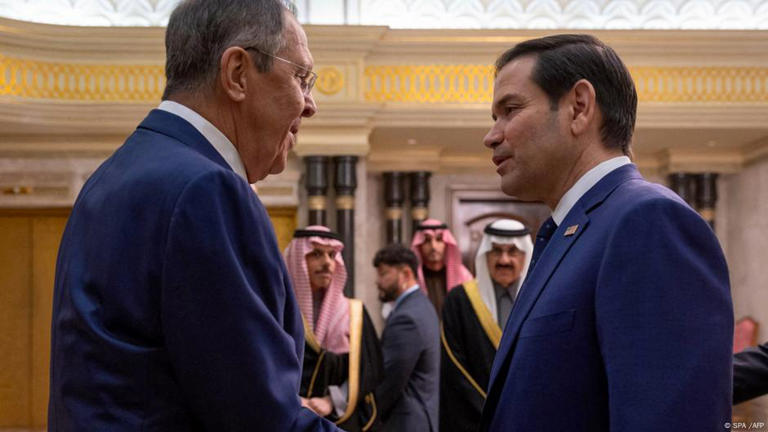
Indicating a thaw in US-Russia relations, Marco Rubio and Sergey Lavrov spoke about further efforts to ending the war in Ukraine as overnight aerial strikes continue.
US-Russia top diplomats Rubio and Lavrov, discuss ‘next steps’ on Ukraine Trump limits Kellogg’s role as special envoy to Ukraine Military meeting set for next week to support Ukraine in the event of a ceasefire with Russia Both Ukraine and Russia report overnight aerial strikes
Here’s the latest regarding Russia’s war in Ukraine on Sunday, March 16.
Russia reiterates demand that Ukraine not join NATO
Moscow will demand guarantees that NATO countries will exclude Ukraine from membership and that Ukraine will remain neutral in any peace agreement, a Russian official said in an interview with the Russian media outlet Izvestia.
“We will demand that ironclad security guarantees become part of this agreement,” Deputy Foreign Minister Alexander Grushko said.
“Part of these guarantees should be Ukraine’s neutral status, the refusal of NATO countries to accept it into the alliance,” he added.
Grushko also reiterated Russia’s opposition to the involvement of peacekeeping forces from NATO member states in Ukraine in any quality.
NATO states sending peacekeepers to Ukraine ‘means war,’ says Medvedev
Former Russian President Dmitry Medvedev has issued a scathing rebuke of a plan by European countries to deploy peacekeepers to Ukraine.
Britain and France have both said they could send peacekeepers to Ukraine as a security guarantee for Kyiv in the event of a ceasefire with Russia.
In a post on X, Medvedev accused French President Emmanuel Macron and British Prime Minister Keir Starmer of “playing dumb.”
“Time and again they are told that peacekeepers must be from non-NATO states,” he wrote.
Deploying peacekeepers from NATO member countries, for Russia, “means war with NATO,” he added.
Russia has repeatedly rejected the idea of soldiers from countries belonging to the NATO alliance being stationed in Ukraine, even if not formally sent as a part of a NATO mission.
Medvedev’s comments came after Macron told French regional newspapers that any peacekeeping force would consist of “a few thousand troops per country.”
He also said the question of whether to station troops in Ukraine was for Kyiv to decide, not Moscow.
Ukraine likely to give up territory under deal with Russia — Trump adviser
Michael Waltz, US President Donald Trump’s national security adviser, suggested that Ukraine would likely have to cede some territory to Russia while also giving up its wish to join the NATO military alliance.
Asked about speculation that a deal might require Ukraine to cede its eastern Donbas region and drop its NATO hopes, Waltz replied: “This is going to be some type of territory-for-future-security guarantees (deal) — the future status of Ukraine.”
“A permanent pathway into NATO, or permanent membership into NATO for Ukraine, is incredibly unlikely,” he said in comments made in an interview with the ABC News broadcaster.
What is Ukraine’s Donbas region?
Ukraine’s eastern Donbas is made up of the Donetsk and Luhansk regions, large swathes of which are controlled by Russian forces. Moscow claims to have annexed both regions in their entirety, alongside Zaporizhzhia and Kherson in the south, and has demanded that Kyiv recognize the annexation as part of any peace deal.
Moscow has long described Ukraine joining NATO as a red line, while Kyiv has ruled out making any territorial concessions.
The United States proposed a 30 cease-fire in the war between Russia and Ukraine after talks in Saudi Arabia earlier this week, with Kyiv accepting the proposal.
However, Russian President Vladimir Putin has not given a clear response to the US proposal, instead listing a number of conditions.
US officials have also strongly hinted that Ukraine will likely have to make some major concessions if a deal is to be reached.
As Europe rearms, will it turn away from Asia?
A few years ago, European Commission President Ursula von der Leyen declared that the EU wanted to “take a more active role in the Indo-Pacific.”
However, the future of this commitment is in doubt, as the United States under President Donald Trump has loudly mused about withdrawing security guarantees, potentially leaving European states to shoulder the burden of an uncertain ceasefire in Ukraine.
DW took a look at EU’s Indo-Pacific strategy: As Europe rearms, will it turn away from Asia?
Zelenskyy appoints new chief of staff
After a series of military setbacks, Ukrainian President Volodymyr Zelenskyy has appointed a new Chief of General Staff, General Andriy Hnatov. He was previously Deputy Chief of the General Staff.
The previous chief of staff, Anatoly Barhylevych, will become the new Inspector General of the Ministry of Defense.
No official reason was given for the need for the changes. However, Ukrainian forces have suffered significant setbacks in their fight against the Russian army in recent weeks, including a retreat in the western Russian region of Kursk.
How much will Trump White House back Ukraine?
US President Donald Trump is currently fighting on many (partly home-made) fronts at the same time: looming trade wars with China and Europe, tariff disputes with neighbors Canada and Mexico, the war in Gaza, plummeting stock markets.
Amid these crises, will the US let Ukraine fall? It seems only a matter of time before it is answered with a “yes.”
Read more here: How much will Trump White House back Ukraine?
Erdogan says he supports Trump’s peace initiatives on Ukraine
Turkish President Recep Tayyip Erdogan told his US counterpart Donald Trump that he stood behind Trump’s initiatives to bring peace to Ukraine, his office said.
According to a statement from the Turkish presidency, Erdogan told Trump in a phone call that he “supported determined and decisive efforts by American President Trump to put an end to the war between Russia and Ukraine.”
Erdogan said he backed “a just and durable peace since the start of the war and will continue to do so,” the statement said.
Since Russia launched its full-scale invasion of Ukraine three years ago, Turkey, a NATO member, has twice hosted direct talks aimed at ending the conflict, while seeking to retain good relations with both Kyiv and Moscow.
While Turkey has condemned Russia’s invasion and has provided Kyiv with military aid, it has not imposed sanctions on Russia.
Continued aerial attacks show Russia does not want to end the war, says Zelenskyy
Ukraine’s PresidentVolodymyr Zelenskyy has said the ongoing barrage of Russian airstrikes on Ukrainian cities shows that Moscow is not interested in ending the fighting in his country.
“Those who want the war to end as soon as possible do not act this way,” Zelenskyy wrote on the platform X, an allusion to recent comments by Russian President Vladimir Putin that seemed to suggest he supported the idea of a ceasefire.
Zelenskyy said that Russian forces had ” launched over 1,020 attack drones, nearly 1,360 guided aerial bombs, and more than 10 missiles of various types” over the past week.
He called on Ukraine’s international allies to continue providing air-defense systems and urged Europe and the US to exert unified pressure on Russia to end the war and work toward a just, lasting peace.
“Decisive measures are needed, including sanctions that must be not only maintained but also continuously strengthened,” he added.
Russia launched a full-scale invasion of neighboring Ukraine in February 2022 against which Kyiv’s forces have been fighting ever since with considerable assistance from the West.
Finnish President Stubb calls chances of Putin’s agreeing to ceasefire ‘abysmal’
Finnish President Alexander Stubb has said there is extremely little chance of Russian President Vladimir Putin agreeing to a ceasefire in Ukraine, calling the likelihood of his doing so “abysmal.”
“Putin doesn’t want peace,” Stubb said during an interview with British broadcaster BBC aired on Sunday.
He said Putin had not changed his long-held view that Ukraine should “cease to exist.”
According to Stubb, imposing more sanctions on Moscow, using frozen Russian assets to purchase military equipment for Kyiv and “militarizing Ukraine to the teeth” were the best ways to end the Russian invasion.
Finland shares a 1,340-kilometer (833-mile) border with Russia and became a NATO member almost two years ago in the face of Moscow’s aggression against Ukraine.
Turkey condemns Russian annexation of Crimea
Turkey again condemned Russia’s annexation of Crimea from Ukraine, saying it is a violation of international law.
“We reiterate that [Turkey] does not recognize the de facto situation in Crimea, which constitutes a violation of international law, and that we support the territorial integrity and sovereignty of Ukraine,” the Turkish Foreign Ministry said.
It released the statement to mark the anniversary of an internationally panned referendum held by Russia in Crimea on March 16, 2014.
Despite the lack of international recognition, the peninsula’s majority ethnic Russian population voted in favor of joining Russia, and Moscow took control of Crimea.
“We will continue to closely monitor developments in Crimea, particularly the situation of the Crimean Tatar Turks, the indigenous people of the peninsula, and we will keep them on the agenda of the international community.”
Crimean Tatars, a Muslim ethnic minority indigenous to Crimea, have been resisting Russian occupation, with some of them fighting in the Ukrainian armed forces.
Crimean Tatar belongs to the Turkic language family, making it a close relative of Turkish.
Steve Witkoff says he expects Trump-Putin talks this week
Donald Trump’s envoy Steve Witkoff has said he expects the US president to hold “really good and positive” talks this week with his Russian counterpart, Vladimir Putin, about ending the war in Ukraine.
“I expect that there will be a call with both presidents this week, and we’re also continuing to engage and have conversation with the Ukrainians,” he told US broadcaster CNN.
Witkoff himself held talks with Putin in Moscow on Thursday, describing them as “positive” and saying he was optimistic that there would be real progress on ending the conflict.
Witkoff said that although the situation was very complicated, “We’re bridging the gap between two sides.”
Russia evacuates hundreds of people from Kursk
Russia announced it has evacuated 371 civilians from areas it regained from Ukrainian forces in the Kursk region.
Kursk is part of western Russia that borders the Sumy region of Ukraine. The Russian military has regained control over several towns in Russia’s Kursk region, which Ukrainian forces had held after a surprise incursion into Russian territory last August.
However, fierce fighting between Russian and Ukrainian troops is ongoing.
Kursk region governor Alexander Khinshtein wrote on the Telegram messaging app, “371 people have been moved, including 14 children,” from the region since Wednesday.
He added 220 of the civilians had been placed in temporary accommodation, while the rest were staying with relatives.
Russia, Ukraine trade strikes; Injuries reported in Belgorod
Both Russia and Ukraine launched aerial strikes on one another from Saturday into Sunday.
Ukraine’s air defense units shot down 47 of 90 drones launched by Russia in an overnight attack, the air force said.
Damage was reported in four regions, but the air force didn’t provide details.
Separately, Russia’s defense ministry said its air defense destroyed 31 Ukrainian drones over Russian territory, including 16 in Voronezh, nine in Belgorod, and the rest in Rostov and Kursk regions.
In Belgorod, three people were injured in the attack, including a 7-year-old, according to regional Governor Vyacheslav Gladkov.
Trump narrows responsibilities of special envoy Kellogg to Ukraine
After reported complaints from Russia, US President Donald Trump has narrowed the role of Keith Kellogg, who will now serve solely as his special envoy on Ukraine.
Kellogg has previously been described as a special envoy for Ukraine and Russia.
“I am pleased to inform you that General Keith Kellogg has been appointed Special Envoy to Ukraine,” Trump wrote on his Truth Social platform.
A former national security adviser during Trump’s first term, Kellogg was excluded from recent talks in Saudi Arabia on ending the war.
He was also not involved in the talks with Russia that followed, with US Special Envoy Steve Witkoff visiting Moscow instead to discuss a possible ceasefire.
US broadcaster NBC, citing a senior Russian official, reported that the Kremlin had put pressure on Trump because President Vladimir Putin considered Kellogg pro-Ukraine.
Kremlin spokesman Dmitry Peskov dismissed the report, telling reporters on Friday Moscow has no intention of interfering.
Rubio and Lavrov discuss ‘next steps’ on Ukraine
US Secretary of State Marco Rubio and Russia’s Foreign Minister Sergey Lavrov spoke on Saturday about ending the war in Ukraine.
The US State Department said the top diplomats “discussed next steps” after the two countries’ meetings in Saudi Arabia and “agreed to continue working towards restoring communication between the United States and Russia.”
Despite recent tensions between US President Donald Trump and Ukrainian President Volodymyr Zelenskyy, Kyiv has agreed to a US-brokered 30-day ceasefire if Moscow halts its attacks, but Russian President Vladimir Putin has set conditions beyond the US-Ukraine agreement.
The State Department gave no details on when the next round of US-Russia talks would begin.
Rubio also updated Lavrov on military activity in the Middle East, where US forces carried out strikes against Houthi rebels Yemen.






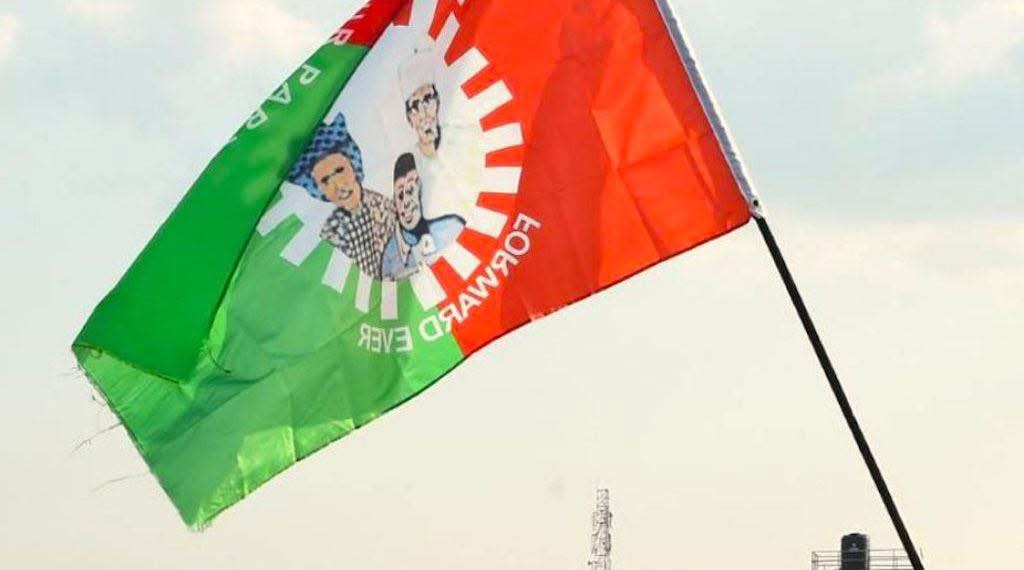
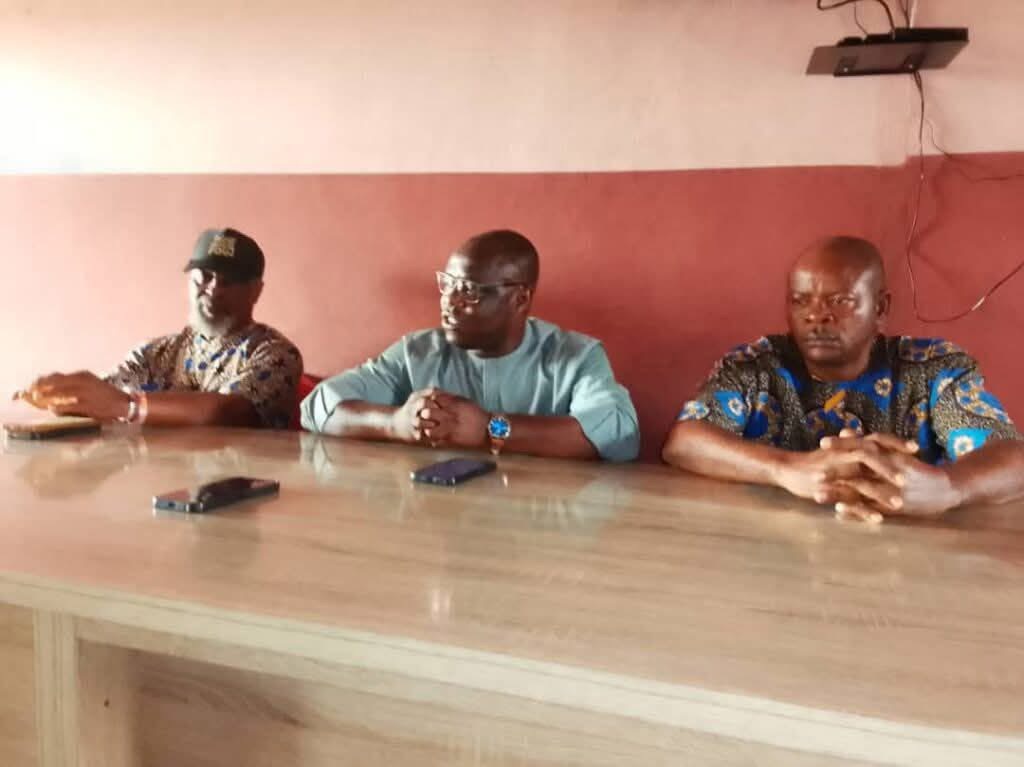
The Labour Party in Imo State is engulfed in a bitter leadership clash as the Callistus Ihejiagwa-led faction warns members not to participate in any party activities not sanctioned by his leadership.
The warning comes in response to claims that Sen. Nenadi Usman and Darlington Nwokocha’s faction plans to hold Ward, LGA, and State congresses starting March 26, 2026—moves Ihejiagwa calls illegal and unconstitutional.
Ihejiagwa insists that the Independent National Electoral Commission (INEC) has already refused to dissolve existing party structures, meaning any attempt to replace sitting executives is null and void.
He dismissed arguments that INEC officials attending Usman/Nwokocha’s National Executive Council meeting on March 17 would confer legality, stressing that presence does not equal approval.
March 20, 2026
The All Progressives Grand Alliance in Abia State has called on the Senate to declare the seat of the Senator representing Abia South, Enyinnaya Abaribe, vacant following his resignation from the party.
The party made the call on Thursday during a press briefing in Umuahia, where its leadership, led by a former member of the Abia State House of Assembly, Obinna Ichita, insisted that Abaribe voluntarily resigned from APGA and was not sacked, contrary to his claim at the Senate.
Ichita argued that Abaribe’s exit from the party that sponsored his election violates constitutional provisions, stressing that there was no leadership crisis within APGA to justify his defection.
“The senator resigned in his ward. He did so voluntarily, which is his right. However, if you leave the party that gave you the platform for another party when there is no leadership crisis, that seat must be declared vacant,” he said.
He further alleged that Abaribe misrepresented the circumstances of his exit by claiming he was sacked.
“The party has documentary evidence to show that Senator Abaribe was not sacked. He resigned three months after disciplinary measures were taken against him over actions the court did not consider appropriate,” Ichita added.
According to him, the mandate belongs to the people and the party, not the individual office holder.
“They gave him the mandate on the platform of APGA, not any other party. There was nothing like ADC when he was elected. He cannot take the mandate elsewhere without consulting the people who gave it to him,” he said.
Ichita maintained that the constitution is clear on defection, noting that any lawmaker who leaves a party without a valid internal crisis must vacate the seat.
“My message to Senator Abaribe is to honourably vacate the seat instead of waiting for the National Assembly to declare it vacant. That would amount to national embarrassment,” he added.
Also speaking, the APGA State Chairman, Sunday Onukwubiri, and the party’s Public Relations Officer, Chukwuemeka Nwokoro, reiterated that Abaribe had distanced himself from the party’s activities at various levels in the state.
They insisted that he neither holds dual membership nor was he expelled, maintaining that his resignation was voluntary.
“He was invited by the party but failed to appear and was subsequently suspended in line with the party’s constitution. Three months later, he resigned,” the officials said.
Reacting, Abaribe defended his position, insisting that he acted within his constitutional rights.
“When you are no longer a member of a party by virtue of being sent away, you have the fundamental right of association to join another party,” he said.
He argued that his indefinite suspension by APGA effectively amounted to expulsion.
“If a party places you on indefinite suspension for more than six months, what does that mean? It means you have been told to go elsewhere, and that is exactly what I did,” he stated.
The senator added that the proper constitutional procedure for removing him from office would be through a recall process by his constituents.
“If the people who elected me no longer want me, the right thing to do is to initiate a recall. That is the position of the law,” he said.
Politics
Tinubu’s Reforms May Be Challenging, but They’ve Boosted Nigeria’s Global Respect — Information Minister Mohammed Idris
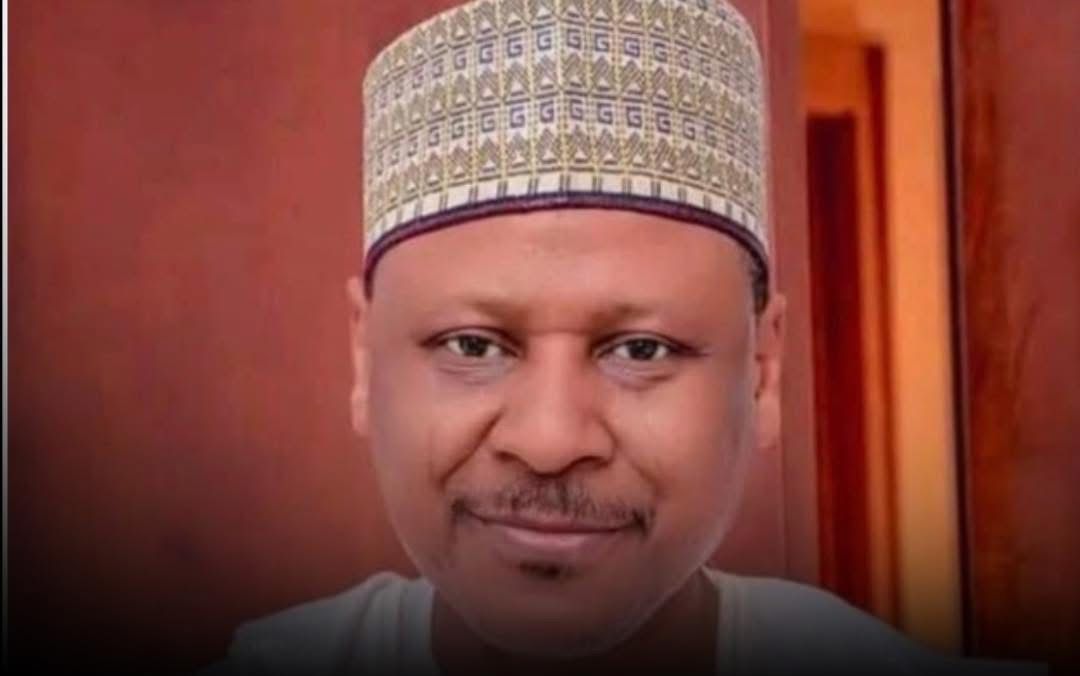
The Minister of Information and National Orientation, Mohammed Idris, has stated that Nigeria is receiving greater respect internationally under the leadership of President Bola Tinubu.
Speaking on Friday after attending Jumaat prayers at Yahaya Road Mosque in Kaduna, Mr Idris said, “Nigeria is indeed taking its rightful place. The country is respected more than ever before on the international scene. The reforms that the president has instituted, as challenging as they are, are meant for the benefit of all Nigerians.”
He urged Nigerians to stay calm as the government continues its efforts to restore security across the nation. Referring to the recent multiple b%mb att@cks in Maiduguri, Borno State, the minister assured that such incidents would not be allowed to recur.
“Indeed, our country is facing challenges, and the government is working tirelessly to ensure security throughout Nigeria. We have seen what has happened, particularly in Borno State. We pray to Allah to make this the last one, as the government is committed to preventing any repetition of such incidents,” he said.
Mr Idris also stressed the importance of citizens being prayerful and working together to address the country’s challenges. He encouraged both Muslims and non-Muslims to unite in the interest of Nigeria’s growth and development.
“This is a time for reflection for all Nigerians. We pray that everyone will consider this moment and recognize the need for unity, progress, and national development. All hands must be on deck for the unity of the country. As we earn respect internationally, we also hope and pray that unity will strengthen within our nation,” he added.

IMO STATE LABOUR PARTY DESCENDS INTO FACTIONAL WAR

EFCC evicts Malami from Abuja home amid forfeiture dispute

Fuel price hike: Gov Makinde announces N10,000 transport support for workers

-
Business1 year ago
US court acquits Air Peace boss, slams Mayfield $4000 fine
-

 Trending1 year ago
NYA demands release of ‘abducted’ Imo chairman, preaches good governance
-

 Politics1 year ago
Mexico’s new president causes concern just weeks before the US elections
-

 Politics1 year ago
Putin invites 20 world leaders
-

 Politics1 year ago
Russia bans imports of agro-products from Kazakhstan after refusal to join BRICS
-
Entertainment1 year ago
Bobrisky falls ill in police custody, rushed to hospital
-
Entertainment1 year ago
Bobrisky transferred from Immigration to FCID, spends night behind bars
-
Education2 years ago
GOVERNOR FUBARA APPOINTS COUNCIL MEMBERS FOR KEN SARO-WIWA POLYTECHNIC BORI