
Politics
Zelensky dampens hopes Trump could strike peace deal with Putin

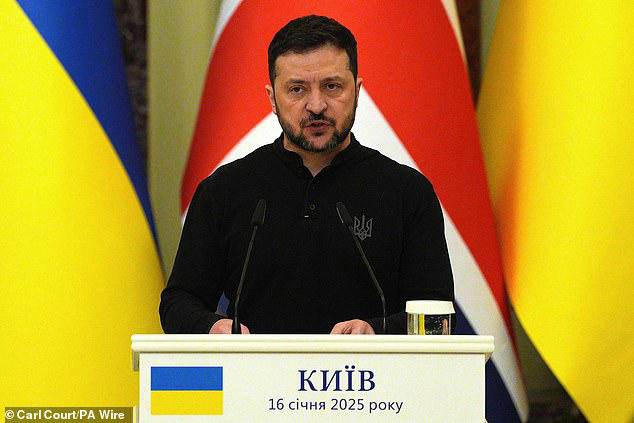
Volodymyr Zelensky has insisted that Ukraine will never recognise occupied Ukrainian territories as being part of Russia, even if pressured to do so by allies, dampening hopes that Donald Trump may be able to strike a peace deal.
‘No matter what anyone wants, even if all the allies in the world unite, we will never recognise the occupied territories [as part of Russia]. This is impossible,’ the Ukrainian president emphasised.
‘We will not legally recognise them. For us, they will always remain occupied territories until we liberate them.’
Trump, who took office for a second term on Monday and was last in power before Russia launched its full-scale invasion of Ukraine, has repeatedly said he could end the war swiftly, without specifying how.
His newly-appointed Secretary of State Marco Rubio said on Tuesday that ending the war was a priority for the president, but would only be possible if both sides make significant concessions.
‘Anytime you bring an end to a conflict between two sides, neither of whom can achieve their maximum goals, each side is going to have to give up something,’ he told CNN, adding that ultimately the decision would be down to the Ukrainians and Russians.
It comes after Russian Deputy Foreign Minister Sergei Ryabkov said today that Moscow sees a small window of opportunity to forge agreements with the new US administration.
‘We cannot say anything today about the degree of the incoming administration’s capacity to negotiate, but still, compared to the hopelessness in every aspect of the previous White House chief (Joe Biden), there is a window of opportunity today, albeit a small one,’ Ryabkov said, according to Interfax.
Volodymyr Zelensky has insisted that Ukraine will never recognise occupied Ukrainian territories as being part of Russia
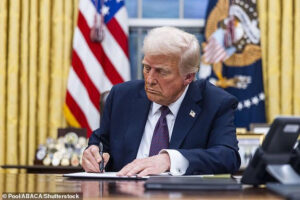
Donald Trump, who took office for a second term on Monday, has said he could end the war swiftly, without specifying how
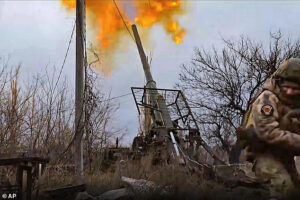
A Russian soldier fires a self-propelled gun
‘It’s therefore important to understand with what and whom we will have to deal, how best to build relations with Washington, how best to maximise opportunities and minimise risks,’ he said, speaking at the Institute for US and Canadian Studies, a think-tank in Moscow.
Trump warned on Tuesday that he would likely impose more sanctions on Russia if President Vladimir Putin refused to negotiate to end the nearly three-year-old conflict.
He gave no details on the possible additional sanctions on Russia, which is already under significant Western sanctions over the war.
The new president also issued a blow to the Kremlin on Tuesday, accusing Putin of ‘destroying Russia‘ with his failed war as he urged him to ‘make a deal’ to end the conflict.
‘He has to make a deal. I think he is destroying Russia by not making a deal,’ Trump said in a stark warning to the dictator.
‘I think Russia is going to be in big trouble,’ he added, saying that Putin ‘can’t be thrilled that he’s not doing so well.’
‘I mean, he works hard, but most people thought the war would be over in about a week, and now it’s been three years, right?’
The Russian economy was sinking, he went on, with inflation a major threat.
Putin, 72, earlier said he was ready to engage with Trump but still insisted on an outcome favouring Russia.
‘We are open to dialogue with the new US administration on the Ukrainian conflict. The most important thing here is to eliminate the root causes of the crisis,’ said the Russian ruler. An initial phone call is expected by Moscow to take place soon.
Trump said Zelensky was ready for a deal to halt the debilitating conflict, and the 78-year-old US leader said he planned to meet Putin with whom he had a ‘great relationship’ during his first term.
‘We’re going to try to do it as quickly as possible. You know, the war between Russia and Ukraine should never have started.’
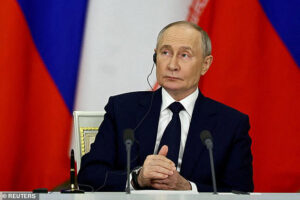
Trump warned on Tuesday that he would likely impose more sanctions on Russia if President Vladimir Putin refused to negotiate to end the nearly three-year-old conflict
After months of Ukraine occupying parts of Russia’s Kursk region as it aims to improve its position in the event of talks, Zelensky stated that any dialogue could only go ahead with Kyiv in a position of strength.
‘Putin cannot be treated as legitimate in this situation. He has violated everything. He must understand his transgression,’ the Ukrainian president said today, adding that if Putin was ‘approached as an equal – that would be a loss for Ukraine.’
But, he said, his government’s top priority was to find a way to halt the war, which has claimed the lives of at least 43,000 Ukrainian soldiers, according to figures released by Ukraine in December.
‘We must find all possible ways to end the hot phase of the war. This is the number one issue,’ Zelensky said.
‘There can be many talks, but the main goal is to stop the active phase. This is the first guarantee of security.’
Russia has occupied Crimea since its 2014 invasion of the territory. Months later it took large parts of the Donbas region, launching a was under the guise of a separatist uprising.
Since the full-scale invasion in 2022, Russian forces have controlled large swathes of southern and eastern Ukraine.
Meanwhile, since a surprise attack in August, Kyiv’s forces occupy around 600 sq km of Russian territory.


Politics
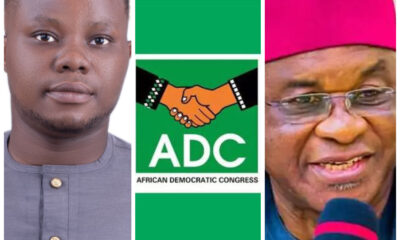
“ADC is a Holy Party, Cannot be used to Scam Nigerians Again” – Hon Success Opara tells David Mark
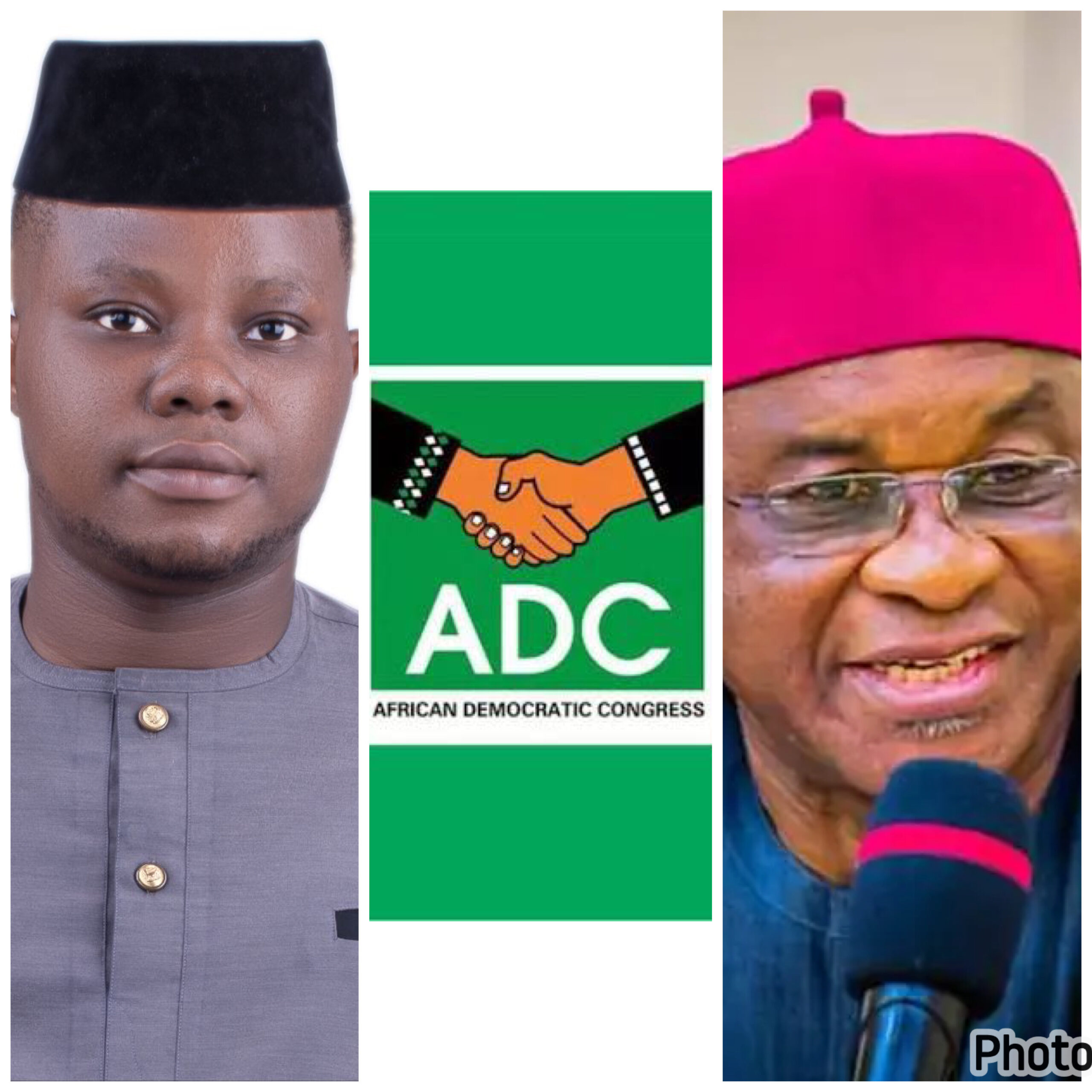
ADC Party in Turmoil: Hon Success Opara Slams Leadership, Warns Against Scamming Nigerians
Abuja, Nigeria – The African Democratic Congress (ADC) is facing internal strife as Hon Success Opara, a prominent party official, has warned against attempts to use the party to deceive Nigerians. Opara specifically criticized the leadership of David Mark, stating that the party cannot be used to scam citizens again.
“ADC holy Party cannot be used to scam Nigerians again,” Opara said, emphasizing that those forming coalitions are hindering the party’s growth and denying youths opportunities to thrive.
“Those who are forming coalition don’t want to give the youths the chance to strive in the party,” she added.
Opara’s statement highlights the deepening divisions within the ADC, with concerns over leadership and the party’s direction.
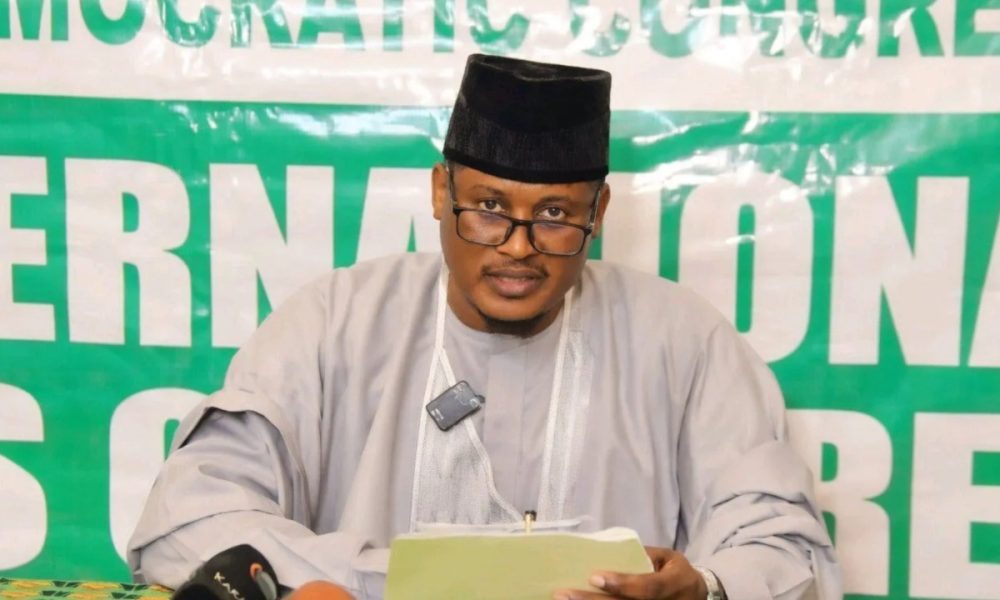
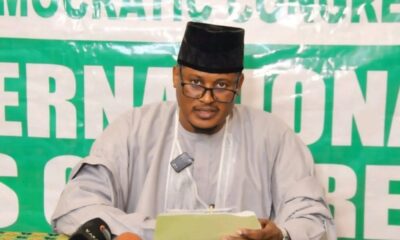
The factional National Chairman of the African Democratic Congress (ADC), Nafiu Bala Gombe, has announced that the party under his leadership will bar individuals above the age of 55 from contesting for political positions.
Gombe made the disclosure during an interview with BBC Hausa, where he outlined a vision centred on generational change and greater youth participation in politics.
“The African Democratic Congress (ADC) is a party that belongs to all Nigerians. What we are doing now is to ensure the party moves forward properly.
“We have decided that we will give the youths a real chance. The time has come for young people to take the lead in politics.
“If you are over 55 years old, you are not going to contest for positions in the ADC under our leadership.
“We want to bring in fresh blood, new ideas, and energy from the youth. Nigeria’s future depends on the young generation.
“The old ways have not worked well for the country. We need to open the door wide for youths to participate fully as candidates, leaders, and decision-makers,” he said.
Politics
“Jail David Mark” as ADC’s Internal Crisis Deepens: Hon Success Opara Threatens Action Against David Mark
Abuja, Nigeria – Tensions within the African Democratic Congress (ADC) reached a boiling point as Hon Success Opara, a high-ranking party official, warned that she would not hesitate to send former Senate President David Mark to jail if she were the judge handling the party’s internal litigation cases.
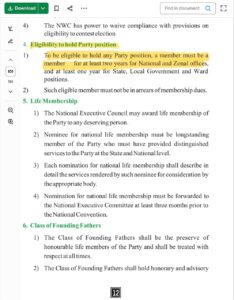
Opara’s statement comes in response to allegations that Mark and the party’s National Executive Committee (NEC) failed to adhere to the ADC’s constitution.
“I’ll jail David Mark if I’m the Judge handling the ADC party internal litigation cases, citing how David Mark and the NEC were not able to adhere to what is written in the constitution of the ADC,” Opara said.
The internal strife has led to a flurry of court cases, with various factions vying for control of the party. Opara’s remarks underscore the deepening divisions within the ADC and raise questions about the party’s future.

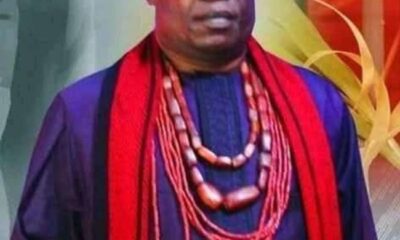
HRH Ekwueme of Ochia Kingdom Iynched & kiIIed in Imo.

“ADC is a Holy Party, Cannot be used to Scam Nigerians Again” – Hon Success Opara tells David Mark

2027: Bala declares aspirants over 55 years disqualified in ADC

-
Business1 year ago
US court acquits Air Peace boss, slams Mayfield $4000 fine
-

 Trending1 year ago
NYA demands release of ‘abducted’ Imo chairman, preaches good governance
-

 Politics1 year ago
Mexico’s new president causes concern just weeks before the US elections
-

 Politics1 year ago
Putin invites 20 world leaders
-

 Politics1 year ago
Russia bans imports of agro-products from Kazakhstan after refusal to join BRICS
-
Entertainment1 year ago
Bobrisky falls ill in police custody, rushed to hospital
-
Entertainment1 year ago
Bobrisky transferred from Immigration to FCID, spends night behind bars
-
Education2 years ago
GOVERNOR FUBARA APPOINTS COUNCIL MEMBERS FOR KEN SARO-WIWA POLYTECHNIC BORI