By Julian Chijioke, PhD
For years, medical tourism has remained one of the difficult realities of Nigeria’s healthcare system. Patients with the financial means to travel have often sought treatment abroad, not necessarily because their conditions cannot be treated in Nigeria, but because of concerns about access to specialised equipment, medical expertise and the quality of care available at home. For families who cannot afford international treatment, the situation can be even more difficult. They are left to navigate the options available to them, sometimes under considerable financial and emotional pressure. This is why the ongoing transformation of the health sector under Governor Hope Uzodimma deserves attention. In Imo State, the effort to strengthen local healthcare capacity is beginning to offer a more practical alternative to the search for treatment outside the country.
At the centre of this development is the Imo Specialist Hospital at Umuguma, Owerri, where substantial infrastructural improvements and the introduction of advanced medical technology are changing the conversation about what public healthcare facilities in the state can offer. The development of the Imo Robotics and Oncology Centre represents an important step in this direction. Rather than limiting the ambition of the hospital to routine medical services, the investment is aimed at expanding its capacity to provide specialised diagnosis and treatment, including procedures that have traditionally driven some patients to seek medical attention abroad. The objective is straightforward: to make more advanced medical services available within Imo State, supported by appropriate facilities and qualified professionals.
A major milestone came on August 21, 2026, when the centre recorded its first robotic-assisted surgery. The procedure, led by Professor Kingsley Ekwueme, a UK-based consultant robotic and laparoscopic surgeon, demonstrated that the technology was being put to clinical use. This was more than an announcement about newly acquired equipment. It was evidence that the state’s investment had reached an important stage, with a specialist medical team using the facility to perform an advanced surgical procedure. While one successful operation cannot, on its own, establish that medical tourism has ended, it demonstrates the kind of local capacity required to reduce the need for overseas treatment in suitable cases.
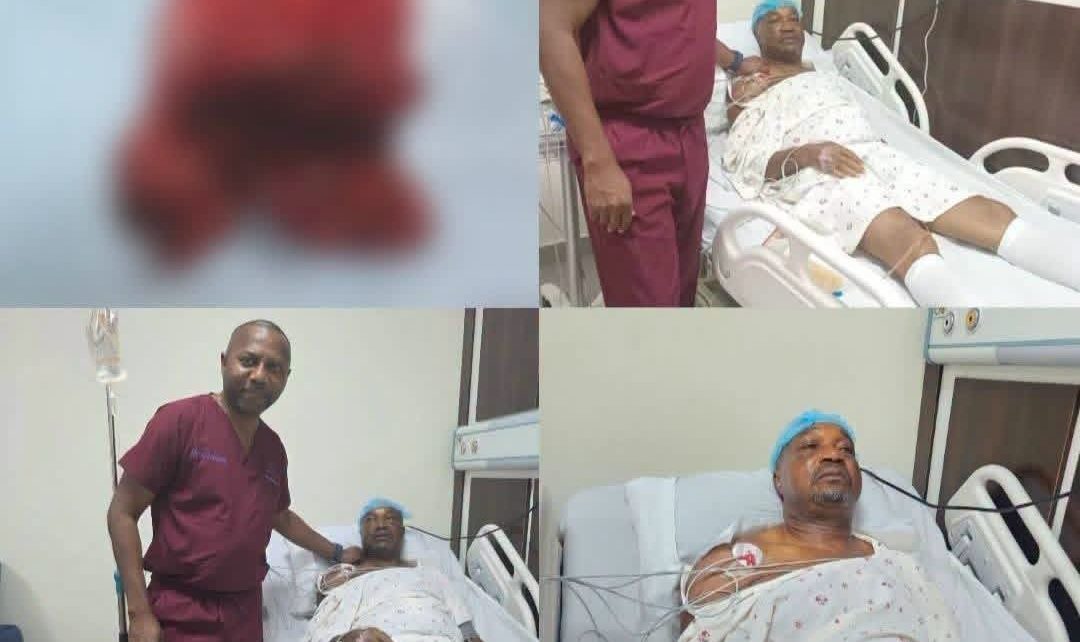
It is against this background that the reported successful prostate surgery involving the Commissioner for Trade, Commerce and Investment, Barr. Rex C. Anunobi, becomes relevant. His reported decision to undergo treatment at the Imo Robotics and Oncology Centre provides a human example of the growing role of the facility. The significance of the story is not simply that a serving commissioner received treatment in a state-owned hospital. It is that the hospital is increasingly part of the conversation about where patients can seek specialist care. When government officials themselves use public healthcare facilities, their experiences can contribute to public confidence, provided that the quality of care, clinical outcomes and patient experiences continue to justify that confidence.
Governor Uzodimma’s healthcare investments must therefore be understood as part of a wider effort to build a system in which patients have more options within their own state. The development at Umuguma provides an important foundation, while the long-term success of the project will depend on sustaining these elements beyond this present administration.
A major question for any public healthcare investment is whether ordinary residents can benefit from it. This is where IMO CARE, the state’s health insurance initiative, becomes an important part of the conversation. The programme is intended to improve access to healthcare through coverage arrangements and participating facilities, with published benefits that include consultations, essential medicines, maternity services and surgeries, subject to the applicable terms. The implementation of this scheme alongside the development of specialist facilities, health insurance can help reduce the financial barriers that prevent families from seeking timely medical attention.
This connection between specialist infrastructure and healthcare financing is crucial. A state may possess advanced medical equipment, but its social value is limited if most residents cannot afford the services it provides. Equally, an insurance programme can offer little reassurance if the necessary medical expertise and facilities are unavailable locally. Bringing these two elements together can create a stronger foundation for a healthcare system that is both capable and accessible.
There is also an economic dimension to the investment. When patients obtain appropriate treatment within Nigeria rather than travelling abroad, some of the money that would otherwise be spent on foreign hospital bills, flights and accommodation can remain within the local and national economy. Local specialist services can also create opportunities for professional development, encourage collaboration with experienced medical practitioners and support the training of younger Nigerian doctors. These benefits will grow as local facilities demonstrate dependable results and earn the confidence of patients through the quality of care they provide.
The reported surgery involving Commissioner Anunobi brings a personal dimension to this larger story, but the central issue remains the direction of healthcare development under Governor Uzodimma. The robotic-assisted procedure at Umuguma has shown that advanced surgery can be performed within the state. The expansion of specialist services creates the possibility of treating more conditions locally, while IMO CARE offers a pathway towards improving access for eligible residents. Together, these developments point towards a future in which fewer patients may need to look beyond Imo State for certain forms of medical treatment.
It would be premature to declare medical tourism ended, but the future is looking so beautiful from here. That expected outcome will depend on the range of procedures available locally, the consistent quality of care, affordability and the confidence patients develop over time. Let no one in the nearest future bastardize this noble achievement. Every specialised service successfully delivered at home expands the choices available to patients and strengthens the case for investing in Nigeria’s healthcare institutions.
Ultimately, the real achievement will be measured in lives improved, families spared avoidable hardship and patients who can receive appropriate treatment closer to home. Governor Uzodimma’s investment has opened an important chapter in that effort. Sustaining the progress and extending its benefits to ordinary Ndi Imo will determine how significant that chapter becomes.
LET NO ONE USE REGGAE TO SPOIL GOVERNOR UZODIMMA’S BLUES!