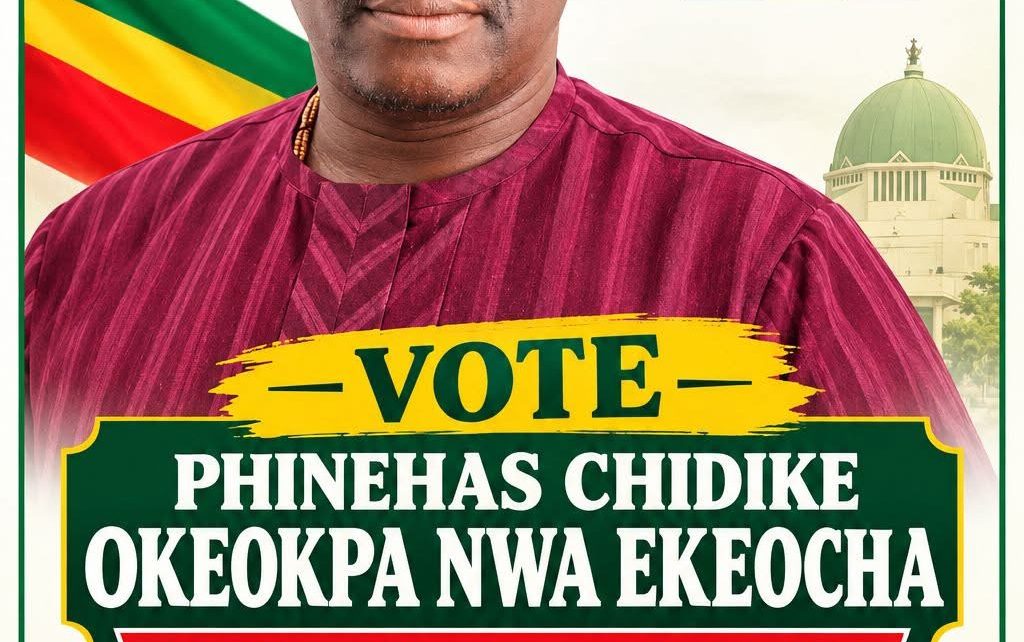
By Phinehas Chidike (Okeokpa) Nwa Ekeocha
Since Nigeria’s return to democratic governance in 1999, Owerri Federal Constituency has participated in nearly three decades of uninterrupted democratic representation at the Federal House of Representatives. Successive representatives have occupied this important legislative position, but a fundamental question remains: beyond elections, political promises, party celebrations and periodic empowerment programmes, what measurable benefits can the ordinary people of Owerri Federal Constituency identify from these years of representation?
Where are the projects? Where are the development interventions? Where is the evidence of equitable federal presence across our three local government areas?
This is not an attempt to witch-hunt anyone, discredit past administrations or make unsubstantiated allegations. It is a legitimate demand for transparency, historical documentation, responsible representation and public accountability.
Our past and present representatives deserve the opportunity to explain their records, while the people deserve the right to ask questions and receive verifiable answers.
Public office is a responsibility, not a personal entitlement. Representation must come with accountability.
Against this background, I present 28 important questions that Owerri Federal Constituency must begin to ask.
A. CONSTITUENCY PROJECTS AND PUBLIC FUNDS
1. How many federal constituency projects have been approved, appropriated or facilitated for Owerri Federal Constituency since 1999?
2. What is the cumulative financial value of federal appropriations, constituency projects and development interventions attracted to our constituency during this period?
3. Where is the comprehensive public record of these projects, including their locations, approved budgets, contractors, implementing agencies and implementation status?
4. How many of these projects have been completed, abandoned, duplicated, delayed or never commenced?
5. What amounts have been appropriated and expended on constituency development interventions, and what verifiable evidence exists to demonstrate that the people received the intended benefits?
6. Why have successive representatives not institutionalised regular public accountability reports detailing the projects facilitated and development interventions secured during their respective tenures?
B. HEALTHCARE AND SOCIAL INFRASTRUCTURE
7. Why does Owerri Federal Constituency still lack adequately distributed federal healthcare institutions serving its three local government areas?
8. What concrete efforts have successive representatives made to attract additional federal hospitals, medical facilities and healthcare interventions to our constituency?
9. Why do several rural communities continue to struggle with inadequate healthcare facilities, medical equipment, qualified personnel and accessible medical services?
10. What federal interventions have been attracted to address erosion, flooding, environmental degradation and the deteriorating road infrastructure confronting our communities?
11. How many federal road projects have been approved or facilitated for Owerri Federal Constituency since 1999, and what is the present implementation status of each?
C. EMPLOYMENT AND ECONOMIC EMPOWERMENT
12. How many federal employment opportunities have been facilitated for qualified residents of Owerri Federal Constituency over the years?
13. What is our constituency’s level of representation in federal appointments, agencies, commissions and parastatals?
14. What transparent and equitable criteria guide the selection and appointment of legislative aides, constituency coordinators and other administrative personnel representing the interests of our people?
15. What sustainable vocational training, technical education and skills development institutions have been attracted to our three local government areas?
16. How many youths, women, artisans, entrepreneurs and small business owners have benefited from verifiable federal economic empowerment programmes, and what measurable outcomes have these programmes produced?
D. EQUITY, INCLUSION AND EQUAL OPPORTUNITIES
17. What deliberate provisions have been made to accommodate persons living with disabilities, including persons who are deaf or hard of hearing, within constituency development programmes and empowerment initiatives?
18. How has the Muslim community in Owerri Federal Constituency been included in federal development opportunities, public appointments and other legitimate avenues of participation?
19. What practical measures have been adopted to ensure equitable distribution of federal constituency projects and development interventions among Owerri Municipal, Owerri North and Owerri West?
20. What specific development programmes have been designed to address the needs of vulnerable families, widows, disadvantaged communities and economically marginalised residents?
21. How many women and young people have been given meaningful opportunities to participate in constituency administration, public appointments, development initiatives and decision-making processes?
E. CULTURAL HERITAGE AND INSTITUTIONAL DEVELOPMENT
22. What federal support and institutional interventions have been attracted towards documenting, preserving and promoting the history and cultural heritage of Owerri Federal Constituency?
23. Why have we not established adequately equipped vocational and technical training centres across our three local government areas to promote practical skills acquisition and sustainable employment?
24. What deliberate efforts have been made to attract federal educational institutions, research centres, technical institutes and skills acquisition facilities to Owerri Federal Constituency?
F. LEGISLATIVE ACCOUNTABILITY AND THE FUTURE
25. How many bills, motions, resolutions and legislative interventions sponsored or supported by successive representatives have directly addressed the developmental needs and challenges of Owerri Federal Constituency?
26. How many oversight visits have been conducted to monitor federal projects and government interventions within our constituency, and what were the findings and subsequent actions?
27. Why should the people not have access to an annual constituency performance report detailing legislative activities, appropriations, federal interventions, employment opportunities, project locations and implementation outcomes?
28. What legacy of measurable development, institutional presence and improved living standards will successive representatives leave behind for the next generation of Owerri Federal Constituency?
—
THE PEOPLE DESERVE ANSWERS, NOT EXCUSES.
These 28 questions are not allegations of wrongdoing. They are legitimate questions of public interest that deserve clear, documented and verifiable answers.
We must begin a comprehensive reconstruction of the development history of Owerri Federal Constituency from 1999 to date.
We must establish what was appropriated for us, what projects were approved, what was implemented, what was abandoned, what communities benefited and what development opportunities remain outstanding.
Our people should not have to rely on political speeches, social media celebrations or unverified claims to understand what has been done in their name.
I therefore propose the establishment of a Constituency Public Accountability and Development Register, containing a comprehensive record of federal constituency projects, appropriations, contractors, project locations, implementation status, employment interventions and other development initiatives facilitated for our constituency.
Going forward, every representative should embrace a culture of periodic public reporting. An annual constituency performance report should become an established standard of legislative accountability.
Representation must not be measured solely by political popularity, roadside celebrations or occasional distributions of relief materials. It must equally be assessed through legislative contributions, effective oversight, access to opportunities, institutional development, equitable representation and measurable improvements in the quality of life of our people.
I believe Owerri Federal Constituency deserves an accountable system where public resources can be traced, projects can be independently verified, opportunities can be equitably distributed and every community has the right to demand answers.
This initiative is also a call for historical documentation. We must preserve the records of our political and developmental journey so that future generations will know where we came from, what we achieved and what we failed to accomplish.
The time has come to move beyond political sentiments and embrace a new standard of public accountability.
Twenty-seven years of democratic representation. Twenty-eight questions. One constituency. One collective responsibility.
Let us account for the past, correct the present and secure a more inclusive and prosperous future.
GOD BLESS OWERRI FEDERAL CONSTITUENCY.
GOD BLESS IMO STATE.
GOD BLESS THE FEDERAL REPUBLIC OF NIGERIA.
PHINEHAS CHIDIKE (OKEOKPA) NWA EKEOCHA
YPP Candidate, House of Representatives
Owerri Federal Constituency
2027 General Elections.