
Politics
2027: Concerned S’East political leaders scrutinize Peter Obi’s single term proposal

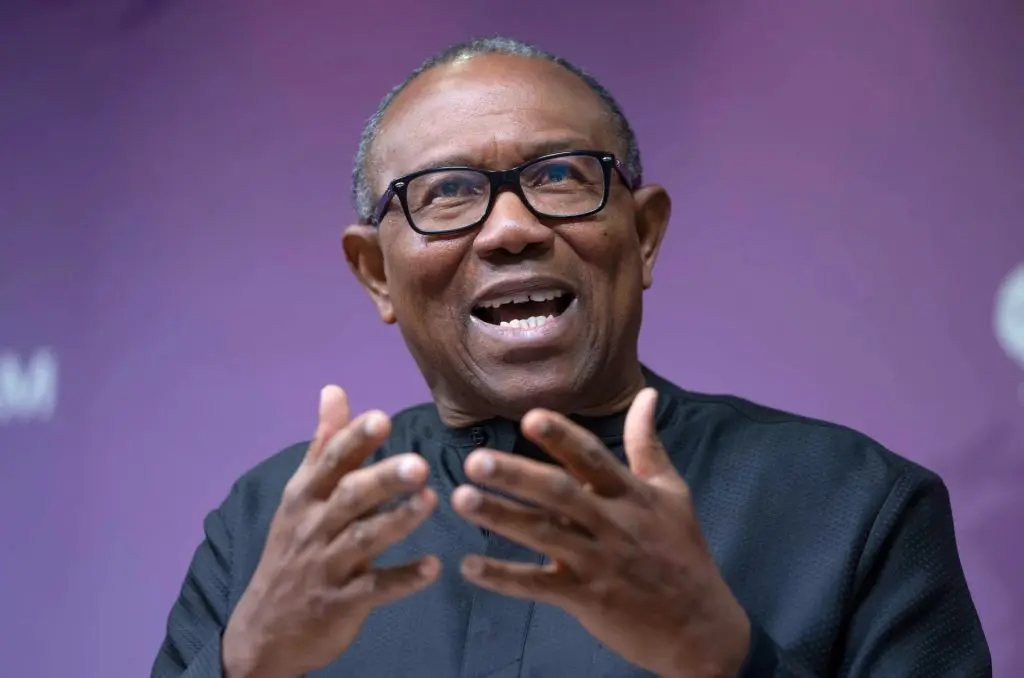
With Nigerians approaching the 2027 presidential election, some stakeholders in the South-East have continued to scrutinize the single-term proposal by the Labour Party, LP, presidential candidate in 2023, Mr Peter Obi.
While some believe that if allowed Obi could turn the tide around for good in Nigeria within four or five years as he proposed, others were of the view that such a time frame was not enough to fix the country.
Obi had caused a stir within the political scene when he announced his plan of a one-term presidency of five years.
During a courtesy visit to Governor Bala Mohammed of Bauchi State in August 2025, Obi said a Nigerian president should not have a second term, as it is practiced in South Korea.
Obi had said: “I’ve said it and I want to say it again in this Government House that if I have the opportunity, we should stop having a second tenure for president.
“It should be five years straight, so that people can come in knowingly they have a job to do.
“What people do now is to be president for one year and use the rest of the year thinking about their next tenure. We must stop it, let’s face the real job, do your own and go.”
However, Obi’s proposal has opened a barrage of opinions in the Southeast and across Nigerians.
Obi trying to woo North, South with one-term presidency, don’t take his words – AA National Chairman
Dismissing Obi’s remark, the National Chairman of the Action Alliance, Kenneth Udeze, warned against taking Obi’s words hook, line, and sinker.
Udeze also noted that one-term presidency portrays Obi as someone who is trying to woo Nigerians because he’s in a dire need to become president.
Speaking with Ekwutosblog, Udeze said: “My understanding of what Peter Obi was making reference to on the one term presidency is more or less a personal opinion for him and as if it drives from the realm of [politicians contesting, winning an election, and deciding to go for a second term based on the fact that there is a window in the constitution that allows whoever that did the first term takes a bite of the cherry.
“Peter Obi’s position, I would rather see it as a political position of somebody who is in dire need to serve the country from the perspective of being a president. It’s an indirect way of wooing other people, either from the North or South to give him backing on the ground and understanding that this man’s interest is just for a four-year term. But that is another kettle of fish if the person is elected and if he can maintain his words of serving for four years.
“Don’t forget in this country, people will always come to tell you things, you will see a group of people coming to tell you things – rented or not rented – please you are doing very well and you must go for a second term, before you know it, politicians will say the people don’t want me to go, they want me to contest for a second term, so even when those pronouncements are made its not what one swallows hook line and sinker.
“The citizens can literally understand it from what the person is saying but for core politicians, don’t fall for statements like that. I’m in support of the constitution of Nigeria that gives people the opportunity to allow the bite of the cherry after first term, but if Peter Obi is saying what he’s saying with respect for just one-term, it’s something that is personal – maybe he would be the first person if destiny finds him right and make him the president of Nigeria, maybe he would be the first person that would decide to go for one term and relinquish power but for him I don’t see it as something that is constitutionally backed.”
Four years not enough to put Nigeria in right standing
The AA National Chairman maintained that four years is not enough to put Nigeria on the right footing and turn the tides around.
He disclosed that issues of insecurity, crisis, corruption, and other distractions would always surface during an administration that would make governance difficult during the first term.
He said: “If he (Peter Obi) later said five years, it has to pass through constitutional amendment and it has to be passed, legislatures have to tinker on the constitution and until such a bill is passed by the president, we are where we are.
“If it’s eventually passed, fine – for somebody to stay for five years with respect to the leadership of this great nation called Nigeria, it takes one being leadership savvy to be able to achieve such.
“Even in America, why couldn’t Trump use one term to finish what he wanted to do and at the end of the day he still came out again. For me ordinarily, i don’t see a leader in Nigeria today that can put this nation in its right standing in four years time, remember the politics associated with winning, appointment, and all manner of things – it all depends on the individual but individual but i don’t see that four years as being enough because this country has been bastardized by series of inept corruption from the grassroots to everywhere, there is nowhere that there is no corruption.
“It takes a leader who can really take Nigeria back through a genuine orientation for people to begin to reason like good citizens and not everybody trying to cut corners in one way or the other. So four years, I don’t think for me as a National Chairman of a political party, four years wasn’t enough for me to get our party to where we were going.”
Udeze added: “Don’t forget a lot of crisis that emanated in somebody’s administration, you never can tell, by the time he enters and starts hearing about one bomb in one part of the country and other distractions of kidnapping in another part of the country, how would that person coordinate himself?
“So somebody that wants to put things in order, if you start talking about the issue of security in the country, it may take you three years to get it done before you can now take up another policy to work on, except the person just has only one point agenda that’s the only way he can do it in one term.
“If para-adventure such a statement is made and it attracts goodwill from other stakeholders across Nigeria and the person emerges as the President of Nigeria, it doesn’t take anything away from the Southeast.
“With a one-term president, things can still get well but it depends on the vision of the leader who wants to lead for just a term. So, I don’t see any discrepancy with respect to whatever such position taken by a particular individual can do in the Southeast.
Peter Obi’s one-term presidency a welcomed development – Chyma Anthony
The APGA 2023 Imo East senatorial candidate, Chyma Anthony said Obi’s proposal of one-term presidency is a welcomed idea because he can achieve a whole lot within the time frame.
He told Ekwutosblog: “I don’t want to talk about the individual’s desperation, but one term presidency could come for a lot of reasons, somebody wants to use certain time to correct certain things. Four years is enough for somebody to be in leadership and make changes, I don’t see anything wrong in that, and for the Southeast, I don’t even care where the president comes from.
”I want to touch on this issue of Peter Obi, it’s not about him but getting Nigeria to run. Nigeria is not working, when we look at insecurity, we look at governance, the justice system, look at the economy, which area is working before we even talk about one-term president?
“Nigerians not just Southeasterners are trying to say even if you will go for one year and make things better, go – it’s not about Peter Obi, I’m being honest with you.
“Peter Obi has a good reach and he has cost me an election, I will tell you. In 2023 I ran under APGA, the senatorial candidate of my zone and a senator from PDP lost his ticket to another person and we were cruising home, all of a sudden because Peter Obi joined Labour, this senator got Labour’s ticket and won.
”So you see that the man has what it takes to organize people, he has followership but it’s not about Peter Obi.”
The former APGA senatorial candidate maintained that Obi can tackle Nigeria’s problems within four or five years like he proposed.
He said: “I will tell you that yes, a child that you give birth to today, in the next four years that child is working, has that child not made progress? So if we look at the institutions, assuming the police work, the state works, what can we not achieve in four years? Are we going to wait for eight years? If your salary is not enough for you, overtime will never be enough.
“After all, when you win an election, it’s not your right that you must win the next four years, so you should be able to perform within four years and give us something that would improve the country.
”I’m not an economist but there are certain things that common sense should tell us. I am a lawyer and I practiced journalism. I was telling people during my campaign that if we can’t do anything let’s denominate this our currency, it may help. In their illiteracy level then, they wanted a way of laundering money, money was N50, N20, N5 then and we had coins, so if they begin to pack this money the house will be filled with papers and coins.
“So they decided to get N1000, N500, N200 and today we are still working with that, not looking at the impact of this on the economy.
”The best currency in the world which is the US dollar is $100, Pounds is £50, they don’t have £100, Euro is €50 no 100. These are the best performing currencies in the world, how can we have loads of N1000, N500.”
Chances of Peter Obi going head-to-head with Tinubu, winning in 2027
The constitutional lawyer-cum politician noted that it’s possible for Obi to defeat Tinubu in 2027, stressing that he won in Lagos in 2023.
He added: “Nothing is impossible, even the Northerners that would determine what happens in 2027 are already tired. One thing that politicians do is to position themselves for the next tenure.
“The North are waiting for their four years; once the South completes, they would want to take over.
“Peter Obi won Lagos, won a lot of elections, you know that I’m one of the greatest supporters of Tinubu. I look at Lagos and those days when we were younger, we all lived in Lagos and we saw what he did. Then when you are driving and you are looking at girls, when your wife wants to catch you, you say ‘o Tinubu has done wonders’, just to make her feel okay, but what we are seeing today, it looks like the man brought the wrong people.
”Somebody like Obasanjo brought the best brains and worked with that administration and we all felt the impact of that administration, till date Obasanjo gave us the best
”Now it is not about Southeast, North, or West. All Nigerians want today is who will deliver them, people are suffering and dying every day because it’s a very rough terrain.
“If people are not dying in the hands of bandits and kidnappers, people are dying because of fake foods and drugs. Today we have GMOs in the country, food that Oyibo have been eating and dying, we now rely on them when we have arable lands.
”Look at the North, it can feed the whole world but they have systematically changed our feeding system. Have you seen watermelon, cucumber, and all these fruits? They are not real again; ginger is so scarce now that I’m sure that they are trying to change it with that of GMO because people are dying of kidney issues, no regulations of any kind. Anybody can win today so long as that person comes to fix Nigeria.”
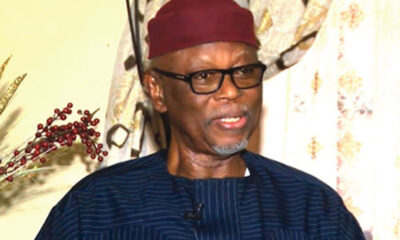





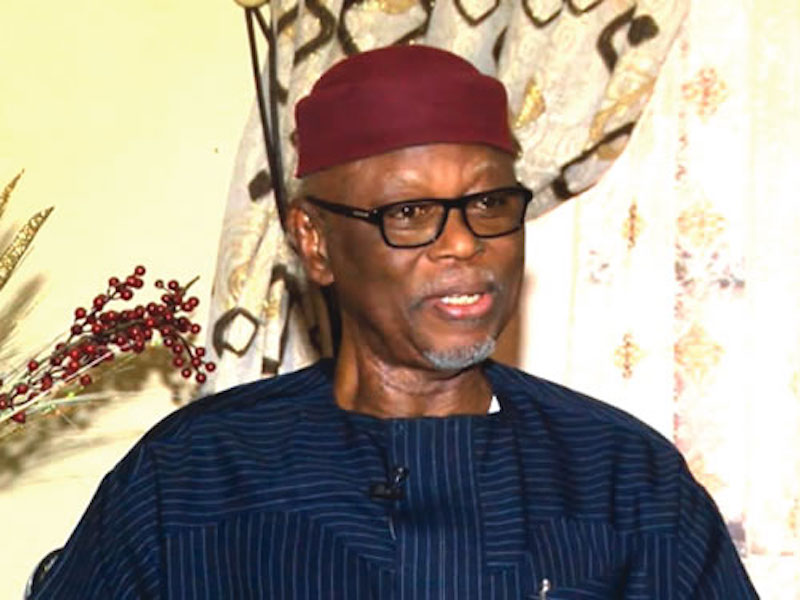
Chairman, Policy Manifesto Committee of the African Democratic Congress, ADC, John Odigie-Oyegun, says former president Muhammadu Buhari gave him the shock of his life, six months into his administration as Nigeria’s leader.
Oyegun made this disclosure on Friday when he featured in an interview on Arise Television’s ‘Prime Time’.
He revealed that as National Chairman of the All Progressives Congress, APC, he went to tell Buhari that he was not delivering his election promises to Nigerians but that the late president told him he would not rule with strictness, but rather wanted to show Nigerians that he is a true civilian president.
The former APC National Chairman lamented that it became business as usual, from there.
“I was national chairman of the APC. Six months or less into our assuming office, fairly alarmed, I went to the late President Buhari for a one-on-one talk. I said Mr President, this is not what the people were expecting. They wanted a bit of the old president Buhari.
“And he explained to me, Mr Chairman, I have learned my lesson. I was shocked. And don’t forget at that time, a lot of prominent Nigerians took their holidays abroad, just to be sure and see what this new sheriff in town will be.
“Buhari told me he wants to now show the people that he’s a true civilian president in Agbada. And by the time we finished the conversation, I said Oh God, we are finished. Because, if he’s not ready to be strict, what’s the point?
“Weeks later, months later, years later, I was proven correct. And of course, it became business as usual, only that they are a new set of tenants in Aso Rock. That was a shocker,” he said.
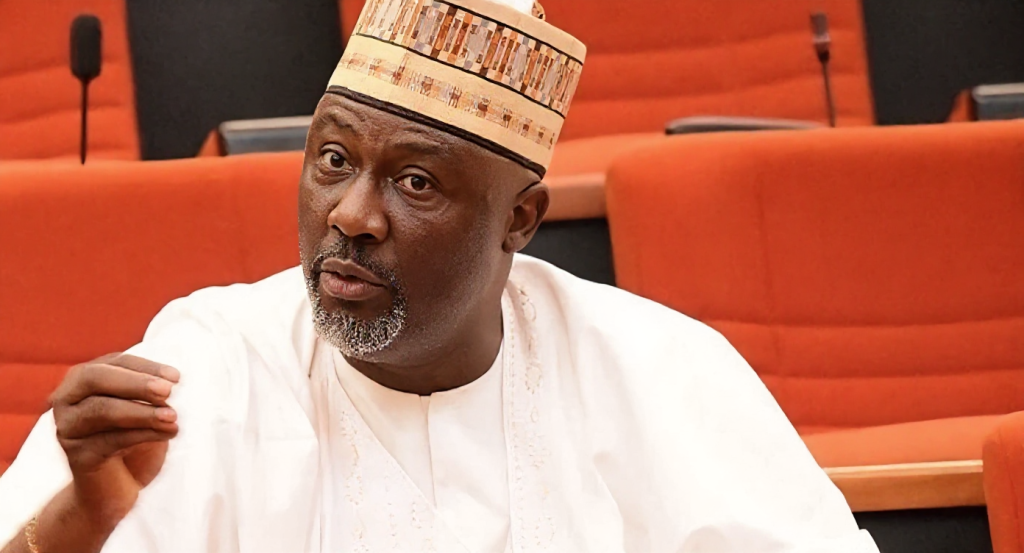
Former lawmaker, Dino Melaye Esq, has raised concerns over the Senate’s reported rejection of the electronic transmission of election results.
The move, according to Melaye, is a clear endorsement of election rigging and an indication of a sinister plan to rig the 2027 elections.
In a statement on Friday, the former lawmaker criticized the Senate’s decision, stating that it undermines the credibility of the electoral process.
The African Democratic Congress, ADC chieftain, also stated that the move opens the door for electoral manipulation and fraud.
He further warned that the rejection of electronic transmission of results is a step backwards for democracy in Nigeria.
Melaye called on lawmakers and citizens to stand up against “this blatant attempt to undermine the will of the people and ensure that future elections are free, fair, and transparent”.
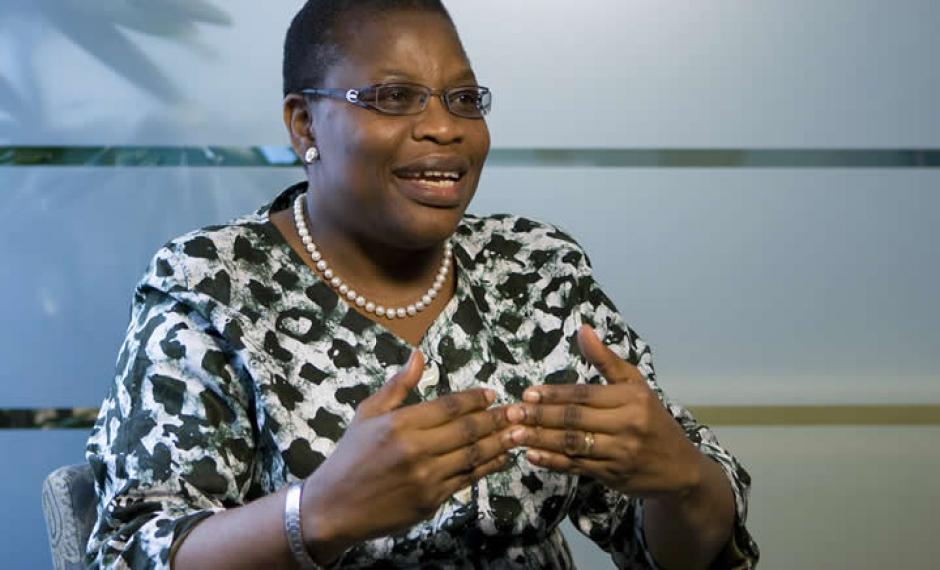
Former Minister of Education, Oby Ezekwesili, has said Nigerians have every reason to be mad at the Senate over the ongoing debate on e-transmission of election results.
Ezekwesili made this known on Friday when she featured in an interview on Arise Television’s ‘Morning Show’ monitored by DAILY POST.
DAILY POST reports that the Senate on Wednesday turned down a proposed change to Clause 60, Subsection 3, of the Electoral Amendment Bill that aimed to compel the electronic transmission of election results.
Reacting to the matter, Ezekwesili said, “The fundamental issue with the review of the Electoral Act is that the Senate retained the INEC 2022 Act, Section 60 Sub 5.
“This section became infamous for the loophole it provided INEC, causing Nigerians to lose trust. Since the law established that it wasn’t mandatory for INEC to transmit electoral results in real-time, there wasn’t much anyone could say.
“Citizens embraced the opportunity to reform the INEC Act, aiming to address ambiguity and discretionary opportunities for INEC. Yet, the Senate handled it with a “let sleeping dogs lie” approach. The citizens have every reason to be as outraged as they currently are.”

How Buhari shocked me 6 months into his administration – Oyegun

Gunmen k!ll President General of Ogidi community and one other in Anambra.

Police bust syndicate behind nude photo blackmail in Lagos

-
Business1 year ago
US court acquits Air Peace boss, slams Mayfield $4000 fine
-

 Trending1 year ago
NYA demands release of ‘abducted’ Imo chairman, preaches good governance
-

 Politics1 year ago
Mexico’s new president causes concern just weeks before the US elections
-

 Politics1 year ago
Putin invites 20 world leaders
-

 Politics1 year ago
Russia bans imports of agro-products from Kazakhstan after refusal to join BRICS
-
Entertainment1 year ago
Bobrisky falls ill in police custody, rushed to hospital
-
Entertainment1 year ago
Bobrisky transferred from Immigration to FCID, spends night behind bars
-
Education1 year ago
GOVERNOR FUBARA APPOINTS COUNCIL MEMBERS FOR KEN SARO-WIWA POLYTECHNIC BORI