
Politics
2027: Count me out of coalition against Tinubu, APC — Peter Obi

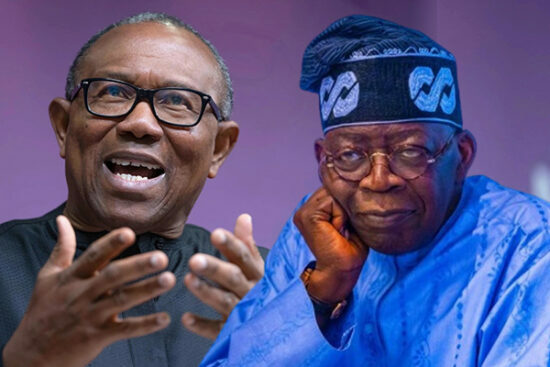
Former Presidential candidate of the Labour Party, Peter Obi has denied involvement in coalition against the ruling President Bola Tinubu and All Progressives Congress in 2027.
Obi made the clarification on Monday in Abuja while speaking with newsmen at the sideline of a two-day National Conference on Strengthening Democracy in Nigeria.
Checks revealed that certain chieftains in predominant opposition political parties and the ruling All Progressives Congress have been involved in discussions to form a coalition towards dislodging the APC.
The former governor of Anambra State stated that what should be paramount to politicians should be eradication of poverty, fixing public schools, hospitals and security of lives and property.
He said: “Well, for me, what is important is let’s discuss Nigeria. Whether we are going to do coalition… let’s talk about the future of the country, but often we abandon the country and what we need to do and talk about power grab.
“I’m not interested in any coalition for purpose of taking power. It is about discussing Nigeria. “How do we care about securing the Nigerians?
“How do we care about the common person in Nigeria? “How do we care about our children being in school? That is the most important thing for now.”
Obi also called for concerted efforts to stop financial inducement in politics.
“That’s what we need to remove, because what you’re doing is that you’re encouraging stealing of public money.
“Because if I steal it and use it to win election, then I get all the power and everything, including immunity not to be prosecuted. So we must stop it. That is what driving the stealing.”
Presenting his key note address, on the theme of the discourse, “Strengthening Nigeria’s Democracy: Pathway To Good Governance And Political Integrity,” former Vice President of Republic of Ghana, Dr Mahamudu Bawumia, who incidentally was Presidential candidate of Ghana’s New Patriotic Party in last general election in the West African country, identified bastardization of state institutions as a big threat to democracy.
He said “Mr. Chairman, one of the most important determinants of a flourishing democracy is the quality of institutions; institutions capable of guaranteeing rights, including property rights, and checking wanton abuse of power.
“These institutions include the Independent Election Management bodies, the Judiciary, the Ombudsman, the Police, other law enforcement agencies, and many others…
“Celebrated Economists like Dani Rodrick, Daron Acemolgu, and others, have come to a firm conclusion that, when it comes to the determinants of growth, the quality of institutions towers above everything else.
“Unfortunately, whilst the culture of peacefully choosing leaders is being entrenched, these institutions are becoming weak and endangered. ”
The former presidential candidate equally expressed concern over growing poverty in the West African sub-region and by extension, the continent as a threat to democracy as he noted that the electorate are beginning to lose faith in representative government.
He said: “Mr. Chairman, one of the biggest threats to democracy today is what I call the Next Meal. Before I make my point, I need to reecho the words of one of Africa’s greatest sons, the distinguished Nelson Mandela, to wit, ‘As long as poverty, injustice, and gross inequality exist in our world, none of us can truly rest.’
“Ladies and gentlemen, democracy must be a means to an end. The best democracy is the one that delivers public goods and services effectively and efficiently and creates opportunities for citizens whilst making conscious efforts to leave no one behind.
“For Sub-Saharan Africa, the data suggests that we do not have an option to do nothing. In 2024, the World Bank estimated that two-thirds of the world’s population in extreme poverty live in Sub-Saharan Africa.
“Back home, the World Bank’s 2024 review reveals that more than half of Nigerians live in multidimensional poverty.
“For Nigeria, and indeed much of Sub-Saharan Africa, our work is cut out for us. We need to take decisive actions to demonstrate that to govern is to advance the interest and welfare of the people.
“We need to reconfigure our economic systems, processes, and institutions in a manner that prioritizes the next meal for majority of our people. For far too long, the focus has been on ticking the boxes on democratic institutions much to the neglect of what those institutions have been able to produce for the ordinary citizen.
“The person who is unable to afford the next ‘Eba’ meal is unlikely to appreciate any data on democratic progress.
“Ladies and gentlemen, there is growing apprehension among the citizenry about the relevance and usefulness of government institutions, with many people losing faith in these institutions.
“This is concerning and portends a bleak future for democratic sustenance if we do not rise to the occasion, and quickly too.
“For our democracy to remain relevant and sustainable, actors need to ensure that citizens have confidence in the democratic system to address their needs and concerns, particularly basic needs, which I call the next meal principle.”
In his paper, ” Democracy in Nigeria: Challenges, Prospects and the 2027 Elections, ” Professor Jibrin Ibrahim bemoaned the absence of ideologically based parties, leaving an indifferent and confused electorate at the mercy of political platforms which he claimed are run by drug barons and warlords.
He said:” The most serious threat is the way the party system has developed.
“The key characteristics is that parties don’t have members but barons, warlords who impose their interests. The political parties that we have had lost their identities in terms of their manifestoes and what they stand for.
“The moment people can’t identify what parties stand for, it becomes impossible to have democratic commitment.
“A situation where they ( political parties) have no commitment to ideals of democracy.
“The real outcome is increasing apathy. The people have lost the right to exercise power because it has been confiscated from them. That creates the crisis of apathy.
“We must revive the belief that it is possible for Nigerians to regain their political power through the ballot.”
In his goodwill message, Vice president, Kashim Shettima, represented by Alhaji Hakeem Baba Ahmed, urged those entrusted with mandate to govern to live up to peoples’ expectations by protecting their interest.
He maintained that transparent governance and genuine commitment to needs of the citizenry would guarantee democracy against military dictatorship.
He added, “There is a huge responsibility on the shoulders of elected leaders in Nigeria to market our democracy in terms of the quality of governance and their conduct and disposition towards the rule of law and respect for the welfare and security of citizens.
“Nigerian democracy must mean a lot more than asking Nigerians to line up every four years to elect leaders. It must mean, in practical terms, that leaders commit to the demands of elected leadership in very transparent manners, that mandates given to them to govern make them servants to interests of the people, custodians of their assets, and protectors of their interests.
“The best leaders are people who exercise power only only to promote interests of their people. These interests include making laws that are consistent with the economic welfare and security of the citizen; that the judiciary is free from interference and corruption; that institutions and structures of governance function with the highest standards of efficiency and integrity; that citizens’ voices are heard and respected not just during elections; and the basic rules of competition between parties and interests are respected.
“The challenge for leaders in democratic systems is to lead with the vision which identifies a path and destination that ultimately benefit the citizens, even where some have legitimate reservations, or have issues with them.
“I would like to assure Nigerians that our administration is acutely aware of many concerns over our direction and goals, particularly given the difficulties which some of our policies inevitably generate.”









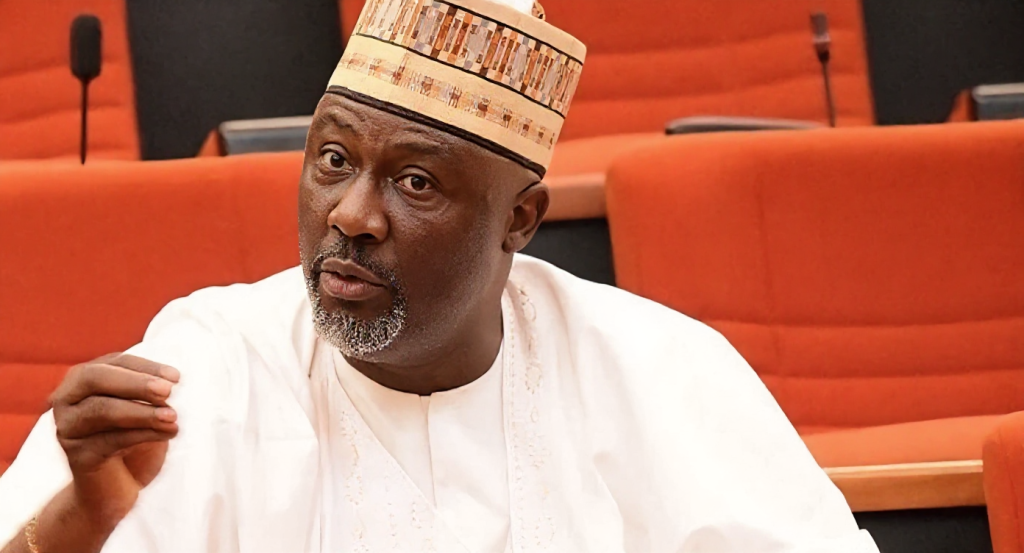
Former lawmaker, Dino Melaye Esq, has raised concerns over the Senate’s reported rejection of the electronic transmission of election results.
The move, according to Melaye, is a clear endorsement of election rigging and an indication of a sinister plan to rig the 2027 elections.
In a statement on Friday, the former lawmaker criticized the Senate’s decision, stating that it undermines the credibility of the electoral process.
The African Democratic Congress, ADC chieftain, also stated that the move opens the door for electoral manipulation and fraud.
He further warned that the rejection of electronic transmission of results is a step backwards for democracy in Nigeria.
Melaye called on lawmakers and citizens to stand up against “this blatant attempt to undermine the will of the people and ensure that future elections are free, fair, and transparent”.
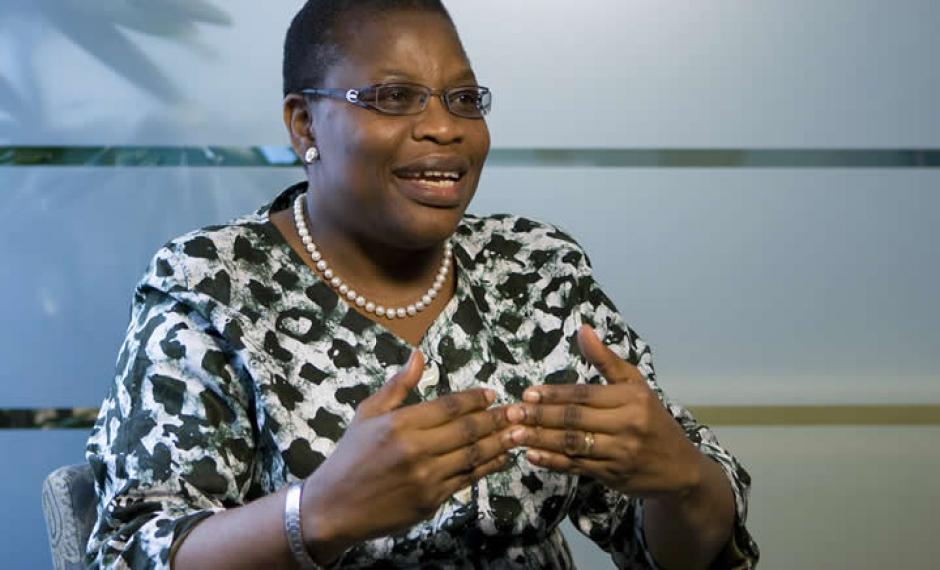
Former Minister of Education, Oby Ezekwesili, has said Nigerians have every reason to be mad at the Senate over the ongoing debate on e-transmission of election results.
Ezekwesili made this known on Friday when she featured in an interview on Arise Television’s ‘Morning Show’ monitored by DAILY POST.
DAILY POST reports that the Senate on Wednesday turned down a proposed change to Clause 60, Subsection 3, of the Electoral Amendment Bill that aimed to compel the electronic transmission of election results.
Reacting to the matter, Ezekwesili said, “The fundamental issue with the review of the Electoral Act is that the Senate retained the INEC 2022 Act, Section 60 Sub 5.
“This section became infamous for the loophole it provided INEC, causing Nigerians to lose trust. Since the law established that it wasn’t mandatory for INEC to transmit electoral results in real-time, there wasn’t much anyone could say.
“Citizens embraced the opportunity to reform the INEC Act, aiming to address ambiguity and discretionary opportunities for INEC. Yet, the Senate handled it with a “let sleeping dogs lie” approach. The citizens have every reason to be as outraged as they currently are.”
Politics
Electoral act: Senate’s action confirms Nigeria ‘fantastically corrupt’, ‘disgraced’ – Peter Obi
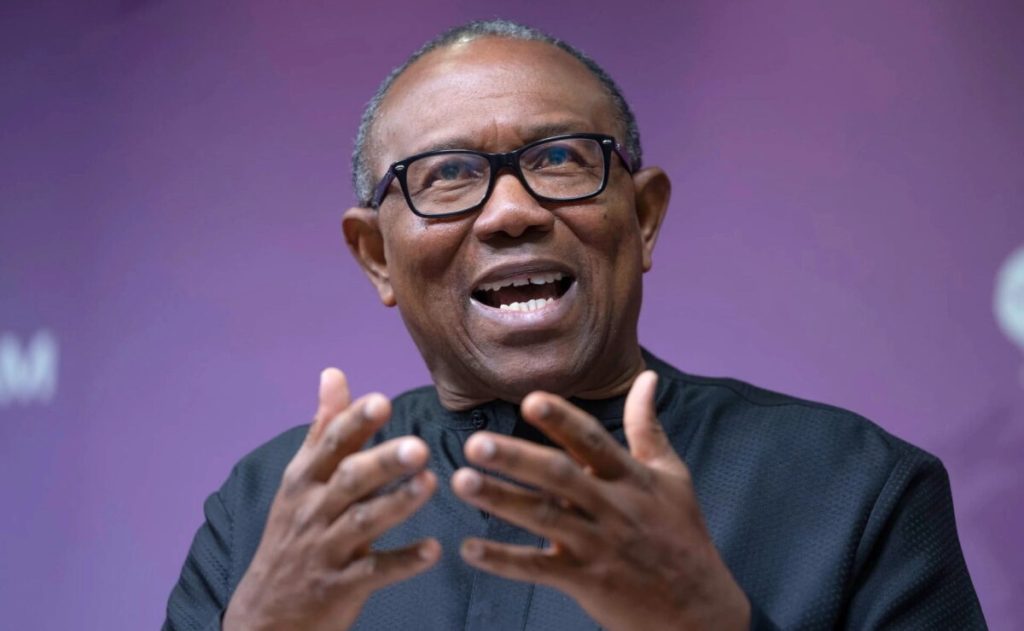
Former Labour Party presidential candidate, Peter Obi, has condemned the Senate’s refusal to make electronic transmission of election results mandatory, saying the move further exposes Nigeria as a fantastically corrupt and disgraced country.
Obi expressed his views in a statement shared on X on Friday, where he accused lawmakers of deliberately weakening Nigeria’s democratic process ahead of the 2027 general elections.
He explained that his reaction came after a brief pause to mourn victims of a deadly tragedy in Kwara State, where over 150 people reportedly lost their lives.
“Let us first pray for the souls of the innocent Nigerians lost in Kwara. That painful incident is why I delayed responding to the shameful development surrounding our electoral system,” he wrote.
Describing the Senate’s decision as intentional and dangerous, Obi said rejecting mandatory electronic transmission was not a simple oversight but a calculated attempt to block transparency.
“The Senate’s open rejection of electronic transmission of results is an unforgivable act of electoral manipulation ahead of 2027,” he said.
According to him, the action strikes at the heart of democracy and raises serious questions about the true purpose of governance in Nigeria.
“This failure to pass a clear safeguard is a direct attack on our democracy. By refusing these transparency measures, the foundation of credible elections is being destroyed. One must ask whether government exists to ensure justice and order or to deliberately create chaos for the benefit of a few.”
The former Anambra State governor linked the post-election controversies of the 2023 general elections to the failure to fully deploy electronic transmission of results, insisting that Nigerians were misled with claims of technical failures.
“
The confusion, disputes and manipulation that followed the 2023 elections were largely due to the refusal to fully implement electronic transmission,” he said.
He added that the so-called system glitch never truly existed.
Obi compared Nigeria’s electoral process with those of other African countries that have embraced technology to improve credibility, lamenting that Nigeria continues to fall behind.
“Many African nations now use electronic transmission to strengthen their democracy. Yet Nigeria, which calls itself the giant of Africa, is moving backwards and dragging the continent along.”
He criticised Nigeria’s leadership class, saying the country’s problems persist not because of a lack of ideas but because of deliberate resistance to meaningful reform.
“We keep organising conferences and writing policy papers about Nigeria’s challenges. But the truth is that the leaders and elite are the real problem. Our refusal to change is pushing the nation backwards into a primitive system of governance.”
Warning of the dangers ahead, Obi said rejecting electronic transmission creates room for confusion and disorder that only serves the interests of a small group.
He also recalled past remarks by foreign leaders who described Nigeria as corrupt, arguing that actions like this continue to justify those statements.
“When a former UK Prime Minister described Nigeria as ‘fantastically corrupt,’ we were offended. When former US President Donald Trump called us a ‘disgraced nation,’ we were angry. But our continued resistance to transparency keeps proving them right.”
Obi warned that Nigerians should not accept a repeat of the electoral irregularities witnessed in 2023.
“Let there be no mistake. The criminality seen in 2023 must not be tolerated in 2027.”
He urged citizens to be ready to defend democracy through lawful and decisive means, while also calling on the international community to closely monitor developments in Nigeria’s electoral process.
“The international community must pay attention to the groundwork being laid for future electoral manipulation, which threatens our democracy and development,” Obi stated.
He concluded by expressing hope that change is still possible if Nigerians take collective responsibility.
“A new Nigeria is possible but only if we all rise and fight for it.”

Police bust syndicate behind nude photo blackmail in Lagos

Man in shock after lady he lodged with in a hotel in Abuja flees with his car and other valuables

US Reacts As De@th Toll In Kwara Terror Attacks Hits 200

-
Business1 year ago
US court acquits Air Peace boss, slams Mayfield $4000 fine
-

 Trending1 year ago
NYA demands release of ‘abducted’ Imo chairman, preaches good governance
-

 Politics1 year ago
Mexico’s new president causes concern just weeks before the US elections
-

 Politics1 year ago
Putin invites 20 world leaders
-

 Politics1 year ago
Russia bans imports of agro-products from Kazakhstan after refusal to join BRICS
-
Entertainment1 year ago
Bobrisky falls ill in police custody, rushed to hospital
-
Entertainment1 year ago
Bobrisky transferred from Immigration to FCID, spends night behind bars
-
Education1 year ago
GOVERNOR FUBARA APPOINTS COUNCIL MEMBERS FOR KEN SARO-WIWA POLYTECHNIC BORI