
Politics
2027: INEC moves to strip president’s power to appoint RECs

Ahead of the 2027 general elections, the Independent National Electoral Commission (INEC) is proposing amendments to Nigeria’s electoral framework that would strip the President of the power to appoint the Resident Electoral Commissioners (RECs).
The proposed change would instead give the commission power to make these appointments, though with a different nomenclature to be known as State Directors of Elections.
The commission is also pushing for the introduction of electronically downloadable voters’ cards to replace the use of Permanent Voter Cards (PVCs).
Specifically, the commission is seeking amendments to Section 14 (3) Paragraph F of the Third Schedule to the 1999 Constitution to confer the power of appointing and disciplining Heads of State and FCT Offices of INEC on the commission.
INEC is also proposing an amendment to Section 6 (3) of the Electoral Act 2022 to confer the power of appointing Heads of State and FCT Offices on the Commission.
According to INEC, these heads of state would be known as State Directors of Elections.
Special Adviser to the INEC chairman, Mohammad Kuna, disclosed this in his presentation at a retreat with the Joint Committee of the National Assembly on Electoral Matters on the reform of the electoral legal framework held in Lagos on Monday.
He said the proposal is essential to promote transparency, accountability, and efficiency in the electoral process.
Currently, the REC is the person in charge of the INEC office at the state level.
The REC, who is assisted by relevant government agencies, undertakes the Presidential, National Assembly, Gubernatorial, and House of Assembly elections in a state and acts pursuant to powers delegated to him or her by INEC’s national Chairman and 12 Commissioners.
Among the duties of the REC is to make available all the materials required to conduct an election. The REC also monitors the activities of all ad hoc staff and provides for the proper verification of election results
Currently, the appointment of RECs, who oversee the electoral process in each state, is within the president’s purview according to Section 154 (1) of the 1999 constitution.
Section 6 (1) of the Electoral Act reads: “There is established in each State of the Federation, Federal Capital Territory and Local Government Area, an office of the Commission which shall perform such functions as may be assigned to it by the Commission.
“(2) A person appointed to the office of a Resident Electoral Commissioner shall
(a) be answerable to the Commission ; and (b) hold office for a term of five years from the date of his or her appointment which may be renewable for another term of five years and no more.
“(3) The Resident Electoral Commissioner appointed under the Constitution may only be removed by the President, acting on an address supported by two-thirds majority of the Senate praying that the Resident Electoral Commissioner be so removed for inability to perform the functions of the office, whether arising from infirmity of mind or body or any other cause, or for misconduct.”
But according to the document presented by Kuna sighted by the Guardian, developments in the recent past and especially during and in the aftermath of the 2023 General election suggest the need for the Commission to have greater powers to make appointments to the heads of State and FCT Offices.
The proposal will also confer on INEC the power to discipline erring RECs.
Aside from this, the commission is also proposing amendments of Sections 77 (2), 117 (1), 132 (5), and 178 (5) of the 1999 Constitution to provide for early, special, Out-of-Country, diaspora, and inmates voting.
The document said this will allow the country to introduce early/special voting to cater for eligible voters on essential services, election personnel, as well as, voters under incarceration, those in the diaspora, and out-of-country voting for eligible Nigerians outside the country during elections.
Another key proposal by INEC is the amendment of Sections 153 (1), 154 (3), 156 (1, a), 157 (2), 158 (1), and 160 (1) and the Third Schedule, Paragraph 15 (b – d) of the 1999 Constitution to create the Electoral Offences Commission and (b) Political Party Regulatory Agency.
The commission is also seeking the amendment of sections 48, 49, 71 and 91 of the 1999 Constitution by Providing New Provisions for Special Seats for Women and PwDs.
“While the Commission should continue to work with all Political Parties for greater participation of under-represented groups in elective positions, the surest way to achieve that objective is through affirmative action.
This should be backed by a clear provision of the law that may, for instance, create designated constituencies for such groups, especially women and persons with Disability.”
The commission is also proposing to the National Assembly to: “Amend Sections of EA 2022 to Remove Ambiguities/Cross-Referencing Errors (a) Section 60 (5) refers to ‘transfer’ of results while 64 (4 & 5) spoke about ‘direct transmission’; (b) Section 64 (4a & 5) refers to 47 (2) with regards the transmission of results; yet 47 (2) makes no reference to the transmission of results; (c) there are similar ambiguities identified in Sections 29 (1), 75 (3) & (4), 77(3), 131 (5) & (6) and 132 (5-10) of the Electoral Act, 2022 detailed in the submission of the Commission.
“Amend Section 65 (1) to Provide Clarity on the Commission’s Powers to Review Election Results. Create a caveat in Section 65 (1) to provide that the triggers to the review of results should be instances of declarations made under duress.
“Review Sections 47 (1) and 16 (1, 2 & 4) on the Design, Printing, Control, Issuance and Use of PVCs. Review Section 47 (1) as well as 16 (1, 2 & 4) to Modify Requirements for the Use of PVCs to allow for the Introduction of Electronically Downloadable Voters’ cards or Any Other Form of ID Acceptable to the Commission.”




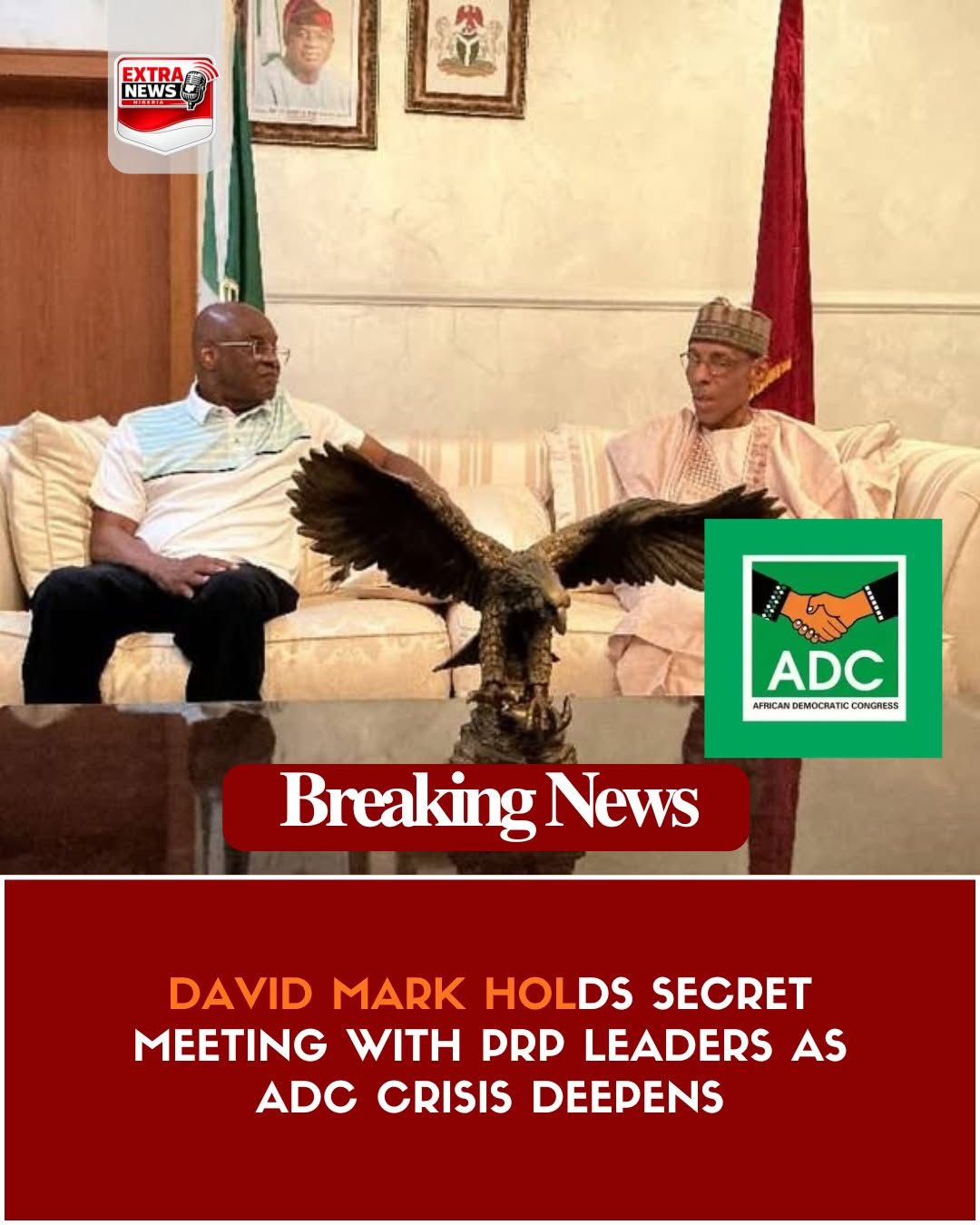
The embattled National Chairman of the African Democratic Congress, David Mark, on Friday held a closed-door meeting with leaders of the Peoples Redemption Party in Abuja. The private consultation is seen as a fresh round of political moves as the ADC continues to battle a lingering leadership crisis and growing internal divisions.
Top figures from both parties were said to be present at the meeting, including PRP National Chairman Hakeem Baba-Ahmed and senior ADC officials. The development is already drawing attention as opposition parties continue realignments ahead of the 2027 political season, with many watching closely for possible alliances and next steps in the party crisis.
Politics
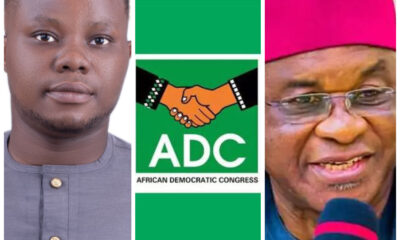
“ADC is a Holy Party, Cannot be used to Scam Nigerians Again” – Hon Success Opara tells David Mark
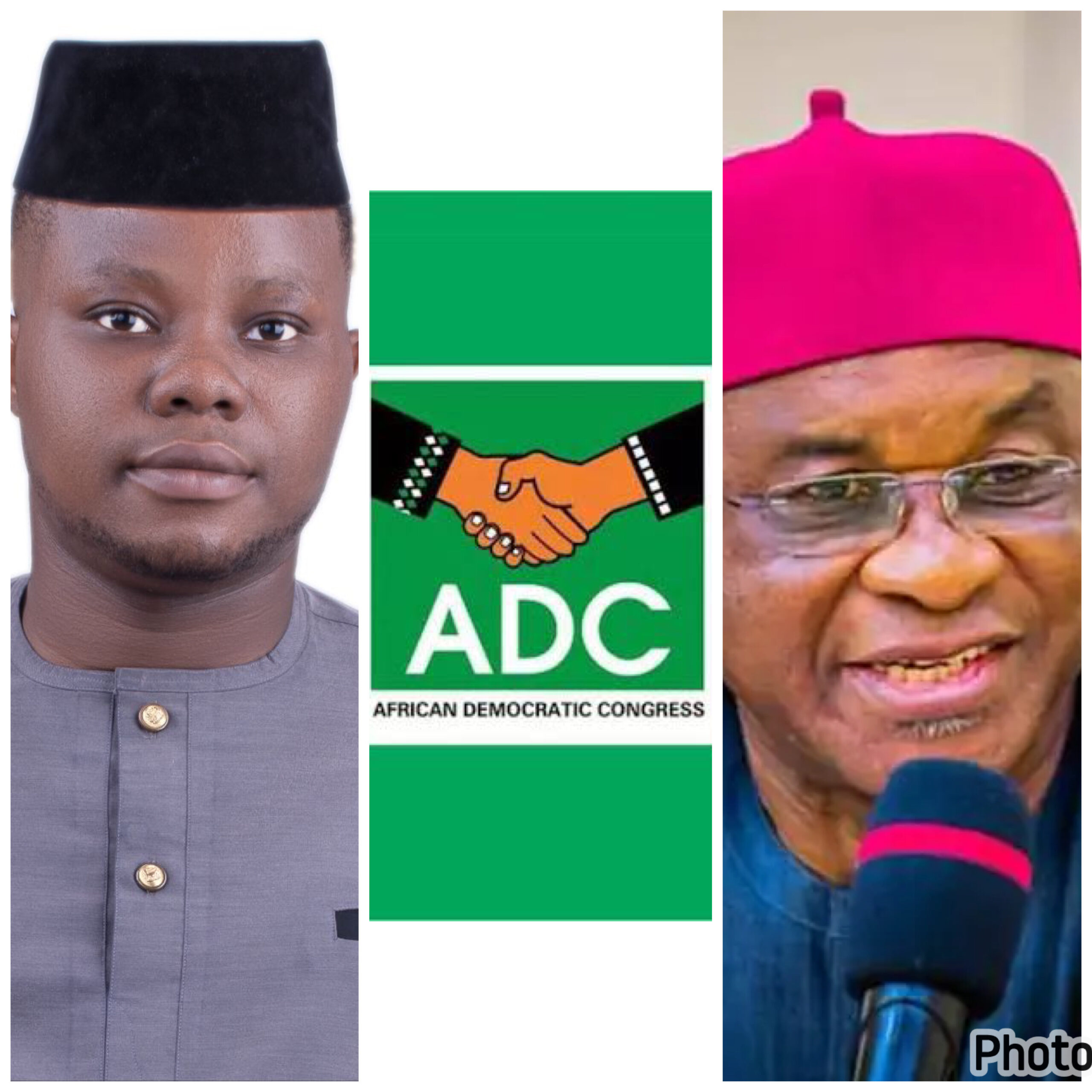
ADC Party in Turmoil: Hon Success Opara Slams Leadership, Warns Against Scamming Nigerians
Abuja, Nigeria – The African Democratic Congress (ADC) is facing internal strife as Hon Success Opara, a prominent party official, has warned against attempts to use the party to deceive Nigerians. Opara specifically criticized the leadership of David Mark, stating that the party cannot be used to scam citizens again.
“ADC holy Party cannot be used to scam Nigerians again,” Opara said, emphasizing that those forming coalitions are hindering the party’s growth and denying youths opportunities to thrive.
“Those who are forming coalition don’t want to give the youths the chance to strive in the party,” she added.
Opara’s statement highlights the deepening divisions within the ADC, with concerns over leadership and the party’s direction.
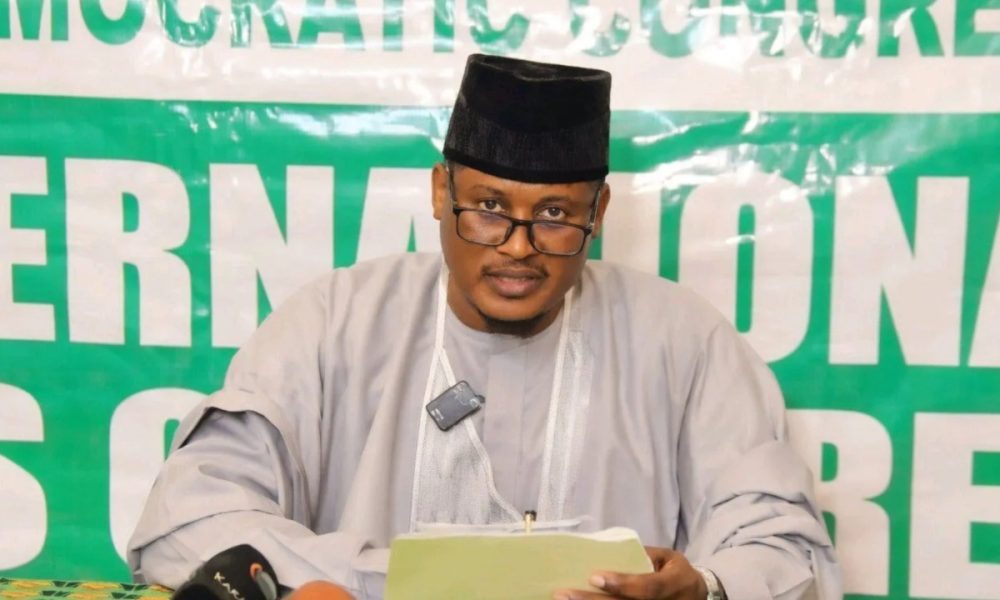
The factional National Chairman of the African Democratic Congress (ADC), Nafiu Bala Gombe, has announced that the party under his leadership will bar individuals above the age of 55 from contesting for political positions.
Gombe made the disclosure during an interview with BBC Hausa, where he outlined a vision centred on generational change and greater youth participation in politics.
“The African Democratic Congress (ADC) is a party that belongs to all Nigerians. What we are doing now is to ensure the party moves forward properly.
“We have decided that we will give the youths a real chance. The time has come for young people to take the lead in politics.
“If you are over 55 years old, you are not going to contest for positions in the ADC under our leadership.
“We want to bring in fresh blood, new ideas, and energy from the youth. Nigeria’s future depends on the young generation.
“The old ways have not worked well for the country. We need to open the door wide for youths to participate fully as candidates, leaders, and decision-makers,” he said.

David Mark Holds Secret Meeting With PRP Leaders as ADC Crisis Deepens

Chaos As Military Officers Exchange Blows During Tinubu’s Visit To Bayelsa (Videos)

HRH Ekwueme of Ochia Kingdom Iynched & kiIIed in Imo.

-
Business1 year ago
US court acquits Air Peace boss, slams Mayfield $4000 fine
-

 Trending1 year ago
NYA demands release of ‘abducted’ Imo chairman, preaches good governance
-

 Politics1 year ago
Mexico’s new president causes concern just weeks before the US elections
-

 Politics1 year ago
Putin invites 20 world leaders
-

 Politics1 year ago
Russia bans imports of agro-products from Kazakhstan after refusal to join BRICS
-
Entertainment1 year ago
Bobrisky falls ill in police custody, rushed to hospital
-
Entertainment1 year ago
Bobrisky transferred from Immigration to FCID, spends night behind bars
-
Education2 years ago
GOVERNOR FUBARA APPOINTS COUNCIL MEMBERS FOR KEN SARO-WIWA POLYTECHNIC BORI