
EVENTS
Alleged Mismanagement Of $4.5 Billion World Bank & Chinese Loan: SERAP Urges Tinubu To Investigate 36 States, FCT And Previous Government Of Buhari, Says Those Guilty should Face Prosecution As Appropriate.


Socio-Economic Rights and Accountability Project (SERAP) has urged President Bola Tinubu, to direct the Attorney General of the Federation and Minister of Justice, Lateef Fagbemi (SAN) and appropriate anti-corruption agencies, to promptly and thoroughly investigate the spending of $1.5bn World Bank loan obtained by the 36 states and Abuja for poverty reduction and social protection across the states.
SERAP said, “Suspected perpetrators of corruption and mismanagement should face prosecution as appropriate, if there is sufficient admissible evidence, and any proceeds of corruption should be fully recovered.”
SERAP also urged him to direct Fagbemi and appropriate anti-corruption agencies to promptly investigate the alleged mismanagement of the Chinese loans of $3.121bn obtained by the Federal Government.
In the open letter dated 10 August 2024 and signed by SERAP deputy director Kolawole Oluwadare, the organisation said ensuring accountability for the spending of World Bank loans and Chinese loans, would build trust in democratic institutions with the ultimate aim of strengthening the rule of law.
Impunity for corruption in the management of World Bank loans and Chinese loans will continue as long as high-ranking public officials go largely unpunished for their alleged crimes.
“It is by pursuing these allegations and taking the evidence before the court that the truth will be revealed and justice best served.
“There are reports that the $1.5bn World Bank loan to the 36 states and Abuja and the $3bn Chinese loans obtained by the Federal Government may have been mismanaged or diverted, and in any case remain unaccounted for.
“Investigating and prosecuting allegations of corruption and mismanagement in the spending of World Bank loans and Chinese loans would be entirely consistent with the Nigerian Constitution, and the country’s international anti-corruption obligations.
“We note that while a governor may enjoy immunity from arrest and prosecution, he does not enjoy immunity from investigation. Any criminal allegation against a sitting governor can and should be investigated pending the time the governor leaves office and loses immunity.
“The findings of such investigation can also be the basis for initiating impeachment proceedings against the governor.
“Your government has the legal obligation to ensure accountability for the spending of the loans obtained from the World Bank and China. SERAP is concerned about the continuing lack of transparency and accountability in the management of World Bank loans and Chinese loans obtained by the states and the Federal Government.
“We would be grateful if the recommended measures are taken within 7 days of the receipt and/or publication of this letter. If we have not heard from you by then, SERAP shall consider appropriate legal actions to compel your government to comply with our request in the public interest.
SERAP said it is concerned about years of allegations of corruption and mismanagement in the spending of World Bank loans and Chinese loans obtained by Nigeria’s 36 states and the Federal Government, as well as the entrenched impunity of perpetrators.
“These allegations have undermined the ability of governments at all levels to address the debilitating poverty and economic inequality across the states and the Federal Capital Territory.
“Section 15(5) imposes the responsibility on your government to ‘abolish all corrupt practices and abuse of power’ in any part of the country. Section 15 defines ‘government’ to include the government of the federation, or of any state, or of a local government council or any person who exercises power or authority on its behalf.
“The Nigerian Constitution and human rights treaties to which Nigeria is a state party impose obligations on your government to probe and prosecute allegations of corruption in the spending of World Bank loans and Chinese loans, and to ensure access to justice and effective remedies for victims of corruption.
“Allegations of corruption and mismanagement in the spending of these loans and other loans have rendered already impoverished citizens incapable of satisfying their minimum needs for survival.
“Prevention of corruption in the spending of World Bank loans and other loans are serious and legitimate public interests. There is a legitimate public interest in ensuring justice and accountability for alleged corruption and mismanagement in the management of these loans.
“According to our information, the World Bank on 15 December 2020 approved a $1.5 billion loan for Nigeria’s 36 states and Abuja for social protection and strengthened state-level COVID-19 response. The loan aims to help the states and Abuja build a resilient recovery post-COVID19 and to reduce poverty.
“Specifically, the loan aims to increase access to basic education, quality water and sanitation services; improve primary healthcare; and increase the coverage and effectiveness of social assistance programs, promote women’s empowerment and reduce maternal and child mortality across the states.
“The $1.5 billion World Bank loan is for two projects. The first is Nigeria Covid-19 Action Recovery and Economic Stimulus – Program for Results (Nigeria CARES) which aims to help increase access to social transfers and basic services, as well as provide grants to poor and vulnerable households. The project is financed through an International Development Association (IDA) credit of $750 million.
“The second is the State Fiscal Transparency, Accountability and Sustainability Program for Results (SFTAS), which aims to help increase the efficiency in spending, strengthen revenue mobilization, and enhance accountability in public resource management to strengthen state-level COVID-19 response.
“The project is financed through an International Development Association (IDA) credit of $750 million.
“According to the Debt Management Office, the total borrowing by Nigeria from China was USD$3.121 billion, as of March 31, 2020. The USD$3.121 billion loans are for 11 projects including the Nigerian Railway Modernization Project (Idu-Kaduna section); and Abuja Light Rail Project.
“Others include the Nigerian Four Airport Terminals Expansion Project (Abuja, Kano, Lagos and Port Harcourt), Nigerian Railway Modernization Project (Lagos-Ibadan section) and Rehabilitation and Upgrading of Abuja – Keffi- Makurdi Road Project.
“According to the Debt Management Office, Nigeria’s total public debt stock, including external and domestic debts, increased by ₦24.33 trillion in three months alone, from ₦97.34 trillion ($108.23 billion) in December 2023 to ₦121.67 trillion ($91.46 billion) as of March 31, 2024.
“The debt represents external and domestic loans obtained by the Federal Government, the 36 state governments and the Federal Capital Territory (FCT).”
Follow ekwutosblog for timely and verified news




EVENTS
EID-EL-FITR: IGP DISU FELICITATES MUSLIM FAITHFUL, ORDERS NATIONWIDE DEPLOYMENT OF TACTICAL ASSETS
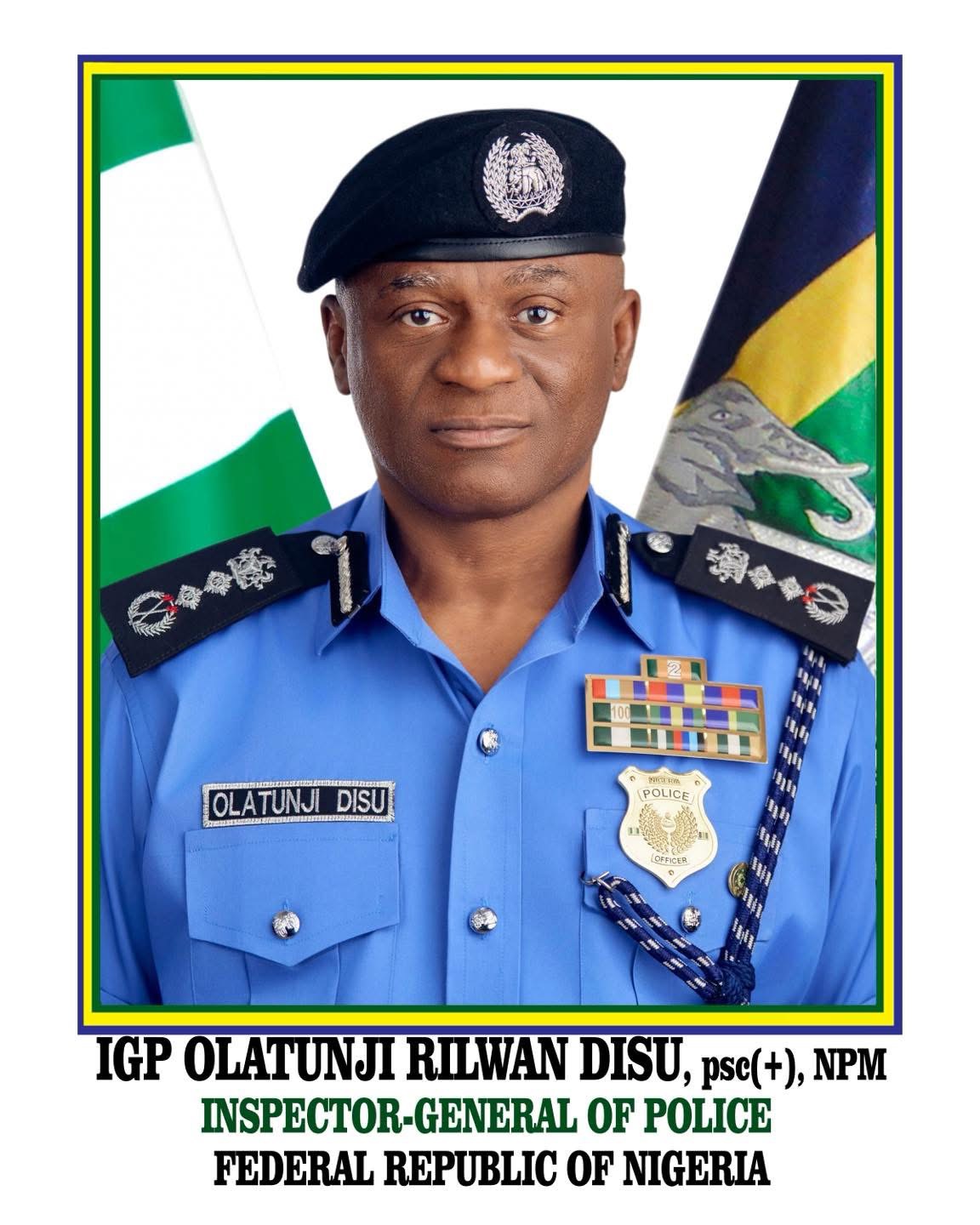
The Inspector-General of Police, IGP Olatunji Rilwan Disu, psc(+), NPM, has extended warm felicitations to the Muslim faithful across Nigeria on the successful completion of the holy month of Ramadan and the celebration of Eid-el-Fitr.
In furtherance of his commitment to ensuring a safe and secure environment during the festive period, the Inspector-General has directed Commissioners of Police and Tactical Commanders across all states of the Federation and the Federal Capital Territory to implement robust security arrangements.
Operational measures include:
Strategic deployment of tactical teams and intelligence operatives.
Deployment of the Special Intervention Squad and conventional police personnel to Eid prayer grounds and critical infrastructure.
Increased presence at highways, motor parks, recreational centers, and other public spaces to ensure peaceful, hitch-free celebrations.
The IGP has also ordered heightened visibility policing, coordinated patrols, enhanced surveillance operations, and intelligence-led stop-and-search duties. These actions are aimed at proactively deterring criminal activities and ensuring a swift response to any emerging threats.
IGP Disu calls on members of the public to remain vigilant, cooperate with law enforcement agencies, and promptly report any suspicious activities to the nearest police station or through the following emergency lines:
08057000001, 08057000002, 09133333785, and 09133333786.
IGP Tunji Disu wishes all Muslim faithful a peaceful and joyous Eid-el-Fitr.

DCP ANTHONY OKON PLACID psc(+) mni
Force Public Relations Officer
Force Headquarters, Abuja
20th March, 2026
EVENTS
Hon Success Opara celebrates Mothering Sunday with St. Peter women, hails them as the ‘neck that controls the household
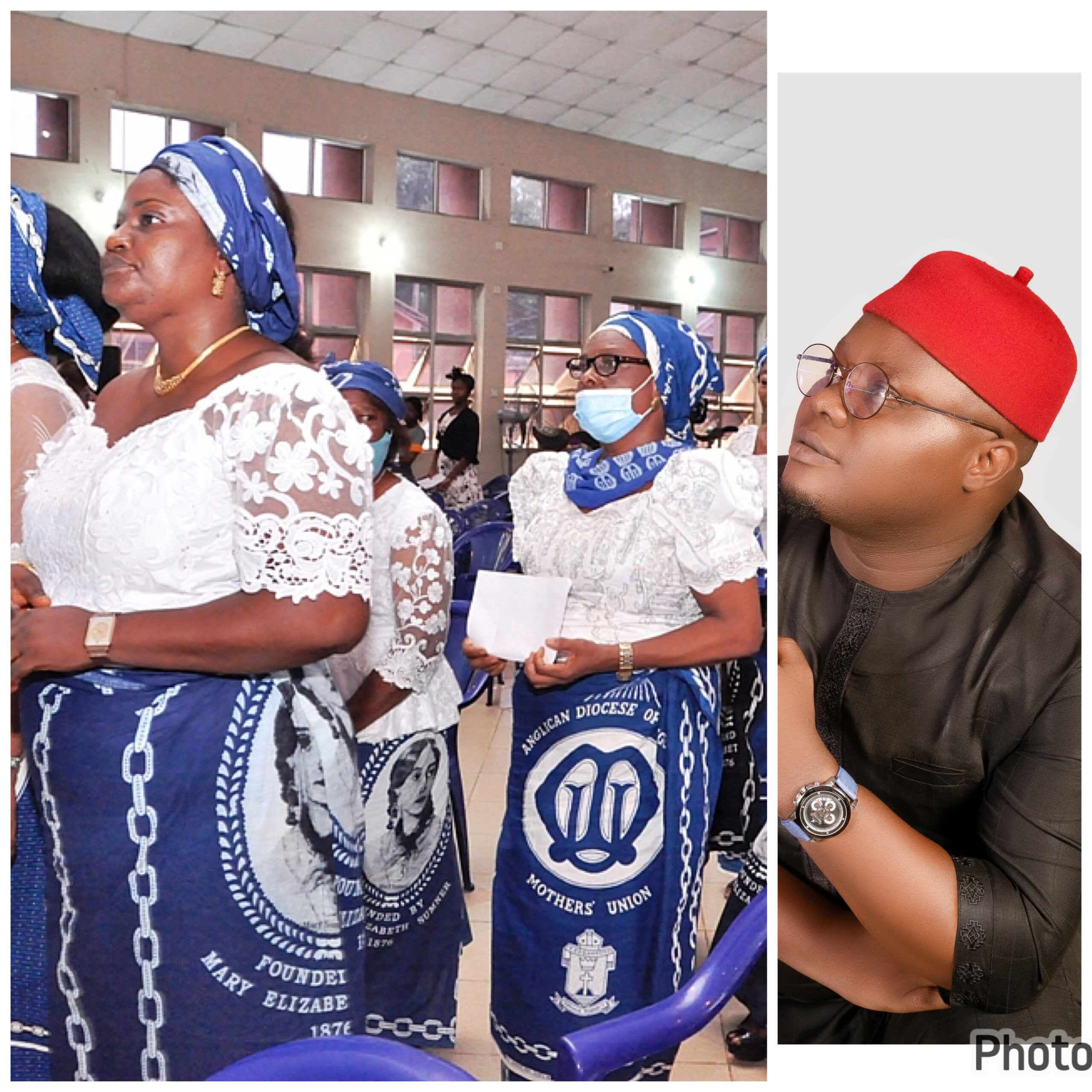
Hon Success Opara, former councilorship candidate for Ikenegbu Ward 2, celebrated Mothering Sunday with the women of St. Peter Anglican Church, Ikenegbu, extolling them as the backbone of their households.
He described them as the “neck that controls the household,” acknowledging their vital role in shaping families and communities.
Opara’s gesture is seen as a testament to his commitment to uplifting and empowering women.
The celebration, which coincided with the Christian observance of Mothering Sunday, featured fellowship and words of encouragement from Opara, who prayed for the women’s well-being.
This event highlights the importance of recognizing and appreciating mothers and mother figures in Nigerian society.
EVENTS
“Early marriage is better than fornication” – Mixed reactions as young Nigerian couple trends after welcoming a child

A young Nigerian couple are currently trending on Arewa social media circles after they welcomed their first child.
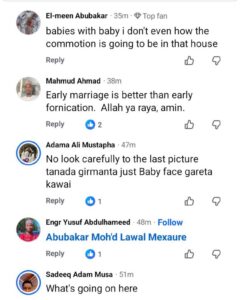
The pictures taken by a Kaduna-based photographer have sparked mixed reactions, with some people saying that the girl is underaged and not old enough to be a wife and mother.



2027: More Than 50 Lawmakers Lose APC Reps Tickets in Major Primary Election

Bandits behind Ogbomoso school abduction will face full wrath of the law- President Tinubu

PDP to screen Goodluck Jonathan on Tuesday as its sole Presidential aspirant For 2027 race

-
Business2 years ago
US court acquits Air Peace boss, slams Mayfield $4000 fine
-

 Trending2 years ago
NYA demands release of ‘abducted’ Imo chairman, preaches good governance
-

 Politics2 years ago
Mexico’s new president causes concern just weeks before the US elections
-

 Politics2 years ago
Putin invites 20 world leaders
-

 Politics2 years ago
Russia bans imports of agro-products from Kazakhstan after refusal to join BRICS
-
Entertainment2 years ago
Bobrisky falls ill in police custody, rushed to hospital
-
Entertainment2 years ago
Bobrisky transferred from Immigration to FCID, spends night behind bars
-
Education2 years ago
GOVERNOR FUBARA APPOINTS COUNCIL MEMBERS FOR KEN SARO-WIWA POLYTECHNIC BORI