
EVENTS
Israel hits back with airstrikes after Hezbollah rocket barrage

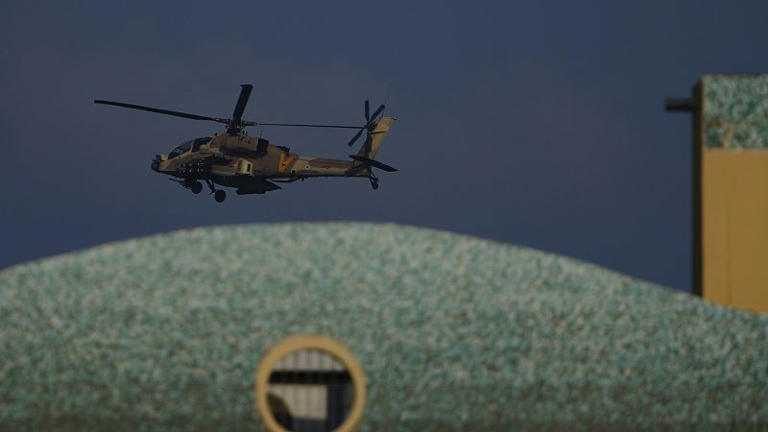
Israel launched a wave of airstrikes across southern Lebanon early on Sunday in what it said was a pre-emptive strike on Hezbollah, as the militant group said it had launched hundreds of rockets and drones to avenge the killing of one of its top commanders last month.
The heavy exchange of fire threatened to trigger an all-out war that could draw in the United States, Iran and militant groups across the region. It could also torpedo efforts to forge a cease-fire in Gaza, where Israel has been at war with the Palestinian group Hamas, an ally of Hezbollah, for over 10 months.
The Quds News Network, a pro-Palestinian new agency, posted on X photos of some of Israel’s airstrikes
The Israeli military said Hezbollah was planning to launch a heavy barrage of rockets and missiles toward Israel. Soon after, Hezbollah announced it had launched an attack on Israeli military positions as an initial response to the killing of Fouad Shukur, one of its founders, in an Israeli airstrike in Beirut last month.
The attacks came as Egypt hosts a new round of talks aimed at ending the Israel-Hamas war. Hezbollah has said it will halt the fighting if there is a cease-fire in Gaza.
Air raid sirens were reported throughout northern Israel, and Israel’s Ben-Gurion international airport diverted incoming flights and delayed take-offs for a time. Israel’s Airports Authority said flights resumed at 7 a.m. local time.
In a video posted on X, Rear Admiral Daniel Hagari, an Israeli military spokesman, said Israel acted in self defence “striking terror targets in Lebanon.”
Lebanon’s state-run National News Agency said one person had been killed in a strike on a car in the town of Khiam. Lebanese media reported other strikes across the south, and footage of apparent strikes circulated on social media.
Hezbollah said its attack involved more than 320 Katyusha rockets aimed at multiple sites in Israel and a “large number” of drones. It said the operation was targeting “a qualitative Israeli military target that will be announced later” as well as “enemy sites and barracks and Iron Dome (missile defence) platforms.”
Hezbollah later announced the end of what it said was the first stage of retaliatory strikes, which it said would allow it to launch more attacks deeper into Israel. The group said all the exploding drones it launched hit their targets, without saying how many. It listed 11 bases, barracks, and military positions that it said it targeted in northern Israel and the Israeli-annexed Golan Heights.
The Quds News Network posted on X a statement by Hezbollah that “The enemy’s claims about preventive action… are empty claims.”
In the U.S., a spokesman for the National Security Council, Sean Savett, said President Joe Biden was “closely monitoring events in Israel and Lebanon.”
“At his direction, senior U.S. officials have been communicating continuously with their Israeli counterparts,” Savett added. “We will keep supporting Israel’s right to defend itself, and we will keep working for regional stability.”
The Pentagon said Defence Secretary Lloyd Austin spoke with his Israeli counterpart, Yoav Gallant, about Israel’s defences against Hezbollah. Austin “reaffirmed the United States’ ironclad commitment to Israel’s defence against any attacks by Iran and its regional partners and proxies,” a statement said.
In recent weeks, diplomats from the U.S. and European countries have made a flurry of visits to Israel and Lebanon in an attempt to tamp down the escalation that they fear could spiral into a regional war.
Last week, Israel’s defence minister said he was moving more troops toward the Lebanese border in anticipation of possible fighting with Hezbollah.
Rear Adm. Daniel Hagari, another Israeli military spokesman, said the military had struck in self-defence.
“We can see that Hezbollah is preparing to launch an extensive attack on Israel, while endangering the Lebanese civilians,” he added, without providing details. ”We warn the civilians located in the areas where Hezbollah is operating to move out of harm’s way immediately for their own safety,” he added.
Israeli Prime Minister Benjamin Netanyahu’s office said he and Defence Minister Gallant were managing the latest operation from military headquarters in Tel Aviv. Gallant declared a “special situation on the home front,” and Netanyahu’s Security Cabinet was set to meet later Sunday morning.
Hezbollah began attacking Israel almost immediately after the start of the war in Gaza, which was triggered by Hamas’ Oct. 7 attack into Israel. Israel and Hezbollah have been exchanging fire almost daily, displacing tens of thousands of people on both sides of the border. Until Sunday, both sides had been careful to avoid all-out war.
Hezbollah, which fought Israel to a stalemate in the summer of 2006, is believed to be far more powerful than it was during that conflict. The United States and Israel estimate it has some 150,000 rockets and is capable of hitting anywhere inside Israel. The group has also also developed drones capable of evading Israel’s defenses as well as precision-guided munitions.
Israel has one of the world’s best militaries and an extensive multi-tiered missile defence system, and it is backed by a U.S.-led coalition that helped it shoot down hundreds of missiles and drones fired from Iran earlier this year. The U.S. military has been building up its forces across the region in recent weeks.
Israel has vowed a crushing response in the case of all-out war, one that would likely demolish critical civilian infrastructure, especially in south Beirut and southern Lebanon, where Hezbollah’s main strongholds are located. A war would likely displace hundreds of thousands of people on both sides.
Hezbollah is a close ally of Iran, which has also threatened to retaliate for the killing of a senior Hamas leader, Ismail Haniyeh, in an explosion in Tehran last month that was widely blamed on Israel, which has not said whether it was involved.






EVENTS
EID-EL-FITR: IGP DISU FELICITATES MUSLIM FAITHFUL, ORDERS NATIONWIDE DEPLOYMENT OF TACTICAL ASSETS
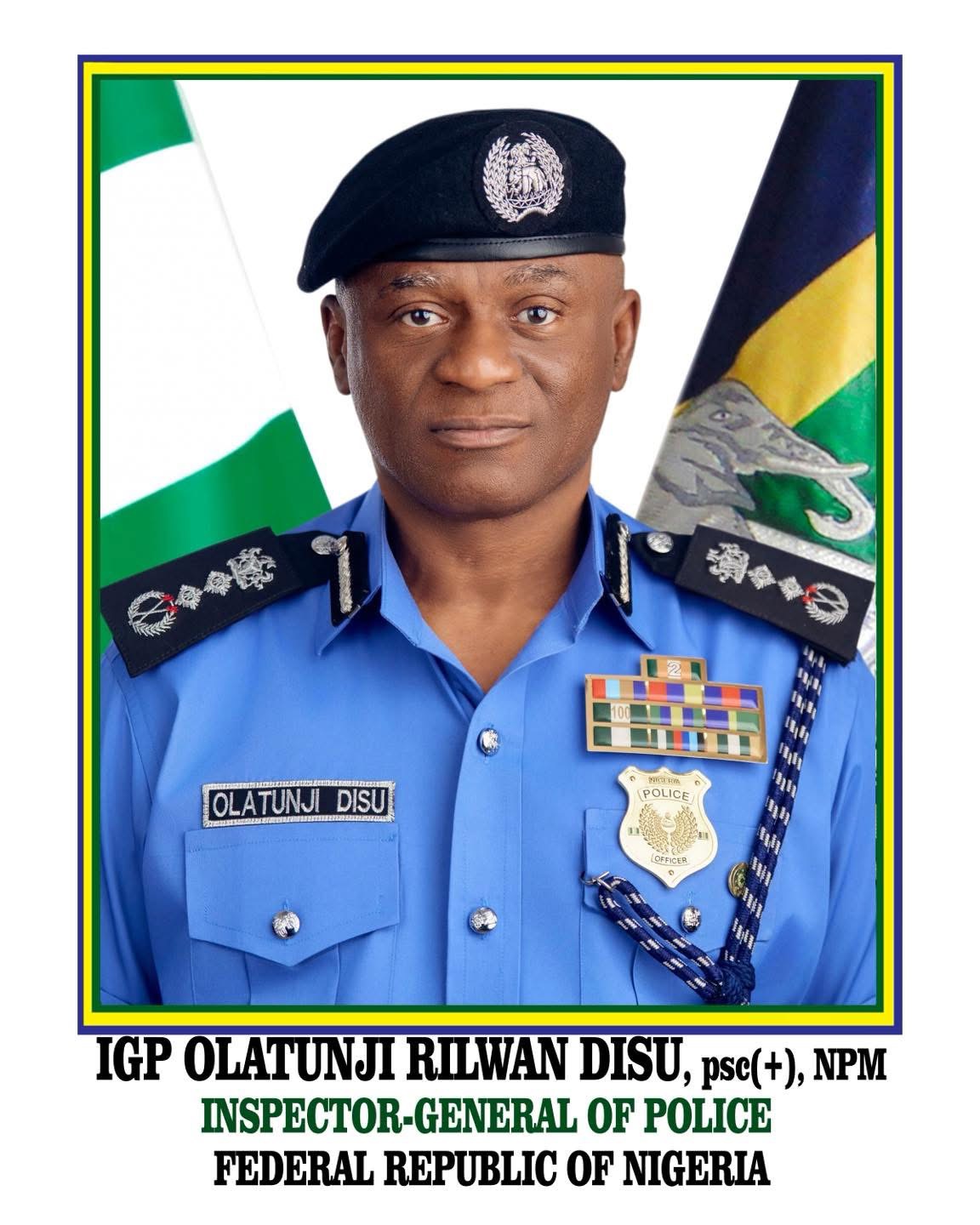
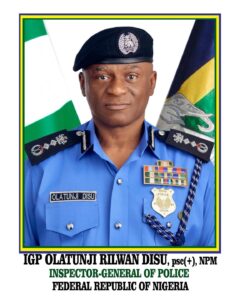
The Inspector-General of Police, IGP Olatunji Rilwan Disu, psc(+), NPM, has extended warm felicitations to the Muslim faithful across Nigeria on the successful completion of the holy month of Ramadan and the celebration of Eid-el-Fitr.
In furtherance of his commitment to ensuring a safe and secure environment during the festive period, the Inspector-General has directed Commissioners of Police and Tactical Commanders across all states of the Federation and the Federal Capital Territory to implement robust security arrangements.
Operational measures include:
Strategic deployment of tactical teams and intelligence operatives.
Deployment of the Special Intervention Squad and conventional police personnel to Eid prayer grounds and critical infrastructure.
Increased presence at highways, motor parks, recreational centers, and other public spaces to ensure peaceful, hitch-free celebrations.
The IGP has also ordered heightened visibility policing, coordinated patrols, enhanced surveillance operations, and intelligence-led stop-and-search duties. These actions are aimed at proactively deterring criminal activities and ensuring a swift response to any emerging threats.
IGP Disu calls on members of the public to remain vigilant, cooperate with law enforcement agencies, and promptly report any suspicious activities to the nearest police station or through the following emergency lines:
08057000001, 08057000002, 09133333785, and 09133333786.
IGP Tunji Disu wishes all Muslim faithful a peaceful and joyous Eid-el-Fitr.

DCP ANTHONY OKON PLACID psc(+) mni
Force Public Relations Officer
Force Headquarters, Abuja
20th March, 2026
EVENTS
Hon Success Opara celebrates Mothering Sunday with St. Peter women, hails them as the ‘neck that controls the household
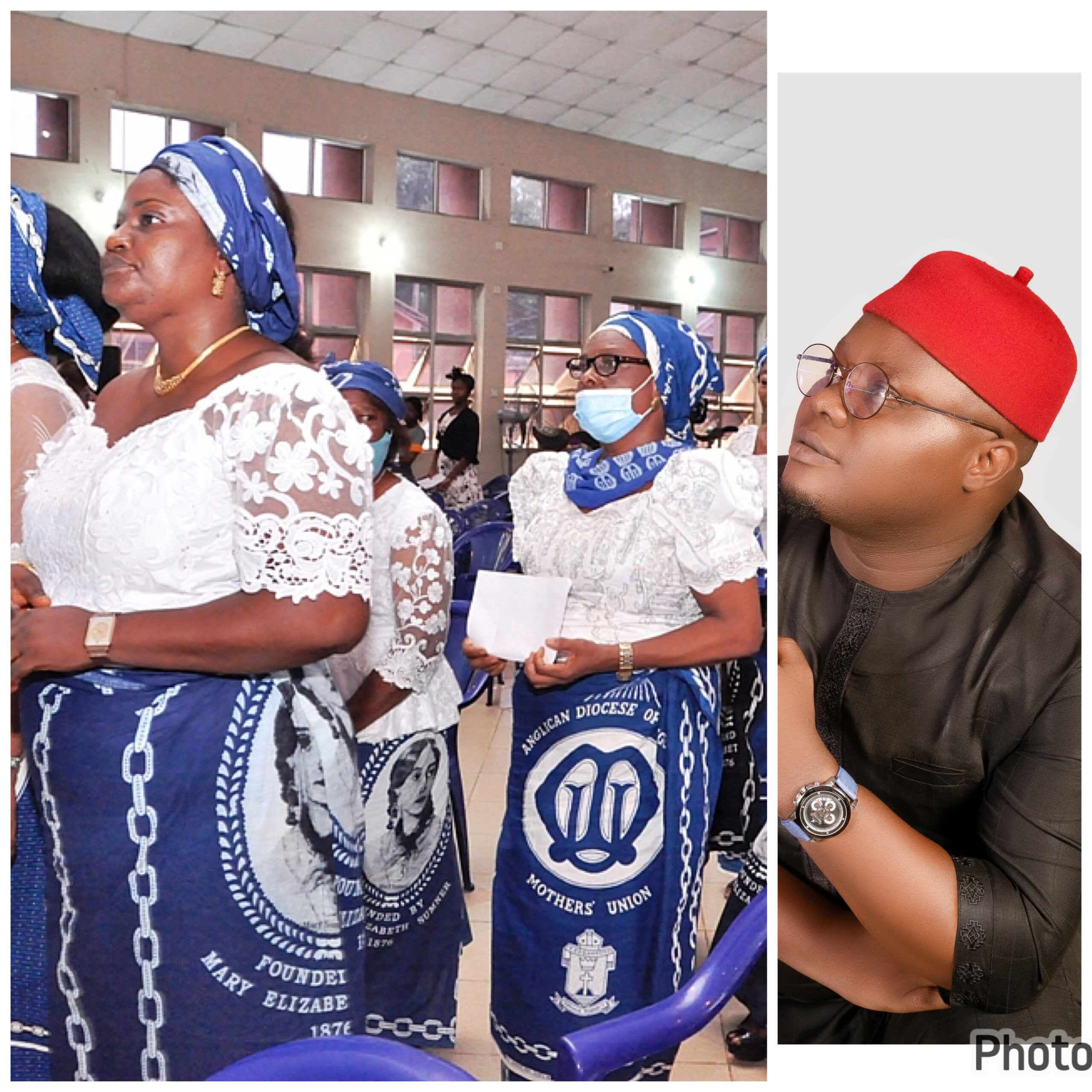
Hon Success Opara, former councilorship candidate for Ikenegbu Ward 2, celebrated Mothering Sunday with the women of St. Peter Anglican Church, Ikenegbu, extolling them as the backbone of their households.
He described them as the “neck that controls the household,” acknowledging their vital role in shaping families and communities.
Opara’s gesture is seen as a testament to his commitment to uplifting and empowering women.
The celebration, which coincided with the Christian observance of Mothering Sunday, featured fellowship and words of encouragement from Opara, who prayed for the women’s well-being.
This event highlights the importance of recognizing and appreciating mothers and mother figures in Nigerian society.
EVENTS
“Early marriage is better than fornication” – Mixed reactions as young Nigerian couple trends after welcoming a child

A young Nigerian couple are currently trending on Arewa social media circles after they welcomed their first child.
The pictures taken by a Kaduna-based photographer have sparked mixed reactions, with some people saying that the girl is underaged and not old enough to be a wife and mother.


David Mark Holds Secret Meeting With PRP Leaders as ADC Crisis Deepens

Chaos As Military Officers Exchange Blows During Tinubu’s Visit To Bayelsa (Videos)

HRH Ekwueme of Ochia Kingdom Iynched & kiIIed in Imo.

-
Business1 year ago
US court acquits Air Peace boss, slams Mayfield $4000 fine
-

 Trending1 year ago
NYA demands release of ‘abducted’ Imo chairman, preaches good governance
-

 Politics1 year ago
Mexico’s new president causes concern just weeks before the US elections
-

 Politics1 year ago
Putin invites 20 world leaders
-

 Politics1 year ago
Russia bans imports of agro-products from Kazakhstan after refusal to join BRICS
-
Entertainment1 year ago
Bobrisky falls ill in police custody, rushed to hospital
-
Entertainment1 year ago
Bobrisky transferred from Immigration to FCID, spends night behind bars
-
Education2 years ago
GOVERNOR FUBARA APPOINTS COUNCIL MEMBERS FOR KEN SARO-WIWA POLYTECHNIC BORI