
Business
What is behind Vietnam’s economic success story?

The World Bank has forecast Vietnam will show the strongest growth out of emerging economies in Southeast Asia.
In a new forecast from the World Bank, Vietnam’s economic growth is expected to reach 6.1% by the end of 2024 and 6.5% in 2025.
Both forecasts are higher than what was estimated in April, with the increase in growth down to a rebound in manufacturing exports, tourism and investment, the report said.
This shows that Vietnam could have a bigger growth in 2025 compared to other emerging economies like Thailand, Cambodia, Malaysia, Indonesia and the Philippines.
“Vietnam certainly faces some serious challenges, not least the ailing domestic sector and over-reliance on the [foreign direct investment] sector, but compared to other Southeast Asian countries, its economic prospects remain bright,” Nguyen Khac Giang, researcher and visiting fellow at the ISEAS Institute, told DW.
What is driving growth?
Vietnam, like other Southeast Asian countries, relies heavily on foreign direct investment.
Between 2021 and 2023, FDI inflows into Vietnam, Thailand, Indonesia, Malaysia, Singapore and the Philippines averaged about $236 billion a year, according to the ASEAN Investment Report 2024.
As Western investors try to diversify away from China amid geopolitical tensions between the Washington and Beijing, Southeast Asian countries are becoming a top choice for foreign investment from the US, Japan and the EU.
Nguyen Khac Giang said Vietnam is taking advantage of those tensions.
“I think Vietnam can maintain its growth momentum due to its domestic advantage of a 100-million population with a rising middle class, while also optimizing the benefits of its geopolitical position in the great power competition between China and the US,” he said.
China has also been investing in Southeast Asia, with Beijing and Hanoi establishing their “comprehensive strategic partnership” in 2008.
‘China plus one’
Like China, Vietnam’s economic growth comes under the stewardship of a one-party system, with the Communist Party having complete controlover the state’s functions, social organizations and media.
“China is Vietnam’s biggest trade partner, but more importantly, it plays a crucial role in Vietnam’s manufacturing sector, as most of its inputs come from China. I don’t think that will change in the foreseeable future,” Nguyen Khac Giang said.
“China Plus One” is a global economic business strategy for investors to reduce sole reliance on market and supply chain operations in China, aiming to expand into other countries while maintaining presence in the Asian giant.
Countries in Southeast Asia are seen as suited alternatives.
Bich Tran, an adjunct fellow at the Center for Strategic and International Studies (CSIS), said Vietnam is a top choice.
“Vietnam is one of the top choices for many companies’ China plus one policy because of the geographical proximity and similar culture,” she told DW.
“For those who have been operating in China, moving to Vietnam is much easier, and dealing with the Vietnamese would be more familiar than dealing with Indonesia or Malaysia,” she said.
“That being said, Vietnam is much smaller than China, so it can only absorb a small number of companies who want to relocate. India, if they open up their economy, would have much better chance of competing with China than Vietnam,” she added.
Vietnam attracts Western economies
The US is Vietnam’s second biggest trade partner and largest export market.
In September 2023, Washington and Hanoi upgraded their diplomatic relations, signing a “Comprehensive Strategic Partnership for Peace, Cooperation and Sustainable Development.” Analysts say the agreement was largely to boost economic benefits.
The US is one of Vietnam’s growing list of strategic partners, including Australia, China, India, Russia, South Korea, and more recently France.
But huge investment from Washington is key to economic opportunities for Vietnam.
Apple, the US tech giant, was again named the most valuable company in the world this year.
Vietnam has become a key manufacturing location for the company, with Apple investing over $15 billion in the country in the last five years.

Apple CEO Tim Cook seen during a visit to Hanoi in 2024
© NHAC NGUYEN/AFP
Vietnam has low labor costs, and a young and large workforce, with 58% under 35-years-old, out of a population of almost 100 million, making the country an attractive bet for investment.
More structural reforms needed
However, strong growth is also encountering domestic issues. Although Vietnam has one of the fastest growing economies in the region, it has a poor reputation on corruption, political censorship, human rights and civic society.
Domestically, local small to medium companies are struggling to become as competitive as manufacturers exporting to international markets.
Prices are also increasing for essentials such as food production due to climate change events, such as the recent Typhoon Yagi. Vietnam faces frequent electricity shortages, and experts say it must increase the use renewable energy.
Sebastian Eckardt, a practice manager for East Asia at the World Bank, said structural reforms are needed.
“During the first half of the year, Vietnam’s economy benefitted from the rebound in export demand. To sustain growth momentum not only for the rest of the year but over the medium term, the authorities should deepen structural reforms, step up public investment while carefully managing emerging financial risks,” Eckard said.
Edited by: Wesley Rahn
Author: Tommy Walker (in Bangkok)









The Trade Union of Nigeria, TUC, has raised the alarm that the price of Premium Motor Spirit aka Petrol may climb to about N2,000 per litre if urgent measures are not taken to cushion the impact of rising global crude prices and the depreciating naira.
Speaking to newsmen on Thursday, April 9, the president of the TUC, Festus Osifo, called on the Federal Government to immediately deploy 60 percent of excess crude oil revenue above the 2026 budget benchmark to subsidise crude feedstock supplies to the Dangote Refinery and other modular refineries, a move it says will slash pump prices of petrol, diesel, and jet fuel within two weeks
“Today, comrades, we are seeing that the cost of petrol is edging towards N2,000 per litre depending on the part of the country that you are. Nigerian workers are already passing through excruciating pain as we speak.
The same way it is affecting transportation, it is also affecting manufacturing. The cost of diesel has also gone northward, meaning that the cost of production has increased. When production costs rise, the final price of goods on the shelves will also skyrocket.
If this continues unchecked, the inflation that we are currently celebrating as going downwards will reverse and start moving up again,” he stated.
Osifo outlined the proposal as an urgent intervention to cushion Nigerian workers from excruciating pain caused by petrol prices edging towards ₦2,000 per litre in some parts of the country

The governor of Oyo state, Seyi Makinde, has approved a N10,000 transportation allowance as a palliative for the state workforce to cushion the effects of the increase in the pump price of Premium Motor Spirit, otherwise known as petrol.
The Chairman of the Nigeria Labour Congress (NLC), Oyo State chapter, Kayode Martins, in a statement released on Monday, March 23, disclosed that the governor has granted the request of the union on the issue of transportation allowance.
The statement read
“Following the intervention and formal request made by the State Council of the Nigeria Labour Congress (NLC) earlier this morning, the state government has approved a N10,000 transportation allowance for all workers in the state.
The newly approved allowance is set to take effect from April 2026, providing much-needed relief to workers grappling with rising transportation costs amid current economic challenges.
This development comes as a direct response to sustained advocacy by the state NLC, aimed at cushioning the impact of increased living expenses on the workforce.
Further details on implementation are expected to be communicated by the relevant government authorities in due course.”
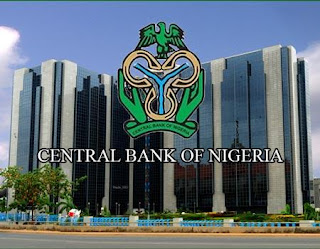
The Central Bank of Nigeria (CBN), has declared that banks and financial institutions must establish and maintain a temporary watch-list for Bank Verification Numbers (BVN) implicated in suspected fraudulent transactions.
According to the CBN in a circular dated March 12, 2026 and signed by its Director of Payments System Policy Department, Musa I. Jimoh, the apex bank said such a suspected BVN may remain on the temporary watchlist for a maximum period of twenty-four (24) hours during which the owner would be contacted to make clarifications.
The circular explained that the move is part of several new measures under a revised regulatory framework aimed at enhancing financial system stability.
“A BVN may remain on this temporary Watchlist for a maximum period of twenty-four (24) hours, during this period, the BVN owner shall be contacted to provide clarification regarding the identified transaction(s),” the circular stated.
The circular also sets an age requirement for BVN enrolment, restricting registration to individuals who have attained eighteen (18) years and above.
The CBN also added that amendments to phone numbers linked to a BVN shall be allowed only once.
“Amendments to phone numbers linked to a BVN shall be allowed only once,” the circular noted.
The apex bank stated that access to BVN databases will remain tightly controlled.
“Access to the BVN databases shall be exclusively granted to Central Bank of Nigeria (CBN) licensed financial institutions.
“Notwithstanding this provision, the Central Bank of Nigeria (the Bank) reserves the right to approve access to the BVN databases in extenuating circumstances and in accordance with the provisions of extant laws,” the circular said.
Financial institutions are expected to comply with the new requirements, and customers may be contacted by their banks if their BVNs are temporarily flagged during the new fraud monitoring process.
The new policy, as stated by the CBN, takes effect from May 1, 2026.

2027: More Than 50 Lawmakers Lose APC Reps Tickets in Major Primary Election

Bandits behind Ogbomoso school abduction will face full wrath of the law- President Tinubu

PDP to screen Goodluck Jonathan on Tuesday as its sole Presidential aspirant For 2027 race

-
Business2 years ago
US court acquits Air Peace boss, slams Mayfield $4000 fine
-

 Trending2 years ago
NYA demands release of ‘abducted’ Imo chairman, preaches good governance
-

 Politics2 years ago
Mexico’s new president causes concern just weeks before the US elections
-

 Politics2 years ago
Putin invites 20 world leaders
-

 Politics2 years ago
Russia bans imports of agro-products from Kazakhstan after refusal to join BRICS
-
Entertainment2 years ago
Bobrisky falls ill in police custody, rushed to hospital
-
Entertainment2 years ago
Bobrisky transferred from Immigration to FCID, spends night behind bars
-
Education2 years ago
GOVERNOR FUBARA APPOINTS COUNCIL MEMBERS FOR KEN SARO-WIWA POLYTECHNIC BORI