
Politics
Singapore seeks to navigate US-China rivalry regardless of presidential election outcome

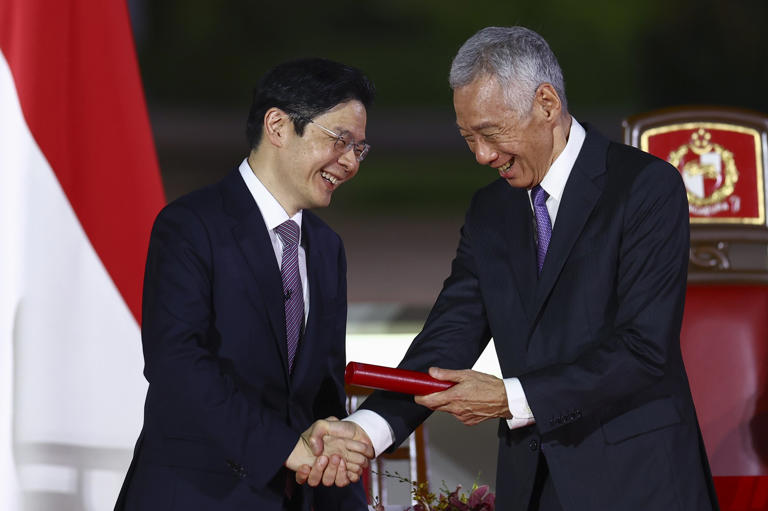
The city state has adapted well to the rivalry and is unlikely to shift from its hedging policy between Washington and Beijing, analysts say
As the United States presidential election draws closer, Singapore is keeping a close eye on how the outcome could affect its careful tightrope walk between the world’s largest economy and China amid their ongoing geopolitical rivalry and trade war.
The city state has been adapting well to the evolving realities arising from the fallout of the US-China rivalry, analysts say.
Regardless of who becomes the next US leader following the November 5 election – Vice-President Kamala Harris or ex-president Donald Trump – the fundamentals of America’s foreign policies towards China and Asia are unlikely to change drastically as much of the uncertainty has been factored in, according to analysts.
Do you have questions about the biggest topics and trends from around the world? Get the answers with SCMP Knowledge, our new platform of curated content with explainers, FAQs, analyses and infographics brought to you by our award-winning team.
“While Trump may inject greater uncertainty and unpredictability, a Harris presidency will not and cannot suddenly engender stability, peace and predictability,” said Dylan Loh, an assistant professor at Nanyang Technological University’s Public Policy and Global Affairs division.
Last week, Singapore’s Senior Minister and former prime minister Lee Hsien Loong warned that if Trump were to slap tariffs of 60 per cent or higher on Chinese goods in his second term as promised, it would put Singapore in “uncharted territory”.
“On the American side, there are not many issues where the Democrats and the Republicans agree on, but this is one [US policy towards China]. And that is a very serious matter. So whether it is Harris or whether it is Trump, that is not going to be changing,” Lee said at a business event last week.
A second Trump term would likely spell more disruptions for American allies and other countries, he said. “In particular, I think, what you can anticipate is that his attitude towards allies, towards America’s friends, will be different from what the Democrat administration has done in these last four years,” Lee added.
In an interview with The Economist in May, days before he became Singapore’s prime minister, Lawrence Wong described the city state as being neither pro-China nor pro-US but “pro-Singapore”. He stressed that Singapore must brace itself for the possibility of a decade or more of unpredictability as the US and China sought a new equilibrium in their relationship.
Last year, Singapore and China upgraded their free trade agreement, which would give businesses from the city state more access to Chinese markets. China has been Singapore’s biggest trading partner since 2013, with two-way trade totalling US$108.39 billion last year, according to data from both countries.
Singapore also has a free-trade agreement with the US since 2004, Washington’s first with an Asian country.
Meanwhile, regional countries such as Singapore and Malaysia have been closely monitoring the impact of the US-China tech war as global businesses seek a haven from the fallout.
Singapore has become one of the top destinations for global tech firms looking to expand their operations into the region, and is home to 80 of the world’s top 100 technology companies, according to a 2023 article published by the Economic Development Board.
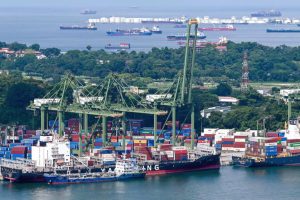
Singapore’s Pulau Brani port terminal. The country’s two biggest trading partners are China and the US. Photo: AFP
Hedging policy
Harris and Trump have so far been vague about their plans for Southeast Asia, according to analysts who spoke to The Post previously
Ongoing wars in Ukraine and the Middle East have diverted Washington’s attention from Southeast Asia, which could limit its ability to engage effectively with the region and Singapore, the analysts said.
While Trump was expected to be “more transactional” in dealing with Washington’s regional allies, Harris would likely adopt a “more personal approach” in dealing with the region, they added.
Singapore is expected to be agnostic about the next US president and is unlikely to depart from its hedging policy between Washington and Beijing, according to one analyst.
In an Asia New Zealand Foundation commentary published earlier this week, NTU’s Loh wrote that across the Trump and Joe Biden administrations in the US, ties between Washington and Singapore had not shifted drastically “from its historically strong and progressive character”.
He pointed out that there were important progress made in areas such as critical technologies, clean energy, and financial technologies throughout the two administrations.
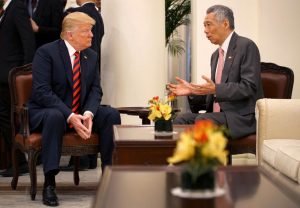
Then US President Donald Trump talks with then Singapore Prime Minister Lee Hsien Loong in the city state in 2018. Photo: AP
Relations between the US and Singapore were based on common interests and pragmatism, said Bilahari Kausikan, a former permanent secretary of Singapore’s foreign ministry.
“There is only one America which plays a vital role in maintaining balance in Asia – a role that is now acknowledged by traditionally non-aligned countries like India and Indonesia and even old enemies like Vietnam – so we will find a way of working with whoever occupies the White House,” he wrote in a Facebook post earlier this week.
If Trump were to carry out his promise to levy tariffs on all imports to promote American manufacturing, it would slow the world economy, Kausikan said.
He was referring to the Republican presidential candidate’s proposal to impose a 20 per cent tariff on goods from all US trading partners and at least 60 per cent on Chinese imports.
Kausikan said Trump could also adopt a tougher stance on Chinese goods using Southeast Asia as a “back door into the US”. While Harris would likely not ignore these issues, she might not “pursue them with the same sharpness” as Trump, Kausikan added.
“We have to understand that the US attitude towards trade has fundamentally changed and adapt ourselves to the new reality,” he said.

US Vice President Kamala Harris attends a news conference in Singapore in 2021. Photo: AP
Tan See Seng, research adviser at the S. Rajaratnam School of International Studies (RSIS), said any move to impose higher tariffs on US trading partners could prove “challenging” for Singapore, given the city state’s heavy reliance on global trade.
“If Trump wins, he is likely to reconvene another trade war with China. If that leads to China doubling down on its ongoing effort to ‘decouple’ its economy from the US, Singapore’s economy will be affected but it’s unclear at this point exactly how so,” he added.
On the other hand, Harris would likely take on a more “nuanced strategy” if she were to become president, Tan said. Regardless of the next occupant of the White House, Singapore would have to find a “sweet spot” to manage its ties with China and the US, he added.
The dynamics within the Democratic and Republican parties would also influence the approach of the US towards China, said Chong Ja Ian, a political scientist from the National University of Singapore.
Some Republicans have been calling for a tougher approach towards Beijing while others from the same party preferred for Washington to maintain the status quo, he said.
“We’re not sure, even after the presidential election, which of these voices will win out within the different parties. If Trump wins, he cycles through these people quickly so there could be a lot of vacillation among these different kinds of voices,” he said.
In comparison, Washington’s China policy could be more “gradual” under a Harris administration, he added.
Singapore and other Southeast Asian countries have learnt to navigate through the US presidential cycles every four years, including their impact on Washington’s relationship with China, analysts said.
Tan from RSIS said: “China may respond a little differently to the US depending on who is leading America and Singapore will need to adroitly go with the flow.”
More Articles from SCMP
Art Basel Paris boosts city’s Art Week, full of art fairs, exhibitions and Hollywood stars
Wet markets at some public housing estates in Hong Kong no bargain for residents, poll finds
Teaching Hong Kong’s rule of law and fostering patriotism are ‘inseparable’: justice minister
Hong Kong can fulfil its hydrogen ambitions via Foshan, suggests start-up
This article originally appeared on the South China Morning Post (www.scmp.com), the leading news media reporting on China and Asia.
Copyright (c) 2024. South China Morning Post Publishers Ltd. All rights reserved.



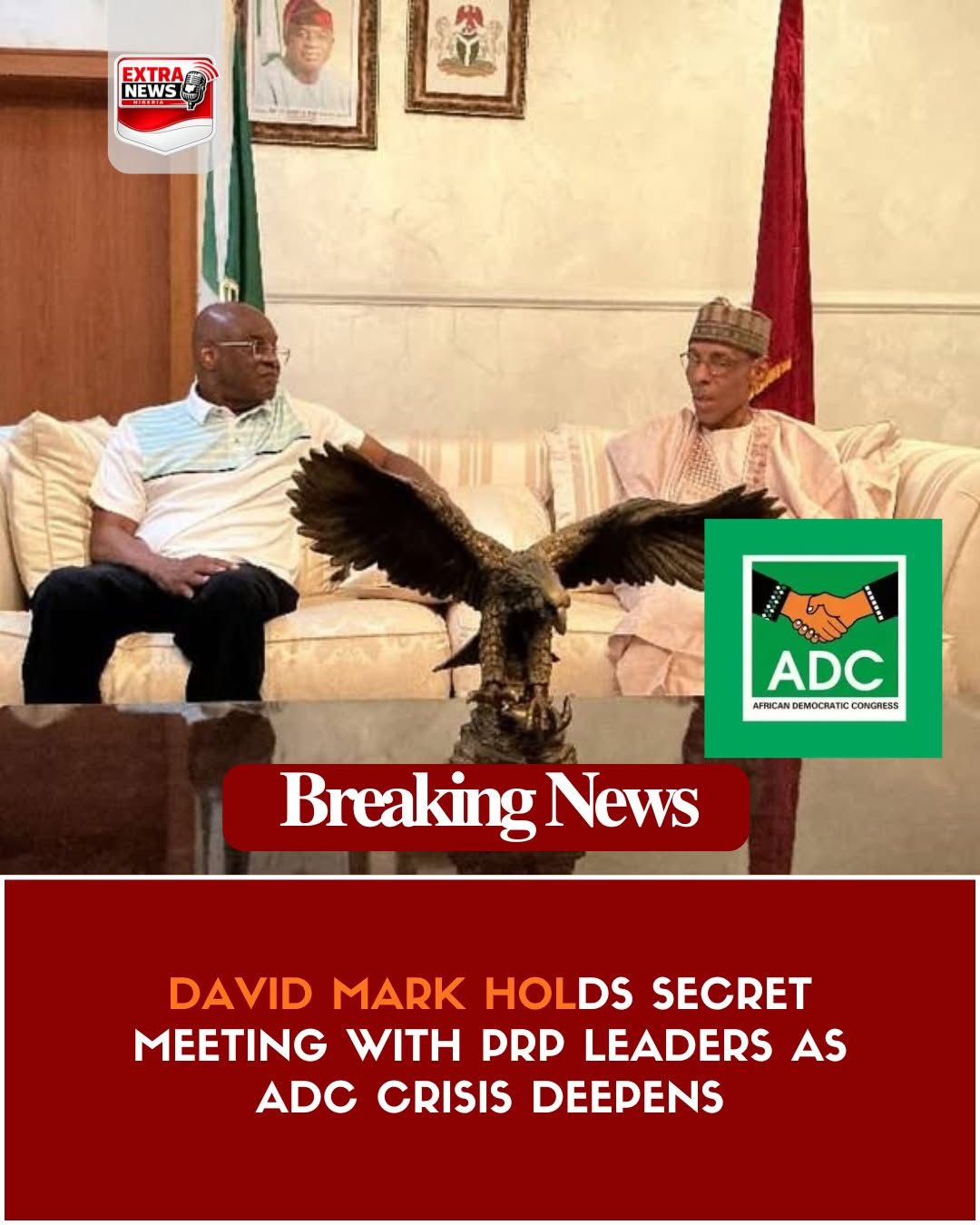
The embattled National Chairman of the African Democratic Congress, David Mark, on Friday held a closed-door meeting with leaders of the Peoples Redemption Party in Abuja. The private consultation is seen as a fresh round of political moves as the ADC continues to battle a lingering leadership crisis and growing internal divisions.
Top figures from both parties were said to be present at the meeting, including PRP National Chairman Hakeem Baba-Ahmed and senior ADC officials. The development is already drawing attention as opposition parties continue realignments ahead of the 2027 political season, with many watching closely for possible alliances and next steps in the party crisis.
Politics
“ADC is a Holy Party, Cannot be used to Scam Nigerians Again” – Hon Success Opara tells David Mark
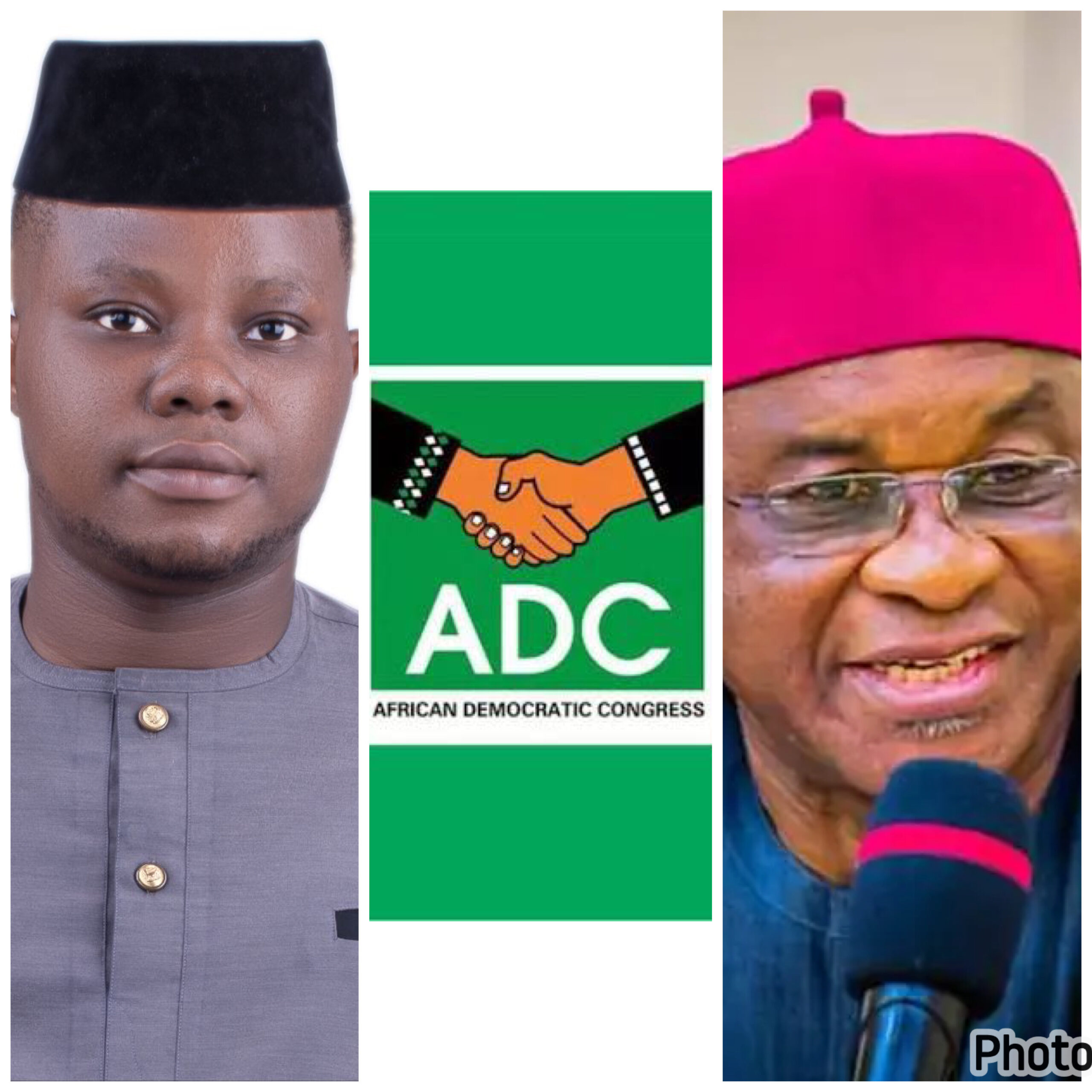
ADC Party in Turmoil: Hon Success Opara Slams Leadership, Warns Against Scamming Nigerians
Abuja, Nigeria – The African Democratic Congress (ADC) is facing internal strife as Hon Success Opara, a prominent party official, has warned against attempts to use the party to deceive Nigerians. Opara specifically criticized the leadership of David Mark, stating that the party cannot be used to scam citizens again.
“ADC holy Party cannot be used to scam Nigerians again,” Opara said, emphasizing that those forming coalitions are hindering the party’s growth and denying youths opportunities to thrive.
“Those who are forming coalition don’t want to give the youths the chance to strive in the party,” she added.
Opara’s statement highlights the deepening divisions within the ADC, with concerns over leadership and the party’s direction.
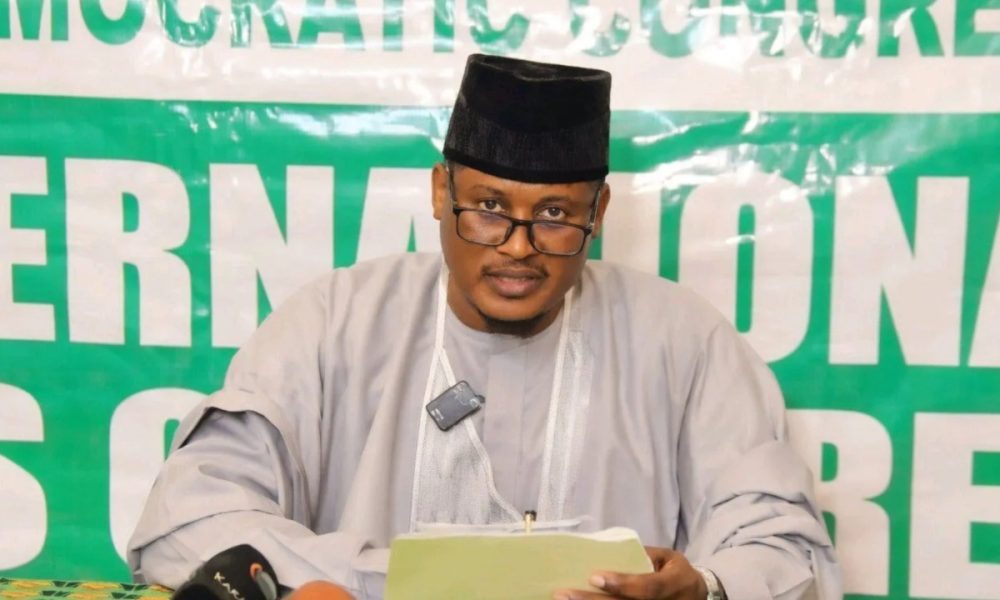
The factional National Chairman of the African Democratic Congress (ADC), Nafiu Bala Gombe, has announced that the party under his leadership will bar individuals above the age of 55 from contesting for political positions.
Gombe made the disclosure during an interview with BBC Hausa, where he outlined a vision centred on generational change and greater youth participation in politics.
“The African Democratic Congress (ADC) is a party that belongs to all Nigerians. What we are doing now is to ensure the party moves forward properly.
“We have decided that we will give the youths a real chance. The time has come for young people to take the lead in politics.
“If you are over 55 years old, you are not going to contest for positions in the ADC under our leadership.
“We want to bring in fresh blood, new ideas, and energy from the youth. Nigeria’s future depends on the young generation.
“The old ways have not worked well for the country. We need to open the door wide for youths to participate fully as candidates, leaders, and decision-makers,” he said.

David Mark Holds Secret Meeting With PRP Leaders as ADC Crisis Deepens

Chaos As Military Officers Exchange Blows During Tinubu’s Visit To Bayelsa (Videos)

HRH Ekwueme of Ochia Kingdom Iynched & kiIIed in Imo.

-
Business1 year ago
US court acquits Air Peace boss, slams Mayfield $4000 fine
-

 Trending1 year ago
NYA demands release of ‘abducted’ Imo chairman, preaches good governance
-

 Politics1 year ago
Mexico’s new president causes concern just weeks before the US elections
-

 Politics1 year ago
Putin invites 20 world leaders
-

 Politics1 year ago
Russia bans imports of agro-products from Kazakhstan after refusal to join BRICS
-
Entertainment1 year ago
Bobrisky falls ill in police custody, rushed to hospital
-
Entertainment1 year ago
Bobrisky transferred from Immigration to FCID, spends night behind bars
-
Education2 years ago
GOVERNOR FUBARA APPOINTS COUNCIL MEMBERS FOR KEN SARO-WIWA POLYTECHNIC BORI