
News
Rare Sahara Floods Bring Morocco’s Dried-Up South Back To Life

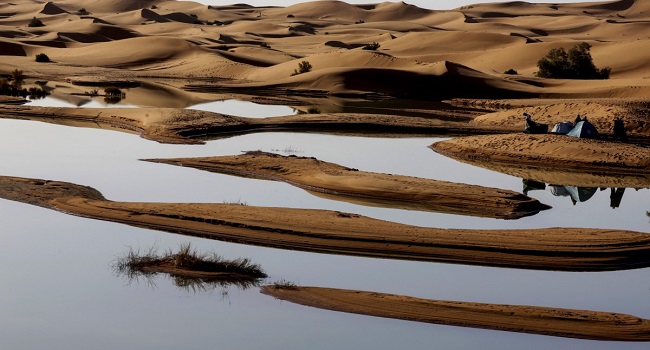
Locals said the basin had been barren for nearly 20 years.
In Morocco’s southeastern desert, a rare downpour has brought lakes and ponds back to life, with locals — and tourists — hailing it as a gift from the heavens.
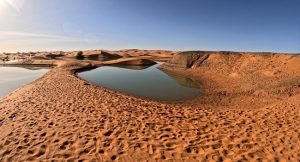
In Merzouga, an attractive tourist town some 600 kilometres (370 miles) southeast of the capital Rabat, the once-parched golden dunes are now dotted with replenished ponds and lakes.
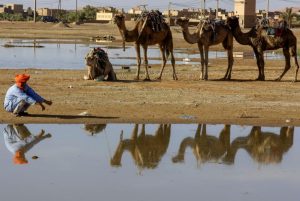
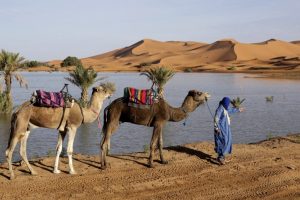
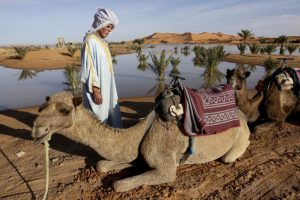
A man sits next to his camels on the shores of Yasmina lake, a seasonal lake in the village of Merzouga in the Sahara desert in southeastern Morocco on October 20, 2024. (Photo by AFP)
“We’re incredibly happy about the recent rains,” said Youssef Ait Chiga, a local tour guide leading a group of German tourists to Yasmina Lake nestled amidst Merzouga’s dunes.
READ ALSO: ‘Venezuela Won’t Be Silenced,’ Maduro Fumes Over Blocked Bid To Join BRICS
Khalid Skandouli, another tour guide, said the rain has drawn even more visitors to the tourist area, now particularly eager to witness this odd transformation.
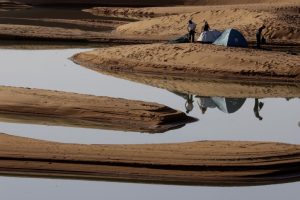
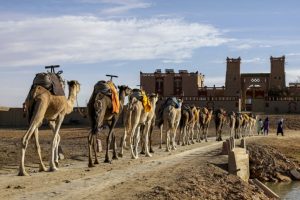
Tourists camp on the shores of Erg Znaigui, a seasonal lake in the village of Merzouga in the Sahara desert in southeastern Morocco on October 20, 2024. (Photo by AFP)
With him, Laetitia Chevallier, a French tourist and regular visitor to the region, said the rainfall has proved a “blessing from the sky”.
“The desert became green again, the animals have food again, and the plants and palm trees came back to life,” she said.
Locals told AFP the basin had been barren for nearly 20 years.
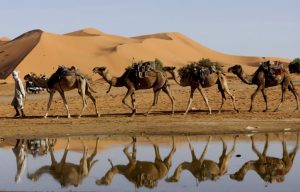
A man leads his camels along the shores of Yasmina lake, a seasonal lake in the village of Merzouga in the Sahara desert in southeastern Morocco on October 20, 2024. (Photo by AFP)
Last year was Morocco’s driest in 80 years, with a 48 percent drop in rainfall, according to an October report from the General Directorate of Meteorology (DGM).
But in September, torrential rains triggered floods in southern parts of Morocco, killing at least 28 people, according to authorities.
The rare heavy rains come as the North African kingdom grapples with its worst drought in nearly 40 years, threatening its economically crucial agriculture sector.
Neighbouring Algeria saw similar rain and flooding in early September, killing six people.
North African countries currently rank among the world’s most water-stressed, according to the World Resources Institute, a non-profit research organisation.
The kingdom’s meteorological agency described the recent massive rainfall as “exceptional”.
It attributed it to an unusual shift of the intertropical convergence zone — the equatorial region where winds from the northern and southern hemispheres meet, causing thunderstorms and heavy rainfall.
‘Climate change’
“Everything suggests that this is a sign of climate change,” Fatima Driouech, a Moroccan climate scientist, told AFP. “But it’s too early to say definitively without thorough studies.”
Driouech emphasised the importance of further research to attribute this event to broader climate trends.
Experts say climate change is making extreme weather events, such as storms and droughts, more frequent and intense.
In Morocco’s south, the rains have helped partially fill some reservoirs and replenish groundwater aquifers.
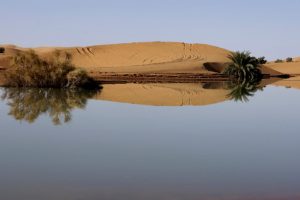
But for those levels to significantly rise, experts say the rains would need to continue over a longer period of time.
The rest of the country is still grappling with drought, now in its sixth consecutive year, jeopardising the agricultural sector that employs over a third of Morocco’s workforce.
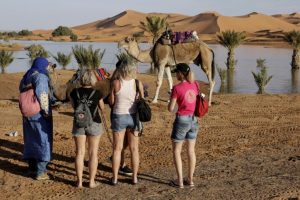
Jean Marc Berhocoirigoin, a 68-year-old French tourist, said he was surprised to find Yasmina Lake replenished.
“I felt like a kid on Christmas morning,” he said. “I hadn’t seen these views for 15 years.”
Water has also returned to other desert areas such as Erg Znaigui, about 40 kilometres south of Merzouga, AFP reporters saw.
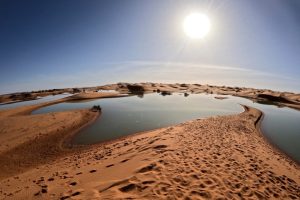
While the rains have breathed life into Morocco’s arid southeast, Driouech warns that “a single extreme event can’t bring lasting change”.
But last week, Morocco’s meteorological agency said such downpours could become increasingly frequent, “driven partly by climate change as the intertropical convergence zone shifts further north”.

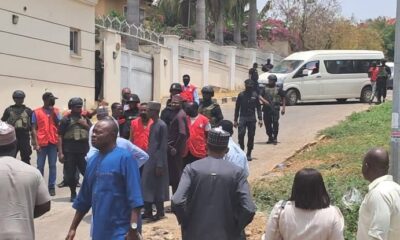







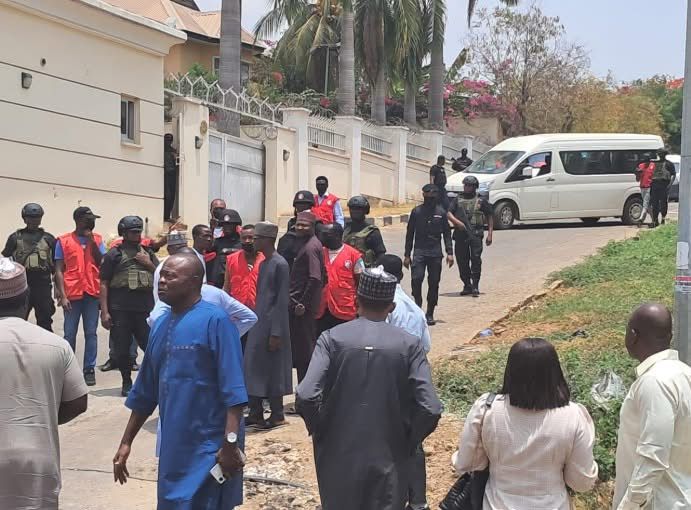
Former Attorney-General Abubakar Malami says Economic and Financial Crimes Commission operatives forcefully evicted him and his family from their Abuja residence despite ongoing court proceedings over the property’s forfeiture.
He described the action as unlawful and vowed to challenge it in court.

The governor of Oyo state, Seyi Makinde, has approved a N10,000 transportation allowance as a palliative for the state workforce to cushion the effects of the increase in the pump price of Premium Motor Spirit, otherwise known as petrol.
The Chairman of the Nigeria Labour Congress (NLC), Oyo State chapter, Kayode Martins, in a statement released on Monday, March 23, disclosed that the governor has granted the request of the union on the issue of transportation allowance.
The statement read
“Following the intervention and formal request made by the State Council of the Nigeria Labour Congress (NLC) earlier this morning, the state government has approved a N10,000 transportation allowance for all workers in the state.
The newly approved allowance is set to take effect from April 2026, providing much-needed relief to workers grappling with rising transportation costs amid current economic challenges.
This development comes as a direct response to sustained advocacy by the state NLC, aimed at cushioning the impact of increased living expenses on the workforce.
Further details on implementation are expected to be communicated by the relevant government authorities in due course.”
News
Former Acting Accountant-General of the Federation bags 72years imprisonment for diverting N868.46 million security funds
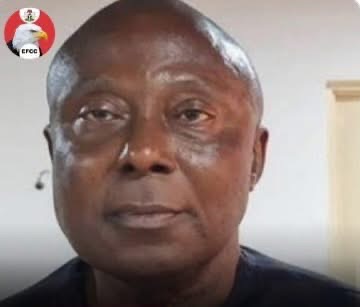
Justice James Omotosho of the Federal High Court in Abuja, on Monday, March 23, convicted and sentenced Chukwunyere Nwabuoku, former acting Accountant-General of the Federation (AGoF), to a 72-year jail term without an option of fine.
DailyTrust reports that in the judgment delivered, Justice Omotosho held that the Economic and Financial Crimes Commission (EFCC) had been able to prove the nine-count money laundering charge beyond reasonable doubt.
According to the judge, the defendant is hereby convicted as charged.
Justice Omotosho convicted Nwabuoku in all the nine counts and sentenced him to eight years imprisonment in each of the counts, making 72 years.
The judge, however, ordered that the counts shall run concurrently.
Justice Omotosho, who described Nwabuoku’s act of diverting funds meant for security and defence while he served as Director of Finance and Account in the Ministry of Defence as “appalling,” commended the EFCC for being detailed in its prosecution.
The judge observed that the evidence of the 9th prosecution witness that Nwabuoku voluntarily refunded part of the siphoned money of over N200 million during investigation was not controverted by the defence.
Nwabuoku served as the Director of Finance and Accounts in the Ministry of Defence between 2019 and 2021. He became acting Accountant General of the Federation in May 2022.

IMO STATE LABOUR PARTY DESCENDS INTO FACTIONAL WAR

EFCC evicts Malami from Abuja home amid forfeiture dispute

Fuel price hike: Gov Makinde announces N10,000 transport support for workers

-
Business1 year ago
US court acquits Air Peace boss, slams Mayfield $4000 fine
-

 Trending1 year ago
NYA demands release of ‘abducted’ Imo chairman, preaches good governance
-

 Politics1 year ago
Mexico’s new president causes concern just weeks before the US elections
-

 Politics1 year ago
Putin invites 20 world leaders
-

 Politics1 year ago
Russia bans imports of agro-products from Kazakhstan after refusal to join BRICS
-
Entertainment1 year ago
Bobrisky falls ill in police custody, rushed to hospital
-
Entertainment1 year ago
Bobrisky transferred from Immigration to FCID, spends night behind bars
-
Education2 years ago
GOVERNOR FUBARA APPOINTS COUNCIL MEMBERS FOR KEN SARO-WIWA POLYTECHNIC BORI