
News
Bobrisky to face fresh criminal charges as panel indicts four prison officers


Controversial crossdresser, Idris Okuneye, aka Bobrisky, may face fresh criminal charges over claims that he served his jail term in a private apartment and bribed officials of the Economic and Financial Crimes Commission to drop money laundering charges against him.
Ekwutosblog on Sunday exclusively gathered that a panel set up to investigate the claims recommended that he should face defamation and criminal charges.
Bobrisky was sentenced to six months’ imprisonment on April 12 for abusing the naira. He was released from prison on August 5.
A few weeks after his release, controversial social critic, Martins Otse, aka VeryDarkMan, shared a voice note of a conversation purportedly between Bobrisky and another person, where the crossdresser allegedly stated that he bribed EFCC officers with N15m to drop money laundering charges against him. He also claimed to have bribed officials of the Nigerian Correctional Service to serve his six-month sentence in a private apartment.
The Minister of Interior, Olubunmi Tunji-Ojo, subsequently constituted an investigation panel, chaired by the Permanent Secretary of the ministry, Magdalena Ajani, on September 30, to probe the claims.
The panel, while presenting its report, said there was no evidence that Bobrisky slept outside the Kirikiri Custodial Centre during his six-month sentence.
Details of the report, exclusively obtained by Ekwutosblog on Friday, stated that Bobrisky tarnished the image of the correctional service with false claims.
The panel also asked the Department of State Services to investigate whether, directly or through a proxy, he bribed the EFCC or the correctional service.
If the allegations of bribery by Bobrisky are substantiated, the panel said he should be charged with corrupt practices.
“The Nigerian Correctional Service should file defamation suits against Bobrisky under sections 373-375 of the Criminal Code Act for his false claims about bypassing the prison system, tarnishing the institution’s reputation.
“The DSS should be requested to investigate whether Bobrisky, directly or through a proxy, bribed EFCC or NCoS officials. If substantiated, Bobrisky should face charges under the Corrupt Practices and Other Related Offences Act for bribing public officials,” the report partly read.
The panel also indicted four correctional officers who were recommended for disciplinary action as outlined in the NCoS’s condition of service, civil service, and applicable laws.
One of those recommended for sanctions is a former Controller of Corrections, Ben Rabbi-Freeman.
He was accused of “effecting the transfer of Okuneye Idris Olarenwaju without proper documentation of Form 5 and Form 5A from the Medium-Security Custody Centre to the Maximum-Security Custodial Centre on April 22, 2024, after over four months of the transfer date, and after the inmate had ended his imprisonment term; backdating the transfer documentation in relation to 1a and 1b above.
The Minister of Interior, Olubunmi Tunji-Ojo, subsequently constituted an investigation panel, chaired by the Permanent Secretary of the ministry, Magdalena Ajani, on September 30, to probe the claims.
The panel, while presenting its report, said there was no evidence that Bobrisky slept outside the Kirikiri Custodial Centre during his six-month sentence.
Details of the report, exclusively obtained by Sunday PUNCH on Friday, stated that Bobrisky tarnished the image of the correctional service with false claims.
The panel also asked the Department of State Services to investigate whether, directly or through a proxy, he bribed the EFCC or the correctional service.
If the allegations of bribery by Bobrisky are substantiated, the panel said he should be charged with corrupt practices.
“The Nigerian Correctional Service should file defamation suits against Bobrisky under sections 373-375 of the Criminal Code Act for his false claims about bypassing the prison system, tarnishing the institution’s reputation.
“The DSS should be requested to investigate whether Bobrisky, directly or through a proxy, bribed EFCC or NCoS officials. If substantiated, Bobrisky should face charges under the Corrupt Practices and Other Related Offences Act for bribing public officials,” the report partly read.
The panel also indicted four correctional officers who were recommended for disciplinary action as outlined in the NCoS’s condition of service, civil service, and applicable laws.
One of those recommended for sanctions is a former Controller of Corrections, Ben Rabbi-Freeman.
He was accused of “effecting the transfer of Okuneye Idris Olarenwaju without proper documentation of Form 5 and Form 5A from the Medium-Security Custody Centre to the Maximum-Security Custodial Centre on April 22, 2024, after over four months of the transfer date, and after the inmate had ended his imprisonment term; backdating the transfer documentation in relation to 1a and 1b above.
“Causing the in-charge Ikoyi Custodial Centre, in-charge Medium-Security Custodial Centre, and in-charge Maximum-Security Custodial Centre to sign backdated transfer documents in relation to Okuneye Idris Olarenwaju.”
In addition, the Deputy Controller of Corrections who was in charge of the Kirikiri Medium Security, Micheal Anugwa, who claimed during a parliamentary inquiry that he had not been suspended despite an official order from the Minister of Interior, was recommended for disciplinary action.
He was indicted for receiving Bobrisky into the Medium Security Custodial Centre without the relevant documentation on April 12, 2024, and without the necessary transfer documentation.
“DCC Balogun Sikiru (retd) — formerly in-charge of Maximum Security Custodial Centre for receiving Bobrisky into the Maximum Security Custodial Centre without the relevant documentation on April 22, 2024, and without the necessary transfer documentation, and DCC Sikiru Kamoru Adekunle who was in charge of the Maximum Security Custodial Centre for backdating the transfer documentation in relation to receiving of Okuneye Idris into the Maximum Security Custodial Centre on April 22, 2024, which was a period he was yet to resume as the in-charge of the Maximum Security Custodial Centre.”
The panel further recommended an audit of all inmates and detainees in all custodial centres of the NCoS, their warrants, and other records. It asked that a mechanism be set up to do this and sustain it as an effective oversight weekly.
It demanded “decommercialisation of all welfare and support services to inmates with immediate effect and ensuring that adequate funding and oversight are put in place to ensure the continuation of these. This will also include building sustainable partnerships with civil society organisations (example, with relevant NGOs and professional associations) on some or all of these.”
“Facilitate the effective implementation of non-custodial measures across the entire country to help reduce the number of people in custodial centres by utilising imprisonment only as a last resort,” the report added.
Special facilities in custodial centres
A senior management officer of the NCoS told Ekwutosblog that what people called VIP treatment for certain prisoners was a special facility that had existed for years.
According to the high-ranking officer, custodial centres have different facilities and prisoners’ conditions (health, age, sex) determine which facility they stay in to serve their jail term.
The officer said, “There are different facilities in the custodial centres across the country, and it is not out of place to treat some of the prisoners according to their health conditions, sex, age, and category of the sentence. Importantly, the prison authority also considers human rights and the treatment of the prisoners.
“The case of Bobrisky is an eye-opener for us. The NCoS authority confirmed that he is a woman from the middle upward, while he is a man from the middle downward. We had never had such a person in our custody, and there is no facility for such a situation. He had to be placed in a separate cell so that he wouldn’t be abused. That facility is what he ignorantly called a private apartment.
“Whether VIP or not, the condition of a prisoner will determine the facility he/she is going to stay in. We can’t put a prisoner who has high blood pressure in a cell without enough ventilation.”
Activists make case for crossdressers
Okuneye’s case has sparked debate on human rights and recognition of crossdressers, transgenders, and transsexual individuals in the country’s laws, institutions, and facilities.
Some activists, who spoke with Ekwutosblog, argued that the government and its institutions should be aware of the presence of these individuals and make provisions for them.
The activists believe that sexual orientation is part of the human rights to be respected by the Nigerian government.
An activist, Femi Adeyeye, said the Kirikiri Custodial Centre where Bobrisky served his jail term was not befitting of his sexual orientation.
Adeyeye urged the Federal Government to respect the rights of individuals regardless of their sexual orientation. He also called on the government to provide special facilities for transgender inmates.
“A special cell for transgender persons is a welcome development; it’s something the government should look into,” he stated.
Another activist, Michael Adaramoye, noted that the Nigerian society had not come to terms with the reality of a growing transgender population.
However, Adaramoye said, “While we must recognise the right of individuals to sexual freedom, as long as it does not infringe on the rights of others, we must also be sensitive to the concerns of other members of society.
He advocated the provision of facilities to accommodate transgender individuals in prisons and cells.
“It is important to note that our correctional centres are organised in a way that dehumanises inmates. Under such vicious conditions, it is difficult for any positive character reform to occur. The prison system in Nigeria is in dire need of deep reform and overhaul,” the activist added.
Also, human rights lawyer, Toyin Taiwo-Ojo, said the Federal Government’s position on homosexuality was ambiguous.
“The Nigerian government must re-evaluate Bobrisky’s detention and consider the long-term implications of their decisions,” she concluded.




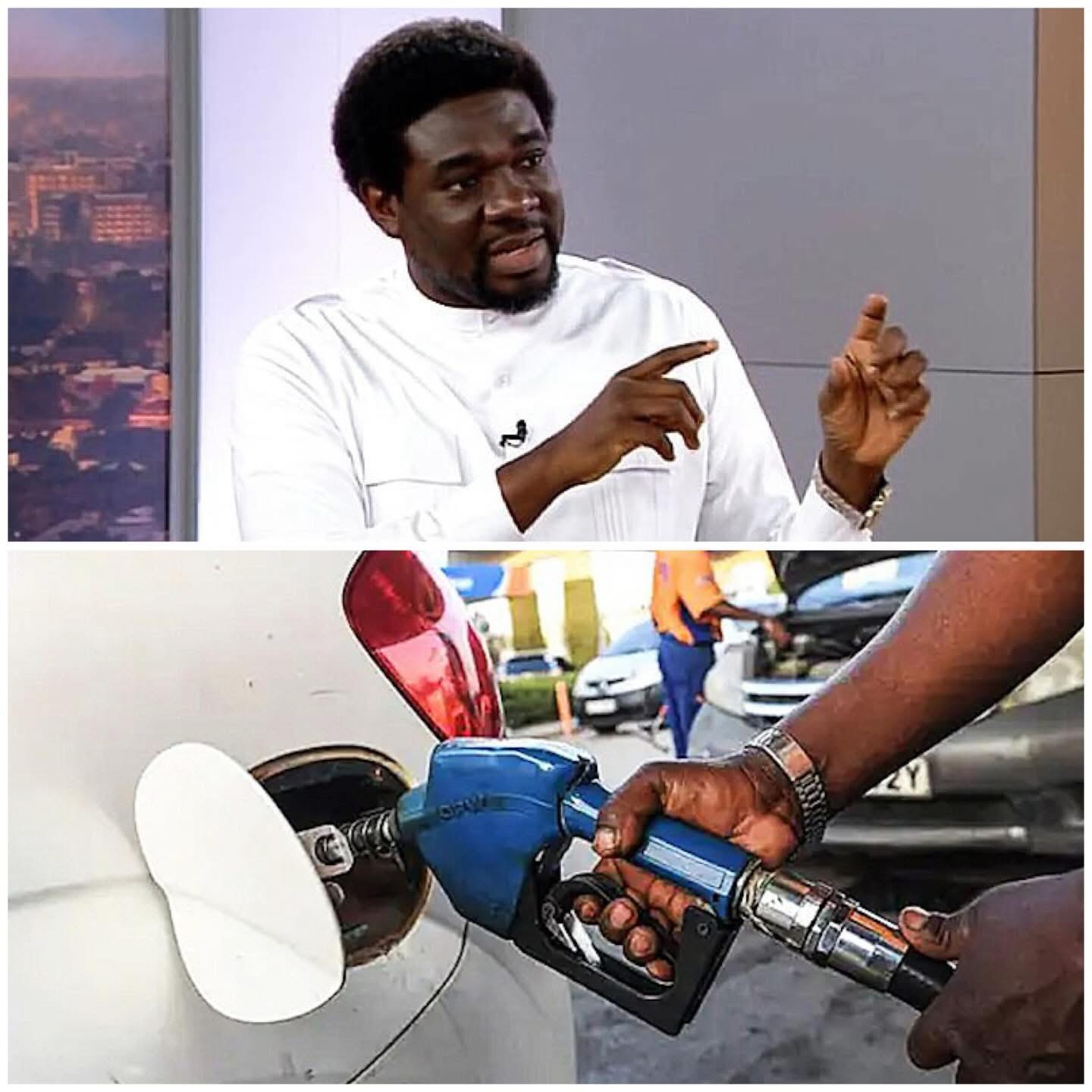
The Trade Union of Nigeria, TUC, has raised the alarm that the price of Premium Motor Spirit aka Petrol may climb to about N2,000 per litre if urgent measures are not taken to cushion the impact of rising global crude prices and the depreciating naira.
Speaking to newsmen on Thursday, April 9, the president of the TUC, Festus Osifo, called on the Federal Government to immediately deploy 60 percent of excess crude oil revenue above the 2026 budget benchmark to subsidise crude feedstock supplies to the Dangote Refinery and other modular refineries, a move it says will slash pump prices of petrol, diesel, and jet fuel within two weeks
“Today, comrades, we are seeing that the cost of petrol is edging towards N2,000 per litre depending on the part of the country that you are. Nigerian workers are already passing through excruciating pain as we speak.
The same way it is affecting transportation, it is also affecting manufacturing. The cost of diesel has also gone northward, meaning that the cost of production has increased. When production costs rise, the final price of goods on the shelves will also skyrocket.
If this continues unchecked, the inflation that we are currently celebrating as going downwards will reverse and start moving up again,” he stated.
Osifo outlined the proposal as an urgent intervention to cushion Nigerian workers from excruciating pain caused by petrol prices edging towards ₦2,000 per litre in some parts of the country
News
Cameroon’s President, Paul Biya Set To Get A Vice President For The First Time In His 43-Year Rule
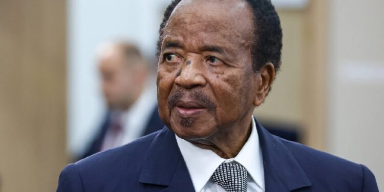
Cameroon’s president, Paul Biya, is set to get a vice president for the first time in his four-decade rule, following controversial constitutional changes backed by the parliament.
In a joint session of the ruling party-dominated National Assembly and Senate, lawmakers voted 200 to 18 in favour, with four abstentions, to pass the bill.
The bill stipulates that the vice president will automatically assume the presidency if President Paul Biya dies, resigns, or becomes incapacitated.
Biya, 93, has led the Central African country since 1982 and is the world’s oldest serving head of state. Public discussion about his health is banned.
According to the legislation, a copy of which was seen by Reuters, the vice president will be appointed and dismissed by the president, serving for the remainder of the president’s seven-year term.
However, the interim leader would be prohibited from initiating constitutional changes or running in a subsequent election.
Prior to the amendment, the constitution designated the leader of the Senate to briefly take over in case the sitting president d!es or is incapacitated. An election would then be held.
The Social Democratic Front (SDF) party, which has six representatives in parliament, boycotted the vote. It had pushed for a revision in favour of the vice-president being jointly elected with the president, rather than appointed.
The party also sought a constitutional provision that reflects the linguistic split between English and French-speaking regions. The SDF wanted the nation’s top two posts to be shared between Cameroon’s two communities, which was the position before 1972.
“This constitutional reform could have been a moment of political courage, but it is nothing less than a missed historic opportunity,” SDF chairman Joshua Osih said.
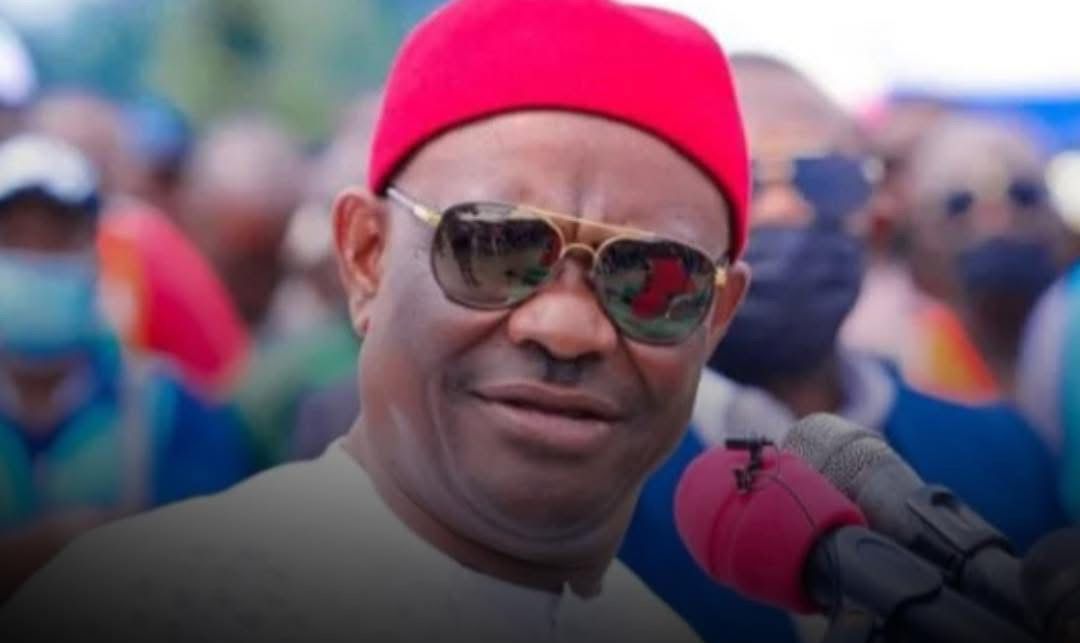
Minister of the Federal Capital Territory, Nyesom Wike, has highlighted the ongoing challenges of tax collection, pointing out the disparity between citizens’ expectations and the reality of government revenue.
Speaking with TVC NEWS live, he stressed that while Nigerians expect quality infrastructure and services, there is widespread reluctance to contribute through taxes.
On the difficulty of generating revenue, Wike said: “To collect tax, you know it’s not an easy thing. I don’t know how many of you here like to pay tax. Nigerians want everything for free. They want road, they want light. It is not easy.”
He further stated; “When I came to Abuja we were about 8, 9 billion. The money we get from the federal government is 1% of the allocation of federal government. So if federal government gets 1 trillion for example, they’ll give us one percent which is ten billion naira and that cannot carry the society. Our salary in a month is not less than 12–13 billion, so we must augment. How do we augment?”
Addressing public criticism, he added: “There’s no ab¥se that any politician has received than me. I think after the president, I’m the highest ab¥sed. There’s nothing we do that we won’t get ab¥sed. Well, what is important to me is that I want to be concentrated to do the job.”
On oversight and accountability, Wike explained how closely he monitors the finances: “The money we have gotten from tax challenge me, minister FCT, what are you doing? I’ll show you as I sit here.”

2027: More Than 50 Lawmakers Lose APC Reps Tickets in Major Primary Election

Bandits behind Ogbomoso school abduction will face full wrath of the law- President Tinubu

PDP to screen Goodluck Jonathan on Tuesday as its sole Presidential aspirant For 2027 race

-
Business2 years ago
US court acquits Air Peace boss, slams Mayfield $4000 fine
-

 Trending2 years ago
NYA demands release of ‘abducted’ Imo chairman, preaches good governance
-

 Politics2 years ago
Mexico’s new president causes concern just weeks before the US elections
-

 Politics2 years ago
Putin invites 20 world leaders
-

 Politics2 years ago
Russia bans imports of agro-products from Kazakhstan after refusal to join BRICS
-
Entertainment2 years ago
Bobrisky falls ill in police custody, rushed to hospital
-
Entertainment2 years ago
Bobrisky transferred from Immigration to FCID, spends night behind bars
-
Education2 years ago
GOVERNOR FUBARA APPOINTS COUNCIL MEMBERS FOR KEN SARO-WIWA POLYTECHNIC BORI