
Politics
Japan’s government in flux after election gives no party majority

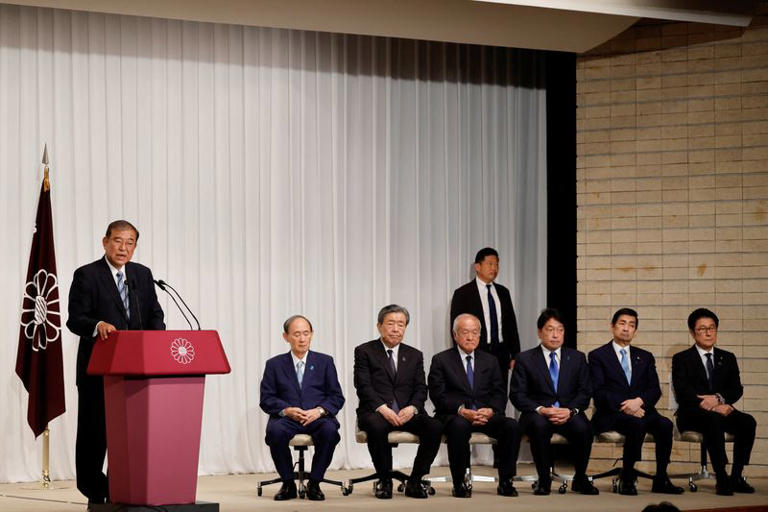
By John Geddie, Tim Kelly and Sakura Murakami
TOKYO (Reuters) -The make-up of Japan’s future government was in flux on Monday after voters punished Prime Minister Shigeru Ishiba’s scandal-tainted ruling coalition in a weekend election, leaving no party with a clear mandate to lead the world’s fourth-largest economy.
The uncertainty sent the yen currency to a three-month low as analysts prepared for days, or possibly weeks, of political wrangling to form a government and potentially a change of leader.
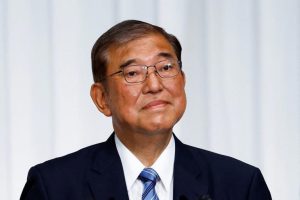
Japanese Prime Minister and leader of the ruling Liberal Democratic Party (LDP) Shigeru Ishiba arrives for a press conference a day after Japan’s lower house election, at the party’s headquarters in Tokyo, Japan October 28, 2024. REUTERS/Kim Kyung-Hoon/Pool © Thomson Reuters
That comes as the country faces economic headwinds, a tense security situation fuelled by an assertive China and nuclear-armed North Korea, and a week before U.S. voters head to the polls in another unpredictable election.
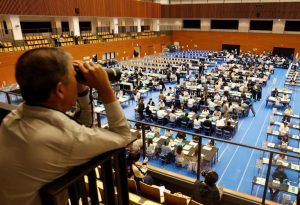
Election officers count ballots for the general election at a ballot counting centre in Tokyo, Japan October 27, 2024. REUTERS/Manami Yamada
© Thomson Reuters
“We cannot allow not even a moment of stagnation as we face very difficult situations both in our security and economic environments,” a defiant Ishiba said at a news conference held Tuesday, pledging to continue as premier.
Ishiba’s Liberal Democratic Party (LDP) and its junior coalition partner Komeito took 215 seats in the lower house of parliament, down from 279 seats, as voters punished the incumbents over a funding scandal and a cost-of-living crunch. Two cabinet ministers and Komeito’s leader, Keiichi Ishii, lost their seats.
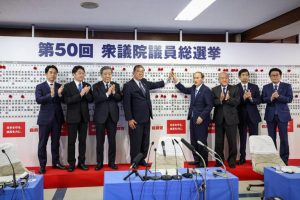
Japan’s Prime Minister Shigeru Ishiba poses for a photo with other members of the Liberal Democratic Party at the LDP’s headquarters on October 27, 2024, in Tokyo, Japan. Takashi Aoyama/Pool via REUTERS
© Thomson Reuters
The biggest winner of the night, the main opposition Constitutional Democratic Party of Japan (CDPJ), had 148 seats, up from 98 previously, but also still well short of the 233 majority.
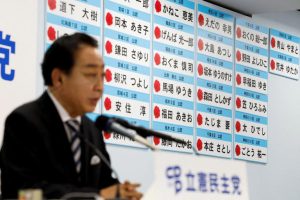
Yoshihiko Noda, leader of the main opposition Constitutional Democratic Party of Japan (CDPJ) speaks to the members of the media, in front of a board with names of CDPJ party candidates indicating results of the general election, at the party’s headquarters in Tokyo, Japan October 27, 2024. REUTERS/Kim Kyung-Hoon
© Thomson Reuters
As mandated by the constitution, the parties now have 30 days to figure out a grouping that can govern, and there remains uncertainty over how long Ishiba – who became premier less than a month ago – can survive after the drubbing. Smaller parties also made gains and their role in negotiations could prove key.
“It seems unlikely that he (Ishiba) will survive to lead a new government as prime minister … though it is possible he could stay on as caretaker,” said Tobias Harris, founder of Japan Foresight, a political risk advisory firm.
CDPJ leader Yoshihiko Noda has said he would work with other parties to try and oust the incumbents, though analysts see this as a more remote possibility.
The LDP has ruled Japan for almost all of its post-war history and the result marked its worst election since it briefly lost power in 2009 to a precursor of the CDPJ.
SCANDAL-TAINTED
Ishiba, picked in a close-fought race to lead the LDP late last month, called the snap poll a year before it was due in an effort to secure a public mandate.
His initial ratings suggested he may be able to capitalise on his personal popularity, but like his predecessor Fumio Kishida he was undone by resentment over his handling of a scandal involving unrecorded donations to LDP lawmakers.
Ishiba’s LDP declined to endorse several scandal-tainted candidates in the election. But days before the vote, a newspaper affiliated with the Japan Communist Party reported that the party had provided campaign funds to branches headed by non-endorsed candidates.
The story was picked up widely by Japanese media despite Ishiba saying the money could not be used by non-endorsed candidates. “LDP’s payments to branches show utter lack of care for public image,” ran an editorial in the influential Asahi newspaper two days before the election.
Support from smaller parties, such as the Democratic Party for the People (DPP) or the Japan Innovation Party (JIP), who won 28 and 38 seats respectively, could now be key for the LDP.
DPP chief Yuichiro Tamaki and JIP leader Nobuyuki Baba have both said they would rule out joining the coalition but are open to ad hoc cooperation on certain issues.
Ishiba echoed that sentiment, saying “at this moment in time, we are not anticipating a coalition” with other opposition parties. The LDP would hold discussions with other parties and possibly take on some of their policy ideas, he added.
The DPP and JIP propose policies that could be challenging for the LDP and the Bank of Japan.
The DPP calls for halving Japan’s 10% sales tax until real wages rise, a policy not endorsed by the LDP, while both parties have criticised the BOJ’s efforts to raise interest rates and wean Japan off decades of monetary stimulus.
“It’s up to what can they give to these two parties to try and get them to just kind of join their side. The best scenario is getting them into the coalition government, but that’s a tall order,” said Rintaro Nishimura, an associate at consultancy The Asia Group.
In a statement, the head of Japan’s most powerful business lobby Keidanren, Masakazu Tokura, said he hoped for a stable government centred on the LDP-Komeito coalition to steer an economy that faced urgent tasks such as boosting energy security and maintaining the momentum for wage hikes.
In one bright spot, a record 73 women were elected into Japan’s male-dominated parliament, surpassing 54 at the 2009 election.
(Reporting by John Geddie, Tim Kelly, Sakura Murakami, Chang Ran-Kim; Writing by John Geddie; Editing by Stephen Coates)







The embattled National Chairman of the African Democratic Congress, David Mark, on Friday held a closed-door meeting with leaders of the Peoples Redemption Party in Abuja. The private consultation is seen as a fresh round of political moves as the ADC continues to battle a lingering leadership crisis and growing internal divisions.
Top figures from both parties were said to be present at the meeting, including PRP National Chairman Hakeem Baba-Ahmed and senior ADC officials. The development is already drawing attention as opposition parties continue realignments ahead of the 2027 political season, with many watching closely for possible alliances and next steps in the party crisis.
Politics
“ADC is a Holy Party, Cannot be used to Scam Nigerians Again” – Hon Success Opara tells David Mark
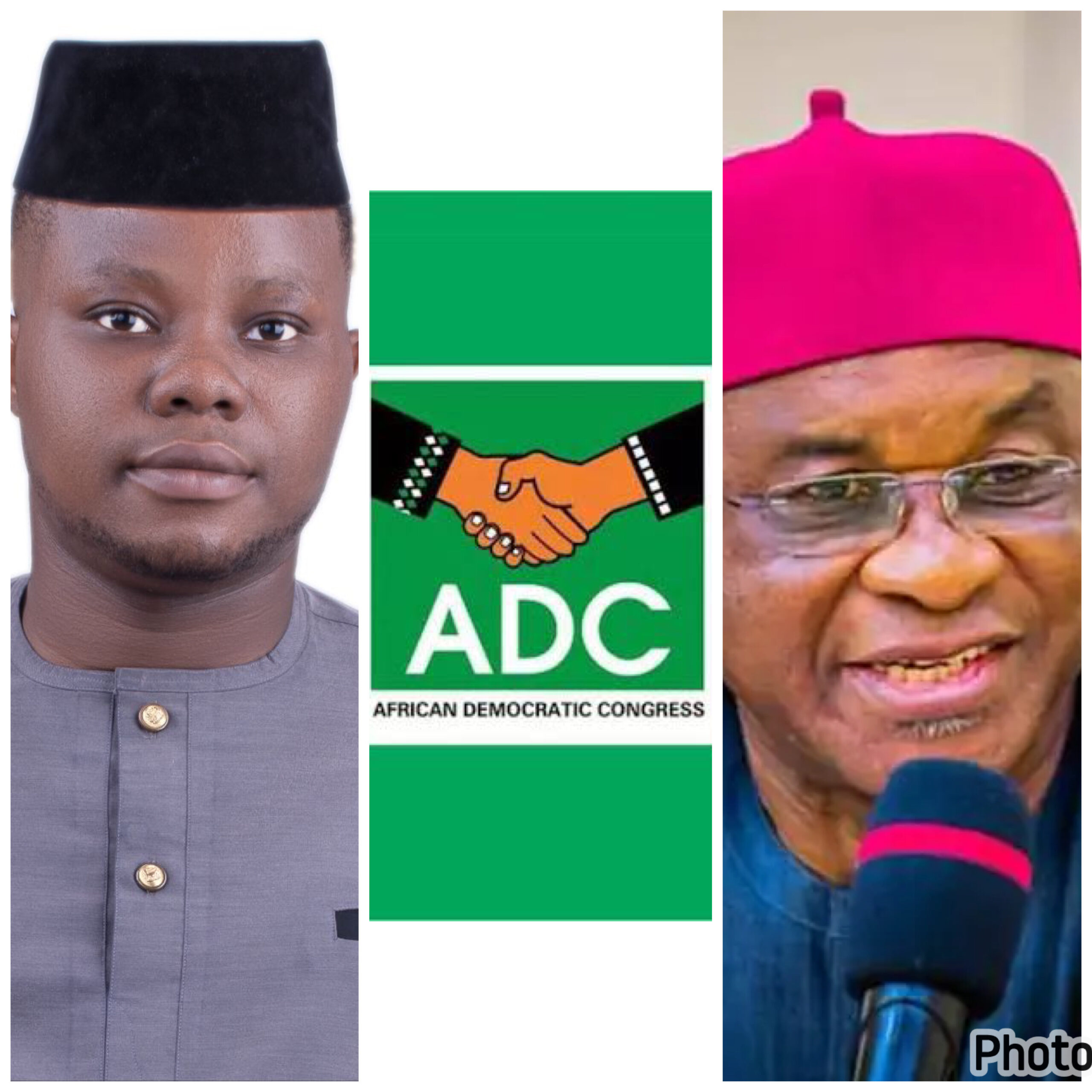
ADC Party in Turmoil: Hon Success Opara Slams Leadership, Warns Against Scamming Nigerians
Abuja, Nigeria – The African Democratic Congress (ADC) is facing internal strife as Hon Success Opara, a prominent party official, has warned against attempts to use the party to deceive Nigerians. Opara specifically criticized the leadership of David Mark, stating that the party cannot be used to scam citizens again.
“ADC holy Party cannot be used to scam Nigerians again,” Opara said, emphasizing that those forming coalitions are hindering the party’s growth and denying youths opportunities to thrive.
“Those who are forming coalition don’t want to give the youths the chance to strive in the party,” she added.
Opara’s statement highlights the deepening divisions within the ADC, with concerns over leadership and the party’s direction.
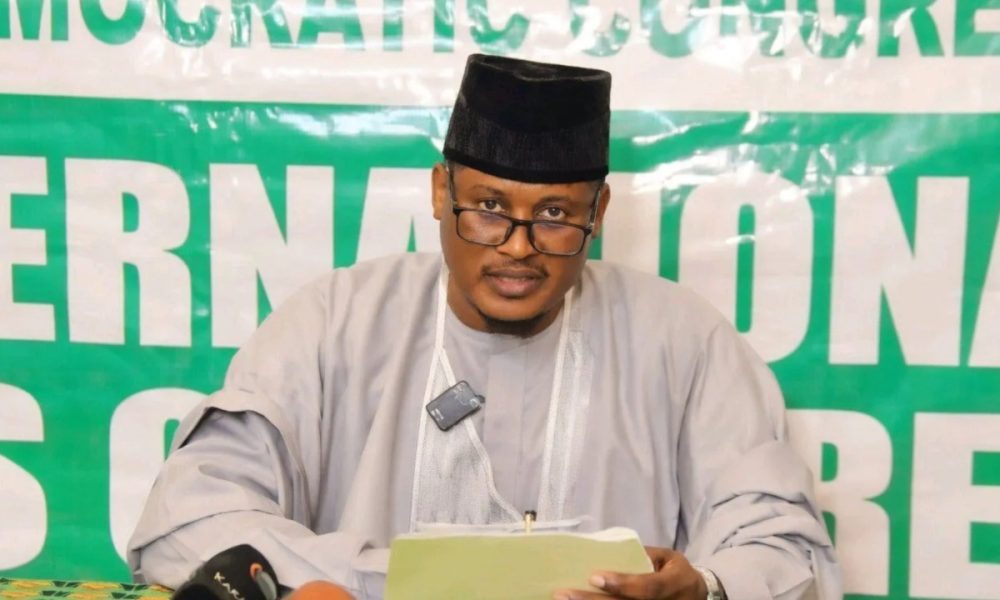
The factional National Chairman of the African Democratic Congress (ADC), Nafiu Bala Gombe, has announced that the party under his leadership will bar individuals above the age of 55 from contesting for political positions.
Gombe made the disclosure during an interview with BBC Hausa, where he outlined a vision centred on generational change and greater youth participation in politics.
“The African Democratic Congress (ADC) is a party that belongs to all Nigerians. What we are doing now is to ensure the party moves forward properly.
“We have decided that we will give the youths a real chance. The time has come for young people to take the lead in politics.
“If you are over 55 years old, you are not going to contest for positions in the ADC under our leadership.
“We want to bring in fresh blood, new ideas, and energy from the youth. Nigeria’s future depends on the young generation.
“The old ways have not worked well for the country. We need to open the door wide for youths to participate fully as candidates, leaders, and decision-makers,” he said.

David Mark Holds Secret Meeting With PRP Leaders as ADC Crisis Deepens

Chaos As Military Officers Exchange Blows During Tinubu’s Visit To Bayelsa (Videos)

HRH Ekwueme of Ochia Kingdom Iynched & kiIIed in Imo.

-
Business1 year ago
US court acquits Air Peace boss, slams Mayfield $4000 fine
-

 Trending1 year ago
NYA demands release of ‘abducted’ Imo chairman, preaches good governance
-

 Politics1 year ago
Mexico’s new president causes concern just weeks before the US elections
-

 Politics1 year ago
Putin invites 20 world leaders
-

 Politics1 year ago
Russia bans imports of agro-products from Kazakhstan after refusal to join BRICS
-
Entertainment1 year ago
Bobrisky falls ill in police custody, rushed to hospital
-
Entertainment1 year ago
Bobrisky transferred from Immigration to FCID, spends night behind bars
-
Education2 years ago
GOVERNOR FUBARA APPOINTS COUNCIL MEMBERS FOR KEN SARO-WIWA POLYTECHNIC BORI