
EVENTS
Uzodimma to journalists: Take steps to promote ethical reporting

GOVERNMENT OF IMO STATE
PRESS RELEASE
Uzodimma to journalists: Take steps to promote ethical reporting

Governor Hope Uzodimma of Imo State has advised journalists in Nigeria to take steps to promote ethical reporting as well as the spread of disinformation in the course of discharging their duties.
Also, he has challenged them to use responsible journalism practice to hold those in positions of authority accountable and to promote democracy.
The suggestions were part of the remarks Governor Uzodimma made in his keynote address at the Nigeria Union of Journalists (NUJ) Triennial Conference in Owerri, the capital of Imo State, on Wednesday.
He said that responsible journalism practice is key to development of any society and helps in promoting healthy democratic experience in a country like Nigeria.
He frowned at the dangers which disinformation with its concomitant impact from fake news has caused both the larger society and the media sector, suggesting that it is high time journalists were exposed to different trainings that will equip them with the necessary skills to ethically practice their profession.
Governor Uzodimma brought to the fore how fake news has been used to undermine and malign the integrity of both the country, individuals and even the media, identifying it as a major threat to real journalism practice in our contemporary world.
He congratulated the leadership’s of the NUJ under Comrade Chris Isiguzo for the choice of Imo State for their Conference and urged the journalists to take advantage of their stay in Imo to see for themselves the developmental strides of his administration against what they may have been fed with on the social media as fake news.
He told the NUJ leadership that his government had taken steps to encourage their members in Imo State, reminding them that the idea is to ensure that he helps to bring out the best in them.
Governor Uzodimma’s speech reads:
“It is with profound pleasure that I welcome you all to Owerri for this triennial conference of the Nigeria Union of Journalists.
“Seeing this impressive gathering of journalists here today fills me with a sense of pride. It not only signifies your firm dedication to your profession but also validates the strides we have made in ensuring peace and progress in Imo State. Just a few weeks ago, we had the privilege of hosting the Nigerian Guild of Editors, and now, we are honoured to welcome the NUJ. This clearly shows that Imo State has truly returned to its rightful place as a safe and welcoming destination, the hospitality capital of the East.
“I want to express my sincere appreciation to the National President of the NUJ, Comrade Chris Isiguzo, and the Executive Council for choosing Imo State as the venue for this important conference. Comrade President, I know this gathering must feel like a homecoming for you, having launched your esteemed career right here in Imo State. Your leadership has been nothing short of transformative, not just in reforming the Union, but also in elevating the standards of professionalism in journalism.
“I commend you, Comrade Isiguzo, for your outstanding achievements and encourage you to continue supporting the incoming administration to ensure a smooth transition and continued progress.
“Now, the theme of this conference, Media and Democracy: The Journalist’s Role in Holding Leaders Accountable, couldn’t be more relevant. As UNESCO has rightly pointed out, journalism is the bedrock of democratic governance. A free and independent press is necessary for a healthy democracy. It provides a space for open debate, a reliable source of information, and a useful mechanism for holding those in power accountable.
“As we all know, the media plays a multifaceted role in shaping public opinion, encouraging civic engagement, and promoting transparency in government. Nevertheless, Free Press Unlimited has identified four key functions of the media in society, and I think they are worth reiterating:
1) Providing reliable information: In today’s world, where information overload and misinformation are rampant, journalists must be symbols of truth. You must diligently verify facts and provide accurate and unbiased reporting. It is this commitment to truth that builds public trust.
2) Acting as a watchdog: Journalists must be the eyes and ears of the people. They must scrutinise the actions of those in power, fearlessly expose corruption, and hold leaders accountable for their decisions. This watchdog role is important for preventing abuses of power and ensuring that the government truly serves the people.
3) Facilitating democratic discourse: The media must provide a neutral and inclusive platform for diverse voices and perspectives to be heard. It is through encouraging healthy debate and championing informed decision-making that you empower citizens to actively participate in the democratic process.
4) Reflecting society’s diversity: Journalists have a responsibility to reflect the rich diversity of our society, and to ensure that all voices, regardless of their background, are represented and given a platform. This commitment to inclusivity is the way to build a just and equitable society.
“Furthermore, research has consistently shown that a strong local press is particularly effective in holding leaders accountable to their constituents. This means that your work, especially at the grassroots level – what we sometimes call journalism for development or emancipatory journalism – will ensure that those in power remain responsive to the needs and aspirations of the people they represent.
“But let us be honest, journalism today faces some serious challenges, particularly with the rise of social media and the spread of disinformation. While social media has empowered citizens and enabled communication in unprecedented ways, it has also become a breeding ground for disinformation and “fake news.”
“We have all seen how quickly false information can spread, sometimes with devastating consequences. I will give some examples. Do you remember that CNN report in 2011 about weapons being smuggled into Nigeria? It resurfaced during the 2019 elections as if it were current news.
“Again, in the lead-up to our 2019 general elections, the Centre for Democracy and Development published a report warning that fake news was rampant, spreading through social media, traditional media, and even word-of-mouth. The report showed that false information ranged from subtle distortions, like an official claiming 800 companies shut down under Buhari (a story which predated his term), to outlandish claims of Buhari being replaced by a Sudanese clone. This “clone” rumour, originating from a YouTube video, gained such traction that Buhari himself had to publicly deny it.
“You may also recall fake quotes attributed to prominent people just to influence the election. Professor Wole Soyinka was alleged to have said “Buhari has finished fighting corruption, he should step down for Atiku to fight poverty and hunger”. But Prof Soyinka never said so. Former INEC Chairman Professor Attahiru Jega was also alleged to have said “If the current INEC Chairman can emulate me and conduct free and fair elections, nothing will stop Atiku from winning 2019 elections.” But of course, Professor Jega never said so.
“Interestingly, fake news is not deployed only to mislead voters. It can also be used to cause social upheaval. For example, during the 2014 Ebola outbreak, there was a viral message claiming salt-water baths prevented infection. Unfortunately, this led to deaths from excessive salt consumption.
“And who could forget the #EndSARS protests? No doubt, the #EndSARS protests were a powerful demonstration of citizen engagement. However, they were also plagued by misinformation. For instance, in December 2020, two months after the #EndSARS protests, Dubawa published a study analyzing 48 million tweets posted between October 5th and 14th, 2020. This analysis, which included work from four reputable fact-checking organizations (Africa Check, AFP Hub, Dubawa, and People’s Check), revealed that the majority of fact-checked claims about the protests were false. That is deeply disturbing.
“As you may know, I have experienced the harm of fake news firsthand. In 2021, opposition politicians in Imo State cloned the August 27th cover of Thisday Newspaper. They replaced the original headline, “Buhari Elated as NNPC Breaks Jinx, Declares N287bn Profit, First in 44 Years,” with a fabricated one: “Shocking, Uzodimma declares Free Marriage Between Fulani Settlers and Imo Ladies.” As if that was not enough, the same fake publication was recirculated in September this year aiming to damage my reputation and incite ethnic tensions.
“Not too long ago, I was accused on social media of trying to export the gas deposits of Imo State to Europe and America. I know it sounds ridiculous, but it just goes to show the extent to which social media can be used to spread misinformation and defame people.
“Unfortunately, the menace of fake news and disinformation does not spare even the traditional media. Sometimes, these false claims are picked up and presented as anecdotes by anchors and commentators all in the name of analysis.
“I believe these examples highlight the urgent need for media literacy, fact-checking initiatives, and responsible use of social media platforms.
“And then there is the rise of citizen journalism. Yes, citizen journalism can enrich perspectives, but it also raises concerns about professional standards and ethics. We need to ensure that everyone engaged in journalistic activities, whether professional or citizen journalists, adheres to the highest standards of accuracy, fairness, and accountability. We must not forget that what identifies a journalist is the ability to check facts.
“The NUJ has an important role to play in dealing with these challenges and upholding the integrity of the journalism profession. I urge you to take proactive steps to promote ethical reporting, combat the spread of disinformation, and ensure that all journalists are equipped with the skills and knowledge necessary to thrive in the digital age.
“This might involve strengthening the Nigerian Press Council, investing in training and development programs for journalists, and working closely with social media platforms to address the challenges of the digital terrain.
“Here in Imo State, my administration is fully committed to supporting a free, independent, and thriving press. We have taken concrete steps to demonstrate this commitment. We established the Governor Hope Uzodimma Media Excellence Awards to recognize and celebrate outstanding journalistic work. We have also provided logistical support to various press unions, including the NUJ, NAWOJ, and the Correspondents Chapel, by providing corporate vehicles to facilitate their operations. We believe that a strong and independent media is not only a cornerstone of democracy but also a catalyst for development.
“Therefore, as you deliberate on the theme of this conference, I urge you to think beyond just financial accountability. While it is necessary to hold leaders accountable for the responsible use of public funds, I encourage you to consider the broader responsibilities of leadership. This includes fulfilling campaign promises, upholding human rights and the rule of law, and addressing pressing social issues such as poverty, healthcare, education, and inequality.
“In Imo State, we are proud of the progress we have made in delivering tangible benefits to our people. We have embarked on an ambitious infrastructure development program, constructing over 100 roads, a world-class flyover from Maria Assumpta Cathedral, and the magnificent Imo International Conference Centre. These roads, which cut across the state, have improved connectivity and boosted economic activity. We have also made major investments in agriculture, education, and social welfare programs to improve the lives of our citizens. Our hard work has caught the attention of the wider world. As you may have heard, our state was one of only four states in the country to win the coveted Sates Action Business Enabling Reforms (SABER), a programme of the World Bank which earned us a cash award of four million US dollars.
“Although, I am not sure that this positive story has received as much coverage or virality as it should. I am of the view that one effective way to hold leaders to account is to make good news popular after all, the reward for hard work is more work.
“In this light, I invite you to tour our state and see for yourselves the transformative impact of these projects. You will see that Imo State is firmly on the path to progress and prosperity, guided by the principles of good governance, transparency, and accountability.
“In closing, I wish you all a successful conference and fruitful deliberations. May your discussions lead to concrete actions that strengthen the media’s role in promoting democracy, upholding accountability, and engendering a more informed and engaged citizenry in Nigeria.
“I wish you all a safe journey back to your respective stations.”
Earlier in his valedictory speech, Isiguzo poured encomia on Governor Uzodimma for being a pillar of support to the NUJ as a body and his tenure in particular, a development they collectively honoured the Governor with the NUJ life patron award
Isiguzo urged the in coming leadership to work hard to surpass his own modest achievements.
While Senator Osita Izunaso (Imo West) though represented, was the Chairman of the event, Prof. Okey Ikechukwu delivered the Triennial lecture – Media and Democracy: The Journalist’s Role in Holding Leaders Accountable.
Oguwike Nwachuku
Chief Press Secretary and Media Adviser to the Governor
November 27, 2024.



EVENTS
EID-EL-FITR: IGP DISU FELICITATES MUSLIM FAITHFUL, ORDERS NATIONWIDE DEPLOYMENT OF TACTICAL ASSETS
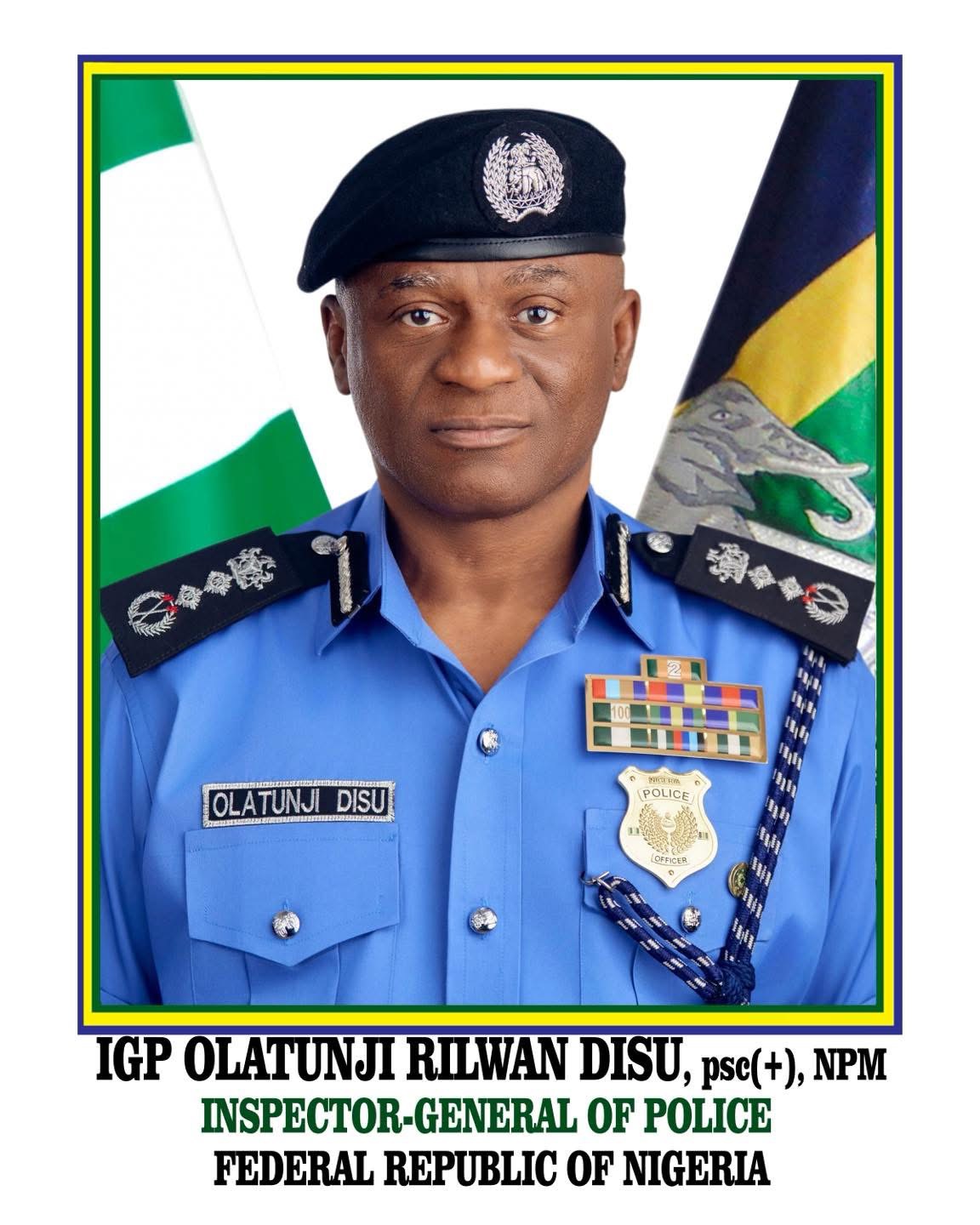
The Inspector-General of Police, IGP Olatunji Rilwan Disu, psc(+), NPM, has extended warm felicitations to the Muslim faithful across Nigeria on the successful completion of the holy month of Ramadan and the celebration of Eid-el-Fitr.
In furtherance of his commitment to ensuring a safe and secure environment during the festive period, the Inspector-General has directed Commissioners of Police and Tactical Commanders across all states of the Federation and the Federal Capital Territory to implement robust security arrangements.
Operational measures include:
Strategic deployment of tactical teams and intelligence operatives.
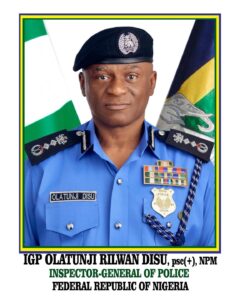
Deployment of the Special Intervention Squad and conventional police personnel to Eid prayer grounds and critical infrastructure.
Increased presence at highways, motor parks, recreational centers, and other public spaces to ensure peaceful, hitch-free celebrations.
The IGP has also ordered heightened visibility policing, coordinated patrols, enhanced surveillance operations, and intelligence-led stop-and-search duties. These actions are aimed at proactively deterring criminal activities and ensuring a swift response to any emerging threats.
IGP Disu calls on members of the public to remain vigilant, cooperate with law enforcement agencies, and promptly report any suspicious activities to the nearest police station or through the following emergency lines:
08057000001, 08057000002, 09133333785, and 09133333786.
IGP Tunji Disu wishes all Muslim faithful a peaceful and joyous Eid-el-Fitr.

DCP ANTHONY OKON PLACID psc(+) mni
Force Public Relations Officer
Force Headquarters, Abuja
20th March, 2026
EVENTS
Hon Success Opara celebrates Mothering Sunday with St. Peter women, hails them as the ‘neck that controls the household
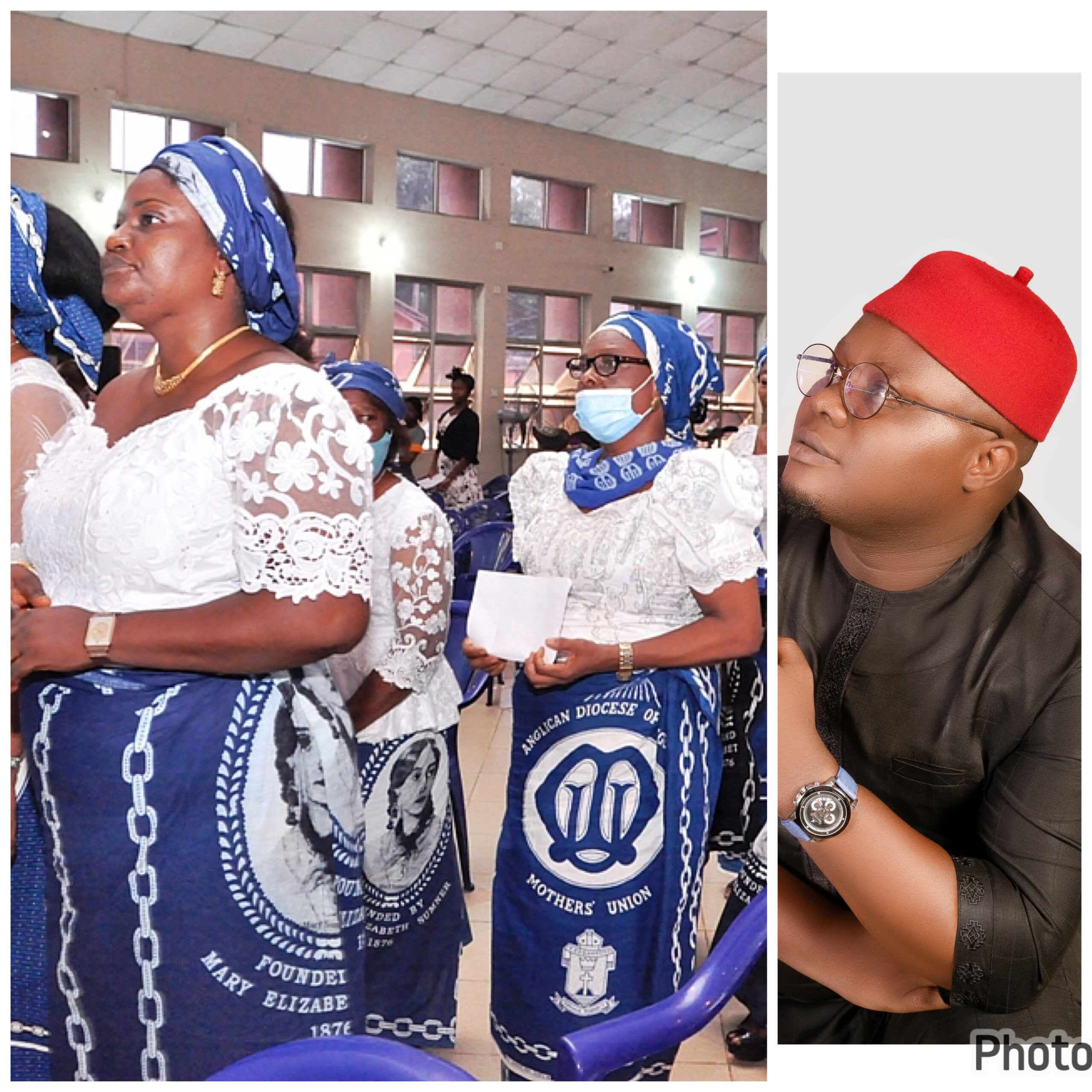
Hon Success Opara, former councilorship candidate for Ikenegbu Ward 2, celebrated Mothering Sunday with the women of St. Peter Anglican Church, Ikenegbu, extolling them as the backbone of their households.
He described them as the “neck that controls the household,” acknowledging their vital role in shaping families and communities.
Opara’s gesture is seen as a testament to his commitment to uplifting and empowering women.
The celebration, which coincided with the Christian observance of Mothering Sunday, featured fellowship and words of encouragement from Opara, who prayed for the women’s well-being.
This event highlights the importance of recognizing and appreciating mothers and mother figures in Nigerian society.
EVENTS
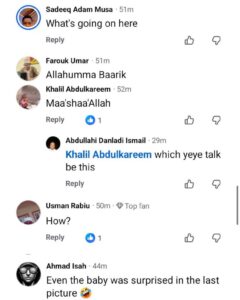
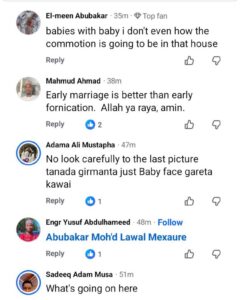
“Early marriage is better than fornication” – Mixed reactions as young Nigerian couple trends after welcoming a child
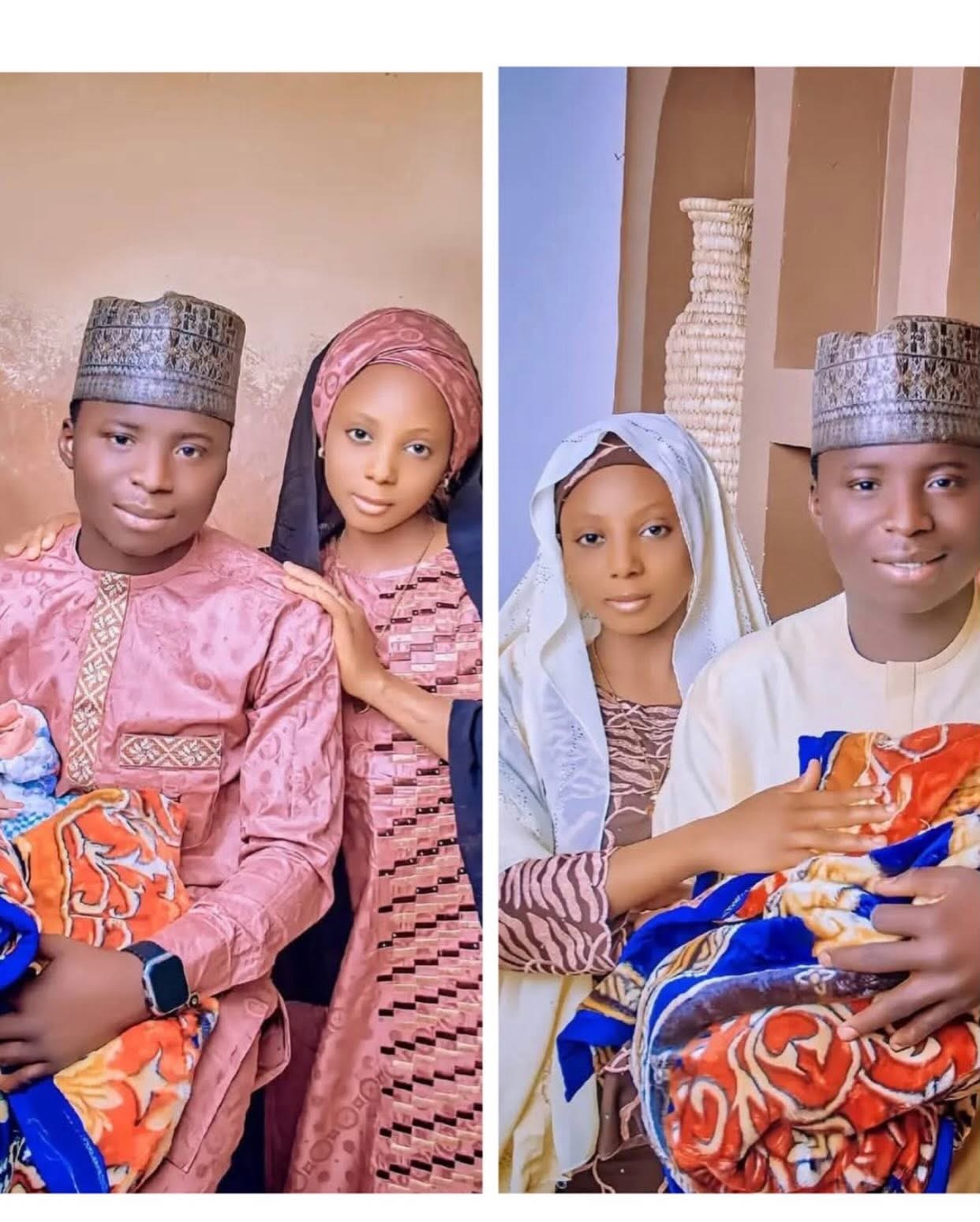
A young Nigerian couple are currently trending on Arewa social media circles after they welcomed their first child.
The pictures taken by a Kaduna-based photographer have sparked mixed reactions, with some people saying that the girl is underaged and not old enough to be a wife and mother.

Fubara To Contest Rivers Governorship Seat Under NDC

Breaking: Tinubu Appoints 39 Year Old Professor As New Jamb Registrar

Desmond Elliot Withdraws from APC Lagos Assembly Primaries, Cites Intimidation

-
Business2 years ago
US court acquits Air Peace boss, slams Mayfield $4000 fine
-
 Trending2 years ago
NYA demands release of ‘abducted’ Imo chairman, preaches good governance
-

 Politics2 years ago
Mexico’s new president causes concern just weeks before the US elections
-
 Politics2 years ago
Putin invites 20 world leaders
-
 Politics2 years ago
Russia bans imports of agro-products from Kazakhstan after refusal to join BRICS
-
Entertainment2 years ago
Bobrisky falls ill in police custody, rushed to hospital
-
Entertainment2 years ago
Bobrisky transferred from Immigration to FCID, spends night behind bars
-
Education2 years ago
GOVERNOR FUBARA APPOINTS COUNCIL MEMBERS FOR KEN SARO-WIWA POLYTECHNIC BORI