
Business
6 rising Parisian independent jewellery brands to watch: how Mira Stella, Lucas Bauer, Viltier, Statement, Gemmyo and Maison Avani are all making a name for themselves

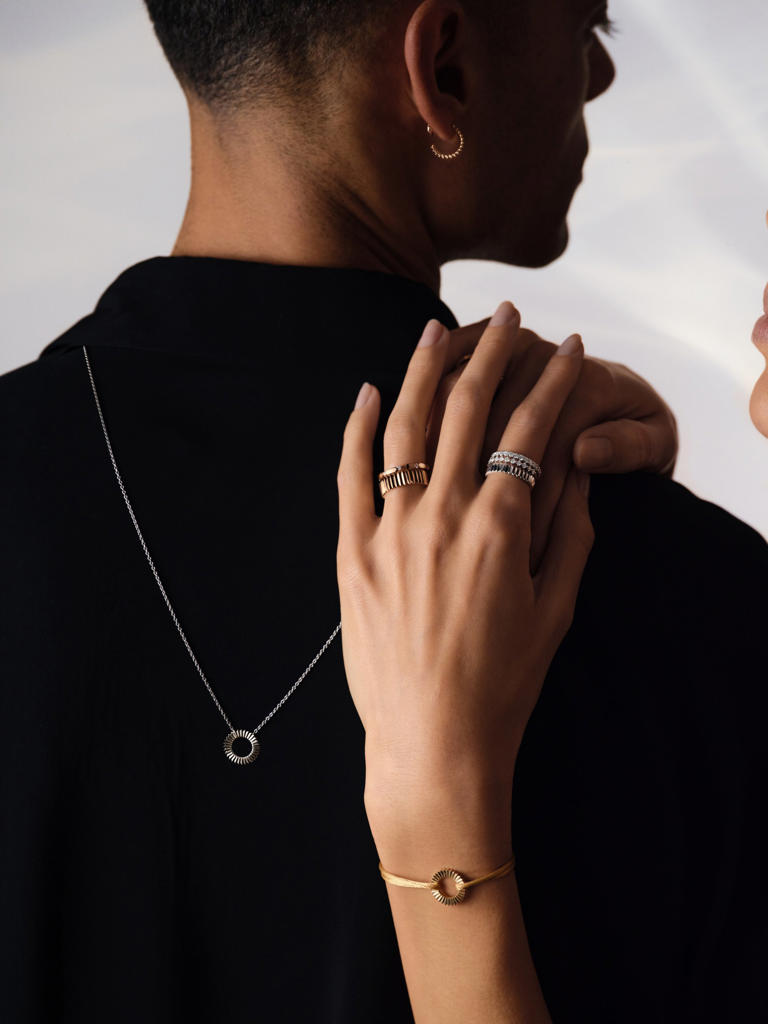
Paris’ Place VendOme is home to many historic maisons, but across the city, entrepreneurial independent jewellers are springing up to offer fresh visions
Paris’ Place VendOme may be the home of high jewellery, but this rarefied world is only the glittering tip of the city’s iceberg of gem-filled creativity.
Under the waterline, a new generation of independent labels is rising, ready to bring their colour-filled designs, and inspirations that range from the natural world to art movements like art deco or Brutalism, into the light.
Here are six names who are setting the pace in Paris’ independent jewellery scene.
Do you have questions about the biggest topics and trends from around the world? Get the answers with SCMP Knowledge, our new platform of curated content with explainers, FAQs, analyses and infographics brought to you by our award-winning team.
1. Mira Stella

Designs inspired by nature at Mira Stella. Photo: Handout
The soil around Sophie Bouilhet-Dumas’ family home in Normandy is fertile indeed. Not only does it support verdant countryside, but it also sprouted Mira Stella, a fine jewellery brand named after the founder’s mother and grandmother.
Where others might have seen ephemeral beauty in nature, she saw treasures that transcended the ages. And since Bouilhet-Dumas is also a scion of the family that founded silversmith Christofle, it felt natural to reproduce the likes of hydrangea petals, sea kale seeds and flax pods in 18k gold.
Oak bark, chicory petals and heart-shaped quaking grass, a plant in the same family as wheat and rice, have since joined Mira Stella’s repertoire. Snippets of botanical information accompany each piece on the website, but if you are in the area, make sure to visit the brand’s boutique, a delightful ray of pink, warm light tucked away in the picturesque streets of Paris’ Saint-Germain-des-Pres.
2. Lucas Bauer
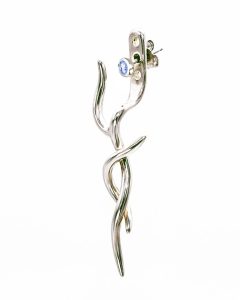
Lucas Bauer earring. Photo: Handout
Nature also influences the work of Lucas Bauer. Not surprisingly, considering he credits a parrotfish encountered while diving as changing the course of his career after nine years spent designing jewellery and accessories in the women’s fashion studio of Louis Vuitton.
This graduate of the famed ecole de la Chambre Syndicale de la Couture Parisienne learned jewellery design on the job, aided by the idea that the precision and planning of patternmaking could be applied to his new medium.
For his eponymous label, Bauer’s inspirations are now found in deeper places: underground in mycelium, the fungal network that permeates our soil; or below the waves for algae. These tie into his idea that all things are connected and united, ourselves included, which is why his jewellery curls around the body organically.
Bauer made his Paris Fashion Week debut with a range that included fine jewellery designs made from recycled gold and stones sourced from existing stock.
3. Viltier
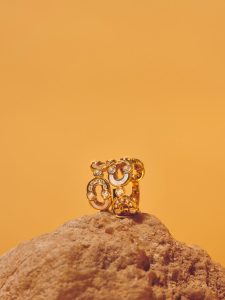
Viltier ring. Photo: Handout
Iris de La VillardiEre and Thomas Montier Leboucher were childhood friends who lost touch, eventually reconnecting over Instagram. Their catch-up conversations uncovered complementary skill sets and experiences in the jewellery world and from there sprang Viltier, a name composed of the first syllables of their last names.
Their first collection, featuring two U shapes connecting with diamonds to form a graphic oval, was a hit thanks to a retro-infused shape with fluted edges ideally realised with hard stone inlays.
Soft curves and plenty of sparkle are distinguishing features of Viltier designs, from the Clique RiviEre necklace and its dancing line of diamonds, to New Edge’s numerous takes on ways to add diamonds to a deceptively simple form.
When in Paris, don’t miss their Rue de Verneuil showroom, an impeccably decorated lounge filled with art and striking furniture in the Carre des Antiquaires area of the Left Bank.
4. Statement
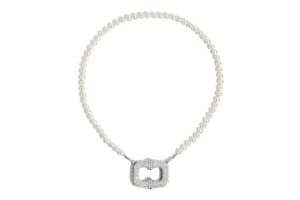
A stand-out necklace from Statement. Photo: Handout
An entrepreneur to the core, Amelie Huynh left not one but two promising careers – one on Place VendOme with Chaumet and the other in advertising – to strike out on her own and launch jewellery brand Statement.
She uses diamond-set silver as her signature, a favoured combination for 19th century French jewellers. The metal’s symbolic association with femininity and the moon also struck a chord.
Art deco geometries, a flair for Brutalist architecture and Huynh’s own taste for voluminous pieces inform her work, which is all about making a personal statement – using jewels as a way to mark milestones, moments and memories.
More recently, she has added 18k gold to her palette and added styles with pearls, giving her striking designs a softer spin.
5. Gemmyo
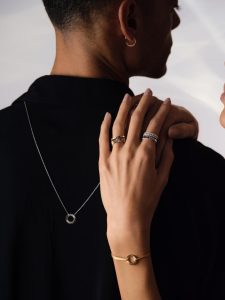
The delicate geometry of Gemmyo. Photo: Handout
Regular visitors to Paris may remember adverts peppered around the city depicting a fluffy pink kitten. The images are entirely a product of Photoshop, Gemmyo founder Pauline Laigneau assures us, but that bold symbol has achieved its aim of putting her label on people’s lips.
In the years since its launch in 2011, Gemmyo’s delicate designs and smartly priced jewellery have done the rest. Among highlights are the stackable Art Deco line, the colourful Gemmyorama with drop-shaped stones, and the recently launched Entaille, with its minimal gold carving that gives a more unisex vibe.
Most recently, the brand debuted a limited-edition range featuring Umba sapphires, rare gems found in Tanzania and naturally polished by the waters of the river that gives them their name. Coming in a palette of warm tones that range from blushing pink to sunset orange, they became the sold-out stars of designs available exclusively at Gemmyo’s Paris boutiques.
6. Maison Avani

A symphony of sapphires: earrings from Maison Avani. Photo: Handout
Any jewellery aficionado turns into a kid in a candy shop when faced with trays of delicately pink/orange Padparadscha sapphires, but even siblings Milan and Thilan Ponweera, whose family supplies such stones from Sri Lanka to top jewellery houses, couldn’t resist the draw of the vibrant pink of Mahenge spinels.
Named for the Sanskrit word for “earth”, the brothers’ Maison Avani pays homage to such vivid gemstones in high-end designs offered in a bijou store on Place du Marche Saint-Honore in Paris.
While the painterly designs of creative director Milan are a great place to start, custom designs are also a tempting avenue offered by the Ponweera brothers – for instance, the recent peony-inspired range produced in collaboration with another pair of siblings, Stephanie Primet and Caroline Cnocquaert, who head up Paris’ oldest florist, Lachaume.
More Articles from SCMP
EU tariffs slow Chinese EV exports, Geely looks to expand in Asia: 7 EV reads
How friendly will Europe’s right wing be to Trump on China? It’s complicated
Wild monkey strays onto private housing estate in Hong Kong
Hong Kong footballer targets 2025 preseason return after ‘life-changing’ Australian surgery
This article originally appeared on the South China Morning Post (www.scmp.com), the leading news media reporting on China and Asia.










The Trade Union of Nigeria, TUC, has raised the alarm that the price of Premium Motor Spirit aka Petrol may climb to about N2,000 per litre if urgent measures are not taken to cushion the impact of rising global crude prices and the depreciating naira.
Speaking to newsmen on Thursday, April 9, the president of the TUC, Festus Osifo, called on the Federal Government to immediately deploy 60 percent of excess crude oil revenue above the 2026 budget benchmark to subsidise crude feedstock supplies to the Dangote Refinery and other modular refineries, a move it says will slash pump prices of petrol, diesel, and jet fuel within two weeks
“Today, comrades, we are seeing that the cost of petrol is edging towards N2,000 per litre depending on the part of the country that you are. Nigerian workers are already passing through excruciating pain as we speak.
The same way it is affecting transportation, it is also affecting manufacturing. The cost of diesel has also gone northward, meaning that the cost of production has increased. When production costs rise, the final price of goods on the shelves will also skyrocket.
If this continues unchecked, the inflation that we are currently celebrating as going downwards will reverse and start moving up again,” he stated.
Osifo outlined the proposal as an urgent intervention to cushion Nigerian workers from excruciating pain caused by petrol prices edging towards ₦2,000 per litre in some parts of the country

The governor of Oyo state, Seyi Makinde, has approved a N10,000 transportation allowance as a palliative for the state workforce to cushion the effects of the increase in the pump price of Premium Motor Spirit, otherwise known as petrol.
The Chairman of the Nigeria Labour Congress (NLC), Oyo State chapter, Kayode Martins, in a statement released on Monday, March 23, disclosed that the governor has granted the request of the union on the issue of transportation allowance.
The statement read
“Following the intervention and formal request made by the State Council of the Nigeria Labour Congress (NLC) earlier this morning, the state government has approved a N10,000 transportation allowance for all workers in the state.
The newly approved allowance is set to take effect from April 2026, providing much-needed relief to workers grappling with rising transportation costs amid current economic challenges.
This development comes as a direct response to sustained advocacy by the state NLC, aimed at cushioning the impact of increased living expenses on the workforce.
Further details on implementation are expected to be communicated by the relevant government authorities in due course.”
The Central Bank of Nigeria (CBN), has declared that banks and financial institutions must establish and maintain a temporary watch-list for Bank Verification Numbers (BVN) implicated in suspected fraudulent transactions.
According to the CBN in a circular dated March 12, 2026 and signed by its Director of Payments System Policy Department, Musa I. Jimoh, the apex bank said such a suspected BVN may remain on the temporary watchlist for a maximum period of twenty-four (24) hours during which the owner would be contacted to make clarifications.
The circular explained that the move is part of several new measures under a revised regulatory framework aimed at enhancing financial system stability.
“A BVN may remain on this temporary Watchlist for a maximum period of twenty-four (24) hours, during this period, the BVN owner shall be contacted to provide clarification regarding the identified transaction(s),” the circular stated.
The circular also sets an age requirement for BVN enrolment, restricting registration to individuals who have attained eighteen (18) years and above.
The CBN also added that amendments to phone numbers linked to a BVN shall be allowed only once.
“Amendments to phone numbers linked to a BVN shall be allowed only once,” the circular noted.
The apex bank stated that access to BVN databases will remain tightly controlled.
“Access to the BVN databases shall be exclusively granted to Central Bank of Nigeria (CBN) licensed financial institutions.
“Notwithstanding this provision, the Central Bank of Nigeria (the Bank) reserves the right to approve access to the BVN databases in extenuating circumstances and in accordance with the provisions of extant laws,” the circular said.
Financial institutions are expected to comply with the new requirements, and customers may be contacted by their banks if their BVNs are temporarily flagged during the new fraud monitoring process.
The new policy, as stated by the CBN, takes effect from May 1, 2026.

Desmond Elliot Withdraws from APC Lagos Assembly Primaries, Cites Intimidation

Political Shockwave in Rivers as Fubara Pulls Out of APC Governorship Race, Backs Party’s Candidate

Ugochukwu Obodo wins Owerri Municipal APC ticket again as APC Elects 27 Imo Assembly Candidates After Successful Primaries

-
Business2 years ago
US court acquits Air Peace boss, slams Mayfield $4000 fine
-

 Trending2 years ago
NYA demands release of ‘abducted’ Imo chairman, preaches good governance
-

 Politics2 years ago
Mexico’s new president causes concern just weeks before the US elections
-

 Politics2 years ago
Putin invites 20 world leaders
-

 Politics2 years ago
Russia bans imports of agro-products from Kazakhstan after refusal to join BRICS
-
Entertainment2 years ago
Bobrisky falls ill in police custody, rushed to hospital
-
Entertainment2 years ago
Bobrisky transferred from Immigration to FCID, spends night behind bars
-
Education2 years ago
GOVERNOR FUBARA APPOINTS COUNCIL MEMBERS FOR KEN SARO-WIWA POLYTECHNIC BORI